Category: French Literature

  • Verne Mapped the Ocean Before We Reached It

    Verne Mapped the Ocean Before We Reached It

    Good — I have what I need. Let me write this now.

    In 1866, ships from a dozen countries reported the same thing: something vast and luminous was moving beneath them. The reports were credible — speeds no living creature could sustain, a phosphorescent wake miles long, impacts that dented iron hulls. The world’s maritime press went briefly mad trying to name the thing. Jules Verne, watching from Paris, did something more useful. He went home and invented it.

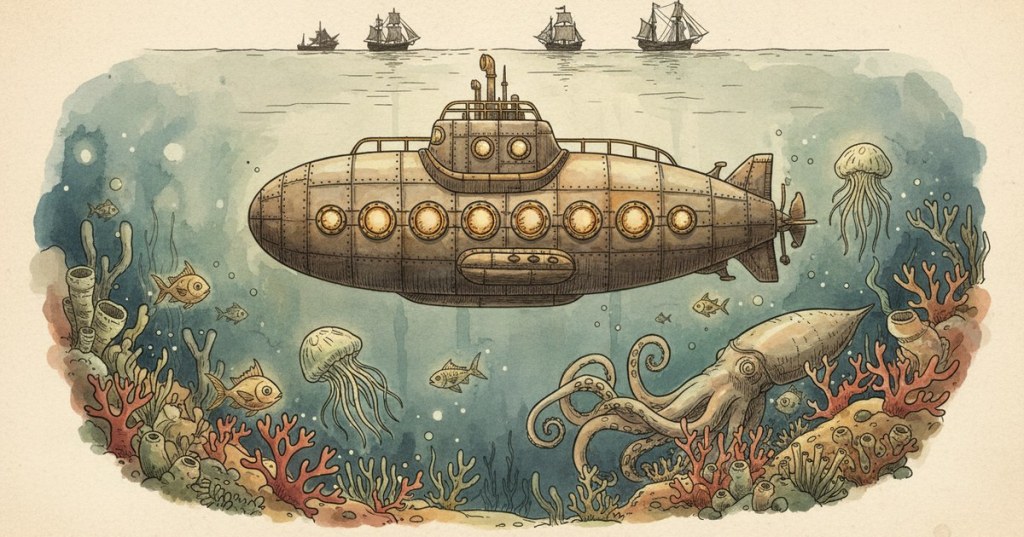
    Twenty Thousand Leagues Under the Sea began as a serial in 1869, a year before anyone had descended more than a few hundred feet in anything resembling a controlled vehicle. Verne had seen a model of the French submarine Plongeur at the 1867 Exposition Universelle — a lumbering, compressed-air prototype that managed brief dips in the Seine. From that seed, he built the Nautilus: electrically powered, capable of circling the globe, equipped with a salon hung with paintings and a library of twelve thousand volumes. The working submarines of 1869 could barely stay down for twenty minutes. Verne’s argument, implicit in every page, was that the ocean was not a void. It was a civilization waiting to be entered.

    That argument has never really been answered. We have explored less than twenty percent of the ocean floor. Verne mapped it before we reached it, and in certain essential ways, we still haven’t caught up.

    The Man Who Turned His Editor’s Rejections into a Career

    Verne was thirty-five when he sold his first novel. Before that: a failed lawyer, a moderately failed playwright, a stockbroker who spent his lunch hours in the Bibliothèque nationale reading scientific journals in fields he had no formal training in — geology, oceanography, astronomy, polar exploration. His first editor rejected the manuscript that would become Five Weeks in a Balloon twice. Verne reportedly told his wife he was going to burn it and try something else. She hid the manuscript. This matters to how Twenty Thousand Leagues reads, because it is a book written by someone who taught himself the science one journal at a time, who had to earn his own authority before he could project it onto a character. Captain Nemo’s serene, absolute expertise — the way he names every organism Aronnax cannot, reads the deep currents the way others read weather — carries the specific confidence of self-made knowledge. Nemo is what Verne wanted to be: the man who had actually read everything.

    The other biographical fact that reshapes the novel: Verne wrote it in the shadow of the Second Empire, a France where political dissent required careful management. Nemo — whose name is Latin for “no one” — is a man who has renounced nations, a stateless fugitive living beneath the reach of governments. He funds anti-colonial uprisings from the sea floor. He mourns something he refuses to name. When Aronnax presses him about his past, Nemo answers: “I am not what you call a civilized man. I have done with society entirely.” That line did not require literary analysis in 1870. Every French reader knew exactly what it meant.

    A Catalogue That Becomes a Grief

    The novel’s central formal gamble is that it gives you a scientist as narrator. Professor Aronnax catalogs everything — species, depths, temperatures, geological formations, the chemical composition of the water at successive fathoms. Lesser writers deploy this technique to seem authoritative. Verne uses it to build an emotional argument. By the time Aronnax has named three hundred organisms, has stood awestruck in the Nautilus’s observation window watching bioluminescent forests scroll past at four knots, you understand what Nemo understood first: the ocean is not empty. It is fuller than the surface world, more ordered, stranger, more alive. The cataloguing is not pedantry — it is the slow accumulation of a love so large it has no object that can hold it. Aronnax cannot stay. He does not want to leave. The novel’s real tension is not whether the crew will escape Nemo. It is whether Aronnax can survive returning to a world that will never be as interesting again.

    What Verne understood, and what most adventure fiction refuses to admit, is that wonder has an aftermath. The specific grief of a man who has seen something no one else has seen — and who will spend the rest of his life failing to describe it adequately — is present on every page without ever being stated directly. It surfaces instead in the catalog: one more species, one more coordinate, one more measurement of a world that does not need us to witness it but that becomes, by being witnessed, unbearably precious. The last line of the book arrives like a door closing on a lit room. You are back on the surface, and the surface is not enough.

    Why This Translation?

    The original English translations of Verne are notoriously damaged goods — the 1872 Mercier Lewis version dropped twenty-five percent of the text, mistranslated the scientific terminology throughout, and smoothed away Nemo’s political edges into something safer for Victorian readers. What Verne actually wrote was more precise, more strange, and considerably more radical than most English readers have ever encountered. This new translation works from the original French, restores the excised passages, and renders Verne’s technical vocabulary accurately while keeping the prose moving at the pace he intended — urgent, specific, alive. If you read Twenty Thousand Leagues in school and found it slow, you were probably reading the wrong book.
    Twenty Thousand Leagues Under the Sea: A New Translation in Modern Accessible English

    Twenty Thousand Leagues Under the Sea: A New Translation in Modern Accessible English

    by Jules Verne

    Buy Paperback

    More from Jules Verne

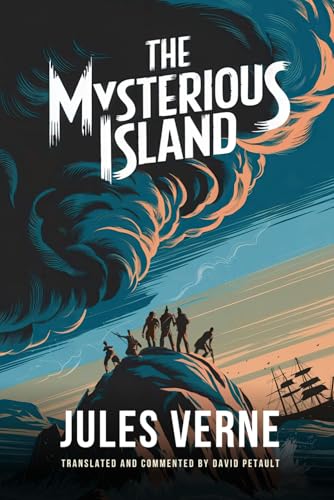
    The Mysterious Island: A New Translation in Modern Accessible English
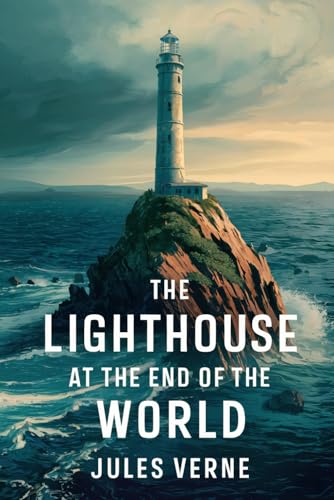
    The Lighthouse at the End of the World: A New Translation
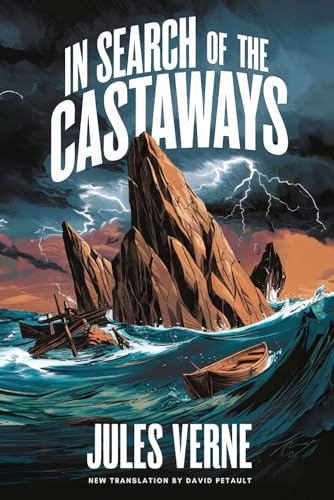
    In Search of the Castaways (The Children of Captain Grant): A New Translation in Modern Accessible English
    Journey to the Center of the Earth: A New Translation in Modern Accessible English
    Propeller Island: A New Translation in Modern Accessible English
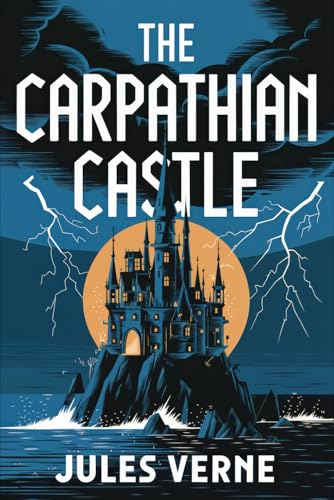
    The Carpathian Castle: A New Translation
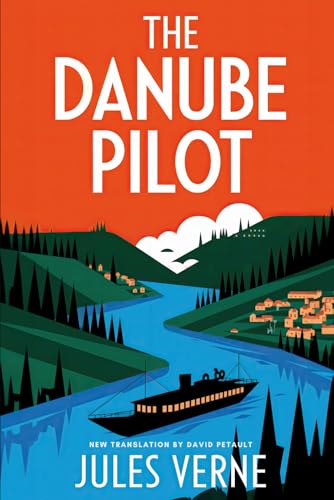
    The Danube Pilot: A New Translation in Modern Accessible English
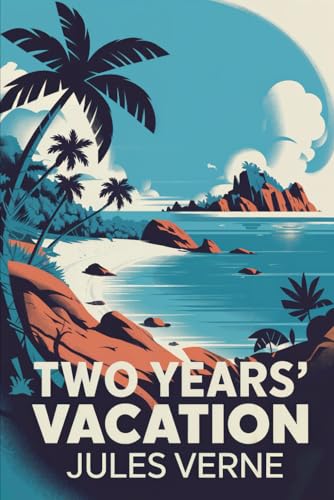
    Two Years’ Vacation: A New Translation

    This post contains affiliate links. As an Amazon Associate, we earn from qualifying purchases.
  • Proust Started a Sentence and Never Stopped

    Proust Started a Sentence and Never Stopped

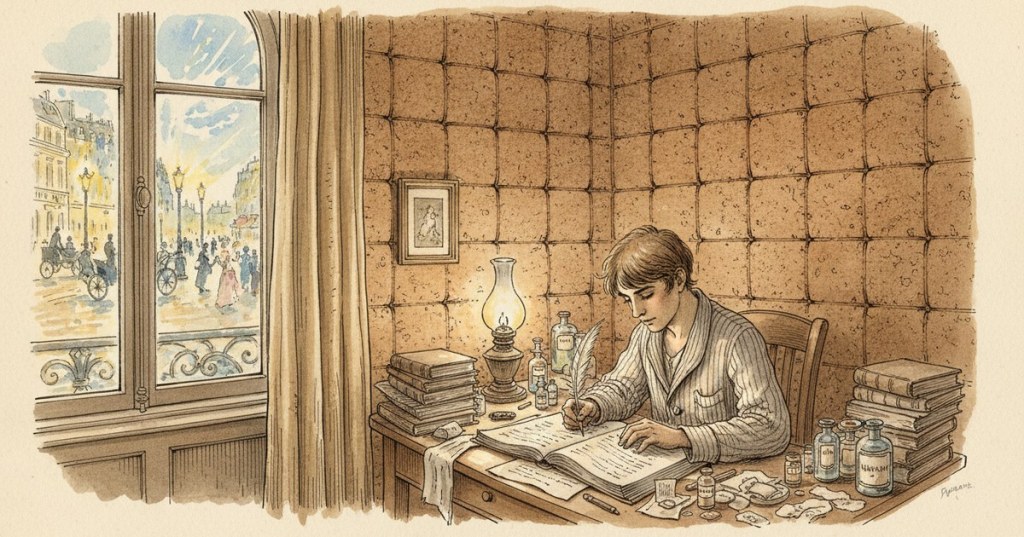
    In 1909, Marcel Proust sat down in a cork-lined bedroom in Paris and began writing a sentence. It ran for several pages. He was describing the experience of waking up, of not knowing where or when you are, of feeling the whole architecture of identity collapse and slowly reassemble itself from nothing but sensation. By the time he died in 1922, he had written 3,000 pages and had not quite finished. The sentence, in a sense, was still going.

    Swann’s Way is the first volume of that sentence. It begins with a man lying in the dark, half-asleep, and it ends with him standing in the street remembering a love affair that destroyed his youth and noticing, with the cold precision of a surgeon, that the woman was not even his type. Everything in between is an argument about time — not time as a calendar records it, but time as the nervous system does: associative, recursive, occasionally merciless. The thesis Proust is running is audacious: that voluntary memory lies, that the past is only genuinely recovered when the body is ambushed by it, and that literature is the only instrument sensitive enough to catch this happening in real time.

    That is what makes Swann’s Way unlike anything else in the canon. Not its length. Not its famous sentences. Its argument.

    The Man Who Built a Cathedral to Stay Indoors

    Proust was born in 1871 to a prominent Paris physician father and a Jewish mother whose family connections opened doors into the upper bourgeoisie. He was brilliant, asthmatic, socially ravenous, and constitutionally unsuited to health. His childhood summers in Illiers — fictionalized as Combray — gave him the landscape of Swann’s Way: the church, the two walks, the hawthorns in bloom, the kitchen smell of a house where time moved differently than in Paris. When his mother died in 1905, he began a grief-driven retreat that accelerated into the cork-lined room on Boulevard Haussmann. He had the room lined to keep out noise and dust. He worked at night. He barely left.

    The isolation wasn’t eccentricity for its own sake. Proust needed silence because he was attempting something that required absolute concentration: to reconstruct, with total fidelity, the precise texture of consciousness moving through time. His asthma forced him inward; his grief demanded it stay there. The result is a novel written from the inside of a mind that has nothing left to do but remember — and has learned, through suffering, to distrust everything memory presents without the body’s confirmation.

    He died of pneumonia in November 1922, correcting proofs in bed. The final volumes were published posthumously. He had spent the last years of his life writing death — his narrator’s slow understanding that time had passed and could not be recovered except in the one way that mattered, which was this: the book itself.

    What the Madeleine Actually Does

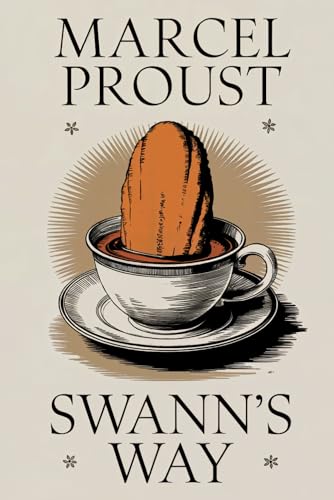
    Everyone knows the madeleine. What most people don’t know is that Proust uses it as a trap. The narrator dips a madeleine into lime-blossom tea, and something unlocks — not a postcard memory, not a nostalgic haze, but a full sensory resurrection so complete it produces joy disproportionate to any deliberate act of remembering. He spends several pages analyzing why. He is not being indulgent. He is making his case: that the past locked in involuntary memory is the only past that remains entirely real, and that the self who recovers it is, for that moment, standing outside time. The madeleine is not a warmth-and-cookies moment. It is a philosophical proof-of-concept.

    The rest of Swann’s Way tests and complicates the proof. The Combray section, written in the long loose rhythms of total recall, gives us childhood as a place where the geometry of two afternoon walks still structures the whole moral universe. “Swann in Love,” the novella nested inside the novel, shifts tense and distance to show us Swann’s obsession with Odette from close enough to feel the shame of it — a man applying the machinery of aesthetic appreciation to a woman who returns none of it, watching himself do it, unable to stop. What Proust shows in that section, with a flatness that verges on cruelty, is that romantic suffering is a form of solipsism: Swann is not in love with Odette, he is in love with his own capacity to suffer over Odette. The reader recognizes this. The recognizing is uncomfortable.

    Why This Translation

    Translation is the central problem with Proust in English. The sentences need to hold their shape — their long, breath-consuming, subordinate-clause-stacking shape — without collapsing into parody or ironing themselves into clarity Proust never intended. This new translation of Swann’s Way takes those sentences seriously as formal objects, preserving their characteristic rhythm while keeping them navigable for a reader encountering Proust for the first time. If you’ve been putting Proust off because you’re not sure you have the patience, this is the edition to start with — and it’s available here in paperback.

    A word on the patience question: you don’t need more of it than usual. You need a different kind. Proust doesn’t ask you to endure; he asks you to slow down to the speed of a mind actually thinking. Once you match that speed, the length stops being a problem. The only difficulty is that when it’s over, ordinary prose feels slightly impoverished by comparison.

    Swann's Way (In Search of Lost Time Vol. 1): A New Translation

    Swann's Way (In Search of Lost Time Vol. 1): A New Translation

    by Marcel Proust

    Buy Paperback

    More from Marcel Proust

    Pleasures and Days: A New Translation
    In the Shadow of Young Girls in Flower (In Search of Lost Time Vol. 2): A New Translation
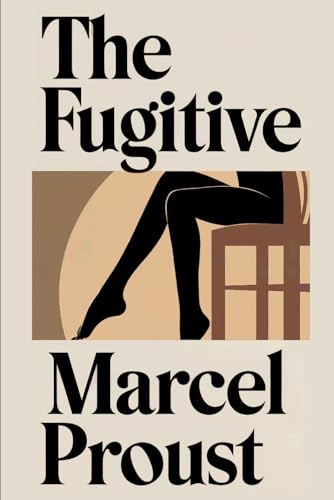
    The Fugitive (In Search of Lost Time Vol. 6): A New Translation
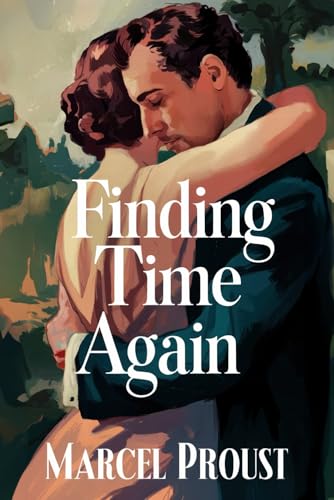
    Finding Time Again (In Search of Lost Time Vol. 7): A New Translation
    The Prisoner (In Search of Lost Time Vol. 5): A New Translation
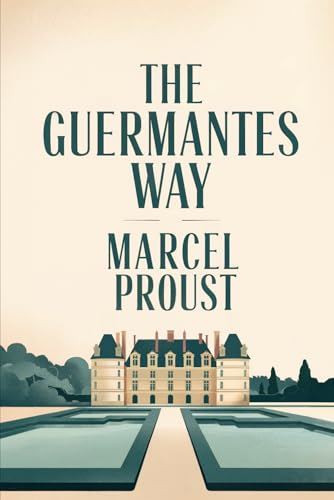
    The Guermantes Way (In Search of Lost Time Vol. 3): A New Translation
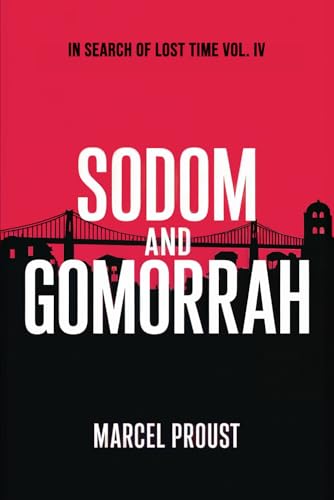
    Sodom and Gomorrah (In Search of Lost Time Vol. 4): A New Translation

    This post contains affiliate links. As an Amazon Associate, we earn from qualifying purchases.
  • Hugo Built Notre-Dame. The Church Burned It Down.

    Hugo Built Notre-Dame. The Church Burned It Down.

    In 1482, the Cathedral of Notre-Dame de Paris had a problem: nobody cared about it. The building was crumbling, its statues defaced, its portals encrusted with grime. Medieval architecture was considered barbaric—the word “Gothic” was itself an insult. City planners had been chipping away at the old stone for years, adding windows here, tearing out chapels there. Then Victor Hugo sat down and wrote a novel. Within a decade, restoration had begun. Within a generation, Viollet-le-Duc had given Notre-Dame its iconic spire—a spire that never existed before Hugo’s book made the cathedral impossible to ignore.

    That’s the peculiar violence of Hugo’s achievement. He didn’t describe Notre-Dame. He manufactured its aura. He made it so densely inhabited by Quasimodo’s longing and Frollo’s damnation and Esmeralda’s doomed grace that the stones themselves became emotional architecture. When the roof burned in April 2019, the shock that went around the world wasn’t grief for a medieval building. It was grief for a place Hugo had made sacred. The Church, which had spent centuries treating the cathedral as a utility, was saved—twice over—by a novel it would not have endorsed.

    That’s the thesis Hugo earns: literature can do what institutions cannot. A building survives because a story made it matter. The Hunchback of Notre-Dame is not a love story, not really, and it’s barely a gothic melodrama. It’s an argument—sustained, furious, and occasionally dazzling—that beauty has a right to exist and that power, whether clerical or civil, destroys beauty at its own peril.

    The Man Who Loved Buildings More Than He Loved People

    Hugo was twenty-nine when he published Notre-Dame de Paris in 1831, and he was already angry. The July Revolution had just toppled Charles X; the Romantics were fighting with the Classicists over the soul of French literature; Haussmann hadn’t yet taken a sledgehammer to medieval Paris, but the intention was visible. Hugo had been documenting condemned buildings since he was a teenager, sketching doorways and towers and gargoyles the way another young man might sketch girls. He understood that architecture was text—that the cathedral was a book in stone, written by anonymous hands over three centuries, and that erasing it was a form of censorship.

    His obsessive, forty-page chapter on the cathedral—a chapter that stops the novel dead in its tracks and that every publisher since 1831 has considered cutting—is not a digression. It’s the argument. Hugo believed that the printing press had made cathedrals obsolete as repositories of meaning, but he also believed that made them more precious, not less. The chapter exists because he understood that his novel was itself an act of restoration, that words could do what mortar couldn’t. That self-awareness shapes everything that follows: the deformed bell-ringer who loves beauty he can never possess, the archdeacon who hoards knowledge until it devours him, the dancer who is all surface and no safety. Each character is a theory about what happens when a society fails to protect the things it creates.

    The biographical fact that matters here isn’t Hugo’s politics or his exile or his legendary appetite for other people’s wives. It’s that he spent a decade watching Paris consume itself and decided the best weapon against forgetting was to make you love a specific gargoyle on a specific tower at a specific hour of the morning. That precision—that refusal to be vague about beauty—is why the novel still works.

    What the Book Actually Does to You

    The Hunchback of Notre-Dame is structurally strange in ways that modern readers aren’t warned about. The first hundred pages are a carnival—chaotic, comic, almost Dickensian in their appetite for grotesque detail. Quasimodo doesn’t appear until you’ve already been lost in the crowd for a while, and when he does appear, crowned Pope of Fools and pelted with garbage, the shift in register is so violent it lands like a fist. Hugo wants you to have laughed before he makes you ashamed of laughing.

    What the novel does with Frollo is more disturbing than anything in its reputation suggests. He is not simply a villain. He is a man who has spent his life in the disciplined pursuit of understanding and has arrived, methodically, at evil. His obsession with Esmeralda isn’t passion—it’s the final, logical destination of a mind that has learned to treat other people as problems to be solved. Hugo renders his descent not with horror-movie theatrics but with the flat, clinical patience of someone who has watched intelligent men ruin everything they touch in the name of certainty. The scene where Frollo watches Esmeralda from a window—wanting her and wanting her destroyed in the same moment—is one of the more honest portraits of a particular kind of masculine damage that nineteenth-century literature produced. It hasn’t aged. That’s the uncomfortable part.

    Why This Translation

    Hugo’s French is beautiful and it is also relentless—long sentences that accumulate pressure like water behind a dam, passages of architectural description that demand patience, slang and street Latin and ecclesiastical terminology layered into the same paragraph. Most Victorian translations preserved the grandeur and lost the energy, producing a Hugo who sounds like he’s delivering a sermon. This new translation keeps the drive. The sentences breathe. Quasimodo’s inner life is rendered with the plainness it deserves—not poeticized, not sentimentalized, just present—and Frollo’s monologues retain the cold intelligence that makes him genuinely frightening rather than merely theatrical. If you’ve tried Hugo before and found him airless, try again here. The cathedral is still standing. Get the paperback or the ebook edition here.

    Notre-Dame burned, and within hours a billion dollars in donations had materialized to rebuild it. Hugo would have found that both gratifying and insufficient. You can restore the stones. The question his novel keeps asking—what a society destroys when it destroys what it finds inconvenient—doesn’t have a restoration fund.

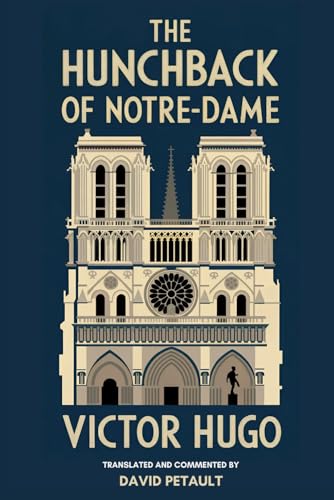
    The Hunchback of Notre-Dame : A New Translation in Modern Accessible English

    The Hunchback of Notre-Dame : A New Translation in Modern Accessible English

    by Victor Hugo

    Buy Paperback

    More from Victor Hugo

    Ninety-Three: A New Translation
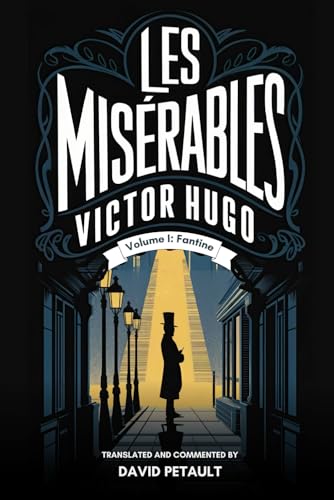
    Les Misérables - Volume 1: A New Translation in Modern Accessible English
    The Last Day of a Condemned Man: A New Translation
    Les Misérables - Volume 3: A New Translation in Modern Accessible English
    Les Misérables - Volume 2: A New Translation in Modern Accessible English
    Les Misérables - Volume 4: A New Translation in Modern Accessible English
    The Toilers of the Sea: A New Translation
    Les Misérables - Volume 5: A New Translation in Modern Accessible English

    This post contains affiliate links. As an Amazon Associate, we earn from qualifying purchases.
  • The Three Musketeers Is Not What You Think It Is

    The Three Musketeers Is Not What You Think It Is

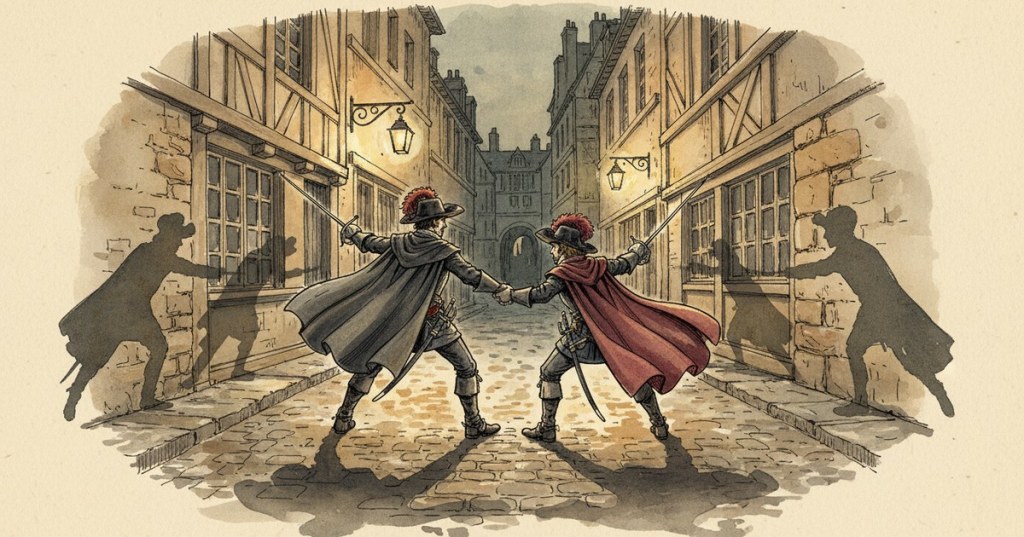
    There is a moment, somewhere in the first fifty pages of The Three Musketeers, when a young Gascon with an ugly horse and an uglier temper manages to schedule three separate duels with three separate men before noon on the same day — and then discovers that all three are friends. Any other writer would have turned this into a disaster. Dumas turns it into the founding of a brotherhood. That whiplash — catastrophe becoming camaraderie in a single paragraph — is the whole engine of the book, and nobody has ever done it better.

    We think we know this story. The films have made sure of that: swashbuckling, capes, a few sword fights, Porthos being loud. But the novel is something stranger and more furious than any of its adaptations have admitted. It is a book about loyalty tested to breaking point, about political power and who it actually crushes, about a woman (Milady de Winter) who is easily the most dangerous intelligence in France — and who the heroes ultimately murder for it. If you came to The Three Musketeers through Hollywood, you have been lied to, pleasantly, for years. The real thing is wilder, darker, funnier, and more morally uncomfortable than any movie had the nerve to show you.

    The question is whether you can get to the real thing. Most English translations have stood between you and Dumas like a well-meaning chaperone — correct, a little stiff, quietly draining the energy from a prose style that in the original runs like a man late for a duel. This new translation is the argument that you don’t have to settle for that anymore.

    The Man Who Wrote Faster Than History Could Keep Up

    Alexandre Dumas was born in 1802 in Villers-Cotterêts, a provincial town north of Paris, the son of a general and the grandson of a Haitian enslaved woman named Marie-Cessette Dumas, whose surname his father took. That lineage mattered — it shaped how Dumas was received, dismissed, and eventually written out of the literary canon that his contemporaries grudgingly admitted he dominated. He arrived in Paris at twenty with almost nothing: a letter of introduction, a gift for penmanship, and an appetite for theatre, history, and argument that never once dimmed.

    He taught himself to write by reading everything. He crashed the Romantic movement just as it was cresting, watched Victor Hugo storm the Comédie-Française with Hernani, and understood immediately what the age wanted: drama, sensation, color, speed. His plays made him famous first. Then, in 1844, two things happened almost simultaneously: The Three Musketeers began its serialization in Le Siècle, and The Count of Monte Cristo began in Journal des Débats. Within twelve months, he had written two of the most-read novels in the history of French literature. He was doing it, by his own account, while running a salon, directing a theatre, entertaining half of Paris, and spending money at a rate that alarmed everyone who watched.

    He worked with collaborators — Auguste Maquet most famously on the Musketeers novels — and this has been used against him ever since, as though collaboration were a form of cheating rather than the normal condition of serialized popular fiction in the 1840s. What Maquet provided was historical scaffolding: the research, the period detail, the document in the Bibliothèque nationale that seeded the idea. What Dumas provided was everything else: the dialogue, the pace, the characters who leap off the page still breathing. No one reading Athos’s scene with Milady at the inn — arguably the most quietly devastating confrontation in the entire novel — has ever wondered who actually wrote it.

    Four Men, One Impossible Standard of Friendship

    The Three Musketeers does something that very few adventure novels have ever managed: it makes you believe in the friendship before it earns it. D’Artagnan arrives in Paris broke and ridiculous, and within two chapters he is fighting alongside men he met hours ago as though they have known each other for a decade. It should feel false. It doesn’t, because Dumas understands that some alliances are legible the moment they form — that certain people recognize each other instantly, and that recognition is its own kind of intimacy. The book is, underneath everything else, a study in what it means to be the kind of person others will run toward trouble alongside.

    But Dumas is too honest a novelist to leave it there. Each musketeer carries a private grief that the camaraderie doesn’t cure — only, occasionally, lightens. Athos drinks because of a wound so old he can barely name it. Aramis wants God and keeps choosing pleasure instead, with a scholar’s ability to justify anything. Porthos wants status with the same naked hunger he’d be mortified to admit. These are not decorative character details. They are the load-bearing walls. And when Milady de Winter enters the novel — cool, brilliant, and catastrophically wronged by the very men the book is asking you to cheer for — Dumas quietly places a crack in the foundation that he never quite bothers to repair. He doesn’t want it repaired. He wants you to feel it.

    Why This Translation, and Why Now

    Every generation of readers deserves a Three Musketeers that doesn’t make them work against the prose to get to the story. Older English versions — some of them produced in the Victorian era by translators who treated Dumas’s propulsive rhythm as something to be calmed down — have given generations of readers an experience closer to a museum diorama than to a novel. The language sits behind glass. This new translation removes the glass. The dialogue runs fast and natural. The action sequences have the kinetic clarity they have in French — you always know where everyone’s sword is. And the novel’s considerable humor, which is often the first casualty of a cautious translation, arrives intact: dry, sudden, and perfectly placed.

    The paperback edition includes a translator’s note and a short historical preface that locates the novel in its actual moment — Louis XIII’s France, Richelieu’s shadow over everything, a kingdom that ran on patronage and whispered favors — without turning the book into homework. You get enough context to understand the stakes. Then you get out of the way and let Dumas run. That is, ultimately, the only correct approach to this novel. It has been making readers miss sleep for a hundred and eighty years. This translation earns its place in that lineage.

    Somewhere in the second half of this book, d’Artagnan will do something that costs him more than he bargained for, and the four men will end up on the wrong side of a wall at dawn, with enemies on three sides and an argument about honor that could only happen between people who have staked everything on each other. You will not want to put it down. The eighteenth century read it that way. The nineteenth did too. There is no good reason for the twenty-first to be any different.

    The Three Musketeers : A New Translation in Modern Accessible English

    The Three Musketeers : A New Translation in Modern Accessible English

    by Alexandre Dumas

    Buy Paperback

    More from Alexandre Dumas

    Twenty Years After (The Three Musketeers Sequel) : A New Translation in Modern Accessible English
    The Black Tulip: A New Translation
    The Count of Monte Cristo (Volume 1): A New Translation
    The Count of Monte Cristo (Volume 3): A New Translation
    The Count of Monte Cristo (Volume 2): A New Translation
    Queen Margot - Book 1: A New Translation
    The Mohicans of Paris - Book 1: A New Translation
    The Count of Monte Cristo (Volume 4): A New Translation

    This post contains affiliate links. As an Amazon Associate, we earn from qualifying purchases.