
Imagine you are a fifty-year-old man who has lost everything — your home, your political career, your city, most likely your children — and you sit down to write the greatest poem in the Western tradition. Not out of triumph. Out of fury and grief and a desperate need to make sense of a world that has gone catastrophically wrong. That is the condition under which Dante Alighieri began The Divine Comedy in exile, sometime around 1308, six years after Florence’s Black Guelph faction seized power, stripped him of his property, and sentenced him to be burned alive if he ever returned. He never did return. He spent the last nineteen years of his life as a wandering guest in other men’s courts, writing a poem about how the universe is, at its core, ordered and just. The audacity of that project, given the circumstances, is almost too large to process. The poem is the argument Dante made against his own despair.
And yet here we are, seven centuries later, and The Divine Comedy still asks the question that no other text in literary history has asked with quite the same unnerving directness: What does it actually feel like to be lost? Not metaphorically. Not spiritually in the abstract. Lost in the middle of the road of your life, in a dark wood, with the right way gone. Dante opens his poem in the first person. He opens it in the present tense. He opens it with the word Nel mezzo — in the middle. Right there, before the first circle of Hell, before Virgil appears out of the shadows, before a single sinner is named, Dante has already done something that Homer never did: he has put you inside the experience. He is not telling you the story. He is handing you the disorientation.
The Politician Who Built a Cathedral Out of Revenge
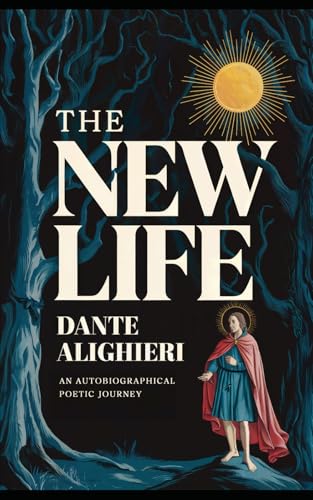
Dante Alighieri was born in Florence around 1265, into a minor noble family that had enough social standing to give him an education and enough financial fragility to make ambition necessary. He studied philosophy, theology, and rhetoric with serious intensity, and by his twenties he was already circulating sonnets among the Florentine literati with the confidence of someone who knew exactly what he was doing. He fell in love — or something that function like love with metaphysical upgrades — with a woman named Beatrice Portinari when he was nine years old. He saw her in the street. He was so affected that he wrote about it in La Vita Nuova as if it were a revelation. She died in 1290, at twenty-four, and Dante never stopped building her into something larger than any human being could actually contain.
But he was not only a poet. He was a politician, and a serious one. He served as one of Florence’s six priors — the highest governing body — in 1300, a role that required him to make brutal decisions, including the exile of his own close friend and mentor Guido Cavalcanti. The Black Guelph coup two years later undid all of it. When Dante was away from the city on a diplomatic mission to Rome, the coup happened. He never set foot in Florence again. The city offered him amnesty in 1315 — on the condition that he pay a substantial fine and march through the streets in public penance. He refused. He wrote back, essentially, that he would rather die in exile than accept humiliation as the price of return. He died six years later in Ravenna, probably of malaria, in September 1321, weeks after finishing Paradiso.
That refusal matters for understanding the poem. The Divine Comedy is, among other things, an act of total aesthetic revenge on everyone who wronged him. Pope Boniface VIII — who engineered much of Dante’s political destruction — ends up in Hell, assigned there while he is still alive, his place being held for him. Corrupt Florentine bankers, treacherous popes, scheming cardinals: Dante puts them all in the pit and lets Virgil explain, with elegant Latinate calm, exactly why the punishment fits the crime. There is something almost unseemly about the satisfaction he takes in this, and that unseemliness is part of what makes the poem feel so startlingly alive. This is not a saint writing about sinners from a distance. This is a furious, specific, still-wounded human being who has constructed a theological architecture grand enough to smuggle his personal grievances into eternity.
Three Realms, One Argument
The structure of The Divine Comedy is famous enough that it risks becoming background noise: Hell, Purgatory, Heaven, one hundred cantos, terza rima, Virgil as guide below, Beatrice above. What gets lost in that summary is how relentlessly the poem insists that ideas have physical consequences. In Dante’s Hell, the punishment is always a precise mirror of the sin — the lustful are eternally swept in a storm because they let passion sweep reason away; the corrupt politicians are submerged in boiling pitch because they dealt in hot, hidden transactions. This is not whimsy. It is a cosmological claim: that what we choose, we become. That character is not merely revealed by action but is action, accumulated and made permanent. Dante’s Hell is terrifying not because it involves suffering but because the suffering makes a kind of horrible sense. You look at each soul and you understand, with a pang of recognition, exactly how someone gets there.
And then Paradiso — the canticle most readers abandon — does something almost no poem has managed before or since: it tries to describe what it feels like to understand something perfectly. Not to believe. Not to hope. To actually know, in your bones, that the universe is held together by love. Dante’s radiant final vision, where all scattered things are bound into one volume, is not escapism. It is the answer to the dark wood. It is what the exile earned by walking through the worst of it and refusing to look away.
Why This Translation?
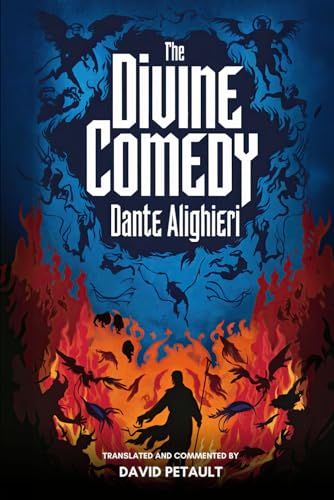
The challenge with Dante has always been the same: the poem operates in three registers simultaneously — the theological, the political, and the deeply personal — and most translations sacrifice one to serve the others. This new modern English version is built on a different premise: that clarity is not the enemy of depth. The language is clean and current without being casual, preserving the emotional momentum of Dante’s terza rima while letting contemporary readers feel the poem moving beneath them like a current rather than grinding through it like a machine. Footnotes are kept spare, placed where they genuinely unlock meaning rather than perform scholarship. The result is a Divine Comedy that reads like what it actually is: a man writing at full pitch, under extreme pressure, with everything at stake — which is, when you think about it, the only kind of poem worth reading at all. The paperback edition makes this one of the most approachable entry points into the poem that English-language readers have ever had. Pick it up. Go into the dark wood. That is always where the journey starts.
More from Dante Alighieri
This post contains affiliate links. As an Amazon Associate, we earn from qualifying purchases.
 Classics Retold