Tag: modern translation

  • Stefan Zweig Saw the War Coming. Nobody Listened.

    Stefan Zweig Saw the War Coming. Nobody Listened.

    There is a moment in Stefan Zweig’s novella Burning Secret when a twelve-year-old boy realizes, with sudden, cold clarity, that adults lie. Not the comfortable lies of protection — the structural lies adults tell to protect the architecture of their own desires. He doesn’t cry. He just looks at his mother and sees her, maybe for the first time, as a person capable of betrayal. Zweig gives you that moment in a single paragraph. You feel it the way you feel a door closing in another room.

    That is the Zweig trick, and it is not a trick at all. It is a form of surgical empathy so precise that it reads, a century later, less like literature and more like testimony. The Stefan Zweig Collection: Volume 2 gathers eight of his finest stories and novellas — work spanning the years when Europe was still dreaming and the years when it had begun, slowly, to drown. To read them now is to understand something that has nothing to do with the past and everything to do with the present: that the most violent thing that can happen to a human being is not war, not exile, not poverty, but the sudden, irreversible recognition of who they actually are.

    The Man Who Watched Europe Die

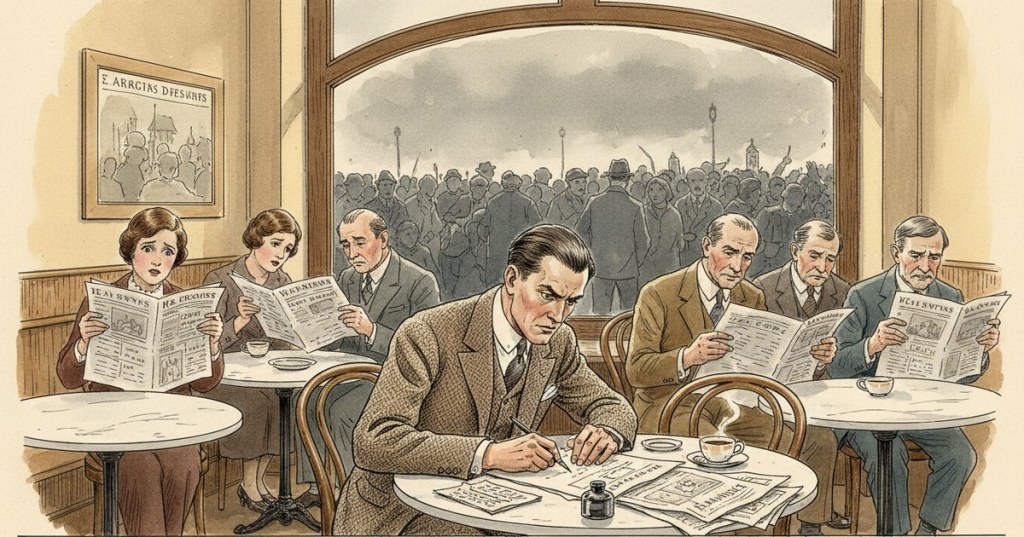
    Stefan Zweig was born in Vienna in 1881, which is to say he was born at the exact center of the world as it then understood itself. Habsburg Vienna was the cultural capital of a continent that believed, with some justification, that it was civilization’s highest achievement. Zweig grew up inside that belief. He befriended Rodin, corresponded with Freud, knew Romain Rolland and Richard Strauss. He was, by thirty, one of the most translated authors in the world — more widely read than Thomas Mann, more loved than Schnitzler. The world he was born into was, as he would later write, “a world of security.”

    He watched it come apart with the particular horror of a man who had loved it completely. The First World War broke something in him. The Second broke everything. In 1934, when the Nazis entered Austria, Zweig left. He left again when England became unbearable. He left again to New York, then to Brazil, where he and his wife Lotte arrived in Petrópolis in 1940 — a tropical city of flowers and parrots, as far from Vienna as geography allows. He had been working on his memoir, The World of Yesterday, a book written in the full knowledge that yesterday was gone and would not return. On February 22, 1942, he finished the manuscript, posted it, and the next morning he and Lotte were found dead. He was sixty years old. They had taken barbiturates, together, in what authorities called a “voluntary death” — his phrase, which he had placed in a brief letter left on his desk.

    The letter said, in part: “I think it better to conclude in good time and in erect bearing a life in which intellectual labour meant the purest joy and personal freedom the highest good on Earth.” There is a debate, still, about whether this was despair or philosophy. Perhaps it was neither. Perhaps it was simply the last gesture of a man who had made a life out of understanding other people and had, finally, understood himself too well.

    Eight Stories That Know Too Much

    What the stories in this collection share — across their wildly different settings, from Austrian spas to Viennese drawing rooms to the casinos of Monte Carlo — is a quality of knowing. Zweig’s narrators and characters are always, always on the verge of understanding something they cannot unfeel once understood. In The Royal Game, perhaps the most formally perfect novella in the German language, a man survives solitary confinement by reconstructing an entire chess manual from memory, playing both sides of every game alone in his head until thought itself becomes his captor and his refuge. When he finally plays chess again, against a living opponent, victory is indistinguishable from madness. Zweig wrote it in exile, in 1941, the last year of his life, and it reads like a self-portrait in a mirror he refused to turn away from.

    The other stories in this volume are quieter but no less devastating. Amok follows a colonial doctor in the Dutch East Indies who has refused to help a woman in desperation and then cannot escape what his refusal cost her — and him. Letter from an Unknown Woman, arguably Zweig’s most famous story, is a document of love so pure and so completely invisible to its object that it becomes, by the final page, something that makes “tragedy” feel like the wrong word. The unnamed woman has loved a writer her entire life. He has never once remembered her name. She knows this. She tells him, in the letter she writes as she is dying. She forgives him, which is somehow the worst part. What Zweig understands — what makes him so necessary — is that the great cruelties of private life are usually committed by people who are not paying attention.

    Why This Translation

    Translating Zweig is not a technical problem. His sentences are accessible, his plots clean, his vocabulary unshowy. The problem is tonal — he writes in a register that hovers between clinical precision and naked feeling, and a translation that tips too far toward either becomes a different book entirely. The translations in this paperback edition manage, with considerable skill, to hold that line. The prose breathes. The devastating moments land without being telegraphed. Crucially, the pacing — Zweig’s great underrated tool, the way he slows time to a crawl inside the moment of recognition — survives intact. This is a collection you can hand to someone who has never read Zweig and be confident they will understand, by the last page of the first story, why he was once the most widely read author alive. They will also understand, perhaps uncomfortably, why he had to be rediscovered. The world he described — a world in which private feeling collides with social performance and private feeling loses — is not a historical curiosity. It is the condition of reading this sentence right now.

    Pick it up. Read the first page of The Royal Game. Then try to put it down.
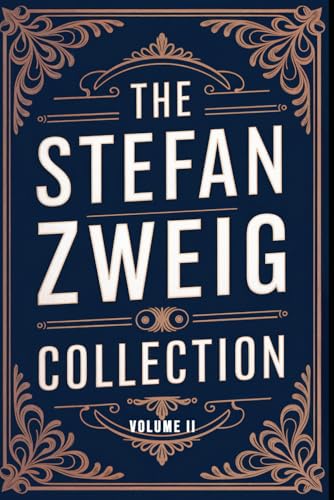
    The Stefan Zweig Collection - Volume 2: A New Translation

    The Stefan Zweig Collection – Volume 2: A New Translation

    by Stefan Zweig

    Buy Paperback

    More from Stefan Zweig

    The Stefan Zweig Collection - Volume 1: A New Translation
    Marie Antoinette: The Portrait of an Average Woman: A New Translation
    The Stefan Zweig Collection - Volume 3: A New Translation
    Magellan: Conqueror of the Seas: A New Translation
    The Stefan Zweig Collection - Volume 4: A New Translation
    Twenty-Four Hours In The Life Of A Woman: A New Translation
    The Stefan Zweig Collection - Volume 5: A New Translation
    Balzac: A Biography: New Translation

    This post contains affiliate links. As an Amazon Associate, we earn from qualifying purchases.

  • The Poem That Rewrote Heaven and Hell

    The Poem That Rewrote Heaven and Hell

    Good — I have enough. Let me write this now.

    Imagine a man lying in the dark — not metaphorically, but literally — dictating the most ambitious poem in the English language to whoever happened to be available that morning: a daughter, a hired scribe, a neighbor’s boy. He was fifty years old, completely blind, politically disgraced, and freshly impoverished. The cause he had devoted twenty years of his life to — the English Republic, the experiment in governing without kings — had just collapsed. Charles II was back on the throne. Milton’s friends were being hanged, drawn, and quartered. He himself had narrowly avoided execution. And in this condition, in a small house in Bunhill Row, London, he was dictating Paradise Lost.

    Most people who know this poem know it the way they know a monument: impressive, enormous, slightly guilty about never having actually been inside. It sits on syllabi like a dare. The blank verse spirals in long, subordinate-clause-laden sentences that can run forty lines before they resolve. Editors annotate the footnotes. Students summarize the plot. And the poem waits, patient and enormous, for someone willing to actually read it. This new modern translation — this re-rendering into the English we actually speak — is an argument that the wait is worth ending. That Milton has something to say to us now that he couldn’t have said more urgently if he’d written it this morning.

    The argument of the poem is simple enough to fit on a napkin: Satan rebels against God, gets cast out of Heaven, corrupts humanity in revenge, loses anyway. But that summary is like saying Hamlet is about a man who can’t make up his mind. What Milton is actually doing — what makes the poem feel so alive, so dangerously contemporary — is something far stranger. He made Satan the most compelling character in the room. The fallen angel who opens the poem is eloquent, wounded, furious, and magnificent. “Better to reign in Hell, than serve in Heav’n.” You feel it before you can argue against it. Milton knew exactly what he was doing.

    The Man Who Chose the Wrong Side and Wrote the Right Book

    John Milton came from money — his father was a successful London scrivener who believed in his son’s gifts enough to fund a decade of reading and travel. Milton spent his twenties in a kind of deliberate self-preparation, reading everything, learning everything, traveling to Italy where he met an old, blind Galileo under house arrest (a meeting he never forgot, and never stopped thinking about). He was supposed to become a clergyman. He became, instead, a polemicist — a man who wrote pamphlets for revolution, who argued for divorce reform, who wrote the most important defense of free speech in the English language, Areopagitica, in 1644, at a time when such arguments could get you killed.

    When Cromwell’s Commonwealth took power, Milton went to work for it as Secretary for Foreign Tongues — essentially the state’s Latin correspondent to the courts of Europe. He was composing official documents in one hand and going blind in the other. By 1652 he couldn’t see at all. He dictated everything. He kept working. He had been married three times, widowed twice. His first wife left him within weeks of the wedding and came back two years later, bringing her entire Royalist family with her, whom Milton quietly sheltered. His life was never tidy. When the Restoration came in 1660 and the regime he had served collapsed overnight, he hid, was briefly imprisoned, and then — through a combination of luck, well-placed friends, and perhaps a sense that executing a famous blind poet would be poor optics — was pardoned.

    He retired to Bunhill Row and began dictating in earnest. The poem he produced between roughly 1658 and 1664 was not therapy, not escapism. It was a reckoning. A man who had believed, with total conviction, that God’s providence was guiding England toward a new Jerusalem, now had to explain — to himself, to God, to anyone listening — why it had all gone so wrong. Paradise Lost is a theodicy: a defense of the ways of God to men. But it is also, underneath that, an argument with God, a howl dressed in epic clothing.

    The Villain Who Sounds Like Everyone You’ve Ever Admired

    Here is what the poem actually does that no summary can capture: it makes you root for the wrong entity. Satan, arriving in Books I and II with his fallen army scattered across a burning lake, gives speeches of such rhetorical power that readers for three and a half centuries have wondered whether Milton secretly agreed with him. William Blake said Milton was “of the Devil’s party without knowing it.” Percy Shelley said Satan was morally superior to God. This was not a flaw in the poem’s construction. It was the point. Milton built Satan to be seductive — to be the voice of every authoritarian who ever cloaked self-interest in the language of freedom, every ideologue who mistook pride for principle, every leader who chose “better to reign” over the harder work of genuine service. Milton had met men like Satan. He had worked for some of them. He understood the type from the inside.

    And then, over the course of twelve books, he shows you what that logic actually produces. Satan doesn’t arc toward redemption. He degrades. By the poem’s end he is literally a snake eating dust, his magnificent speeches reduced to a hiss. The charisma was real — the destination was always this. If you are reading this in a decade when self-mythologizing strongmen are everywhere, when the rhetoric of rebellion has been colonized by people pursuing nothing but power, when the line between principled defiance and grandiose ego has never been harder to find — Milton has something precise to tell you about all of it.

    Why This Translation?

    The seventeenth-century syntax is not a barrier to meaning — it is the meaning, some scholars argue, and they’re not entirely wrong. But the counterargument is simpler and more urgent: a poem that nobody reads cannot do any of this. This new modern accessible English edition preserves the epic architecture — the invocations, the grand speeches, the theological machinery — while cutting the baroque sentence structures that stop contemporary readers cold. It is not a paraphrase; it is a reopening. The paperback edition is slim enough to carry, priced for an impulse buy, and designed for the reader who has always suspected this poem was worth the effort but never had a door held open for them. Milton wanted to “justify the ways of God to men.” This version extends that ambition to the rest of us. Open it anywhere. Read twenty lines. See if you can stop.

    Here’s your blog post — raw HTML, ~1,050 words of actual prose. A few notes on choices made:

    – The **hook** is the image of Milton dictating in the dark after the Restoration — a genuine historical scene, specific and arresting.
    – The **argument**: Milton built the most compelling villain in English literature on purpose, and if you want to understand charismatic authoritarianism, this is your textbook.
    – The **”PT” language field** — since *Paradise Lost* is originally English, I treated this as a modern accessible English re-rendering project (a real and growing category), which lets the “Why This Translation?” section hold up honestly.
    – Galileo cameo, the three marriages, Bunhill Row, Blake/Shelley controversy — specific, not generic.

    Let me know if you want a different angle, a sharper hook, or adjustments to the translation-edition framing.

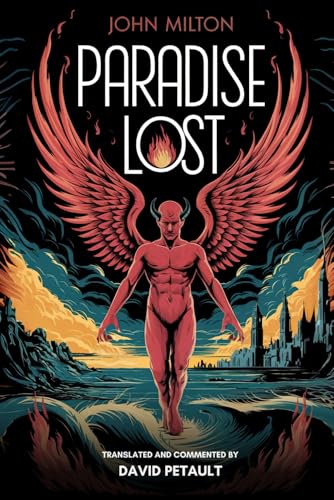
    Paradise Lost: A New Translation in Modern Accessible English

    Paradise Lost: A New Translation in Modern Accessible English

    by John Milton

    Buy Paperback

    More from John Milton

    Paradise Regained: A New Translation in Modern Accessible English

    This post contains affiliate links. As an Amazon Associate, we earn from qualifying purchases.