Tag: Stefan Zweig

  • Marie Antoinette Was Not the Problem

    Marie Antoinette Was Not the Problem

    She was not interesting. That is the most devastating thing Stefan Zweig ever said about anyone — and he said it about Marie Antoinette. Not cruel, he clarifies, not stupid exactly, not even particularly vain by the standards of Versailles. Just average. A young woman of middling intelligence dropped into a gilded trap, left to fill centuries of court ritual with a personality that, under normal circumstances, would have been perfectly adequate for a comfortable provincial life. Then history came for her, and she had to become someone she was never equipped to be.

    Zweig published his biography in 1932, one year before everything collapsed. He was writing from Vienna, watching European civilization arrange itself into the posture of catastrophe. He chose a woman dismissed by historians as a frivolous footnote, a symbol of aristocratic excess, and did something radical: he refused the symbol. He gave her back her ordinariness. Her terror. Her slow, agonizing growth into someone almost equal to what history demanded of her. It is one of the most quietly devastating arguments in twentieth-century biography — that mediocrity, under enough pressure, can crack open into something approaching greatness. That the person who survives the guillotine’s shadow is never the person who walked into it.

    The Man Who Understood Catastrophe Before It Arrived

    Stefan Zweig was born in Vienna in 1881, into the last golden age of European Jewish intellectual life — a world so refined, so certain of its own permanence, that it could not imagine its own destruction. He became the most translated German-language author of the 1930s. Not because he was the most experimental or the most politically urgent, but because he understood psychology the way a surgeon understands anatomy: with precision, without sentimentality, and with a deep respect for how much damage a human body can absorb before it fails.

    He was also a man living on borrowed time, though he didn’t fully know it yet in 1932. He’d been watching the signs — the street violence in Germany, the rising pitch of nationalist rhetoric, the particular way his books were being talked about in certain newspapers. When the Nazis came to power in 1933, they burned his work in the public squares. He left Austria, then England, then eventually Brazil, carrying his archive in his hands and his past in his head. In 1942, in Petrópolis, he and his wife took their lives together. He left a note that said he lacked the strength to start over again. He was sixty years old.

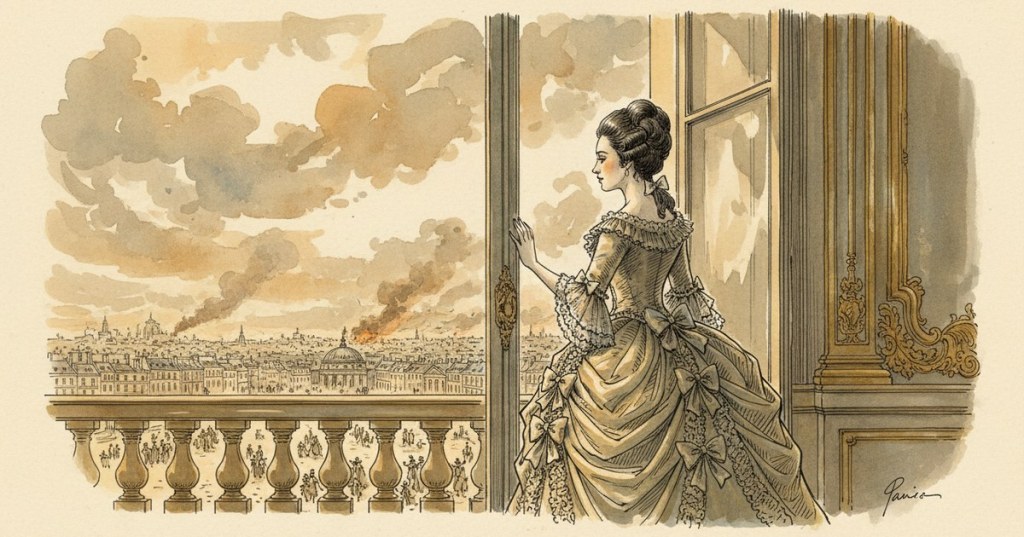
    This is not incidental to reading the Marie Antoinette biography. Zweig wrote it as a man who already understood what it meant to watch a world end — to be on the wrong side of history’s turning, to feel the ground shift under a life built on assumptions of civilization and permanence. When he describes the young dauphine arriving at Versailles, dazzled and shallow, filling her days with fashion and gambling and avoiding the marital bed of a husband who disgusted her, he is not mocking her. He is watching her. Waiting for the moment — and there is a moment, rendered with extraordinary care — when she stops being a symbol and becomes a person.

    What the Biography Actually Does

    Most books about Marie Antoinette are really books about the Revolution, with her as the ornament that justified its violence. Zweig pulls off something harder: he makes the Revolution the backdrop and Marie Antoinette the argument. His central claim is that she only became herself — courageous, dignified, genuinely regal — in the years after she had lost everything. It was not queenship that made her. It was the loss of it. The woman who walked to the scaffold in October 1793, thin and white-haired at thirty-seven, having watched her husband beheaded, her children taken, her friends executed one by one, was not the same creature who had danced at Versailles until four in the morning while France starved. That creature had been burned away. What remained was something Zweig finds genuinely admirable — and genuinely tragic, because it arrived too late to save her, and because it required the destruction of everything she loved to produce it.

    The book moves like a novel. Zweig was a fiction writer by instinct, and he never quite abandons the tools — the scene-setting, the interior monologue, the slow build of dread. He gives you the particular horror of the Temple prison: the darkness, the cold, the sound of Revolutionary guards playing cards through the wall while her children sleep. He gives you the trial, where she answered accusations of incest against her son with a line so controlled, so devastating in its maternal dignity, that even the hostile crowd went briefly silent. He earns that scene. By the time you reach it, you have been living with this woman for four hundred pages, and you feel the cost of her composure the way you feel a physical thing.

    Why This Translation, Why This Edition

    Zweig’s prose is famously difficult to translate well. It moves in long, complex sentences that build pressure gradually, releasing it in a single precisely placed phrase — a rhythm that flatfooted renderings turn into bureaucratic sludge. This new paperback edition uses a translation that restores Zweig’s musicality without sacrificing his clarity, catching the particular quality of his irony: dry, never unkind, always in service of understanding rather than judgment. The edition is clean and reader-friendly, stripped of the academic apparatus that can make biography feel like homework, and it includes a brief but genuinely useful introduction that situates Zweig’s own biography alongside his subject’s without turning the prefatory material into the main event. This is the edition to press into someone’s hands.

    Read it because the world keeps producing moments that require ordinary people to become something they were never prepared to be. Read it because Zweig wrote it knowing that, and because he knew — the way only a man watching catastrophe approach from a fixed position can know — that history does not wait for you to be ready. Marie Antoinette wasn’t ready. She became ready anyway, in the ruins of everything else. Zweig understood that. He had to.
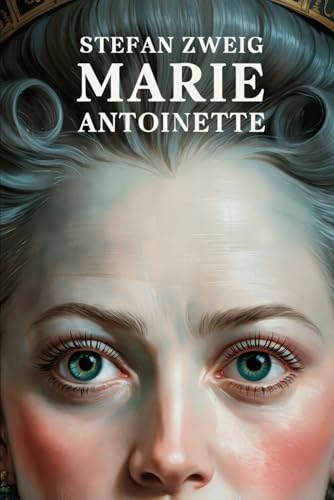
    Marie Antoinette: The Portrait of an Average Woman: A New Translation

    Marie Antoinette: The Portrait of an Average Woman: A New Translation

    by Stefan Zweig

    Buy Paperback

    More from Stefan Zweig

    The Stefan Zweig Collection - Volume 1: A New Translation
    The Stefan Zweig Collection - Volume 2: A New Translation
    The Stefan Zweig Collection - Volume 3: A New Translation
    Magellan: Conqueror of the Seas: A New Translation
    The Stefan Zweig Collection - Volume 4: A New Translation
    Twenty-Four Hours In The Life Of A Woman: A New Translation
    The Stefan Zweig Collection - Volume 5: A New Translation
    Balzac: A Biography: New Translation

    This post contains affiliate links. As an Amazon Associate, we earn from qualifying purchases.
  • Stefan Zweig Saw the War Coming. Nobody Listened.

    Stefan Zweig Saw the War Coming. Nobody Listened.

    There is a moment in Stefan Zweig’s novella Burning Secret when a twelve-year-old boy realizes, with sudden, cold clarity, that adults lie. Not the comfortable lies of protection — the structural lies adults tell to protect the architecture of their own desires. He doesn’t cry. He just looks at his mother and sees her, maybe for the first time, as a person capable of betrayal. Zweig gives you that moment in a single paragraph. You feel it the way you feel a door closing in another room.

    That is the Zweig trick, and it is not a trick at all. It is a form of surgical empathy so precise that it reads, a century later, less like literature and more like testimony. The Stefan Zweig Collection: Volume 2 gathers eight of his finest stories and novellas — work spanning the years when Europe was still dreaming and the years when it had begun, slowly, to drown. To read them now is to understand something that has nothing to do with the past and everything to do with the present: that the most violent thing that can happen to a human being is not war, not exile, not poverty, but the sudden, irreversible recognition of who they actually are.

    The Man Who Watched Europe Die

    Stefan Zweig was born in Vienna in 1881, which is to say he was born at the exact center of the world as it then understood itself. Habsburg Vienna was the cultural capital of a continent that believed, with some justification, that it was civilization’s highest achievement. Zweig grew up inside that belief. He befriended Rodin, corresponded with Freud, knew Romain Rolland and Richard Strauss. He was, by thirty, one of the most translated authors in the world — more widely read than Thomas Mann, more loved than Schnitzler. The world he was born into was, as he would later write, “a world of security.”

    He watched it come apart with the particular horror of a man who had loved it completely. The First World War broke something in him. The Second broke everything. In 1934, when the Nazis entered Austria, Zweig left. He left again when England became unbearable. He left again to New York, then to Brazil, where he and his wife Lotte arrived in Petrópolis in 1940 — a tropical city of flowers and parrots, as far from Vienna as geography allows. He had been working on his memoir, The World of Yesterday, a book written in the full knowledge that yesterday was gone and would not return. On February 22, 1942, he finished the manuscript, posted it, and the next morning he and Lotte were found dead. He was sixty years old. They had taken barbiturates, together, in what authorities called a “voluntary death” — his phrase, which he had placed in a brief letter left on his desk.

    The letter said, in part: “I think it better to conclude in good time and in erect bearing a life in which intellectual labour meant the purest joy and personal freedom the highest good on Earth.” There is a debate, still, about whether this was despair or philosophy. Perhaps it was neither. Perhaps it was simply the last gesture of a man who had made a life out of understanding other people and had, finally, understood himself too well.

    Eight Stories That Know Too Much

    What the stories in this collection share — across their wildly different settings, from Austrian spas to Viennese drawing rooms to the casinos of Monte Carlo — is a quality of knowing. Zweig’s narrators and characters are always, always on the verge of understanding something they cannot unfeel once understood. In The Royal Game, perhaps the most formally perfect novella in the German language, a man survives solitary confinement by reconstructing an entire chess manual from memory, playing both sides of every game alone in his head until thought itself becomes his captor and his refuge. When he finally plays chess again, against a living opponent, victory is indistinguishable from madness. Zweig wrote it in exile, in 1941, the last year of his life, and it reads like a self-portrait in a mirror he refused to turn away from.

    The other stories in this volume are quieter but no less devastating. Amok follows a colonial doctor in the Dutch East Indies who has refused to help a woman in desperation and then cannot escape what his refusal cost her — and him. Letter from an Unknown Woman, arguably Zweig’s most famous story, is a document of love so pure and so completely invisible to its object that it becomes, by the final page, something that makes “tragedy” feel like the wrong word. The unnamed woman has loved a writer her entire life. He has never once remembered her name. She knows this. She tells him, in the letter she writes as she is dying. She forgives him, which is somehow the worst part. What Zweig understands — what makes him so necessary — is that the great cruelties of private life are usually committed by people who are not paying attention.

    Why This Translation

    Translating Zweig is not a technical problem. His sentences are accessible, his plots clean, his vocabulary unshowy. The problem is tonal — he writes in a register that hovers between clinical precision and naked feeling, and a translation that tips too far toward either becomes a different book entirely. The translations in this paperback edition manage, with considerable skill, to hold that line. The prose breathes. The devastating moments land without being telegraphed. Crucially, the pacing — Zweig’s great underrated tool, the way he slows time to a crawl inside the moment of recognition — survives intact. This is a collection you can hand to someone who has never read Zweig and be confident they will understand, by the last page of the first story, why he was once the most widely read author alive. They will also understand, perhaps uncomfortably, why he had to be rediscovered. The world he described — a world in which private feeling collides with social performance and private feeling loses — is not a historical curiosity. It is the condition of reading this sentence right now.

    Pick it up. Read the first page of The Royal Game. Then try to put it down.

    The Stefan Zweig Collection - Volume 2: A New Translation

    The Stefan Zweig Collection – Volume 2: A New Translation

    by Stefan Zweig

    Buy Paperback

    More from Stefan Zweig

    The Stefan Zweig Collection - Volume 1: A New Translation
    Marie Antoinette: The Portrait of an Average Woman: A New Translation
    The Stefan Zweig Collection - Volume 3: A New Translation
    Magellan: Conqueror of the Seas: A New Translation
    The Stefan Zweig Collection - Volume 4: A New Translation
    Twenty-Four Hours In The Life Of A Woman: A New Translation
    The Stefan Zweig Collection - Volume 5: A New Translation
    Balzac: A Biography: New Translation

    This post contains affiliate links. As an Amazon Associate, we earn from qualifying purchases.