Tag: Alexandre Dumas

  • Complete Alexandre Dumas Bibliography & Reading Order

    Complete Alexandre Dumas Bibliography & Reading Order

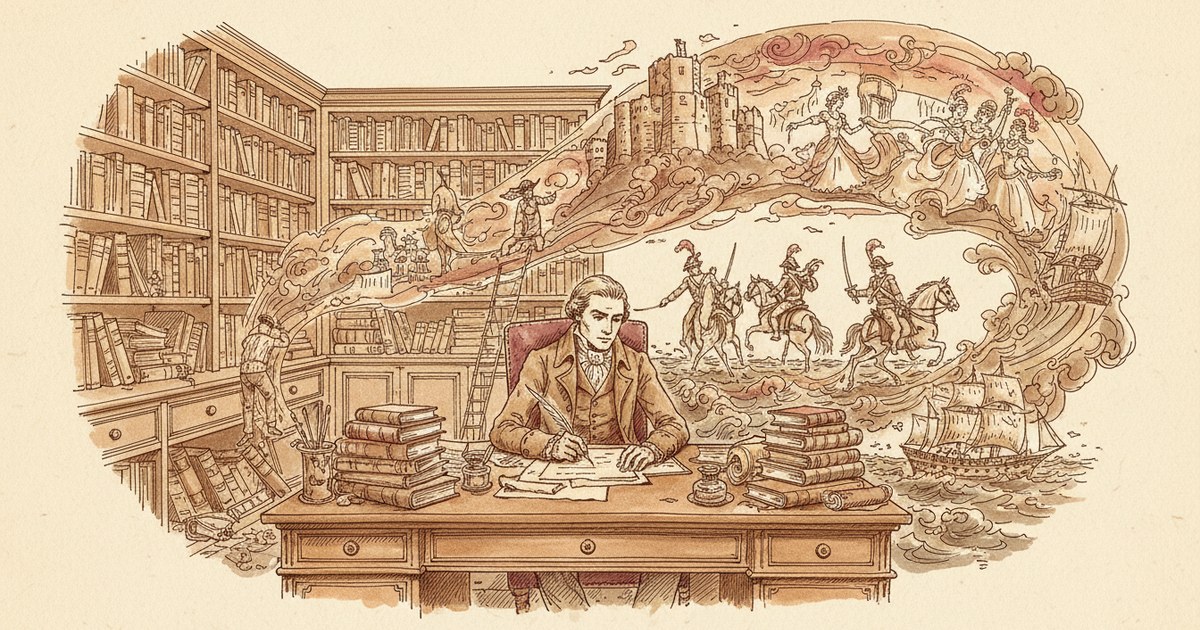
    In 1844, Alexandre Dumas was producing copy at a rate that defied the physics of the quill. He was serializing The Three Musketeers and The Count of Monte Cristo simultaneously, while overseeing a small army of collaborators and managing a private life that was as expensive as it was scandalous. Legend has it that a friend once visited him and found him at a desk, mid-sentence, surrounded by mountains of manuscript. Without looking up, Dumas shouted for a fresh stack of paper; he was moving so fast his assistants couldn’t dry the ink on the previous page before the next one was tossed toward them. This wasn’t a writer at work; it was a factory of the imagination, a man who treated narrative like a high-speed chase.

    To read Dumas today is to realize that the 19th-century “doorstop” novel was not always a slow, pastoral affair. Dumas’s prose moves with a theatrical, percussive energy that predates the cinematic cut. His characters don’t just walk into rooms; they burst through doors, swords drawn, or they arrive via secret passages with a confession that changes the course of French history. His genius was speed. He understood that a reader will forgive almost any historical inaccuracy if the pace never falters. He wrote for the pulse, not the academy, and because he produced nearly 250 volumes of work, a new reader faces a daunting task: finding the entry point into a catalogue that feels less like a library and more like an entire ecosystem.

    The thesis of the Classics Retold approach to Dumas is simple: his work is an engine. If you start with the right spark, the momentum carries you through thousands of pages. If you start with the wrong gear—a dry, Victorian translation or a minor historical curiosity—you might miss the fact that Dumas is arguably the most “modern” writer of his century. He did not describe the world; he animated it. To navigate his bibliography is to choose a path through a life that was just as improbable as his fiction.

    The General’s Grandson and the Theatre of History

    Dumas was the grandson of Marie-Cessette Dumas, an enslaved Haitian woman, and a French nobleman. His father, Thomas-Alexandre Dumas, rose to become a legendary general under Napoleon—a man of such immense physical strength and tactical brilliance that he was nicknamed “the Black Devil” by his enemies. When the General died young and penniless, the young Alexandre was left with nothing but his father’s name and a desperate, driving ambition. He didn’t come to literature through the university; he came through the theatre. He arrived in Paris with a handful of francs and a handwriting so elegant it landed him a clerkship, but his real work happened at night, watching the melodramas that gripped the city.

    This theatrical background is the key to every page he ever wrote. Dumas never lost the playwright’s sense of the “beat.” He knew when to end a chapter on a cliffhanger because his early success depended on keeping a live audience in their seats. When he pivoted to the historical novel, he brought that stagecraft with him. He treated history not as a set of cold facts to be respected, but as a wardrobe of costumes to be inhabited. “History,” he famously quipped, “is a nail upon which I hang my novels.” His mixed-race heritage and his status as an outsider in the Bourbon Restoration gave him a specific vantage point: he understood the mechanics of power, the sting of social exclusion, and the intoxicating rush of the self-made man. These aren’t just themes in his books; they are the autobiography of his style.

    The sheer scale of his output led to accusations that he was merely a “factory owner” who signed his name to the work of others. While it is true that he employed collaborators—most notably Auguste Maquet, who helped with historical research and plot outlines—the final “music” of the prose was always Dumas’s. Maquet provided the skeleton; Dumas provided the blood, the breath, and the wit. He was a man who lived as largely as he wrote, building a literal “Chateau de Monte Cristo” outside Paris, hosting banquets for hundreds, and eventually dying in the arms of his son (Alexandre Dumas fils, the author of The Lady of the Camellias) after a life that had exhausted several fortunes and several lifetimes’ worth of ink.

    Mapping the Dumasian Epic

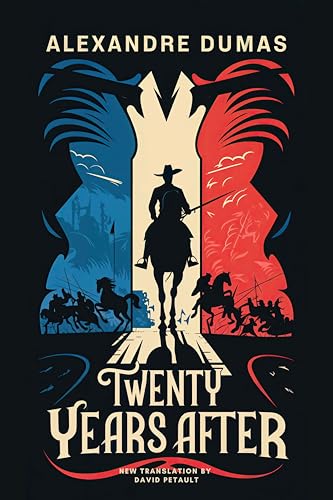
    The Dumas bibliography is built around several massive cycles, the most famous being the “D’Artagnan Romances.” This isn’t just a book called The Three Musketeers; it is a sprawling, multi-decade saga that tracks the evolution of four friends from the hot-headed idealism of youth to the weary cynicism of middle age. If The Three Musketeers is about the joy of the blade, its sequels—Twenty Years After and the massive The Vicomte de Bragelonne—are about the weight of time and the betrayal of politics. Reading them in order is one of the great pleasures of Western literature, as you watch the “Inseparables” navigate the shifting sands of the French court, eventually culminating in the tragic, high-stakes drama of The Man in the Iron Mask.

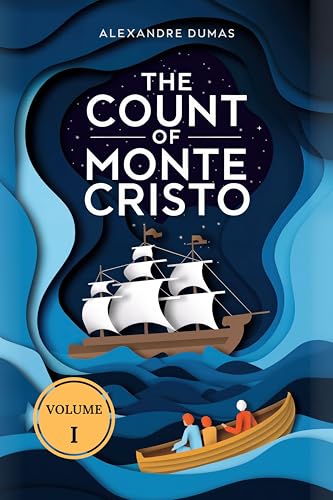
    Parallel to the Musketeers is the Valois cycle, which begins with Queen Margot. Here, Dumas dives into the blood-soaked religious wars of the 16th century. It is a darker, more claustrophobic world than that of D’Artagnan, centered on the terrifying Catherine de’ Medici and the St. Bartholomew’s Day Massacre. These books are less about swordplay and more about poison, secret pacts, and the psychological toll of living in a palace where every hallway hides a spy. Then, of course, there is the standalone masterpiece: The Count of Monte Cristo. It is the ultimate story of transformation and vengeance, a book that moves from the damp misery of the Chateau d’If to the glittering, drug-fueled decadence of 19th-century Paris. It is a massive work, but it reads with the urgency of a thriller because Dumas never forgets that the reader is waiting for the next blow to fall.

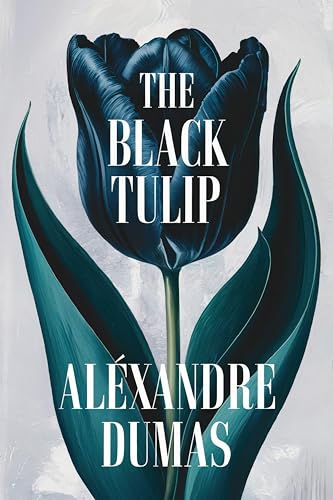
    For the reader looking for something tighter, The Black Tulip offers a masterclass in his more focused style. Set during the Dutch “Tulip Mania” of the 17th century, it combines a political conspiracy with a tender romance and a horticultural obsession. It shows that Dumas didn’t always need a war to create tension; he could make the blooming of a flower feel as dangerous as a duel at dawn. Whether he was writing about a tulip or a revolution, his focus was always on the “life” of the scene—the sensory details, the sharp dialogue, and the relentless forward motion of the plot.

    The Translation Trap: Why Modern English Matters

    For over a century, the English-speaking world was served Dumas through the filter of Victorian-era translators who were often paid by the word and terrified of the author’s racier impulses. These early versions tended to flatten his dialogue, turning his sharp, staccato exchanges into long-winded, formal speeches that sound more like a sermon than a conversation. They also frequently cut “unnecessary” descriptions or subplots to save on printing costs, effectively lobotomizing the author’s grand designs. If you have ever tried to read Dumas and found him “dry” or “slow,” you weren’t reading Dumas; you were reading a Victorian ghost of him.

    Modern English translations are essential because they restore the theatrical “snap” of the original French. Dumas wrote for the ear; his characters speak in short, punchy sentences that reveal their personalities through action rather than exposition. A modern edition honors this by preserving the rhythm of the prose and the grit of the historical setting. When you read a contemporary version of The Three Musketeers, you feel the dust of the road and the heat of the tavern; the humor is actually funny, and the stakes feel real. These are the versions that capture the “Classics Retold” spirit—bringing the urgency of the past into the clarity of the present.

    To begin your journey into this high-octane world, we recommend starting with the Classics Retold edition of The Three Musketeers, which maintains the breakneck speed of D’Artagnan’s first arrival in Paris. For those ready to commit to the ultimate tale of revenge, the first volume of The Count of Monte Cristo provides the essential foundation for Edmond Dantès’s transformation. And if you prefer a standalone story that highlights Dumas’s skill with suspense and romance on a smaller scale, The Black Tulip is an ideal next step. These modern translations ensure that the “engine” of Dumas’s prose never stalls, allowing you to experience the work exactly as the 19th-century public did: with wide eyes and a racing pulse.

    Is it necessary to read the Three Musketeers sequels?

    While The Three Musketeers works perfectly as a standalone adventure, the sequels—Twenty Years After and The Vicomte de Bragelonne—are where Dumas achieves true literary greatness. They follow the characters into old age, dealing with themes of disillusionment and the changing face of France. If you loved the first book, the sequels are essential for seeing the full arc of the characters’ lives, particularly the legendary conclusion in The Man in the Iron Mask.

    How historically accurate are Dumas’s novels?

    Dumas was a master of “historical fiction” in the truest sense: he used real events and figures as a playground for his imagination. While the broad strokes of the history are often correct—the Siege of La Rochelle, the reign of Louis XIV—he frequently altered dates, motivations, and details to serve the plot. He famously said that he “raped history” to produce his “children,” meaning that the story always takes precedence over the textbook.

    Where should I start if I’ve never read Dumas?

    The best entry point is almost always The Three Musketeers. It is the purest expression of his style: fast, funny, and relentlessly paced. It introduces you to his use of dialogue and his sense of adventure without the sheer weight of The Count of Monte Cristo. If you find you enjoy the “vibes” of the 17th-century court, you can then move on to the sequels or pivot to the Count for a more complex psychological journey.

    How do I handle the length of his longer books?

    Remember that Dumas wrote these as serials—meant to be consumed in small, regular installments in the newspaper. Don’t feel pressured to marathon a 1,000-page book in a weekend. Treat it like a high-end television series. Read two or three chapters at a time, let the cliffhangers breathe, and enjoy the journey. His books were designed for entertainment, not endurance, and they are much more enjoyable when read at a steady, rhythmic pace.

    Recommended Edition

    The Three Musketeers

    The Three Musketeers — Alexandre Dumas
    Modern English translation

    Kindle →
    Paperback →

  • D’Artagnan Never Becomes a Musketeer

    D’Artagnan Never Becomes a Musketeer

    There is a moment, somewhere in the first fifty pages of The Three Musketeers, when a young Gascon with an ugly horse and an uglier temper manages to schedule three separate duels with three separate men before noon on the same day — and then discovers that all three are friends. Any other writer would have turned this into a disaster. Dumas turns it into the founding of a brotherhood. That whiplash — catastrophe becoming camaraderie in a single paragraph — is the whole engine of the book, and nobody has ever done it better.

    We think we know this story. The films have made sure of that: swashbuckling, capes, a few sword fights, Porthos being loud. But the novel is something stranger and more furious than any of its adaptations have admitted. It is a book about loyalty tested to breaking point, about political power and who it actually crushes, about a woman (Milady de Winter) who is easily the most dangerous intelligence in France — and who the heroes ultimately murder for it. If you came to The Three Musketeers through Hollywood, you have been lied to, pleasantly, for years. The real thing is wilder, darker, funnier, and more morally uncomfortable than any movie had the nerve to show you.

    The question is whether you can get to the real thing. Most English translations have stood between you and Dumas like a well-meaning chaperone — correct, a little stiff, quietly draining the energy from a prose style that in the original runs like a man late for a duel. This new translation is the argument that you don’t have to settle for that anymore.

    The Man Who Wrote Faster Than History Could Keep Up

    Alexandre Dumas was born in 1802 in Villers-Cotterêts, a provincial town north of Paris, the son of a general and the grandson of a Haitian enslaved woman named Marie-Cessette Dumas, whose surname his father took. That lineage mattered — it shaped how Dumas was received, dismissed, and eventually written out of the literary canon that his contemporaries grudgingly admitted he dominated. He arrived in Paris at twenty with almost nothing: a letter of introduction, a gift for penmanship, and an appetite for theatre, history, and argument that never once dimmed.

    He taught himself to write by reading everything. He crashed the Romantic movement just as it was cresting, watched Victor Hugo storm the Comédie-Française with Hernani, and understood immediately what the age wanted: drama, sensation, color, speed. His plays made him famous first. Then, in 1844, two things happened almost simultaneously: The Three Musketeers began its serialization in Le Siècle, and The Count of Monte Cristo began in Journal des Débats. Within twelve months, he had written two of the most-read novels in the history of French literature. He was doing it, by his own account, while running a salon, directing a theatre, entertaining half of Paris, and spending money at a rate that alarmed everyone who watched.

    He worked with collaborators — Auguste Maquet most famously on the Musketeers novels — and this has been used against him ever since, as though collaboration were a form of cheating rather than the normal condition of serialized popular fiction in the 1840s. What Maquet provided was historical scaffolding: the research, the period detail, the document in the Bibliothèque nationale that seeded the idea. What Dumas provided was everything else: the dialogue, the pace, the characters who leap off the page still breathing. No one reading Athos’s scene with Milady at the inn — arguably the most quietly devastating confrontation in the entire novel — has ever wondered who actually wrote it.

    Four Men, One Impossible Standard of Friendship

    The Three Musketeers does something that very few adventure novels have ever managed: it makes you believe in the friendship before it earns it. D’Artagnan arrives in Paris broke and ridiculous, and within two chapters he is fighting alongside men he met hours ago as though they have known each other for a decade. It should feel false. It doesn’t, because Dumas understands that some alliances are legible the moment they form — that certain people recognize each other instantly, and that recognition is its own kind of intimacy. The book is, underneath everything else, a study in what it means to be the kind of person others will run toward trouble alongside.

    But Dumas is too honest a novelist to leave it there. Each musketeer carries a private grief that the camaraderie doesn’t cure — only, occasionally, lightens. Athos drinks because of a wound so old he can barely name it. Aramis wants God and keeps choosing pleasure instead, with a scholar’s ability to justify anything. Porthos wants status with the same naked hunger he’d be mortified to admit. These are not decorative character details. They are the load-bearing walls. And when Milady de Winter enters the novel — cool, brilliant, and catastrophically wronged by the very men the book is asking you to cheer for — Dumas quietly places a crack in the foundation that he never quite bothers to repair. He doesn’t want it repaired. He wants you to feel it.

    Why This Translation, and Why Now

    Every generation of readers deserves a Three Musketeers that doesn’t make them work against the prose to get to the story. Older English versions — some of them produced in the Victorian era by translators who treated Dumas’s propulsive rhythm as something to be calmed down — have given generations of readers an experience closer to a museum diorama than to a novel. The language sits behind glass. This new translation removes the glass. The dialogue runs fast and natural. The action sequences have the kinetic clarity they have in French — you always know where everyone’s sword is. And the novel’s considerable humor, which is often the first casualty of a cautious translation, arrives intact: dry, sudden, and perfectly placed.

    The paperback edition includes a translator’s note and a short historical preface that locates the novel in its actual moment — Louis XIII’s France, Richelieu’s shadow over everything, a kingdom that ran on patronage and whispered favors — without turning the book into homework. You get enough context to understand the stakes. Then you get out of the way and let Dumas run. That is, ultimately, the only correct approach to this novel. It has been making readers miss sleep for a hundred and eighty years. This translation earns its place in that lineage.

    Somewhere in the second half of this book, d’Artagnan will do something that costs him more than he bargained for, and the four men will end up on the wrong side of a wall at dawn, with enemies on three sides and an argument about honor that could only happen between people who have staked everything on each other. You will not want to put it down. The eighteenth century read it that way. The nineteenth did too. There is no good reason for the twenty-first to be any different.

    Translation Landscape

    The Three Musketeers (Oxford World’s Classics, trans. David Coward) — The definitive annotated edition. Coward’s notes illuminate the historical scaffold Dumas built under his fiction — the real Richelieu, the real Buckingham, the actual geography of the siege of La Rochelle — without ever slowing the read. The standard choice if you want to understand the novel as well as enjoy it.

    The Three Musketeers (Penguin Classics, trans. Richard Pevear) — Pevear’s 2006 translation prioritises pace and fidelity over contextual apparatus. The dialogue has an easy, modern rhythm. Lighter on annotation than Coward, which for many readers is a feature: you get the story without the scholarly frame. The lower-friction entry point.

    Further reading: More books by Alexandre Dumas · Explore French Literature

    What is the best English translation of The Three Musketeers?

    For readers coming to Dumas for the first time, or returning after years away, The Three Musketeers: A New Translation in Modern Accessible English is the strongest choice available today. Older Victorian-era translations carry the rhythm of a different century — stiff syntax, archaic diction, passages that slow rather than propel. This modern translation preserves the pace, wit, and swashbuckling energy Dumas intended while removing the friction that causes readers to abandon the book mid-chapter. Every line is rendered in natural contemporary English without sacrificing fidelity to the original French.

    Is The Three Musketeers worth reading in 2026?

    The novel’s core tensions — loyalty versus self-interest, individual honor against institutional power, the cost of ambition — are not period concerns. Athos, Porthos, Aramis, and d’Artagnan are drawn with enough psychological complexity that modern readers recognize them immediately. The plot moves at a speed most contemporary thrillers struggle to match. Reading The Three Musketeers: A New Translation in Modern Accessible English in 2026 means encountering that story without the barrier of outdated language, which is the single most common reason readers bounce off classic literature before it has a chance to work on them.

    How does The Three Musketeers compare to Twenty Years After?

    The Three Musketeers: A New Translation in Modern Accessible English is pure momentum — a young man arrives in Paris with nothing, befriends three of the finest swordsmen in France, and is swept into a conspiracy involving the Queen’s diamonds and Cardinal Richelieu. The stakes feel personal and immediate. Twenty Years After (The Three Musketeers Sequel): A New Translation in Modern Accessible English is a darker, more elegiac book. The musketeers are older, the friendships tested, and Dumas allows himself to write about loss and disillusionment in ways the first novel never requires. Both translations apply the same modern accessible standard, so moving from one to the other is seamless. If you want exhilaration, start with the first. If you want Dumas at his most emotionally complex, the sequel delivers it.

    What should I read after The Three Musketeers?

    Two titles make natural follow-ons. If you want to stay inside nineteenth-century Paris and push deeper into the world Dumas inhabited, The Hunchback of Notre-Dame: A New Translation in Modern Accessible English — available at classicsretold.com — is the obvious next step. Hugo and Dumas are inseparable figures of French Romanticism, and this translation applies the same accessibility-first approach, making Hugo’s dense, cathedral-obsessed prose fully readable without gutting its grandeur. If you’re ready to move into the twentieth century and want something more interior and layered, Swann’s Way (In Search of Lost Time Vol. 1): A New Translation, also at classicsretold.com, is the place to go. The pace is entirely different from Dumas — meditative rather than propulsive — but the translation makes Proust approachable in a way no prior English edition has managed.

    Curated pick
    The Three Musketeers — Alexandre Dumas
    Modern English translation

    Kindle →Paperback →

    More from Alexandre Dumas
    Twenty Years After (The Three Musketeers Sequel)The Black TulipThe Count of Monte Cristo (Volume 1)The Count of Monte Cristo (Volume 3)

    This post contains affiliate links. As an Amazon Associate, we earn from qualifying purchases.