Tag: modern translation

  • Stefan Zweig Saw the World Collapse Twice — and Wrote About It Both Times

    Stefan Zweig Saw the World Collapse Twice — and Wrote About It Both Times

    The Writer Behind The Stefan Zweig Collection – Volume 5

    In 1942, Stefan Zweig sat in a rented room in Petrópolis, Brazil — a resort town in the hills above Rio — and finished a memoir about a world that no longer existed. Two days later, he and his wife Lotte were found dead, a double suicide, their farewell note written in careful, composed prose. He was sixty years old. The man who had once been the most widely translated author on earth, whose novellas sold in millions across thirty languages, who had corresponded with Freud and Rolland and Toscanini, died as a stateless refugee with a temporary visa. That tension — between extraordinary intimacy with civilization and the total loss of it — runs through everything he wrote.

    Zweig was born in Vienna in 1881, into the prosperous Jewish bourgeoisie of the Austro-Hungarian Empire. He spent his twenties in Paris absorbing Rodin and Verhaeren, his thirties cementing a reputation as Europe’s premier literary psychologist, and his forties watching the architecture of that culture — coffeehouses, opera seasons, the republic of letters — get systematically dismantled. The Nazis burned his books in 1933. He fled Austria in 1934, settled briefly in Bath, then London, then New York, then finally Brazil. Each address was a smaller room. His autobiography, The World of Yesterday, completed the morning before his death, is among the great elegies in the language.

    What made Zweig singular wasn’t scope — he rarely wrote novels — but precision. He was a miniaturist who worked at psychological depth, a writer who could compress an entire moral catastrophe into forty pages and leave you feeling like you’d read a thousand. His novellas strip their characters down to a single obsession — jealousy, compulsive gambling, shame, a fleeting erotic fixation — and follow that obsession to its logical, terrible end. That method came directly from his years studying Freud’s Vienna, where the interior life was understood to be the whole life, and self-deception the engine of most human tragedy.

    What Makes The Stefan Zweig Collection – Volume 5 Still Matter

    The Stefan Zweig Collection — Volume 5 gathers several of his finest shorter works into a single edition, giving readers access to the full range of his craft: the claustrophobic precision of his psychological novellas, the moral acuity of his character studies, and the almost unbearable sympathy he extends to people who have made irreversible mistakes. These are not comfortable stories. Zweig is not interested in reassurance. His protagonists are people whose inner lives have become prisons — a chess master who fractures under isolation, a woman undone by a single night’s passion, a man whose dignity depends on a secret he cannot keep. The collection’s power comes from accumulation: each story reinforces the sense that Zweig’s subject is always the same thing, approached from a different angle — what it costs a person to live as they are.

    What makes this particular volume essential reading is its historical moment. These stories were written as European civilization was proving, conclusively, that it did not deserve the confidence Zweig had placed in it. That context haunts the pages even when the plots are intimate and personal. The chess player trapped in a hotel room by the Gestapo is also Europe trapped in itself. The woman who gives everything for one night is also a culture that exhausted its inheritance on a single catastrophic bet. Zweig never wrote propaganda — he considered didacticism a literary failure — but he couldn’t keep the age out of the work. It’s there in the pressure, in the claustrophobia, in the sense that his characters have no exits left.

    Why Read a Modern Translation?

    Zweig’s German is deceptively difficult to render in English. His sentences are long, syntactically intricate, emotionally pressurized — built on subordinate clauses that pile up like evidence until the main verb finally lands and the meaning breaks open. Bad translations flatten this into smooth, bloodless prose that loses the very texture his work depends on. the edition linked below of Volume 5 works to preserve that syntactic tension while keeping the language genuinely readable to a contemporary audience — the rhythm breathes, the psychological vocabulary doesn’t feel dated, and the emotional logic of each story stays intact rather than being paraphrased into clarity. For readers coming to Zweig for the first time, this is the version that delivers what the reputation promises.

    What is the best English translation of The Stefan Zweig Collection – Volume 5?

    the edition linked below uses modern, accessible English that keeps Zweig’s long, coiled sentences intact rather than breaking them into easier units — which is where the psychological pressure lives. It handles his precise emotional vocabulary well, translating terms like Angst and Scham in ways that feel earned rather than clinical, and it preserves the deliberately slow, accumulating pace that makes the final revelations so effective.

    Is The Stefan Zweig Collection – Volume 5 worth reading in 2026?

    Yes, with some urgency. The collection’s recurring theme — what happens to a person’s interior life under authoritarian surveillance and enforced isolation — reads differently now than it did a decade ago. Zweig’s chess master, broken by solitary confinement and the impossibility of trust, is a precise psychological map of what prolonged state pressure does to a human mind, and that map has not become less relevant. His portrait of how cultural confidence collapses — not all at once, but in increments that each seem survivable — is one of the sharpest available.

    How does The Stefan Zweig Collection – Volume 5 compare to Beware of Pity?

    Beware of Pity, Zweig’s only full-length novel, operates through accumulation and social obligation — it’s about a young officer who mistakes pity for love and destroys someone with good intentions. The novellas in Volume 5 are more surgical: less interested in social dynamics than in the single interior moment when a person crosses a line they cannot uncross. Where the novel has room to implicate an entire class structure, the shorter works go straight for the nerve — there’s no buffer of plot between the reader and the character’s crisis.

    What should I read after The Stefan Zweig Collection – Volume 5?

    The natural next step is Zweig’s autobiography, The World of Yesterday, which provides the historical frame for everything in the fiction — you see exactly what world Zweig was mourning and why he couldn’t survive its loss. For readers who want to stay in the novella form, Joseph Roth’s The Radetzky March covers similar Habsburg territory with a different emotional register: where Zweig is psychological and interior, Roth is elegiac and sweeping, and the two together give you the full picture of what was lost in 1918.

    Curated pick
    The Stefan Zweig Collection – Volume 5 — Stefan Zweig
    Modern English translation

    Kindle →Paperback →

    This post contains affiliate links. As an Amazon Associate, Classics Retold earns from qualifying purchases. This does not affect our editorial recommendations.

    More from Stefan Zweig

    The Stefan Zweig Collection - Volume 1

    The Stefan Zweig Collection – Volume 1

    Buy Paperback

    The Stefan Zweig Collection - Volume 2

    The Stefan Zweig Collection – Volume 2

    Buy Paperback

    Marie Antoinette

    Marie Antoinette

    Buy Paperback

    The Stefan Zweig Collection - Volume 3

    The Stefan Zweig Collection – Volume 3

    Buy Paperback

  • The Man Who Saw Europe Die

    The Man Who Saw Europe Die

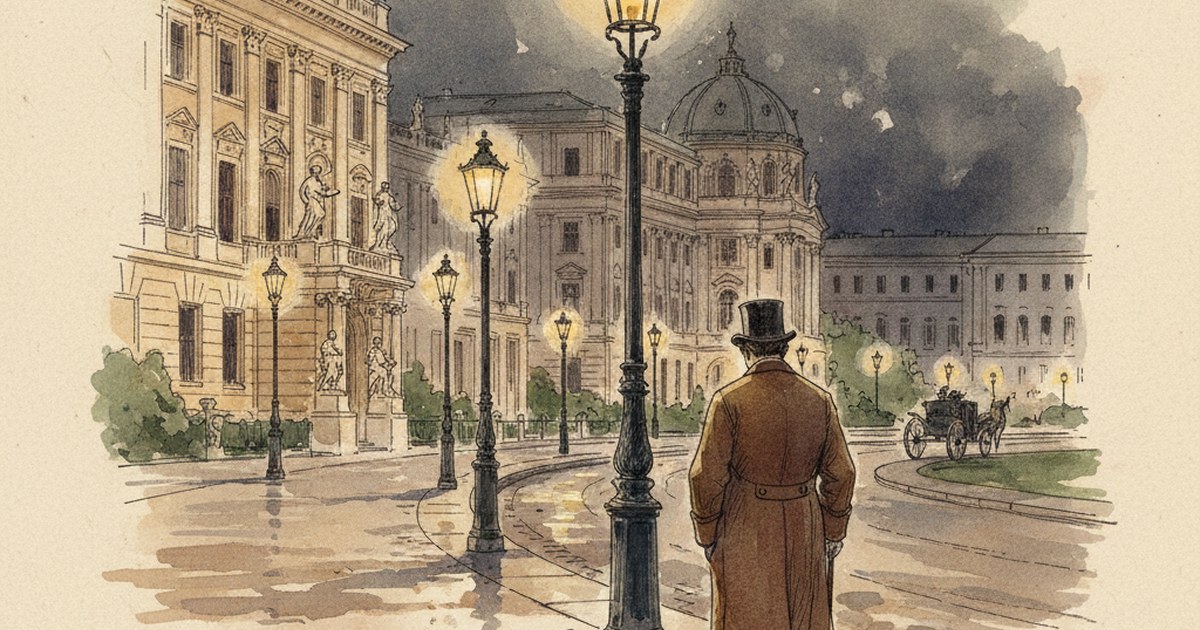
    In the winter of 1900, a young man in a good overcoat walked the length of the Ringstrasse and felt, with the particular certainty of the gifted and the young, that he was standing at the center of the world.

    Vienna at the turn of the century was not merely a city. It was a proposition — the argument, made in stone and music and coffee and lamplight, that civilization was a permanent achievement, that the long work of culture had arrived somewhere worth arriving. The Ringstrasse itself was the proposition made architectural: that boulevard of imperial ambition, lined with museums and opera houses and parliament buildings dressed in Hellenistic robes, announcing that this city, this empire, this Europe had inherited antiquity’s mantle and intended to wear it well. Stefan Zweig, twenty years old, a poet by vocation and a bourgeois by birth, walked its length and believed every word of it.

    He would spend the next four decades watching the argument collapse. And he would spend those same decades writing — furiously, tenderly, obsessively — as though the act of description could hold the thing described in place a little longer. It could not. But what he left behind is something rarer than preservation: it is testimony, the account of a man who loved a world, watched it die, and had the literary gifts to say what exactly was lost.

    The Republic of Letters, and Its Most Famous Citizen

    By 1930, Stefan Zweig was the most translated author in the world. Not the most celebrated in any single country — that crown belonged, depending on the season, to Thomas Mann or to Romain Rolland — but across languages, across borders, across the precisely the range of European and South American cultures he had spent his life cultivating, no one moved more copies. The novellas sold in Paris and São Paulo and Warsaw and Tokyo. The biographical essays — what he called his “spiritual portraits” of historical figures — were read by people who had never opened a history book and would not have described themselves as readers of biography. He had found the tone that the age wanted: intimate but not sentimental, erudite but not pedantic, morally serious without the hectoring quality that makes moral seriousness exhausting.

    The friendships he accumulated read like the roster of a civilization’s greatest achievement. He corresponded with Rainer Maria Rilke for years, two Austrians writing to each other in a German so careful it was practically a private dialect. He visited Auguste Rodin in Meudon and wrote about the sculptor’s workshop with an attention so precise you can still smell the clay. He and Romain Rolland maintained a friendship that survived the First World War, two pacifists writing across the lines of a conflict that made pacifism feel like either cowardice or sainthood depending on which side of the Rhine you stood. With Sigmund Freud, his older contemporary in Vienna, he shared a reverence for the interior life, for the proposition that what happens in the mind is as consequential as anything that happens in the street.

    What bound all of these relationships was a shared faith — and it was, at bottom, a faith — in what Zweig called the European idea. Not a political program, not a bureaucratic arrangement, but a cultural reality: the sense that a writer in Vienna and a writer in Paris and a writer in Prague were, at some level, citizens of the same republic. They read the same books, argued about the same ideas, moved through the same coffeehouses when they visited each other’s cities. He was, in the fullest sense, a European writer — not Austrian, not German-speaking, but something that the twentieth century would systematically set about destroying: a man whose identity was constituted by culture rather than nation.

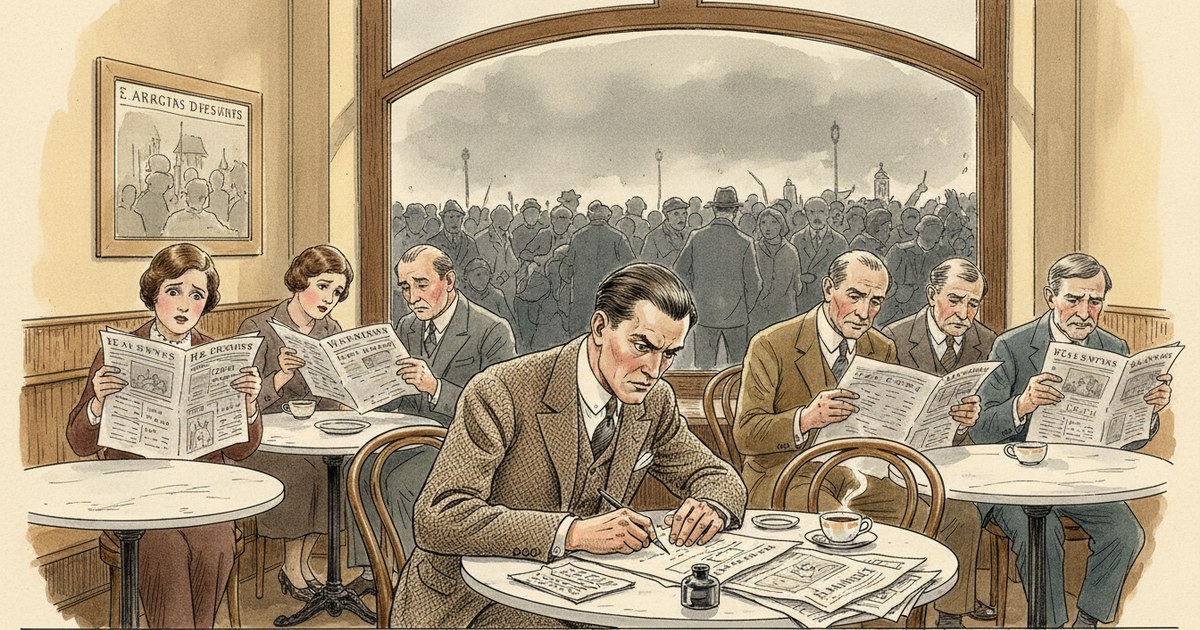
    The Viennese coffeehouse was, for Zweig, the physical embodiment of this ideal. He understood it the way that later generations would understand the internet: as an infrastructure for a particular kind of sociability, a place where you could sit for four hours over a single coffee, read every newspaper in six languages, and encounter the sculptor, the journalist, the philosopher, and the politician at adjacent tables. The coffeehouse was classless in a way that Austrian society was not — or rather, it performed the suspension of class distinctions with enough theatrical conviction that the performance became, for a few hours each afternoon, a reality. It was also radically international. In the Café Landtmann or the Central, the question of which nation had produced you was less interesting than the question of what you had read recently and what you thought about it.

    Zweig’s own work was animated by precisely this spirit. His biographical essays — on Erasmus, on Mary Queen of Scots, on Magellan, on Mary Baker Eddy — were not conventional biographies in any academic sense. They were acts of imaginative identification, attempts to inhabit another consciousness across the distances of time and language. He was drawn consistently to figures who stood at the intersection of history and private experience, to people whose inner lives were thrown into violent relief by the events surrounding them. Erasmus, who watched the Reformation tear apart the humanist project he had devoted his life to, was in many ways Zweig’s mirror: the intellectual who believed in reason and persuasion and watched power prove them inadequate.

    The World That Ended

    January 30, 1933. Adolf Hitler became Chancellor of Germany, and Stefan Zweig’s world — the specific, irreplaceable, painstakingly constructed world he had spent his life inhabiting — began its final movement.

    The speed of the collapse was, in retrospect, astonishing. Within weeks, his books were being removed from German libraries. Within months, the intellectual culture of central Europe had been subjected to a kind of surgical removal, with Jewish writers and artists and academics extracted from the body politic with a thoroughness that was itself a kind of negative tribute to their centrality. Zweig had been, all his adult life, so thoroughly assimilated into European literary culture that his Jewishness had seemed, to him and to most of his correspondents, a biographical fact rather than a defining identity. The Nazis corrected this misapprehension with characteristic brutality.

    He left Austria in 1934, before the Anschluss made leaving compulsory, and settled in Bath — of all places, Bath, that most Georgian of English cities, a place of limestone crescents and conducted orderliness that must have felt, after Vienna, like living inside a very well-maintained museum exhibit. He worked there, writing the libretto for Richard Strauss’s opera Die Schweigsame Frau, but the collaboration became its own small scandal when the Nazi authorities insisted that Zweig’s name be removed from the program. Strauss, choosing the opera over the friendship, eventually complied. It was a minor betrayal in a decade of catastrophic ones, but it had the particular sting of the personal.

    London, then Bath, then New York — the geography of exile has its own grammar, and Zweig was learning it word by word. He understood, before many of his contemporaries were willing to admit it, that the world he had known was not merely threatened but already over — that the question was not whether the Europe of the Ringstrasse and the Café Central would survive, but whether anything of it could be carried forward into whatever came next. The autobiography he was writing in these years, The World of Yesterday, was composed in that spirit: not as a memoir in the usual sense, not as an account of a life that continued, but as a monument to a civilization in the process of its own demolition.

    He arrived in Brazil in 1940, settling eventually in Petrópolis, a mountain town outside Rio de Janeiro that the Portuguese royal family had once used as a summer retreat from the coastal heat. It was, in its way, another place of displaced grandeur, another city that had once been at the center of something and now existed in the pleasant irrelevance of the postimperial. Zweig worked there, completed The World of Yesterday, continued the essay on Montaigne he had been writing for years. He was fifty-nine years old, in good health, professionally productive, living in a country that was not at war and had no immediate intention of becoming so. By any external measure, he had survived.

    On the night of February 22, 1942, he and his wife Lotte took lethal doses of barbiturates and lay down together to die. They were found the following afternoon, arranged on the bed with a composure that suggested the act had been considered and prepared. The note he left was addressed to his friends in Brazil — not to posterity, not to the literary world, but to the specific people who had shown him kindness in a country not his own — and it explained, with characteristic lucidity, that he was ending his life not from hopelessness about his personal circumstances but from exhaustion at watching the world he belonged to be destroyed. He was, he wrote, too tired to begin again.

    The distinction matters. This was not a man brought low by failure or obscurity or the ordinary cruelties that literary careers can inflict. He was, at his death, still widely read, still respected, still capable of work he believed in. What had been destroyed was not his career but his civilization — the community of readers and writers and artists across whose network of relationships his identity had been constituted. Without that network, the work itself felt, to him, like speaking into a room from which everyone had left. He was not wrong. The Europe he described in The World of Yesterday was already an archaeological site, and he was old enough to know it.

    What the Books Hold

    It is tempting — and not entirely inaccurate — to read Zweig’s suicide as the last paragraph of his autobiography, the gesture that completed the argument the book had been making. He had lived through the world he described; he chose not to outlive it. But this reading, for all its elegance, does a disservice to the actual work, which is neither an elegy nor a suicide note but something more demanding and more generous: a sustained act of attention to human experience, offered in the belief that such attention is worthwhile regardless of what happens to the civilization that produces it.

    The novellas — Letter from an Unknown Woman, The Royal Game, Amok, Beware of Pity — are extraordinary pieces of narrative engineering, stories that move with the propulsive efficiency of plot while carrying, in their interiors, a weight of psychological observation that belongs to a much slower literary tradition. The chess story in particular, written in his final years, has about it the quality of a last testament: a tale of a man who survives imprisonment by retreating entirely into the life of the mind, learning chess from a smuggled book, playing both sides against each other until the interior game threatens to consume him. It is the story of intellectual civilization as a form of resistance, and it was written by a man who had spent a decade watching intellectual civilization fail to resist anything.

    What has brought him back to readers in recent years — the new translations, the reissued collections, the renewed critical interest — is not nostalgia for the Belle Époque, though a certain nostalgia is probably inevitable. It is, rather, the particular quality of his prose attention: the sense that human experience, rendered with sufficient care and honesty, yields something that outlasts the historical moment that produced it. The coffeehouse is gone. The Ringstrasse still stands, but the empire it was built to celebrate is a century in the ground. The republic of letters — that informal, idealistic, cosmopolitan network of writers and readers that Zweig devoted his life to — exists now only in fragments and approximations.

    But the books remain. They sit on the shelf with the patient authority of all good writing, waiting for the reader who needs to be told that there was once a world where culture was taken seriously as a form of human achievement, where the life of the mind was understood to be as consequential as any other kind of life, where a young man in a good overcoat could walk the length of a great boulevard and feel, not without justification, that he was at the center of something worth being at the center of. That world is gone. What Zweig left behind is the most precise account we have of what it felt like to inhabit it — and to watch it end.

    Read Zweig in a Translation That Does Him Justice

    The Stefan Zweig Collection brings together his finest novellas and biographical portraits in a modern English translation that preserves his musicality without the stiffness of the Victorian-era versions.

    Explore the Collection on Amazon →

    Recommended Edition
    The Stefan Zweig Collection – Volume 1 — Stefan Zweig
    Modern English translation

    Kindle →Paperback →

    Frequently Asked Questions

    Who is “the young man in the good overcoat” the author describes walking the Ringstrasse?

    The figure is left deliberately unnamed in the opening passage, functioning less as a biographical subject than as a composite type — the confident, cultivated European who believed in 1900 that progress was irreversible. The author uses this anonymous walker to set up the central irony: that certainty would not survive the century he was just entering.

    What does the author mean when he calls Vienna “a proposition”?

    He means that fin-de-siècle Vienna was not just a place but an argument — a claim, built into its architecture, coffeehouses, and concert halls, that Western civilization had achieved something durable. The book then tracks how systematically that argument was refuted over the following five decades.

    Is “The Man Who Saw Europe Die” structured as a biography, a history, or something else?

    The book sits between genres: it uses one life as a lens to focus a broader historical collapse, moving between personal memoir and political chronicle as the century darkens. Readers who expect a conventional biography will find the historical analysis intrudes constantly — and that intrusion is the point.

    How much does the author rely on primary sources versus retrospective accounts of this period?

    The opening sections draw heavily on diaries, letters, and contemporaneous journalism from Vienna circa 1900, giving the early chapters their ground-level texture. As the narrative moves toward 1914 and beyond, the author increasingly works from retrospective memoirs, a shift he acknowledges creates a different kind of knowledge — shaped by what survivors already knew had been lost.
  • Zweig Never Escaped the War Inside

    Zweig Never Escaped the War Inside

    The Man Who Bet Everything on Europe

    Looking for Stefan Zweig’s Jewish Legends and other stories in the best modern English translation? This guide shows you the strongest editions and helps you choose based on readability and emotional depth.

    Find Your Best Zweig Translation

    Use this guide to compare editions before you choose your next read.

    In February 1942, Stefan Zweig and his second wife Lotte swallowed barbiturates in their rented bungalow in Petrópolis, Brazil. He was sixty years old. On his desk: a completed manuscript, The World of Yesterday, and a brief suicide note declaring himself exhausted by years of exile. Twenty years earlier, he had been the most widely translated living author in the world—more popular than Thomas Mann, more commercially successful than any German-language writer of his generation. What happened between those two moments is the story of a man whose faith in European humanism collapsed along with the continent that birthed it.

    Zweig was a Vienna-born cosmopolitan who spoke five languages, collected rare manuscripts (he owned original drafts by Goethe and Nietzsche), and maintained friendships across every border. He believed passionately in a united, cultured Europe—a belief that made him both beloved and, eventually, naïve. When the Nazis came, he fled Austria in 1934, then England in 1940, finally landing in Brazil where the isolation broke him. He was not starving. He was not in immediate danger. He simply could not endure watching the world he loved burn from the periphery. His suicide note read: “I salute all my friends! May they live to see the dawn after this long night!”

    What makes that note so unsettling is what it leaves out. Zweig does not invoke God, does not reach for the Jewish liturgy he had spent two decades studying for these very stories. The man who wrote so searchingly about faith’s capacity to survive catastrophe could not, in the end, access it for himself. That gap—between the tradition he could articulate with such precision on the page and the private despair he could not overcome—is the biographical undertow you feel throughout Volume 3. These are not detached scholarly exercises. They are a man arguing himself toward hope from the inside.

    But before the darkness, Zweig spent two decades excavating the Jewish diaspora experience through historical legends and biblical reimaginings. Unlike his psychological novellas about doomed love affairs (Letter from an Unknown Woman, The Post Office Girl), these Jewish tales probe the tension between faith and fate, between a people’s covenant with God and history’s refusal to honor it. Volume 3 of the Stefan Zweig Collection gathers four of these stories, written between 1918 and 1937, each wrestling with what it means to belong to a tradition that guarantees both identity and persecution.

    Zweig and Judaism: A Complicated Inheritance

    Zweig grew up in a secular, assimilated Jewish family in Vienna—the kind of household where Goethe sat on the bookshelf but the Torah did not. His father was a textile manufacturer; his mother came from a banking family. Neither parent was observant, and Zweig’s early identity was emphatically cosmopolitan rather than Jewish. He wrote in his memoir that he felt himself “a European first, an Austrian second, and a Jew almost as an afterthought.” That ordering, he eventually understood, was a luxury the twentieth century would not permit.

    The stories in Volume 3 represent a long reckoning with that inherited ambivalence. Zweig returned to Jewish source material not out of religious conversion but out of historical pressure—the Dreyfus Affair, the rise of political Zionism under Theodor Herzl (whom Zweig knew personally and admired while disagreeing with), and finally the open anti-Semitism of the 1930s forced him to take seriously a tradition he had previously treated as background noise. His research was rigorous: he read Graetz’s multi-volume History of the Jews, immersed himself in Hasidic tales, and consulted rabbinical commentaries that most secular European Jews of his class never opened. The result is writing that neither romanticizes nor dismisses Jewish religious life—it engages it as a living argument about suffering and survival.

    Four Legends Written Against the Clock

    The Buried Candelabrum (1937) is the centerpiece—Zweig’s final Jewish legend, published the year before Kristallnacht. It follows a Roman-era Jewish candelabrum stolen during the sack of Jerusalem, buried to protect it from Christian conquerors, and rediscovered centuries later by a poor shepherd. The candelabrum becomes a symbol of Jewish survival through dispersion: even when the Temple falls, the light endures in fragments, scattered and hidden. Zweig wrote this knowing the Nazis were already cataloging Jewish property for confiscation. The story’s final line—”The light has not been extinguished”—reads differently now than it did in 1937.

    Rachel Against God (1918) is the earliest piece here, written at the end of World War I. It retells the biblical Rachel’s defiance when God demands her silence during the Babylonian exile. Instead of meek acceptance, Zweig’s Rachel argues with God, challenges Him, demands justice for her scattered children. It’s Zweig at his most theologically audacious, imagining Jewish suffering as grounds for contention rather than submission. The other two stories—The Dissimilar Doubles and The Eyes of the Eternal Brother—explore doppelgänger myths and mystical visions within Jewish folklore, both showing Zweig’s fascination with how identity fractures under historical pressure.

    These are not fables. Zweig researched Talmudic commentaries, medieval chronicles, and Hasidic oral traditions to construct narratives that feel simultaneously ancient and urgently modern. He was writing for a secular European audience who saw Judaism as either exotic folklore or an inconvenient ancestral fact. Zweig insisted it was neither—it was a living intellectual tradition with unresolved arguments about suffering, endurance, and hope.

    The chronological span of these four stories—1918 to 1937—tells its own story if you read them in the order they were written rather than the order they appear in the collection. Rachel Against God, written in the ashes of World War I, still believes the argument with God is worth having; God is present enough to be addressed, challenged, held accountable. By the time Zweig writes The Buried Candelabrum nearly two decades later, God has largely vacated the narrative. What remains is the object, the light, the act of preservation itself—faith reduced to its physical residue because the metaphysical scaffolding has grown too precarious to lean on. That arc from confrontation to mute endurance is, quietly, the most devastating thing about reading these four stories together.

    What Zweig Did With the Biblical Source Material

    Zweig was not simply retelling stories everyone already knew. He was doing something more specific and more provocative: he was finding the gaps in the canonical text and filling them with psychological interiority. The biblical Rachel of Genesis and Jeremiah is a figure invoked, mourned over, referenced—but rarely given a voice of her own. Zweig gives her one, and it is not a gentle voice. His Rachel does not weep quietly at the roadside. She demands an accounting. She uses the logic of the covenant against God: if He chose this people, then their suffering is not an abstraction He can observe from a distance—it is a breach of contract He must answer for.

    This move—turning biblical silence into psychological confrontation—places Zweig in a longer tradition of Jewish interpretive writing that runs from the midrash through Elie Wiesel. But Zweig was doing it for a secular readership in 1918 who would not necessarily have recognized the midrashic precedent. He was smuggling the tradition’s most radical impulse—the right to argue with God—into a form his assimilated contemporaries would accept as modern literature. That sleight of hand is part of what makes these stories worth rereading now, when that same secular readership has drifted even further from the source material Zweig was quietly translating for them.

    Why Read a Modern Translation?

    Zweig wrote for the educated German reader of 1920–1940: someone who caught his classical allusions, recognized his cadences from Goethe and Schiller, and understood the weight of a single Yiddish phrase dropped into High German prose. Old English translations either flatten this into generic “timeless” prose or preserve German sentence structures that make Zweig sound stilted. A modern translation captures what he actually did—the way he shifted registers between lyrical and reportorial, the way he used biblical rhythms to evoke oral storytelling, the way he embedded contemporary anxieties into ancient settings. Zweig was not writing museum pieces. He was writing for readers who lived in the same crumbling Europe he did.

    The specific challenge with these Jewish legends—as distinct from Zweig’s psychological novellas—is that they operate in two registers simultaneously. The surface register is folktale: simple syntax, declarative sentences, the measured pace of a story passed down orally across generations. Underneath that is the modern register: irony, compression, psychological subtext that the folktale surface is deliberately understating. An older translation that flattens one register into the other loses the whole game. The translation featured here keeps that tension alive—when the prose suddenly slows and the sentences shorten in The Buried Candelabrum, you feel the weight of what is being said under the simplicity rather than reading it as merely plain writing.

    Curated pick
    The Stefan Zweig Collection, Volume 3 — Stefan Zweig
    Modern English translation

    Kindle →Paperback →

    What is the best English translation of The Stefan Zweig Collection – Volume 3?

    This modern translation of The Stefan Zweig Collection – Volume 3 is among the most accessible English editions available today. Unlike older translations that carry the stiffness of mid-century prose conventions, this version preserves Zweig’s psychological precision and emotional urgency while reading naturally for contemporary audiences. If you want to experience Zweig’s voice without the interference of dated diction, this is the edition to start with.

    Is The Stefan Zweig Collection – Volume 3 worth reading in 2026?

    Yes. Zweig’s preoccupations — the fragility of identity, the collapse of civilized order, the interior lives of people under pressure — resonate with particular force right now. The stories in Volume 3 were written in an era of European upheaval, and that anxiety translates directly into the present moment. Readers in 2026 will find nothing dated about the emotional stakes Zweig sets on every page.

    How does The Stefan Zweig Collection – Volume 3 compare to The Stefan Zweig Collection – Volume 1?

    Volume 1 is the stronger entry point — it gathers Zweig’s most widely taught and discussed novellas, giving readers an immediate sense of his range and reputation. Volume 3 rewards those who already know what to expect: the writing is no less precise, but the selections are less frequently anthologized and therefore feel fresher to readers who have come to Zweig through the standard introductory texts. Think of Volume 1 as the door and Volume 3 as the room behind it.

    What should I read after The Stefan Zweig Collection – Volume 3?

    The natural next step is The Stefan Zweig Collection – Volume 1: A New Translation, available at classicsretold.com, which anchors the series with Zweig’s most celebrated shorter fiction. After that, The Stefan Zweig Collection – Volume 2: A New Translation fills in the middle ground and completes the arc of themes running across all three volumes. Reading them in sequence gives you a coherent portrait of one of the twentieth century’s most precise psychological writers.

  • Zweig Knew Europe Was Already Dead

    Zweig Knew Europe Was Already Dead

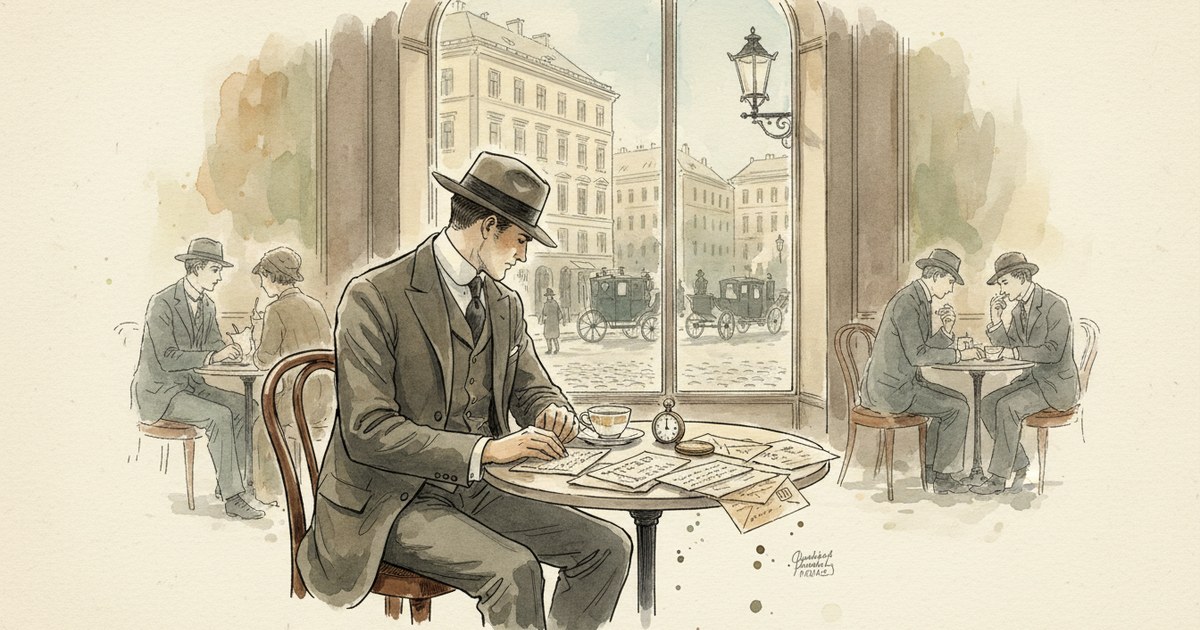
    In a smoke-filled rail car cutting through the Austrian Alps, or perhaps on the rain-slicked deck of a steamer bound for Rio, a Stefan Zweig story begins. It starts with a glance, a dropped glove, or a nervous tic. Within three pages, the protagonist is no longer a traveler; they are a casualty of their own hidden history. There is a specific, thrumming velocity to Zweig’s prose—a “nervous energy,” he called it—that collapses the distance between the 1920s and tonight. He does not build tension so much as he unmasks the obsession that was already there, waiting for the right catalyst to explode.

    To read Zweig for the first time is to realize that the “modern” psychological thriller was perfected nearly a century ago in a Viennese study. During the 1930s, he was the most translated author in the world, a literary superstar whose novellas were consumed like prestige television is today. Yet, his massive bibliography of biographies, essays, and fiction can feel like an intimidating labyrinth for the uninitiated. You need a map not because his work is difficult, but because it is so potent that starting in the wrong place is like jumping into a high-speed centrifuge without a harness.

    The “Zweig momentum” is his signature. He understood that human beings are essentially stable structures held together by very thin wires of social convention. His stories are the sound of those wires snapping. Whether it is a world chess champion losing his mind to a silent internal adversary or a woman spending her entire life in the shadow of a single, unrequited encounter, Zweig’s focus never wavers from the internal conflagration. He was the great chronicler of the “amok”—the moment when the civilized mind surrenders to the irresistible pull of a singular, devastating impulse.

    The Architect of the Vanishing World

    To understand why Zweig wrote with such desperate urgency, one must look at the map of Europe that was dissolving beneath his feet. Born in 1881 to a wealthy Jewish family in Vienna, Zweig was a true child of the Habsburg Empire’s golden twilight. He lived in a world where “security” was the highest virtue, where the currency was stable, the theaters were full, and the progress of humanity seemed inevitable. He was a pacifist, a polyglot, and a European in the deepest sense of the word, counting Sigmund Freud, Auguste Rodin, and Romain Rolland as his closest peers. His Vienna was the laboratory of the modern soul, and he was its most sensitive recording instrument.

    This “World of Yesterday,” as he later titled his definitive memoir, was not just a place but a state of mind. When the First World War shattered the borders of Europe, and the rise of Nazism subsequently turned his books into fuel for bonfires, Zweig became a man without a country. His life became a frantic flight: from Vienna to London, then New York, and finally to Petrópolis, Brazil. He watched from afar as the cosmopolitan, humanist culture he inhabited was systematically erased. Every novella he wrote in exile was an attempt to preserve the psychological complexity of a civilization that was being replaced by the blunt force of ideology.

    This sense of impending loss is what gives his biographies of figures like Marie Antoinette or Erasmus their peculiar bite. He wasn’t interested in dry dates; he was looking for the moment where a person’s character collided with the machinery of history. His suicide in 1942, a joint pact with his wife Lotte in Brazil, was the final, tragic testament to his belief that the Europe he loved was gone forever. He died believing the “darkness” had won, yet his work remains the most vibrant evidence we have of the light that preceded it. He didn’t just record history; he captured the feeling of living through its disintegration.

    The Essential Starting Points

    If you are standing at the threshold of Zweig’s library, the first door you should open is Chess Story (also known as The Royal Game). It is the ultimate concentration of his style, written in the final months of his life. Set on a passenger liner, it depicts a confrontation between a mechanical, brutal world chess champion and a mysterious passenger who learned the game while in solitary confinement by the Gestapo. It is a terrifying exploration of how the mind can save itself through obsession, only to be destroyed by that same salvation. It is short, jagged, and impossible to put down—a perfect entry point into his “nervous” narrative drive.

    From there, move to Letter from an Unknown Woman. This is Zweig at his most emotionally operatic. A famous novelist receives a letter from a woman he does not remember, detailing a lifelong devotion that has dictated her every move, her every sacrifice, and her eventual ruin. In the hands of a lesser writer, this would be melodrama; in Zweig’s hands, it is a clinical and devastating study of how the human heart can build a cathedral out of a ghost. It shows his remarkable ability to inhabit the interior lives of his characters, peeling back the layers of social propriety to reveal the raw nerves beneath.

    Finally, no one should consider themselves a reader of Zweig without experiencing The World of Yesterday. It is frequently cited as the greatest memoir of the 20th century, and for good reason. It is the biography of an era rather than a man. Zweig barely mentions his own marriages or private scandals; instead, he chronicles the death of a dream. He takes you from the coffee houses of fin-de-siècle Vienna to the trenches of the Great War and the chilling silence of a London flat as the second war begins. It is the essential companion to his fiction, providing the context for the “psychological velocity” that defines his creative output.

    Why the Right Translation Changes Everything

    For decades, Stefan Zweig was a victim of his own popularity. Because he was so widely read, many early English translations were rushed to market, resulting in prose that felt stiff, Victorian, and strangely distant. This was a tragedy, because Zweig’s German is anything but stiff. He wrote with a breathless, cinematic quality, favoring rhythm and psychological precision over flowery ornamentation. If you read an older edition, you might find the plots compelling but the “voice” muffled, as if you are watching a brilliant film through a dusty lens.

    This is why the modern resurgence of Zweig is so vital. Newer translations, such as the ones featured in the Classics Retold editions, focus on recapturing that specific “nervous energy” that Zweig intended. A modern English translation understands that Zweig’s sentences are designed to mimic the pulse of his characters—speeding up during moments of panic, slowing down during the agony of reflection. By stripping away the linguistic cobwebs of the mid-20th century, these editions allow the psychological sharpness of his work to pierce through. You aren’t just reading a story about 1920; you are feeling the immediacy of 1920.

    If you are ready to begin your journey, we highly recommend The Stefan Zweig Collection Vol 2. This curated volume brings together several of his most vital novellas, including Chess Story, in a format that prioritizes the visceral impact of his prose. It is designed to be the definitive starting point for the contemporary reader, offering a bridge into the mind of a writer who understood our private obsessions better than we often understand them ourselves. You can find this essential edition here: The Stefan Zweig Collection Vol 2. It is more than a book; it is an invitation to a lost world that feels hauntingly familiar.

    Is Stefan Zweig’s work difficult to read?

    Not at all. In fact, Zweig was known for his extreme readability and fast-paced narratives. While his themes are psychologically deep, his prose is remarkably clear and direct. He intentionally avoided the dense, philosophical digressions common in many of his German-speaking contemporaries, preferring the “velocity” of a well-told story that focuses on character and action.

    Why is he often called a “chronicler of the lost world”?

    Zweig lived through the total collapse of the European cultural order. Because he was born into the stable, wealthy environment of the Austro-Hungarian Empire and died in exile during WWII, his work captures the specific transition from a world of security and humanism to one of total war and ideology. He felt a personal responsibility to document the “soul” of the Europe that was being destroyed.

    Did Stefan Zweig write full-length novels?

    Zweig was primarily a master of the “novella”—a format longer than a short story but shorter than a novel. He felt this length was perfect for exploring a single psychological obsession without losing momentum. While he did write one full-length novel, Beware of Pity, his most famous and influential fiction remains his shorter, more concentrated works.

    Why did his popularity decline and then suddenly return?

    After his death in 1942, Zweig’s brand of high-humanism and psychological focus fell out of fashion in favor of more overtly political or experimental literature. However, in the 21st century, readers have rediscovered his uncanny ability to describe the fragility of civilization and the complexity of the human mind. His work feels incredibly relevant in an era of global uncertainty and rapid social change.

    Curated pick

    The Stefan Zweig Collection - Volume 2

    The Stefan Zweig Collection – Volume 2 — Stefan Zweig
    Modern English translation

    Kindle →
    Paperback →

  • Milton Made Satan the Hero

    Milton Made Satan the Hero

    Satan wakes on a burning lake, his wings singed, his pride intact, and his first move is to check the geography of his own ruin. He doesn’t lament; he calculates. He looks at the “dismal situation waste and wild,” the “regions of sorrow, doleful shades, where peace and rest can never dwell,” and he decides that “the mind is its own place, and in itself can make a Heav’n of Hell, a Hell of Heav’n.” This is not the voice of a mythological abstraction. It is the voice of a political revolutionary who has just watched his coup fail and is already planning the insurgency. It is the most cinematic opening in the history of the English language, a wide-angle shot of a cosmic disaster that zooms in until we are staring directly into the eyes of the most charismatic villain ever written.

    For most readers, however, this cinematic scale is obscured by a fog of Latinate syntax and seventeenth-century inversions. We are told John Milton wrote the definitive English epic, but we approach it like a chore, a linguistic mountain to be climbed rather than a story to be inhabited. We get lost in the “thee” and “thou,” the convoluted sentence structures that stretch for sixteen lines before hitting a verb, and the dense thicket of classical allusions. We abandon the poem in Book II, somewhere between the council in Pandemonium and the gates of Hell, convinced that Milton is “important” but ultimately unreadable. This is a tragedy of translation—not from another language, but from an older version of our own.

    The truth is that Paradise Lost is the most psychologically complex work in our canon. It is a story about the anatomy of a grudge, the weight of unintended consequences, and the agonizing process of losing everything and trying to find a reason to keep going. When Milton wrote that he intended to “justify the ways of God to men,” he wasn’t just writing a theological treatise. He was writing a survival manual. To understand why it reads with such desperate, muscular urgency, you have to understand the man who was sitting in the dark, dictating it to his daughters.

    The Blind Secretary of a Fallen Republic

    John Milton did not write Paradise Lost from a position of comfort or academic detachment. He wrote it as a defeated man, a wanted man, and a man who had literally lost his sight in the service of a failed revolution. During the English Civil War, Milton wasn’t just a poet; he was the Latin Secretary for Oliver Cromwell’s Commonwealth. He was the chief propagandist for the regime that executed King Charles I. He spent a decade writing fierce, brilliant defenses of regicide and republic, straining his eyes over flickering candles until, by 1652, the world went completely black.

    Then came the Restoration of 1660. The monarchy returned, Milton’s friends were executed or driven into exile, and the “Good Old Cause” he had sacrificed his health for was dismantled overnight. He was briefly imprisoned, his books were burned by the common hangman, and he retreated into a quiet, dangerous obscurity. It was in this silence and darkness that he composed over ten thousand lines of blank verse, carrying the poem in his head and waiting for his “amanuensis” to arrive each morning so he could “be milked,” as he put it.

    This biographical context is the engine of the poem. When Milton describes Satan’s rebellion against a “celestial tyranny,” he is channeling the fire of his own republicanism. When he describes the crushing weight of defeat and the temptation to “reign in Hell” rather than “serve in Heaven,” he is interrogating the very impulses that led his own political movement to its ruin. The poem is a massive, polyphonic argument between his theological devotion to God and his visceral, human understanding of the rebel. He didn’t make the Devil the most interesting character by accident; he made him interesting because he knew exactly what it felt like to believe you were on the side of justice and end up in the fire.

    The Wall of the Grand Style

    If the story is so vital, why do so many people bounce off the page? The problem lies in what critics call the “Grand Style.” Milton wanted to create a language that felt as massive as his subject matter. He deliberately mimicked the structure of Latin, placing adjectives after nouns and delaying the main action of a sentence to create a sense of mounting tension. In 1667, this felt revolutionary and majestic. In 2026, it often feels like reading through a brick wall. The sheer density of the verse can act as a barrier to the psychological intimacy of the characters.

    Most modern readers are looking for the “cinematic” Milton—the poet who can describe the War in Heaven with the scale of a Christopher Nolan epic and the interiority of a prestige drama. They want to see the moment Eve looks at her reflection in the water for the first time, or the way Adam’s heart sinks when he realizes the woman he loves has doomed them both. When the language is too archaic, these moments lose their sharpness. We need a version that preserves the iambic pentameter—the heartbeat of English poetry—while clearing away the linguistic cobwebs that make the meaning feel remote.

    The goal of a modern reading guide isn’t to “dumb down” Milton, but to restore the clarity he intended. Milton was a populist at heart; he wrote in English, not Latin, because he wanted his message to reach the “fit audience, though few.” He wanted to be understood. A great translation of Paradise Lost for the contemporary reader is one that lets the narrative momentum take center stage, allowing the reader to feel the velocity of Satan’s fall without tripping over the syntax.

    Navigating the Editions: Which One to Carry?

    For the serious student or the casual reader, the choice of edition is the difference between a transformative experience and a decorative one. The Penguin Classics edition, edited by John Leonard, is the gold standard for academic rigor. Its footnotes are exhaustive, providing a masterclass in seventeenth-century theology and classical reference. If you want to know exactly which obscure Greek myth Milton is referencing on line 450 of Book IV, this is your book. However, the sheer volume of notes can interrupt the flow of the poem, turning a narrative experience into a research project.

    The Oxford World’s Classics edition offers a similar level of scholarship but with a slightly more streamlined presentation. It is an excellent choice for those who want a portable, reliable text that respects the original spelling and punctuation. But again, these editions are designed for the classroom. They assume a level of patience with archaic language that many modern readers, used to the directness of contemporary prose, simply do not possess. They provide the map, but they don’t always clear the path.

    This is where the edition linked below enters the conversation. It is built on a different philosophy: that Paradise Lost should be as readable as a high-stakes novel. This edition doesn’t just reprint the 1674 text; it offers a modern English translation that maintains the rhythmic integrity of Milton’s blank verse while updating the vocabulary and untangling the most complex inversions. It treats the poem as a living document, prioritizing the emotional beats and the narrative arc. It is the version for the reader who wants to stay up late to find out what happens next in the Garden, rather than the reader who needs to pass a midterm.

    Why the edition linked below is the 2026 Choice

    We live in an age of visual storytelling and psychological deep-dives. We are obsessed with anti-heroes, tragic falls, and the gray areas of morality. Paradise Lost is the ancestor of all these tropes, but it requires a gateway. the edition linked below serves as that bridge. By clarifying the language, it allows the modern reader to appreciate Milton’s incredible technical skill—the way he uses sound to mimic the clashing of armor or the whispering of a snake—without getting bogged down in “ye” and “hath.”

    This edition is particularly effective at highlighting the relationship between Adam and Eve. In more archaic versions, their dialogue can feel stiff and formal. In this modern translation, their love—and their eventual, devastating argument after the Fall—feels shockingly contemporary. You realize that Milton wasn’t just writing about the “First Couple”; he was writing about the complexities of partnership, the burden of shared guilt, and the grace required to forgive someone who has changed your life for the worse. If you have ever felt that Milton was too “heavy” for you, this is the version that will change your mind.

    For those ready to experience the epic in its most accessible and powerful form, the modern English translation provided in the edition linked below of Paradise Lost is the essential starting point. It strips away the pretense and leaves you with the raw, muscular poetry of a man who saw the end of the world and decided to write a way back to the light.

    Is Paradise Lost hard to read?

    The original seventeenth-century text can be challenging due to its complex sentence structures and archaic vocabulary. However, the story itself is a fast-paced narrative filled with action and psychological drama. Using a modern translation like the edition linked below makes the poem as accessible as a contemporary novel while preserving the famous rhythm of Milton’s verse.

    Is Satan actually the hero of the poem?

    This is one of the most famous debates in literature. While Milton’s stated goal was to “justify the ways of God,” he gave Satan the most compelling dialogue and the most relatable motivations in the first half of the book. Many readers find Satan more interesting because he represents the human struggle with pride, ambition, and the pain of loss, whereas God can feel more abstract and remote.

    Do I need to be religious to enjoy Paradise Lost?

    Not at all. While the poem is based on the Biblical story of the Fall, it functions as a work of epic fantasy and psychological realism. You can appreciate it as a study of power, rebellion, and the human condition in the same way you might appreciate The Iliad or The Lord of the Rings. Its influence on Western culture—from Frankenstein to Star Wars—is so vast that it’s worth reading simply for its literary impact.

    What is the “War in Heaven” and is it in the book?

    Yes, the War in Heaven is a central set-piece in the poem, occurring in Book VI. It describes the literal physical battle between the loyalist angels and Satan’s rebel forces. Milton describes it with immense scale, featuring celestial artillery, mountain-throwing, and a three-day conflict that culminates in the Son of God driving the rebels into the abyss. It is perhaps the most spectacular action sequence in all of English poetry.

    Curated pick

    Paradise Lost

    Paradise Lost — John Milton
    Modern English translation

    Kindle →
    Paperback →