Tag: best translation

  • The Best Translation of Edgar Allan Poe: A Curator’s Guide to the Macabre

    The Best Translation of Edgar Allan Poe: A Curator’s Guide to the Macabre

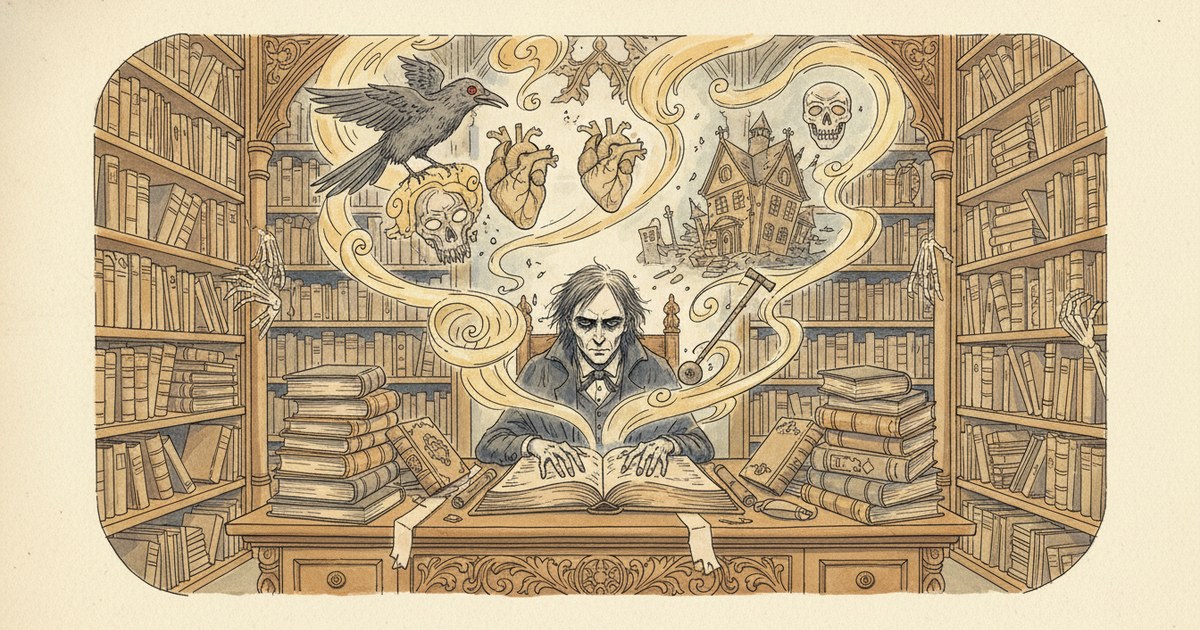
    The narrator of “The Tell-Tale Heart” does not want you to think he is mad. In fact, he insists that his nervousness has only sharpened his senses—specifically his hearing. He can hear “all things in the heaven and in the earth,” and “many things in hell.” This is the terrifying premise of Edgar Allan Poe’s most famous study in obsession: a man who decides to murder an old man not for greed, not for revenge, but because of the “vulture eye,” a pale blue eye with a hideous veil over it. The technical precision with which Poe describes the murder—the lantern beam falling like a single spider’s thread upon that eye—is so controlled that it makes the narrator’s underlying insanity feel all the more claustrophobic. It is a masterclass in the economy of dread.

    For too long, Poe has been relegated to the status of a gothic curiosity, a writer of “spooky” tales best suited for October reading or high school anthologies. This reputation is a disservice to one of the most rigorous stylists in the history of the English language. Poe’s prose is not merely atmospheric; it is mathematically precise. He did not stumble into horror; he engineered it. When we read Poe today, the challenge is often the “Victorian packaging”—the ornate, dusty editions with scrolled borders and fainting-maiden illustrations that make his work feel like a relic. To read Poe properly is to strip away the lace and find the cold, sharp blade of his logic underneath. The right edition doesn’t make Poe feel old; it reveals how dangerously modern he remains.

    Poe’s insistence on total authorial control was likely a psychological defense against a life that was almost entirely characterized by abandonment and disorder. Born in 1809 to itinerant actors, he was orphaned before he was three. He was taken in, though never formally adopted, by John Allan, a wealthy tobacco merchant in Richmond whose relationship with Edgar was a decades-long war of mutual resentment. Poe was a man of immense talent and zero stability: he was expelled from the University of Virginia over gambling debts and later deliberately got himself court-martialed out of West Point to spite his foster father. He spent his adult life in a state of “chronic poverty,” a term that fails to capture the indignity of a man who invented the modern detective story while struggling to buy firewood.

    The Architect of the Controlled Nightmare

    His marriage to his first cousin, Virginia Clemm, when she was just thirteen, remains the most controversial footnote of his biography, but in the context of his work, it points to a desperate reach for domesticity in a life defined by loss. Every woman Poe loved died young of tuberculosis—his mother, his foster mother, his wife. This recurring tragedy manifests in his work not as a vague sadness, but as a specific, recurring obsession with the “death of a beautiful woman,” which he famously called the most poetical topic in the world. However, notice the way he writes about it. In “Ligeia” or “The Fall of the House of Usher,” the grief is not messy; it is architectural. The House of Usher doesn’t just fall because it’s haunted; it falls because its physical structure is a mirror of the family’s genetic collapse. Poe used the rigid constraints of the short story and the formal poem to contain a reality that was constantly bleeding out.

    This biographical chaos produced a writer who was, ironically, the most influential editor and critic of his day. He was known as the “Tomahawk Man” for his “slashing” reviews, and he approached fiction with the same analytical rigor. He pioneered the “Philosophy of Composition,” arguing that a work of art should be written backward from its intended effect. When he sat down to write “The Raven,” he didn’t wait for a muse; he decided he wanted an emotional effect of “mournful and never-ending remembrance” and then calculated the rhythm, the length, and the refrain (“Nevermore”) to achieve it. This is the Poe we find in the best modern editions: the engineer of the soul, the man who understood that to truly terrify a reader, you must first be perfectly, coldly sober in your craft.

    The “Classics Retold” selection of Poe’s work focuses on the texts where this precision is most visible. In “The Tell-Tale Heart,” the brilliance lies in the unreliable narrator. We are trapped inside a mind that is attempting to use logic to justify the illogical. The heartbeat that eventually drives him to confession is not a supernatural occurrence; it is the sound of his own guilt amplified by his “over-acute” hearing. It is a psychological thriller written decades before the term existed. Similarly, “The Fall of the House of Usher” uses atmosphere as a structural element. The “vacant eye-like windows” of the house and the “faintly luminous” atmosphere of the tarn are not just window dressing; they are the physical manifestations of the Usher siblings’ mental decay. Poe’s genius was in making the setting do the work of the character.

    From the First Detective to the Red Death

    Beyond the horror, Poe’s contribution to the “rational” tale is equally profound. In “The Murders in the Rue Morgue,” he invented the detective story and the “locked-room mystery” in one stroke. C. Auguste Dupin is the blueprint for Sherlock Holmes—a man of “analytic” power who solves crimes by identifying with the mind of the perpetrator. For Poe, the detective story was the ultimate expression of his belief in the power of the human mind to impose order on the most chaotic and “monstrous” of circumstances. It is the flip side of his horror: if the horror stories show the mind breaking, the detective stories show the mind triumphing. Both require the same clinical, detached prose.

    Then there are the allegories of dread, most notably “The Masque of the Red Death.” Here, Poe’s prose becomes almost liturgical. The description of the seven colored rooms, ending in the black room with the blood-red windows and the ebony clock, is a countdown to the inevitable. Prince Prospero’s attempt to wall out the plague is the ultimate human folly—the belief that wealth and stone can protect us from our common mortality. The “Red Death” enters like a thief in the night, proving that there is no fortress thick enough to keep out the end. It is a short, sharp shock of a story that achieves in five pages what most novelists fail to do in five hundred: it creates a total, inescapable mood.

    Finally, any serious Poe edition must reckon with his verse. “The Raven” and “Annabel Lee” are often dismissed as “jingly” because of their strong internal rhyme and insistent meter. But this is intentional. Poe believed that poetry should be “the rhythmical creation of beauty.” In “The Raven,” the repetitive, hypnotic rhythm is designed to simulate the circling, obsessive thoughts of the bereaved lover. In “Annabel Lee,” the fairy-tale cadence creates a deliberate contrast with the cold, sepulchral reality of the “kingdom by the sea.” When read in a clean, modern layout—free from the distracting gothic fonts and over-eager illustrations—the technical mastery of these poems becomes clear. They aren’t just poems; they are emotional engines.

    Why the Right Edition Changes Everything

    What does a modern reader actually need from an edition of Edgar Allan Poe? The irony is that the more “gothic” an edition looks, the harder it is to read Poe as a serious writer. We advocate for editions that prioritize a clean, unadorned text. Poe’s vocabulary is rich and occasionally archaic, so notes are helpful, but they should be sensible—clarifying his references to 19th-century science or forgotten poets without lecturing the reader on what to feel. The layout is equally important; Poe’s long, winding sentences and dense paragraphs need “white space” to breathe. When the text is cramped and the margins are narrow, the reading experience becomes as suffocating as one of his premature burials.

    The “Classics Retold” edition of Poe’s selected works is curated to highlight this ruthlessly efficient side of his genius. By stripping away the ornamental baggage of the late 19th century, we allow the reader to see the “dangerous” Poe—the writer who was obsessed with the thin line between sanity and madness, between life and death, and between order and chaos. In this edition, you won’t find the “quaint and curious” Poe; you will find the writer who influenced everyone from Baudelaire to Dostoevsky to Stephen King. It is a selection that proves Poe wasn’t a man out of time, but a man who saw exactly where our modern anxieties were headed.

    Reading Poe in a well-curated edition reveals the “unity of effect” he so prized. Every word is a brick in the wall he is building around you. If you have only ever known Poe through film adaptations or pop-culture references, the actual prose will surprise you with its clarity. He does not meander. He does not waste time. Whether he is describing the “heavy and lung-oppressive” air of a vault or the “singularly wild” logic of a detective, he is always moving toward a specific, pre-calculated end. This is why Poe matters: in a world that often feels chaotic and disordered, he offers the dark satisfaction of a nightmare that has been perfectly, brilliantly designed.

    Is Poe’s writing difficult for a modern reader?

    While Poe uses 19th-century vocabulary, his narrative drive is very modern. He invented the “short” story as we know it, focusing on a single, intense effect rather than sprawling subplots. The biggest hurdle is usually the initial “Victorian” density of his sentences, but once you adjust to the rhythm, the clarity of his logic makes the stories remarkably accessible and fast-paced.

    Which story should I read first to “get” Poe?

    “The Tell-Tale Heart” is the perfect entry point. It is short, intense, and showcases his obsession with the “unreliable narrator.” If you prefer logic over horror, start with “The Murders in the Rue Morgue,” which established the entire genre of detective fiction. Both stories demonstrate his ability to create a “unity of effect” within a few pages.

    Why is he called the “inventor” of the detective story?

    Before Poe’s “The Murders in the Rue Morgue” in 1841, there were stories about crime, but no stories about the *process* of detection. Poe created the “armchair detective” in C. Auguste Dupin, the eccentric genius who uses “ratiocination” (pure logical deduction) to solve a crime that baffles the police. This template was later adopted and refined by Arthur Conan Doyle for Sherlock Holmes.

    Did Poe actually die of alcoholism or rabies?

    Poe’s death in 1849 remains a mystery. He was found delirious in Baltimore, wearing someone else’s clothes, and died four days later without ever explaining what happened. While his literary rival, Rufus Griswold, spread rumors of chronic alcoholism to ruin Poe’s reputation, modern theories range from “cooping” (voter fraud kidnapping) to rabies, brain tumors, or carbon monoxide poisoning. The mystery of his death is, fittingly, as strange as his fiction.

  • Milton Wrote Paradise Lost Completely Blind

    In the autumn of 1660, John Milton was hiding. Charles II had returned to England, the Commonwealth was finished, and men who had served Cromwell’s regime were being hunted. Milton had served it at the highest level — as Secretary for Foreign Tongues, he had written the Latin defenses of regicide that went out to European courts as official government propaganda. He had justified the execution of a king in prose elegant enough to circulate in the chanceries of France and the Netherlands. Now the king’s son was back, and Milton was somewhere in London, waiting to learn whether he would be arrested, tried, and hanged.

    He wasn’t. Friends intervened — Andrew Marvell is usually credited — and Milton was released after a brief imprisonment, fined, and left alone. He went home, nearly completely blind, and over the next several years dictated one of the longest poems in the English language to his daughters and a series of amanuenses. The subject he chose was the Fall of Man. The villain he created was so persuasive, so fully realized, so obviously the most intelligent being in the room, that readers have been arguing about Milton’s intentions ever since. William Blake concluded that Milton was “of the Devil’s party without knowing it.” That argument hasn’t stopped.

    The question isn’t whether Paradise Lost is great. That’s settled. The question is how you’re going to read it — and which edition will actually get you through twelve books of seventeenth-century blank verse without losing the argument Milton spent a decade constructing.

    The Propagandist Who Outlived His Revolution

    Milton was born in 1608 into a prosperous London family that took education seriously enough to hire private tutors before sending him to Cambridge. He was a prodigy who knew it, and he spent his twenties reading deeply in Greek, Latin, Italian, and Hebrew — not as party tricks but as scaffolding for a poetic ambition he was already mapping. He wanted to write the great English epic. He spent the next two decades doing almost everything else first.

    The Italian journey matters for the poem. In 1638, Milton spent over a year traveling through France and Italy, where he met Galileo — then under house arrest by the Inquisition, old, nearly blind himself. The encounter lodged in Milton’s imagination. Galileo appears by name in Paradise Lost, and Book VIII is essentially a long debate about heliocentrism, with the archangel Raphael declining to settle the question definitively for Adam. Milton had sat with the man who proved the earth moved and was silenced for it. That tension — between what we know, what we’re permitted to know, and what we do with forbidden knowledge — runs through every book of the poem.

    The political decade is where the poem’s voice comes from. From 1640 onward, Milton threw himself into the pamphlet wars of the Civil War, writing with a ferocity and elegance that made him the regime’s indispensable polemicist. He defended the execution of Charles I. He wrote Areopagitica, still the most eloquent argument for press freedom in the language. He understood revolutionary rhetoric not as an observer but as a practitioner — he knew how it built its case, how it inspired, and ultimately how it failed. Satan’s speeches in Books I and II aren’t the work of a writer who stumbled onto a compelling villain. They are the work of a man who had spent twenty years writing exactly that kind of oratory, and who understood, better than anyone, why it was dangerous.

    By 1652, Milton was completely blind. By 1660, his revolution was over. He dictated Paradise Lost in the years that followed — years of genuine personal danger, reduced circumstances, and the slow work of making sense of catastrophic political failure. The poem’s insistence that God’s ways are just has always read differently once you know the man who wrote it had every reason to doubt the claim.

    The Villain Is the Point

    Paradise Lost opens in Hell. Satan and the fallen angels are lying on a burning lake, stunned from their defeat, and Satan is the first to speak. Within fifty lines he has delivered one of the most seductive speeches in English: “Better to reign in Hell, than serve in Heav’n.” It sounds like defiant wisdom until you think about what it actually means — a declaration that pride beats everything else, dressed up as independence. Milton knows you’re going to admire it. He wrote it to be admired. That’s the trap.

    The twelve books that follow are built on a deceptively simple architecture. Books I and II establish Satan as the poem’s most dynamic character. Books III through VI shift the perspective — God and the Son in Heaven, the war that preceded the Fall, the creation of the world. Books VII through XII focus on Adam and Eve: their life together before the Fall, the temptation, the moment of choice, the aftermath. The poem builds toward a final image of two human beings walking out of Paradise, hand in hand, into a world that is, if not what they wanted, their own. It’s not a triumphant ending, but it isn’t despairing either.

    What catches most readers off guard is the tenderness Milton brings to Adam and Eve before the Fall. They are happy — genuinely, specifically, domestically happy. They tend their garden, they talk, they sleep together, they wake to pray. Milton renders their relationship with an attentiveness that makes what Eve does with the apple feel like a real tragedy rather than a morality-play mistake. When Adam, knowing what Eve has done and what it means, chooses to eat as well so that he won’t be separated from her, the poem makes you understand the choice even while refusing to endorse it. That’s the moment the poem stops being about theology and starts being about people.

    The poem’s difficulty is real but specific. The syntax can run for twenty lines. The classical allusions assume a reader who knows their Homer and their Virgil. The theological arguments require patience. None of this is insurmountable with the right edition — but pick the wrong one and you’ll find yourself lost in apparatus when you should be following an argument, or stranded in syntax when the stakes are highest. The poem rewards the work required to follow it. The work required shouldn’t be the syntax.

    The Translation Landscape

    Since Paradise Lost was written in English, “translation” here means something specific: modernization and editorial framing. The original text is available in several serious scholarly editions. The Penguin Classics edition, edited by John Leonard, is the standard recommendation for serious general readers — Leonard’s notes are patient and well-calibrated, identifying allusions without turning every page into a seminar. The Oxford World’s Classics edition offers a similarly clean text with solid annotation and a useful introduction. For academic work, the Norton Critical Edition edited by Gordon Teskey is the authoritative option: it includes extensive contextual materials, contemporary responses, and centuries of critical commentary, but it presupposes a reader who wants to study the poem rather than read it. None of these choices is wrong. They solve different problems.

    The challenge all three share is that they preserve Milton’s original seventeenth-century syntax and vocabulary — the right decision for anyone who wants the real poem, but a genuine barrier for a reader coming to Paradise Lost for the first time. This is where a modern accessible version does something the scholarly editions don’t attempt. This edition renders Milton’s argument in contemporary English without stripping the poem of its grandeur or its moral seriousness. Where the original opens: “Of Man’s First Disobedience, and the Fruit / Of that Forbidden Tree, whose mortal taste / Brought Death into the World, and all our woe” — a reader has to work through the inverted syntax before the meaning arrives. A modernized version makes the sentence parse on first reading, which matters enormously when you’re trying to track a theological argument across twelve books and ten thousand lines. The argument is the same. The obstacle is gone.

    Why This Edition, and Why Now

    Paradise Lost has spent three and a half centuries being taught primarily to people already trained in classical literature and biblical history — readers for whom the poem’s density was a familiar kind of difficulty. For everyone else, the most common experience is abandonment somewhere around Book III, not because the argument has failed but because the syntax has finally won. This modern English edition removes that specific obstacle without condescending to the reader. The argument is still serious. The moral stakes are still real. Satan still sounds better than he should. You can follow all of it without a dictionary open in the other hand.

    If you’re coming to Milton for the first time, or if you’ve tried the original and stalled, this edition is available on Amazon and offers the most direct route into a poem that genuinely rewards the effort. The argument Milton is making — that free will matters even when it ends in catastrophe, that loss and understanding can coexist — is as alive now as when he dictated it in the dark.

    Is Paradise Lost difficult to read?

    In the original, yes — Milton’s sentences routinely run for twenty lines, and the poem assumes familiarity with classical epic and biblical history. A modern accessible edition removes the syntactic barrier while preserving the argument and emotional weight. Most readers find the poem gripping once they can follow the logic without fighting the seventeenth-century grammar simultaneously.

    Do I need to know the Bible to understand Paradise Lost?

    A working knowledge helps — the Fall of Man, the war in Heaven, and the figures of Satan, Adam, and Eve are the poem’s raw material. But Milton reinterprets all of it, and a good edition glosses the references you need. Readers without a religious background often find the poem’s philosophical questions about free will and divine justice more interesting, not less, because they come without preset answers.

    How long is Paradise Lost?

    Twelve books, approximately ten thousand lines. In a modern prose rendering, that’s a single manageable volume — roughly the length of a medium novel. Most readers report that the pace accelerates after Book II, once Satan’s trajectory becomes clear and the focus shifts to Adam and Eve in the garden.

    Is Satan really the hero of Paradise Lost?

    This is the central argument the poem has been generating for three centuries. Milton clearly makes Satan the most rhetorically powerful character in the poem. Whether that’s intentional theological demonstration — showing how sin seduces — or, as Blake believed, an unconscious betrayal of Milton’s official position, the poem never settles the question for you. That refusal is part of what makes it worth reading twice.

    Recommended Edition
    Paradise Lost — John Milton
    Modern English translation

    Kindle →Paperback →

  • Crime and Punishment: Best Translation? A 2026 Guide for Modern Readers

    If you are buying Crime and Punishment, the translation matters more than most readers realize. This is not just a book of ideas. It is a book of pressure: fever, shame, panic, self-justification, and the terrible intimacy of a mind trying to out-argue its own conscience. A translation that sounds merely respectable can flatten all of that into dutiful Russian gloom. A translation that gets it right preserves the heat.

    That is the real question with Dostoevsky. Not which version is most scholarly, not which one has the most prestigious introduction, not which translator is most revered in graduate seminars. The real question is simpler: which translation keeps the novel alive? Which one lets Raskolnikov sound like a brilliant, sick, dangerous young man rather than a museum exhibit in a frock coat?

    Why Crime and Punishment Is So Translation-Sensitive

    Dostoevsky does not write with classical balance. He writes in surges. People interrupt themselves. Ideas arrive half-formed and then harden into obsession. A sentence can begin in reason and end in delirium. That volatility is not accidental. It is the whole mechanism of the novel. If a translator smooths the texture too much, Crime and Punishment stops feeling like a moral emergency and starts feeling like a famous book you are supposed to admire from a distance.

    Raskolnikov is the best test. He is not merely intelligent; he is intellectually cornered by his own intelligence. He keeps trying to think his way out of guilt, and the language has to carry that instability. You need the arrogance, the fever, the sudden collapses into pity or terror. Get the tone wrong and he becomes either melodramatic or dull. Get it right and you feel the novel tightening around him chapter by chapter.

    The Main English Translation Camps

    There are, broadly, three ways English readers meet Crime and Punishment. First, the older public-domain tradition, represented most famously by Constance Garnett. Garnett matters historically and she remains readable in a plain, serviceable way. But she often sounds tidier than Dostoevsky really is. The language can feel softened, the edges filed down, the nerves calmed. If you want a nineteenth-century English literary texture, Garnett is still useful. If you want maximum voltage, she is rarely the best choice.

    Then there is the high-fidelity modern camp, most commonly associated with Pevear and Volokhonsky. Their defenders value exactness, verbal closeness, and a refusal to beautify Dostoevsky into something more polished than he is. Sometimes that produces real force. Sometimes it also produces English that feels slightly knotted, as if you are reading the pressure of the Russian syntax through a pane of glass. For some readers, that is honesty. For others, it is drag.

    The third camp is the readable-modern approach: translations that want the book to move in English while preserving Dostoevsky’s ferocity. For most contemporary readers, this is where the best experience usually lives. The ideal version does not embalm the text under scholarly reverence, but it also does not paraphrase away the strangeness. It keeps the novel urgent.

    Best Crime and Punishment Translation for Most Readers

    For most readers, the best translation is the one that makes the novel feel immediate without making it feel simplified. That means clear dialogue, supple pacing, and enough roughness to preserve Dostoevsky’s instability. If a version reads too ceremonially, the book dies. If it reads too casually, the moral pressure leaks out. The sweet spot is English that feels modern in movement but still haunted by the original’s unrest.

    That is why the best recommendation for most readers is not the most literal translation and not the most famous older one. It is the version that keeps the pages turning while preserving psychological abrasion. You should feel trapped with Raskolnikov, not merely informed about him. The right translation makes you understand why this novel feels less like a philosophical case study than like a fever you catch.

    Find Your Best Crime and Punishment Translation

    Choose the edition that gives you Dostoevsky’s full pressure — readability, philosophical force, and emotional voltage intact.

    If You Want Maximum Fidelity Instead

    If you are the sort of reader who would rather feel the grain of the Russian even at the cost of some English elegance, then a more literal modern translation may be the right choice. You may prefer a version that preserves awkwardness where awkwardness is part of the effect, even if it occasionally slows the prose. That is a legitimate preference. Crime and Punishment is, after all, a novel of friction, and some readers want that friction exposed rather than managed.

    But fidelity is not a simple virtue. A translation can be formally loyal and still fail as reading. The point is not to choose the version that looks most severe on paper. The point is to choose the version that gives you the novel’s actual experience. Sometimes that means closeness. Sometimes it means re-creating force rather than word order.

    Which Edition Should You Actually Buy?

    If you are reading Crime and Punishment for the first time, buy the edition that feels alive in English. Prioritize readability, tonal tension, and dialogue that sounds human under stress. If you are returning to the novel and want a stricter encounter with the Russian texture, then choose a more literal version and accept the slower gait as part of the bargain. If you want older public-domain flavor, Garnett still has a place — just know that you are reading a historical English Dostoevsky, not necessarily the most electrically convincing one.

    The wrong way to choose is by prestige alone. The right way is to ask what this novel requires. It requires dread, intellectual pride, moral claustrophobia, and sudden bursts of pity. It requires a translator who can keep all of that moving at once. The best Crime and Punishment translation is the one that makes you forget you are doing homework and remember, with a bit of alarm, that you are in the hands of a genius who understands exactly how a human being rationalizes the unforgivable.

    Frequently Asked Questions

    Which translation of Crime and Punishment is best for first-time readers in 2026?

    The Oliver Ready translation (Penguin Classics, 2014) is the strongest choice for most modern readers — it keeps Dostoevsky’s fractured, feverish rhythm without smoothing it into polished literary prose. The Pevear and Volokhonsky version is widely available and respected, but its deliberate roughness can feel like an obstacle before you’ve learned to trust the book.

    What is wrong with the older Constance Garnett translation of Crime and Punishment?

    Garnett’s version, still reprinted in many cheap editions, normalizes Dostoevsky’s sentences into calm, grammatically tidy English, which kills the psychological pressure that drives Raskolnikov’s chapters. She also made outright omissions and softened the more hysterical passages — fine for 1914, but a real loss now that we know how deliberate Dostoevsky’s chaos was.

    Does the Pevear and Volokhonsky translation of Crime and Punishment live up to its reputation?

    It earns its reputation for fidelity — Pevear and Volokhonsky preserve repetitions, verbal tics, and syntactic awkwardness that earlier translators cleaned up, and those details matter to how Raskolnikov’s mind sounds. The trade-off is that the English occasionally reads like a demonstration of Russian grammar rather than a novel, which can distance first-time readers from the story’s momentum.

    Is there a Crime and Punishment translation that handles Raskolnikov’s internal monologues especially well?

    Oliver Ready’s translation is the most successful at rendering the monologues as genuine thought rather than literary speech — the self-interruptions, the circular justifications, and the moments where Raskolnikov almost catches himself in a lie all land with the right kind of unease. Michael Katz’s Norton Critical Edition translation is also worth considering for readers who want an accessible text alongside substantial contextual scholarship.

  • Seduction Is Just Warfare by Other Means

    Seduction Is Just Warfare by Other Means

    Choderlos de Laclos wrote Les Liaisons Dangereuses in 1782 and was never fully forgiven for it. The novel — told entirely in letters — follows two aristocrats, the Vicomte de Valmont and the Marquise de Merteuil, as they scheme to seduce, ruin, and discard people for sport. It caused a scandal on publication. It has never stopped causing one.

    The question most readers arrive with is not whether to read it, but which translation to read it in.

    What the Novel Actually Is

    This is not a romance. It is a novel about power — specifically, about two people who have decided that other people’s feelings are raw material to be processed for entertainment. Valmont and Merteuil are brilliant, charming, and entirely without scruple. The letters they write to each other are some of the most coldly intelligent prose in French literature. The letters they write to their victims are almost unbearably manipulative.

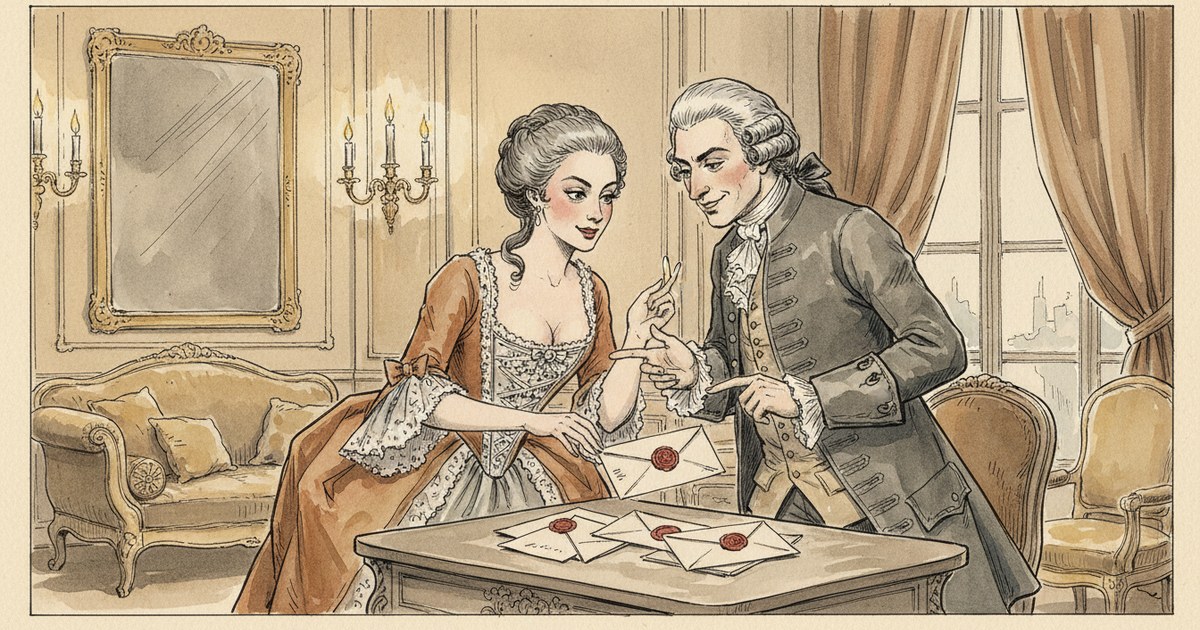
    Laclos spent his career as a military engineer, and the novel has an engineer’s precision. Every letter is placed deliberately. The reader always knows more than any single character. The effect is not suspense — it is dread. Consider Letter 48, in which Valmont writes to Merteuil at the very moment he is composing a tender declaration to Madame de Tourvel — using her back as his writing desk. He describes the scene to Merteuil with amused detachment while the woman beneath him believes herself the object of his most sincere feeling. Laclos does not editorialize. He simply shows you the letter, and the information it contains is enough to make your skin crawl.

    The Man Who Wrote One Book

    Pierre-Ambroise-François Choderlos de Laclos was born in Amiens in 1741 into a family of minor nobility — respectable enough to access aristocratic circles, not grand enough to dominate them. He spent two decades as a garrison officer, stationed in provincial towns, doing the unglamorous administrative work of the French military while the courtly world he observed went about its glittering business at a distance. That outsider’s proximity matters. Les Liaisons Dangereuses is not the work of someone who was part of that world; it is the work of someone who watched it very carefully and had opinions.

    Laclos wrote one novel. He spent years working on a treatise on women’s education that was never finished, served in the Revolutionary wars, and died in 1803 having published essentially nothing else. Les Liaisons Dangereuses is his entire literary legacy, which gives it a strange completeness — there is no early Laclos, no late Laclos, just this one perfect machine of a book. He lived long enough to see the world his novel described destroyed by revolution, and then to serve the republic that replaced it. Napoleon eventually made him a general. Whether Laclos found any irony in that — a man who had written the most devastating portrait of the ancien régime, rewarded by its successor — the historical record does not say.

    The Best Translation to Read

    The two translations most commonly recommended are P.W.K. Stone (Penguin Classics) and Douglas Parmée (Oxford World’s Classics). Both are reliable. The Stone translation has been in print since 1961 and remains the most widely read; it’s accurate, clear, and carries the formal register of the original without becoming stiff. The Parmée translation is slightly more contemporary in rhythm and better suited to readers who find Stone’s prose dated.

    For most readers, the translation we recommend is Stone. The formal, slightly elevated prose actually serves the novel — Valmont and Merteuil speak in a register that marks them as people who have turned language into a weapon. A more colloquial translation softens that edge. The test is simple: read Merteuil’s Letter 81 in both versions. In Stone, her self-description — the account of how she trained herself to suppress every visible emotion, to read rooms, to perform sincerity on demand — lands with the cold weight it requires. The register is that of a manifesto delivered in a drawing room. In more contemporary versions, it risks reading like self-help. Stone keeps the distance that Laclos built into the character, and that distance is the point.

    Where It Sits in the Canon

    It influenced Stendhal. It influenced Flaubert. The cold precision of Madame Bovary’s irony has Laclos behind it. If you read Laclos and then go back to Flaubert, you’ll see the debt immediately. What Flaubert learned from Laclos is not subject matter but method: the idea that a narrator can be entirely absent — that the prose can efface itself so completely that the reader is left alone with the characters and their self-delusions, with no authorial hand to guide the verdict. Laclos achieves this through the epistolary form itself; Flaubert would spend his whole career trying to achieve the same effect in continuous prose.

    The novel also has a quieter but significant relationship with Rousseau. Julie, ou la Nouvelle Héloïse — published twenty years earlier and also an epistolary novel — was the defining sentimental counterpoint to everything Laclos was doing. Rousseau believed that letters revealed the authentic self; Laclos spent 175 letters demonstrating that they do nothing of the kind. The two novels are, in a sense, in direct argument with each other, and understanding that argument explains why Madame de Tourvel — the virtuous woman Valmont pursues and destroys — is written with such uncomfortable sympathy. She is the Rousseauian reader, destroyed by her faith in authenticity.

    The World It Came From

    France in 1782 was seven years from revolution, though nobody knew it yet. The aristocratic leisure class — the world Valmont and Merteuil inhabit — was defined above all by time: time to write letters, to receive them, to read them aloud, to parse them for hidden meaning, to compose replies that concealed as much as they revealed. The letter was not merely a communication technology; it was the primary medium through which that class conducted its social and erotic life. Relationships were built in correspondence. Reputations were made and destroyed by what was written, forwarded, withheld. Laclos did not choose the epistolary form because it was fashionable — though it was — he chose it because it was the form in which his characters actually lived.

    This is why the novel felt so dangerous when it appeared. Contemporary readers did not experience it as fiction in the way we might today. The letters read like letters they could have received, from people they might have known. Laclos claimed, in a preface dripping with irony, that he was merely the editor of a real correspondence. Nobody fully believed him; many were not entirely sure. The scandal was not that the book described depravity — libertine literature was abundant in 18th-century France — but that it described depravity with such recognizable specificity. It was not a warning. It was a mirror held up to a class that preferred its mirrors flattering.

    The speed of the novel’s notoriety was itself remarkable. Within weeks of publication it was being read in the salons it depicted — the same aristocratic women who recognized the social world on every page were passing it between each other under their shawls. Several readers attempted to identify the real people behind the characters, and at least one candidate for “the real Merteuil” was proposed in Parisian society within the year. Laclos denied everything with the practiced innocence of a man who had written a 400-page argument for the unreliability of all stated positions.

    What People Get Wrong

    Readers who come to the novel via the 1988 film — Glenn Close, John Malkovich, the costumes, the heat — often find the book colder than expected. That is not a flaw. The film is a story of passion; the novel is a story of geometry. Valmont and Merteuil do not lose control because they feel too much. They lose control because they have constructed a system so intricate that it eventually turns on its architects. The seductions in the novel are less erotic than tactical. Reading it, you are less a voyeur than an analyst watching a campaign unfold — which is precisely the effect Laclos intended.

    The second misreading is more consequential: the assumption that Merteuil is simply a villain. She is not. She is the only character in the novel who has thought seriously about what she is doing and why. Letter 81 — the letter in which she explains, to Valmont, how she constructed herself from nothing, how she taught herself to read faces and master her own, how she became what she is through deliberate self-creation — is one of the most remarkable pieces of writing in 18th-century French literature. It is a philosophical autobiography delivered as a weapon. Merteuil is monstrous, yes. She is also the most fully realized intelligence in the book, and Laclos knows it. The novel’s moral universe does not simply punish her for being powerful. It punishes her for existing in a world that had no legitimate place for what she was.

    The third misreading — less common but worth naming — is to read Cécile de Volanges, the young convent-educated girl Merteuil and Valmont jointly destroy, as simply naive. She is naive, yes, but she is also fifteen years old, has been educated in deliberate ignorance of the world she is about to enter, and is surrounded by adults whose interest in her well-being is performative at best. Her letters, which start out cheerful and girlish and grow increasingly confused and frightened, track a very specific kind of harm. Laclos gives her enough interiority that her destruction doesn’t feel like furniture. It feels like a crime the reader watched happen and did nothing to stop.

    Who Should Read It

    Anyone who has read Stendhal, Flaubert, or Balzac and wants to understand where they came from. Anyone interested in how the epistolary form can be used not just as a narrative device but as a structural argument — the form of letters is the point; it creates the information asymmetry that makes the novel work. Anyone who finds the aristocratic world of 18th-century France fascinating and wants to see it at its most predatory.

    It is not a long book. The Penguin edition runs to about 400 pages, but it reads faster than that — the letters pull you forward. It is also, despite everything, frequently very funny. Valmont’s accounts of his own maneuvers have the self-satisfied comedy of someone who is absolutely certain he is the cleverest person in any room — a certainty the novel methodically dismantles, but which produces some genuinely sharp comedy on the way down. Reading Laclos is not a grim experience. It is an exhilarating one, with a slow-building sense of doom underneath.

    If You Liked This

    The natural companions are novels about intelligence turned predatory. Stendhal’s The Red and the Black takes the same engine — manipulation as a form of sport, ambition dressed as seduction — and runs it through the post-Napoleonic social climb; Julien Sorel is a provincial Valmont with worse odds. Flaubert’s Sentimental Education (not Bovary — the disillusionment arc here is harder and more systemic) shows what happens when that same cold clarity turns inward and hollows out its subject entirely. And Henry James’s The Portrait of a Lady is the anglophone version of the same problem: characters who treat other people as objects to be arranged, and one woman who slowly understands that she has been arranged. These books talk to each other. Reading them in sequence is its own education.

    Frequently Asked Questions

    Is Dangerous Liaisons worth reading?

    Yes, without qualification. It is one of the most precisely constructed novels in the Western canon — a book that uses form and content as a single argument. If you have any interest in how psychological manipulation works, how power operates through language, or simply in prose that never wastes a sentence, it belongs on your list.

    Is Les Liaisons Dangereuses appropriate for young readers?

    It depends on the reader, not the age. The novel contains seduction, sexual manipulation, and the deliberate destruction of a young woman’s reputation and sanity. None of it is graphic by contemporary standards — this is 18th-century French prose, not modern literary fiction — but the themes are adult and the psychological content is genuinely dark. Mature teenagers who read seriously will handle it; it is not a book for younger adolescents.

    Which is better — the 1988 film or the book?

    They are doing different things. The film, directed by Stephen Frears with a screenplay by Christopher Hampton, is an excellent adaptation that translates the novel’s cruelty into something warmer and more visceral. The book is colder, more structural, and ultimately more disturbing — because it never lets you forget that you are watching a system operate, not a passion unfold. Read the book first. The film rewards you differently once you know how the machine is supposed to work.

    How long does it take to read Les Liaisons Dangereuses?

    The Penguin Classics edition runs to roughly 400 pages, but the epistolary format moves faster than continuous prose — letters are short, the transitions are abrupt, and the forward pull is strong. Most readers finish it in four to six hours of focused reading, spread across two or three sittings. It does not drag.

    Why did Les Liaisons Dangereuses cause such a scandal in 1782?

    The scandal was not simply about content — libertine fiction was widely available in 18th-century France — but about recognizability. The social world Laclos depicted was specific enough that contemporaries attempted to identify real people behind the characters, and the novel’s formal device (Laclos claiming to be merely an editor of genuine letters) blurred the line between fiction and document in a way that felt threatening. It was suppressed after the Revolution as a product of aristocratic decadence, then again under Napoleon on different grounds. The book has spent most of its existence being banned by someone.

    Is there a connection between Les Liaisons Dangereuses and Cruel Intentions?

    Yes, direct and credited. Roger Kumble’s 1999 film Cruel Intentions is a loose adaptation that transposes the story to a Manhattan prep school milieu, with Sebastian Valmont (Ryan Phillippe) and Kathryn Merteuil (Sarah Michelle Gellar) replacing the French aristocrats. The core structure — a wager over a seduction, letters used as instruments of power, a system that destroys its architects — is preserved almost intact. Hampton’s 1988 screenplay (which became both the Frears film and a stage play) was also separately adapted as Valmont by Miloš Forman in 1989, meaning the novel generated two major films in a single year, which is itself a measure of how much material it contains.

    📚 Further Reading
    If Laclos interests you, the natural next steps are Stendhal’s The Red and the Black and Flaubert’s Madame Bovary — both available in modern English translations from Classics Retold.

    Stendhal Guide →
    Flaubert Guide →

    Recommended Edition
    Dangerous Liaisons — Pierre Choderlos de Laclos
    Modern English translation

    Kindle →Paperback →