Tag: existentialism

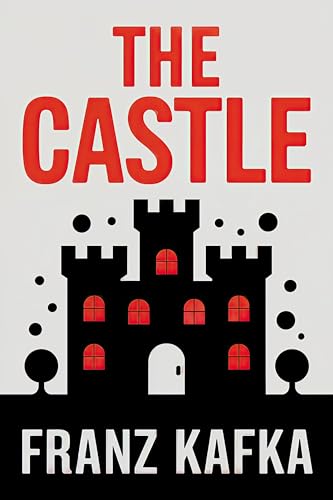
  • Kafka Died Before Reaching His Own Castle

    Kafka Died Before Reaching His Own Castle

    K. arrives at the village on a winter night and cannot find a place to sleep. A man stops him, demands to know his business, and K. says he is the Land Surveyor — the one the Castle sent for. The man says there is no Land Surveyor. There is also, he implies, no permission for K. to be here at all. K. goes to sleep on the floor of a tavern, and by morning nothing has changed except that he is slightly colder. This is how The Castle begins, and it is, in miniature, everything the novel will ever be.

    Franz Kafka never finished the book. He told his friend Max Brod to burn it. Instead Brod published it, and a century later the novel stands as the most precise map ever drawn of a bureaucratic system whose purpose is its own continuation — a machine that processes requests by generating the need for more requests. K. spends four hundred pages trying to reach the Castle, and the Castle’s genius is that it never refuses him. It just makes contact impossible through an infinite series of intermediaries, procedural delays, and officials who are perpetually either asleep or unavailable. The thesis of The Castle is not that power is cruel. It is that power doesn’t need to be.

    What makes this unbearable — and unputdownable — is that K. is not delusional. He sees the system clearly. He names it. He even, occasionally, finds moments of warmth inside it. And still he cannot get through. The incompleteness of the novel is not a flaw. It is the only honest ending a book like this can have.

    There is a detail Brod recorded about the ending Kafka described to him verbally before he died: K. would eventually receive word from the Castle that his legal claim to live in the village was invalid, but that in consideration of certain circumstances he would be permitted to remain and work there. Kafka told Brod this while lying ill in a sanatorium. He never wrote it down. The spoken ending is more devastating than any written conclusion could have been — the Castle grants K. permission to exist on its sufferance, not on any right. Victory and defeat are indistinguishable. That is very much on purpose.

    The Man Who Wrote Before Work and Burned Most of It

    Kafka wrote The Castle in 1922, the last year he had any real health to work with. He had tuberculosis by then — he would die two years later at forty — and he had recently quit his job at an insurance company in Prague after eighteen years. The insurance work mattered. He spent his days processing workers’ injury claims, reading the testimony of men who had lost fingers, hands, arms to machines, and then writing determinations about what their fingers were worth. He understood, from the inside, how a system could be scrupulously fair and completely indifferent at the same time. That understanding is in every page of The Castle.

    He wrote in German in a Czech city under Austro-Hungarian administrative culture — which is to say he wrote surrounded by exactly the kind of layered, jurisdictionally fragmented bureaucracy that his novel would anatomize. The village K. arrives in has its own mayor, its own traditions, its own understanding of the Castle’s wishes — none of which match what the Castle itself says, when it says anything at all. Kafka had watched Prague operate under exactly this kind of jurisdictional fog his entire life. He didn’t invent the absurdity. He just recognized it as a system.

    The German in which Kafka wrote is notoriously difficult to translate. It is flat on the surface and bottomless underneath — long subordinate clauses that keep deferring their meaning, sentences that feel bureaucratic until you realize they are describing terror. He wrote without ornamentation because ornament would have been dishonest. The prose style is part of the argument.

    What is easy to miss is how funny Kafka’s German is, in exactly the way a Kafka sentence is funny: the humour arrives before you realize you are reading about something horrible. In The Castle, K. has a conversation with the village Mayor that runs for dozens of pages. The Mayor is not obstructive; he is genuinely helpful, even apologetic. He explains, with great patience and evident goodwill, exactly how K.’s appointment as Land Surveyor came to be confirmed, why that confirmation was then contradicted, why the contradiction was itself a bureaucratic error, and why the error — though acknowledged as such — cannot simply be corrected. He offers this explanation across several nested sub-clauses, each one temporarily appearing to promise resolution. By the end, K. knows more about the process than he did before and is no closer to any outcome. Kafka knew, from eighteen years at the insurance office, that this is exactly how it works. The Mayor is not villainous. He is helpful. That is precisely the problem.

    What the Novel Actually Does

    The Castle does something that almost no novel manages: it makes administrative procedure feel like dread. There is a chapter where K. receives a letter from an official named Klamm — a letter that acknowledges his work and seems to promise progress — and K. spends pages analyzing it, trying to determine if it is genuine recognition or a form letter or a trap. He can’t tell. The reader can’t tell. That indeterminacy is not a puzzle to be solved. It is the condition of K.’s existence, and Kafka renders it with such patience that you begin to feel it physically, the weight of not knowing whether anything you do registers.

    The women in the novel are the strangest and most essential figures. Frieda, who becomes K.’s lover, had some kind of relationship with the inaccessible Klamm, and K. is drawn to her partly because of it — as if proximity to someone who touched the Castle might constitute a kind of access. It doesn’t. But the logic of the novel is that K. cannot stop trying, because stopping would mean accepting that the Castle is not a puzzle but a permanent condition. He cannot accept that. And in his refusal, Kafka gives us something that is not quite tragedy and not quite comedy but exists in the specific register of a man who understands he is trapped and keeps moving anyway.

    Klamm himself is one of literature’s great off-stage presences. He is described, debated, theorized about — and never directly encountered. Different villagers give K. contradictory physical descriptions of the man: tall or short, thin or heavy, with a moustache or without. When K. manages to observe Klamm through a peephole in a tavern, he sees a large, heavy man sitting at a desk, apparently asleep or dozing over his beer. That is the closest K. — or the reader — ever gets. Kafka understood that power is most effectively total when it cannot be looked at directly. The novel enacts that principle structurally: Klamm recedes in direct proportion to how hard K. pushes toward him.

    The Unfinished Question

    It is worth pausing on what it actually means that Kafka didn’t finish this book, because “unfinished” can sound like a defect that requires apology. It doesn’t, here. Kafka began The Castle in January 1922 at a sanatorium in the Bohemian mountains — Spindlermühle, in the Giant Mountains — where he had gone to recover from a tuberculosis flare-up. He wrote in the first person initially, then switched to the third, crossing out the word “I” wherever it appeared and replacing it with “K.” That revision is itself telling: Kafka was distancing himself from the protagonist just enough to observe him without mercy. He wrote intensely through early 1922, then stopped in September. He wrote no more fiction of any length after that. By 1924, he was dead.

    Max Brod, who had promised to burn the manuscripts and then immediately announced he would do no such thing, published The Castle in 1926. He made editorial decisions that shaped how the novel was read for decades — including how he divided chapters, since Kafka’s manuscript was largely unpunctuated and unbroken. More recent scholarly editions have tried to recover something closer to the original manuscript’s texture. The edition we recommend here draws on that more careful editorial tradition, giving readers a text that is as close to what Kafka actually wrote as modern scholarship can establish — which matters, because in a novel where the bureaucratic distance between documents is the whole subject, the distance between the manuscript and the printed page is not a trivial question.

    Why This Translation (translated by David Petault)

    A novel this dependent on prose texture needs a translation that doesn’t smooth what Kafka made rough or clarify what he left suspended. The edition featured here handles the flatness honestly — it doesn’t reach for elegance where Kafka was deliberately plain, and it doesn’t domesticate the strangeness into something more comfortable than Kafka intended. Earlier English versions, particularly Willa and Edwin Muir’s 1930 translation, were for a long time the standard, and they are not without merit — but they were made at a moment when English literary prose had different expectations of what a sentence should do. The Muirs occasionally tidied Kafka’s subordinate clauses into something more grammatically conventional, which is exactly the wrong instinct. When Kafka’s sentences loop back on themselves mid-thought, that loop is not a stylistic quirk. It is the argument. If you haven’t read The Castle, or if you read it in a version that felt distant, this is the one to start with. Pick up the paperback here — it is the right length for a long weekend and the wrong book to read if you have any patience left for systems that fail you while insisting they are working perfectly on your behalf.

    K. never reaches the Castle. Kafka never finished the book. The system, in both cases, simply outlasted them — which was always the point.

    What is the best English translation of The Castle by Franz Kafka?

    For modern readers, The Castle: A New Translation stands out as the most accessible English edition available today. Unlike older translations that carry the weight of dated idiom and overly formal syntax, this version preserves Kafka’s distinctive prose rhythm while rendering it in clear, contemporary English. It is the translation to reach for if you want to experience Kafka’s bureaucratic nightmare without the additional barrier of archaic language getting in the way.

    Is The Castle by Kafka worth reading in 2026?

    The Castle resonates in 2026 precisely because the systems Kafka satirized have only grown more elaborate. K.’s endless, fruitless effort to gain recognition from an authority that refuses to acknowledge him maps directly onto modern encounters with institutions, algorithms, and administrative loops that seem designed to exhaust rather than resolve. The novel’s unfinished state, far from being a flaw, makes it feel permanently unresolved in exactly the way life often is. A fresh translation makes that feeling more immediate than ever.

    How does The Castle compare to The Trial by Kafka?

    Both novels trap their protagonists inside systems of opaque, indifferent power, but the texture of dread differs. In The Trial: A New Translation, Josef K. is pursued — the machinery of judgment closes in on him from the start. In The Castle, K. is the one pushing forward, trying to penetrate a bureaucracy that simply refuses to engage. The Trial is tighter, more propulsive; The Castle is expansive and exhausting in a way that feels truer to ordinary institutional life. Read one and you will want the other.

    What should I read after The Castle by Kafka?

    Kafka’s Central European sensibility finds a natural companion in the work of Stefan Zweig, another master of psychological precision and moral unease. The Stefan Zweig Collection — Volume 1: A New Translation and The Stefan Zweig Collection — Volume 2: A New Translation, both available at classicsretold.com, offer an ideal next step. Zweig writes with warmth where Kafka writes with cold clarity, but both circle the same terrain: identity under pressure, individuals caught inside forces larger than themselves, and the quiet devastation of modern life.

    Frequently Asked Questions

    Curated pick
    The Castle — Franz Kafka
    Modern English translation

    Kindle →Paperback →

    More from Franz Kafka
    The TrialThe CastleAmerika (The Man Who Disappeared)A Country Doctor And Other Stories

    This post contains affiliate links. As an Amazon Associate, we earn from qualifying purchases.
  • Nietzsche Found Joy at His Lowest Point

    Nietzsche Found Joy at His Lowest Point

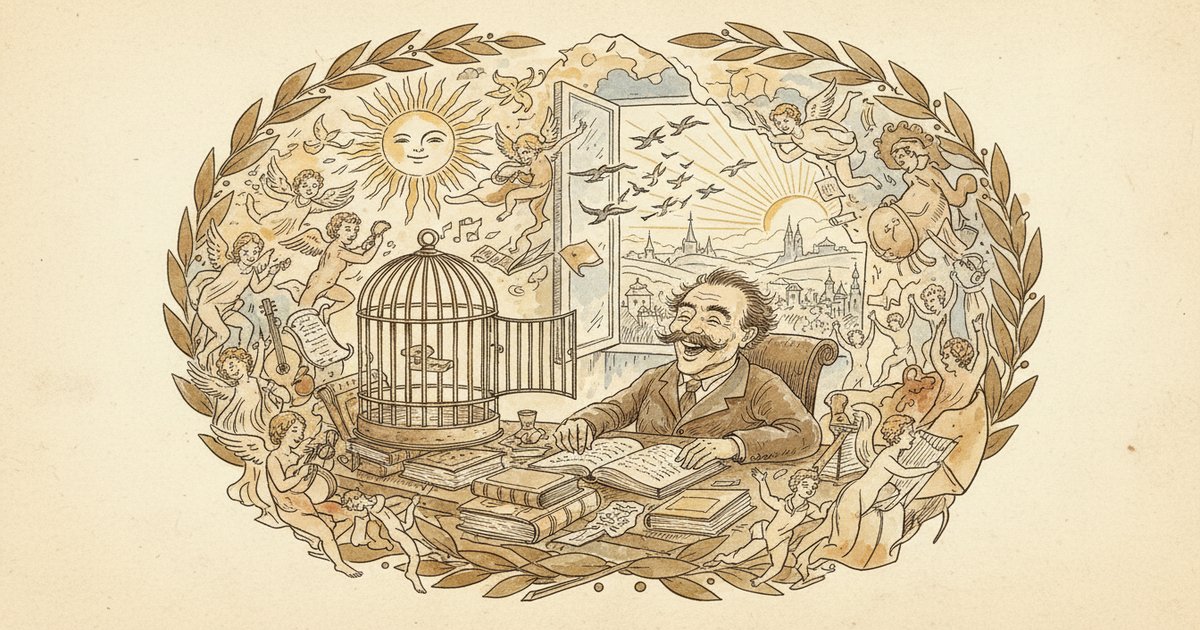
    In 1882, Nietzsche published a parable about a madman who runs into the marketplace at midday carrying a lantern. The man is looking for God. The crowd laughs at him. Then he turns on them: “We have killed him — you and I. All of us are his murderers.” The crowd keeps laughing. They don’t understand what they’ve done yet. Neither, Nietzsche suggests, does the madman himself — he has come too early. The deed is done but the consequences haven’t arrived. That parable lives in The Gay Science, and it is one of the most chilling paragraphs in the history of European thought — not because it is sacrilegious, but because it is grieving.

    Most people who have heard “God is dead” have not read the book that contains it. They’ve absorbed the line as a provocation, a slogan for atheist defiance, a bumper sticker. What The Gay Science actually argues is stranger and more demanding: if the entire moral and metaphysical architecture of Western civilization was built on a foundation that no longer holds, then the collapse isn’t liberation — it’s vertigo. The question Nietzsche spends the book working through is not whether God exists, but what happens to human beings when the story they organized their lives around stops being believable. That is not a nineteenth-century problem. It is this morning’s problem.

    The title itself is the first signal that something unusual is happening. Die fröhliche Wissenschaft — the joyful, or gay, science — is a reference to the Provençal troubadour tradition, the gai saber, the art of poetry and song practiced by medieval knight-poets. Nietzsche chose it deliberately. Philosophy, for him, was not supposed to be a solemn trudge toward truth. It was supposed to dance. Several sections of the book are written as poems. The preface to the second edition was written after a long illness, and it reads like a man who has just survived something and is astonished to find himself laughing again. That biographical texture is not incidental.

    The Man Who Philosophized at the Edge of Collapse

    Nietzsche spent most of his adult life in physical ruin. Migraines that lasted for days, near-blindness, nausea so severe he could barely read or write. He resigned his professorship at Basel at thirty-four because his body would not cooperate with a normal academic life. What followed was a decade of boarding houses in Switzerland and Italy, moving with the seasons to find climates his head could tolerate, writing in brief windows of clarity between attacks. The Gay Science was composed in this way — in fragments, in bursts, sometimes dictated, sometimes scrawled in notebooks before the next wave hit. The book’s aphoristic structure is not a philosophical affectation. It is the form imposed by a body that could not sustain argument for longer than a page.

    This matters because the philosophy in the book is inseparable from what it cost to produce it. When Nietzsche writes about the will to live, about joy as something wrested from suffering rather than simply given, he is writing from inside the experience. He was not a healthy man theorizing about resilience. He was a sick man who had decided — as a matter of survival — to find the suffering interesting. His famous concept of amor fati, the love of fate, the wish that nothing had been otherwise: it reads very differently when you know it was written by someone who had every conventional reason to resent his fate and chose not to. That choice is the philosophical argument made flesh.

    He was also, in 1882, falling into and out of love with Lou Salomé, the Russian-born intellectual who would later become Rilke’s companion and one of Freud’s earliest analysts. She declined to marry him. The section of The Gay Science that contains the eternal recurrence thought experiment — the most terrifying idea in the book — was written during this period. Nietzsche asks: what if you had to live your life again, exactly as it happened, infinite times, with no variation? Would you be crushed by that, or would you be able to say yes to it? He was asking this question at a moment when his life contained fresh, specific pain. The stakes of the answer were not abstract.

    What the Book Actually Does to You

    The structure of The Gay Science is looser than most philosophy, tighter than it looks. It moves from skepticism through grief into something that resists being named — a kind of affirmation that has been stress-tested against everything that might undo it. Nietzsche dismantles the consolations one by one: the afterlife, moral progress, the idea that suffering has cosmic meaning, the idea that knowledge makes things better. He is not doing this to be destructive. He is doing it because he thinks you cannot build anything worth having on foundations that won’t hold. Every section that feels like demolition is clearing ground.

    The famous section 341, the eternal recurrence, lands differently in context than it does as a standalone citation. By the time you reach it, Nietzsche has already asked you to abandon your inherited framework for meaning, has offered you nothing supernatural to replace it, and has watched you sit with the discomfort. Then he offers this: a thought experiment designed not to be solved but to be felt. If the answer is that you would choose to live it again — all of it, the migraines and the rejection and the boarding houses and whatever your specific version of those are — then you have found something. He never tells you what to call it. The last section of the original book is a poem. It ends with an invitation to the next work. Nietzsche understood that the dance wasn’t finished, and had the honesty not to pretend otherwise.

    Why This Translation (translated by David Petault)

    The translation in this edition makes choices that matter: it preserves the rhetorical heat of the original German, the sudden shifts between irony and earnestness that make Nietzsche so hard to paraphrase, and it treats the book’s poetry as poetry rather than as an embarrassment to be rendered in plain prose. If you’ve only encountered Nietzsche through quotation or reputation, this is the place to start — not because it’s the easiest entry point, but because it’s the most alive. Get your copy here.

    The madman in the marketplace extinguishes his lantern at the end of the parable, because it is too early — the news of God’s death has not yet reached human ears, and light is useless before people are ready to see. Nietzsche spent the rest of his career waiting for the ears to open. He is still waiting.

    What is the best English translation of The Gay Science?

    For readers approaching Nietzsche for the first time, this modern translation of The Gay Science is the most accessible entry point available. Unlike older Victorian-era renderings that preserve archaic syntax and stiff diction, this new translation prioritizes clarity without sacrificing philosophical precision. The result is a text that reads with the wit and urgency Nietzsche intended — aphoristic, provocative, and alive. Scholars who want word-for-word fidelity to the German may still reach for Kaufmann, but general readers will find this edition far more rewarding as an actual reading experience.

    Is The Gay Science worth reading in 2026?

    Yes — arguably more so now than at any point in the past century. The Gay Science is the book in which Nietzsche first announces the death of God and introduces the concept of eternal recurrence, two ideas that have only grown in cultural weight as secular modernity matures. Its central challenge — how do we create meaning without inherited metaphysical frameworks? — is precisely the question a post-religious, algorithmically mediated world is still failing to answer. The aphoristic format also rewards fragmented, distracted reading habits in a way that traditional philosophical prose does not.

    How does The Gay Science compare to Thus Spoke Zarathustra?

    The Gay Science and Thus Spoke Zarathustra are companion texts, written in overlapping years, and the final aphorism of The Gay Science flows directly into the opening of Zarathustra. The key difference is register: The Gay Science is analytic and ironic, built from numbered aphorisms that argue and probe; Zarathustra is prophetic, written in quasi-biblical verse and meant to overwhelm through rhythm and image. Readers who want to understand Nietzsche’s reasoning read The Gay Science first. Readers who want to feel the force of his vision read Zarathustra after. Both are available in modern accessible translations; starting with The Gay Science is the more intellectually honest sequence.

    What should I read after The Gay Science?

    Once you have absorbed Nietzsche’s dismantling of inherited values, the natural next step is literature that dramatizes the human consequences — characters adrift from old certainties, constructing identity under pressure. Stefan Zweig is the ideal bridge. The Stefan Zweig Collection — Volume 1: A New Translation, available at classicsretold.com, gathers his finest novellas, each a precise psychological study of people at the exact moment their inner world collapses or reconstitutes. The Stefan Zweig Collection — Volume 2: A New Translation extends that project with equal craft. Zweig was a direct inheritor of the Central European crisis Nietzsche diagnosed; reading him after The Gay Science closes the circuit between philosophy and lived experience.

    Curated pick
    The Gay Science — Friedrich Nietzsche
    Modern English translation

    Kindle →Paperback →

    More from Friedrich Nietzsche
    Thus Spoke ZarathustraThe Will to PowerThe Birth of TragedyBeyond Good and Evil

    This post contains affiliate links. As an Amazon Associate, we earn from qualifying purchases.

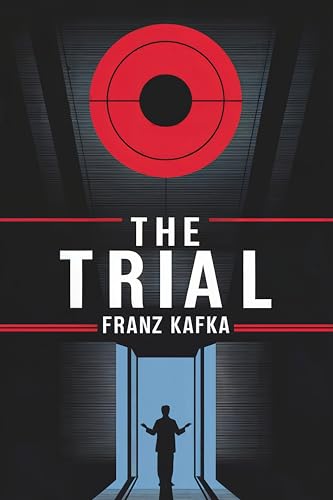
  • Kafka Never Finished The Trial. It Shows.

    Kafka Never Finished The Trial. It Shows.

    On the morning of his thirty-first birthday, Josef K. is arrested by two men who eat his breakfast and cannot tell him what he’s charged with. He is not taken anywhere. He goes to work. He comes home. The trial, whatever it is, proceeds without him—or rather, it proceeds through him, feeding on his attempts to stop it. Kafka wrote that opening scene in a single night in August 1914, six weeks after the assassination in Sarajevo and three days after Germany declared war on Russia. He was also, that same week, breaking off his engagement to Felice Bauer for the first time.

    The conjunction matters. The Trial is not about bureaucracy in the abstract. It’s about the specific horror of a man who believes, somewhere beneath his panic, that the charge against him might be real—and who cannot ask what it is because naming it would confirm it. Every procedural absurdity K. encounters, every painter and lawyer and cathedral priest who offers to help, is an escape route that leads deeper in. Kafka understood that mechanism from the inside. He had spent years in it.

    What he finished in those months of 1914 and 1915—he never declared the novel done, left chapters in a drawer, told Max Brod to burn everything—was not a political allegory but something closer to a portrait of guilt that has outrun its cause. Josef K. doesn’t know what he did. Neither do we. That is not a mystery to solve. It is the condition of the book.

    The novel’s unfinished state is itself part of the argument. Kafka left at least two chapters in incomplete drafts and never settled on their placement in the sequence. When Max Brod assembled the manuscript for publication in 1925, he was making editorial decisions Kafka had never sanctioned, about which scenes belonged, in what order, with what weight. The Trial we read is partly Brod’s construction—which means the book about a man who never fully understands the proceedings against him reaches us through proceedings its author never fully authorized. That irony is either accidental or too perfect to be accidental, and either way it belongs to the novel.

    The Man Who Administered His Own Sentence

    Kafka spent eleven years as a senior claims officer at the Workers’ Accident Insurance Institute in Prague, assessing industrial injury compensation for men who had lost fingers, hands, whole limbs to machines their employers had not bothered to guard. He was good at it. He wrote meticulous reports, proposed safety reforms, understood bureaucratic machinery in the way a mechanic understands an engine—by having spent years watching it fail people. His literary reputation has often turned him into a pale, tubercular visionary isolated from the world, but the biographical record is more uncomfortable than that: he was competent and embedded, and he hated that he was.

    The engagement to Felice lasted, in its fractured way, from 1912 to 1917. In his diary entries from those years, Kafka describes writing as the only thing that gave him the right to exist, and marriage as something that would extinguish writing, and the inability to choose between them as a kind of permanent verdict. When he writes, in The Trial, about a court that operates in attic rooms above ordinary apartments—that holds its sessions in buildings where families are also cooking dinner and children are doing homework—he is not imagining Kafkaesque abstraction. He is describing what it feels like to carry a proceeding inside you while the world continues its ordinary operations all around you.

    He was diagnosed with tuberculosis in 1917, the year he finally broke the engagement for good. He died in 1924. He was forty. Max Brod published The Trial the following year, against explicit instructions. Whether that was friendship or betrayal is a question the novel, characteristically, refuses to answer.

    Prague in 1914 adds another layer that tends to get lost in the English-language reception of the novel. Kafka was a German-speaking Jew in a Czech city that was itself inside the Austro-Hungarian Empire—three identities, none of them fully his, none of them fully comfortable. He wrote in German, worked in German, but lived among Czech speakers. He was subject to laws made in Vienna by administrators he had never met and would never see. The court that tries Josef K. has no single location, no named jurisdiction, no identifiable nationality. For Kafka that was not an invented absurdity. It was Tuesday.

    What the Court Already Knows

    The genius of the novel is not its surrealism—it is its precision. The court’s logic is not random; it is perfectly consistent, internally, once you accept its first premise: that accusation and guilt are the same thing. Every character K. consults confirms this premise while appearing to contest it. The painter Titorelli explains with cheerful expertise that acquittals are theoretical. The lawyer Huld explains that the most effective strategy is to avoid annoying the lower clerks. The priest in the cathedral explains that the doorkeeper in the parable was not cruel—he was only doing his job. Each explanation is coherent. Each one closes another door.

    What makes the novel land, still, is that K. is not passive. He fights. He organizes. He drafts a petition. He fires his lawyer and decides to represent himself. His energy and intelligence are completely genuine, and they are completely useless, and Kafka is not cruel about this—he is something worse than cruel, he is accurate. The final chapter, where two men in frock coats arrive at K.’s apartment on the eve of his thirty-second birthday, is four pages long and written with the flat procedural clarity of an official report. K. does not resist. He has been preparing for this since the first page, and so have we, and when the knife turns, the sentence Kafka gives us is not dramatic. It is administrative. That economy is the whole argument.

    The parable of the doorkeeper—”Before the Law”—deserves a moment on its own, because Kafka published it as a standalone story in 1915, while the novel sat unfinished in a drawer. A man from the country spends his entire life waiting at a door that was built only for him, and never enters. The doorkeeper never forbids him; he only implies that entry is not currently advisable. The man waits, bribes the doorkeeper, grows old, and dies at the threshold. In the cathedral scene of the novel, a priest offers K. this parable as consolation—or instruction—or warning—and then spends several pages explaining that its meaning is disputed and that all interpretations are equally valid. Kafka embeds the parable, then immediately demonstrates that even the parable cannot be read without the court’s interference. There is no outside text. There is no vantage point from which the system looks comprehensible.

    The Architecture of Dread: How the Novel Is Built

    One of the things that gets missed in summary is how strange the novel’s structure actually is. It does not build toward revelation in the way a thriller does, or collapse inward in the way a tragedy does. It accumulates. Each chapter introduces a new figure—the washerwoman, the flogger in the lumber room, the manufacturer, the painter—who seems to represent a new avenue of escape or understanding, and each chapter ends with that avenue quietly sealed. The lumber room scene is the most startling example: K. opens a door at his bank and finds, in a storage space he walks past every day, the two guards who arrested him being flogged by a man in leather. He shuts the door. He comes back the next evening and opens it again. They are still there, in the same positions, still being flogged, as though nothing has moved. The scene has no resolution because the novel is not interested in resolution. It is interested in the door you keep opening even when you know what’s behind it.

    This structural logic—repetition without progress, motion without direction—is what gives The Trial its particular texture of dread. It does not feel like suspense because suspense implies that something might yet be resolved. It feels like recognition: the slow accumulation of evidence that you already knew this was how it would go.

    Why This Translation (translated by David Petault)

    Kafka’s German is not ornate. It is the language of forms and memos—precise, impersonal, faintly polite—turned toward material that strips politeness to its skeleton. A translation that reaches for elegance misses the point; one that flattens into plainness loses the constant, quiet pressure of a bureaucratic register being used to describe a man’s destruction. The translation we recommend holds that tension. The sentences read the way official correspondence reads when you know it contains something terrible: smooth on the surface, load-bearing underneath. If you have not read The Trial in English before, or if you read it in a version that felt distant or dated, this is the edition to go back with. Find it here: The Trial: A New Translation.

    The older Muir translation, which dominated the English-language reading of Kafka for decades, has real virtues—it was made by people who knew Kafka’s circle and cared deeply about his work—but it was also made in the 1930s, and it shows. Certain words that carried precise bureaucratic weight in Kafka’s German got rendered into English equivalents that have since drifted in meaning, or that carried literary connotations Kafka was deliberately avoiding. The modern English edition featured here strips those accretions away. When K. receives a summons, it reads like a summons. When an official speaks to him with impeccable courtesy about something monstrous, the courtesy lands the way it should: not as warmth, but as the most unsettling thing in the room.

    The court, the novel insists, was always already in session. You were just the last to know.

    Further reading: More books by Franz Kafka · Explore German Literature

    Frequently Asked Questions

    What is the best English translation of The Trial by Franz Kafka?

    The translation we recommend on this page is the modern English edition linked above, which preserves Kafka’s precise, bureaucratic register without the archaic phrasing that makes older versions feel dated. The Muir translation held the field for decades and remains historically significant, but its 1930s English has drifted far enough from current usage that it creates a distance Kafka never intended—his German was contemporary and clipped, not literary and elevated. For a first read or a reread, the modern edition featured here is the cleaner entry point.

    Is The Trial worth reading in 2026?

    More than ever. Kafka wrote about a man prosecuted by a system that never explains its charges, and that premise has only grown more relevant in an era of algorithmic decisions, opaque institutions, and bureaucratic dead ends that defy appeal. The Trial resonates in 2026 not as historical curiosity but as a diagnostic tool — a novel that names something most people feel but struggle to articulate.

    How does The Trial compare to The Castle by Kafka?

    Both novels trap their protagonists in systems designed to frustrate, but the emotional texture differs significantly. The Trial moves with the urgency of a legal proceeding spiraling toward an unknown verdict — it is tighter, more propulsive, and more claustrophobic. The Castle is slower and more expansive, following a land surveyor who can never quite reach the authority he seeks. Readers who find The Trial gripping often describe The Castle as its philosophical counterpart: same machinery, longer rope.

    What should I read after The Trial by Kafka?

    The Stefan Zweig Collection — available in two volumes of new translations at classicsretold.com — is the natural next step. Zweig was Kafka’s contemporary, writing in the same Central European literary tradition, and shares Kafka’s interest in psychological pressure and institutional dread. Volume 1 introduces Zweig’s novellas and stories at their most concentrated; Volume 2 extends that range. Together they offer a fuller portrait of the era that produced The Trial.

    Did Kafka finish writing The Trial?

    No. Kafka wrote the novel intensively between August 1914 and January 1915 but never declared it complete, leaving several chapters in draft form and the chapter sequence unresolved. When he died in 1924 he left instructions for Max Brod to destroy all his unpublished work; Brod ignored those instructions and assembled the manuscript for publication in 1925, making editorial choices about chapter order and inclusion that Kafka had never sanctioned. The novel we read today is partly Brod’s construction—a fact that sits uncomfortably alongside a story about proceedings that never fully disclose their own logic.

    What does “Before the Law” mean in The Trial?

    “Before the Law” is a parable Kafka published as a standalone story in 1915 and also embedded in the cathedral chapter of The Trial, where a priest recites it to Josef K. as a kind of instruction. A man from the country spends his entire life waiting at a door built only for him, discouraged from entering by a doorkeeper who never explicitly forbids it, and dies at the threshold without ever passing through. Kafka then uses the following pages to show the priest and K. disputing what the parable means—whether the doorkeeper was deceiving the man, whether the man deceived himself, whether any reading is more valid than another—without resolution. The parable is not an explanation of the novel. It is a demonstration that explanations do not help.

    Curated pick
    The Trial — Franz Kafka
    Modern English translation

    Kindle →Paperback →

    More from Franz Kafka
    The CastleAmerika (The Man Who Disappeared)A Country Doctor And Other StoriesMetamorphosis

    This post contains affiliate links. As an Amazon Associate, we earn from qualifying purchases.
  • Nietzsche Wrote Scripture for Godless Men

    Nietzsche Wrote Scripture for Godless Men

    In the autumn of 1882, Friedrich Nietzsche sat in a boarding house in Genoa, watching the Mediterranean light fail, and began drafting the speech a madman gives in a marketplace. The madman has a lantern. It is midday. He is looking for God. “We have killed him,” the madman says to the crowd that is laughing at him—”you and I.” Then he asks the question that stops the laughter cold: “What festivals of atonement, what sacred games shall we have to invent?”

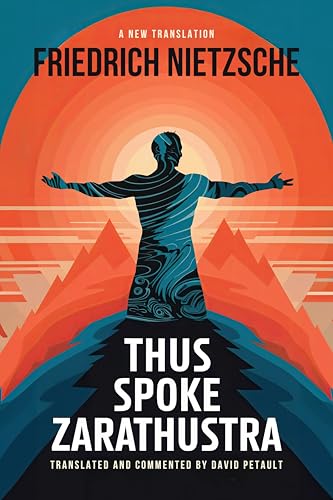
    That scene—from The Gay Science, which preceded Thus Spoke Zarathustra—is where the argument begins, and Nietzsche never let it end. The death of God was not a theological position. It was a diagnosis: Western civilization had built its entire architecture of meaning on a foundation it could no longer defend, and the building was still standing only because no one had told the inhabitants. Thus Spoke Zarathustra is what Nietzsche wrote next. It is not an answer. It is the question asked at full volume, in the form of a prophet who comes down from his mountain to find that humanity is not ready to hear him.

    Zarathustra speaks. The crowd listens politely and asks for a tightrope walker. Nietzsche understood this was the likeliest outcome.

    The Philosopher Who Diagnosed His Own Century

    He was born in 1844 in Röcken, a small Prussian village, the son of a Lutheran pastor who died of brain disease when Friedrich was four. That biographical fact is not incidental. Nietzsche grew up in a house where faith was the atmosphere, then watched it removed. He became a child prodigy, a professor of classical philology at Basel at twenty-four—the youngest ever appointed—before the migraine attacks and the eye problems and the nausea made sustained academic work impossible. By his mid-thirties he had resigned his professorship, lost the friendship of Wagner over what he called Wagner’s capitulation to Christianity and German nationalism, and was writing books that sold fewer than two hundred copies. He was, in the specific way of the nineteenth century, a man who had arrived too early at a conclusion everyone would eventually have to face.

    What his biography explains about Zarathustra is its loneliness—not as a mood, but as a structural argument. Zarathustra keeps returning to his cave. He gives his wisdom to crowds and they miss it. He finds disciples and sends them away because he wants followers who will surpass him, not worship him. The book’s most famous concept, the Übermensch—the Overman—is precisely this: not a superman in the comic-book sense, but a human being who has stopped requiring God as an excuse not to be fully, terrifyingly responsible for the meaning of their own existence. Nietzsche wrote this in the years he spent alone in Swiss and Italian boarding houses, surviving on plain food and walking through alpine terrain for hours each day because it was the only thing that relieved the headaches. The philosophy of self-overcoming was written by a man who had very little self left to spare.

    He completed the fourth and final part of Zarathustra in 1885. Six years later he collapsed in Turin, found embracing the neck of a horse that had been whipped in the street. He spent the last eleven years of his life in mental silence, cared for by his sister—who would later, with catastrophic consequences, align his work with German nationalism. He never knew his books had finally found their readers. He never knew what would be done to his ideas.

    The Book That Refuses to Be Summarized

    Thus Spoke Zarathustra is structured like a gospel—four parts, a prophet, parables, disciples—but it behaves like a grenade thrown at every gospel that preceded it. Its central chapters include “On the Three Metamorphoses,” where Nietzsche describes the human spirit moving from camel (the beast that bears all burdens willingly) to lion (the beast that can say no) to child (the beast that can begin again, free of obligation to what came before). This is not mysticism. It is a map of a specific psychological passage: out of inherited meaning, through the violence of negation, into the terrifying freedom of self-authorship. Anyone who has spent time sitting with a commitment—to a religion, a career, a relationship, an identity—that has gone hollow knows exactly what the camel stage feels like from the inside. Nietzsche just named it.

    The chapter called “On the Vision and the Riddle” contains the concept of eternal recurrence—the thought experiment that if time is infinite and matter finite, every moment must repeat, endlessly, including your worst ones—delivered as a confrontation with a dwarf on a mountain path who keeps whispering “gravity” in Zarathustra’s ear. The question eternal recurrence poses is not cosmological. It is: would you choose this life again if you had to live it forever? It is the most brutal possible test of whether you have actually made peace with the life you are living. Most readers find the chapter unexpectedly physical—there is a gate, a gateway, a serpent, a shepherd who bites the serpent’s head off, and Zarathustra laughing. It is the closest Nietzsche ever gets to writing a seizure in prose.

    Why This Translation (translated by David Petault)

    The problem with most English editions of Zarathustra is that they preserve the nineteenth-century formality—the “thou”s and “thee”s, the inverted syntax—in a way that creates a reverent distance from the text. That distance is exactly wrong. Nietzsche was writing in deliberate opposition to reverence. He wanted the book to feel urgent, spoken, direct. This new translation works in the idiom of contemporary English without flattening the strangeness of the original: the aphorisms still land like blows, the passages of lyric intensity still lift off the page, but the reader is not required to climb through archaic diction to reach the argument. The result is a Zarathustra that reads the way it must have felt in German—dangerous, beautiful, slightly unhinged, and alive.

    You can find the paperback edition here. Nietzsche asked what festivals of atonement we would invent to replace what we had killed. We are still answering. We will be for a while.

    Further reading: More books by Friedrich Nietzsche · Explore German Literature

    “`html

    What is the best English translation of Thus Spoke Zarathustra for modern readers?

    For readers approaching Nietzsche today, Thus Spoke Zarathustra: A New Translation in Modern Accessible English stands out as one of the most reader-friendly editions available. Older Victorian-era translations preserve a certain grandeur but frequently obscure meaning behind archaic diction. This modern accessible translation prioritizes clarity without sacrificing the philosophical depth or rhetorical force of Nietzsche’s original German—making it the practical first choice for anyone who wants to actually understand what Zarathustra is saying, not just admire its ornament.

    Is Thus Spoke Zarathustra worth reading in 2026?

    Yes, and arguably more than ever. Nietzsche’s central preoccupations in Thus Spoke Zarathustra—the death of inherited values, the will to create meaning in a disenchanted world, and the danger of herd conformity—map directly onto anxieties that define contemporary life. The book does not offer comfort; it offers a mirror. Thus Spoke Zarathustra: A New Translation in Modern Accessible English makes that confrontation available to readers who might have bounced off denser Victorian editions, which means its core provocation reaches a wider audience in 2026 than it could have a generation ago.

    How does Thus Spoke Zarathustra compare to The Gay Science as an entry point into Nietzsche?

    The Gay Science is where Nietzsche announces the death of God and introduces the eternal recurrence in compressed, aphoristic bursts—it is analytical and probing. Thus Spoke Zarathustra: A New Translation in Modern Accessible English is where those same ideas are dramatized, expanded into parable and prophecy. Readers who prefer argument should start with The Gay Science; readers drawn to narrative and vision will find Zarathustra more immediate. The two books are complementary rather than redundant, and reading them in sequence gives a fuller picture of Nietzsche’s thought than either provides alone.

    What should I read after Thus Spoke Zarathustra?

    After the sustained intensity of Nietzsche, many readers benefit from a writer who applies philosophical seriousness to human psychology at the level of individual lives rather than sweeping proclamations. Stefan Zweig is the natural next step. The Stefan Zweig Collection – Volume 1: A New Translation and Stefan Zweig Collection – Volume 2: A New Translation, both available at classicsretold.com, collect Zweig’s finest novellas—works that examine obsession, fate, and the fragility of identity with a precision that quietly echoes Nietzschean themes while remaining grounded in character and story. They are accessible, psychologically rich, and rewarding immediately after the more demanding philosophical terrain of Zarathustra.


    “`

    Curated pick
    Thus Spoke Zarathustra — Friedrich Nietzsche
    Modern English translation

    Kindle →Paperback →

    More from Friedrich Nietzsche
    The Gay ScienceThe Will to PowerThe Birth of TragedyBeyond Good and Evil

    This post contains affiliate links. As an Amazon Associate, we earn from qualifying purchases.