Now I have enough. Let me write this.
In the spring of 1898, Leo Tolstoy sat down to finish a novel he had been avoiding for a decade. He was seventy years old. He had written War and Peace and Anna Karenina. He had renounced his copyrights, given away his estate, and scandalized his wife by sleeping on a peasant’s cot. And still the story that Anatoly Koni had told him years earlier — about a nobleman who seduces an orphan girl, abandons her, and then finds her on trial before his own jury — would not leave him alone. Because it was not just Koni’s story. Tolstoy had done something very like it himself. Before his marriage, he seduced a household serf named Masha, got her dismissed, and watched her disappear into a life he never inquired after. He told his biographer this near the end of his life, calling it one of the two crimes he could never forget. Resurrection is the novel he built around the second one.
This is what separates Resurrection from virtually everything else in the Russian canon: it is a confession that does not know how to stop. Tolstoy’s thesis — the one driving every courtroom scene, every Siberian march, every argument between Nekhlyudov and his own reflection — is that guilt is not a feeling to be managed but a debt to be paid. Not metaphorically. Literally. The novel’s moral engine is the question of what a man actually owes when he has destroyed someone’s life. And Tolstoy, unlike his hero, already knew the answer was more than he had paid.
That the novel got written at all was partly an accident of solidarity. Tolstoy rushed it to completion to raise money for the Dukhobors, a pacifist Christian sect facing Tsarist persecution, and sold the rights to fund their emigration to Canada. He generated enough to send them — and in the process got himself excommunicated from the Russian Orthodox Church in 1901. The institution he spent three hundred pages indicting returned the favor by declaring him anathema. He framed the letter.
The Man Who Needed to Be Punished
Tolstoy was born in 1828 into the Russian nobility and spent his twenties doing what Russian noblemen did: gambling, drinking, keeping serfs, fighting in the Caucasus, and writing with extraordinary precision about all of it. His early diaries record his seductions with the same forensic clarity he brought to battle scenes — which is to say, he watched himself sin and took careful notes. This habit of self-observation, which makes Boyhood and Sevastopol Sketches so uncomfortable to read, is exactly what makes Resurrection so devastating. Nekhlyudov is not a villain Tolstoy invented. He is a Tolstoy he remembered.
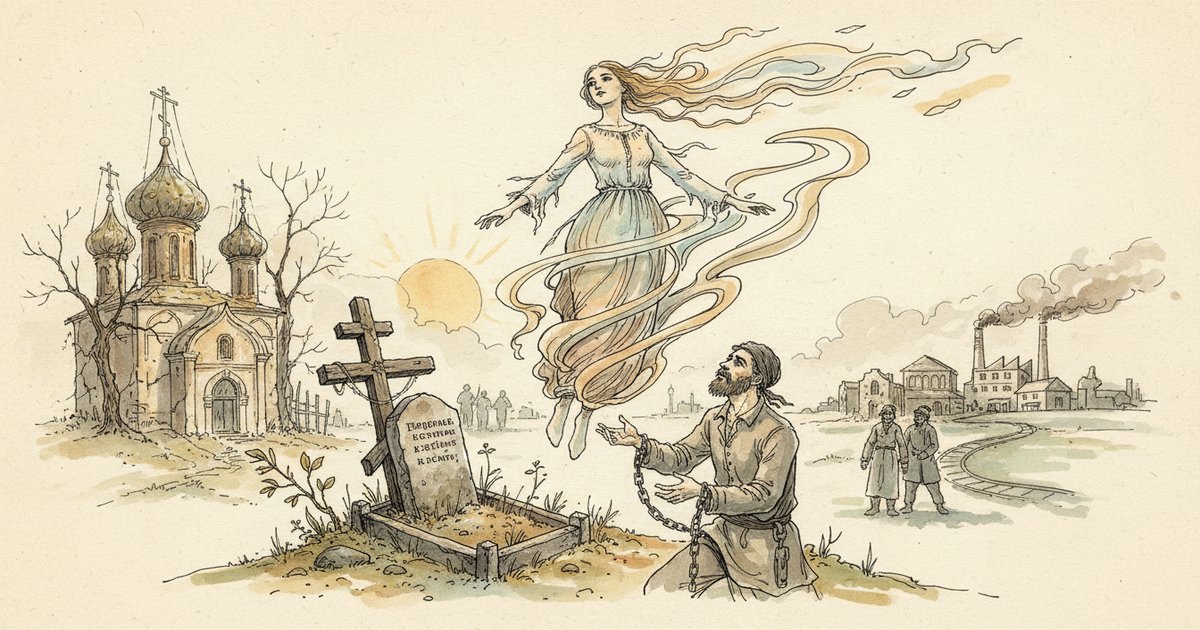
The spiritual crisis Tolstoy underwent in his fifties — documented in A Confession, published 1882 — didn’t arrive as an abstract philosophical event. It arrived as a reckoning. He looked at his life, at the serfs he had owned and the women he had used, and concluded that the class system that had made him comfortable was a crime he had been participating in since birth. After that crisis, every major work he produced was an argument: against the Church, against property, against violence, against the comfortable numbness of his own caste. Resurrection is where the argument gets a body — specifically, Katyusha Maslova’s body, in a Siberian prison, still alive despite everything Nekhlyudov set in motion.
That biographical fact — that Tolstoy was writing against his own past — changes every scene. When Nekhlyudov squirms in his velvet theater seat while Katyusha marches in chains through the mud two miles away, the discomfort is not fictional. It is Tolstoy’s. He knew that seat. He had been comfortable in it for thirty years before he finally found it intolerable.
What the Novel Actually Does to You
Resurrection opens with Nekhlyudov called to jury duty, recognizing the defendant, and feeling — not guilt yet, but the precise, nauseating sensation of being caught. The book’s first hundred pages track his self-justifications with a detail that is almost clinical: how he tells himself she won’t remember, that she’s made her choices, that the system is unjust and therefore his individual guilt is diffuse. Tolstoy spent fifty years developing the ability to transcribe moral evasion from the inside, and here he turns it on a character who shares his original sins. The effect is not comfortable. By the time Nekhlyudov decides to follow Katyusha to Siberia — not to save her, exactly, but because he has no other way to live with himself — the reader has already seen every exit he considered and rejected.
What Katyusha gives him is not forgiveness. That is the novel’s sharpest move. She doesn’t want his guilt, his proposals, or his conscience. She wants to be left alone to become someone else. The resurrection of the title is not Nekhlyudov’s dramatic moral transformation — it is Katyusha’s slow, unwitnessed rebuilding of herself into a person who no longer needs him. Tolstoy, who spent his life writing women he half-understood, got her right. She is the character who survives the novel intact, and she does it by refusing to be anyone’s redemption.
Why This Translation (translated by Sergey Adana)
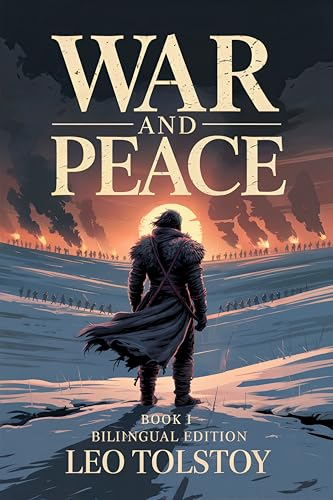
This 2025 edition brings Resurrection into contemporary English without flattening the moral intensity that makes the novel essential — the dialogue lands with the weight of argument, the courtroom sequences read with the pacing of a thriller, and the Siberian chapters carry the cold they were written to carry. Pick up the paperback here and read the book Tolstoy got excommunicated for finishing.
Also worth reading
“`html
What is the best English translation of Resurrection by Leo Tolstoy?
The 2025 translation of Resurrection is among the most accessible modern English renderings of Tolstoy’s final great novel. Unlike older Victorian-era translations that carry stiff, dated prose, this edition prioritizes natural contemporary English while preserving Tolstoy’s moral intensity and narrative rhythm. Readers who found previous translations slow or archaic will find this version significantly easier to stay with from start to finish.
Is Resurrection by Tolstoy worth reading in 2026?
Yes, without qualification. Resurrection follows a nobleman forced to confront the human wreckage left by his own moral failures—a premise that lands harder in 2026 than Tolstoy could have anticipated. Its critique of institutional religion, corrupt courts, and class indifference reads less like a 19th-century sermon and more like a dispatch from the present. The 2025 translation removes the prose friction that kept many readers at arm’s length, making the novel’s emotional argument easier to absorb.
How does the 2025 translation of Resurrection compare to Anna Karenina: Book I: A New Translation?
Both translations share a commitment to idiomatic modern English over literal fidelity, but they serve different reading experiences. Anna Karenina: Book I is a social novel—dense with character, status anxiety, and domestic drama. Resurrection is leaner and more polemical; Tolstoy wrote it with a specific moral purpose, and that urgency comes through in the prose. Readers who want psychological complexity across a large cast should start with Anna Karenina. Readers who want a single relentless moral argument rendered in clean, propulsive prose should start with Resurrection.
What should I read after the 2025 translation of Resurrection?
The two strongest follow-up reads available at classicsretold.com are The Idiot: A New Translation and The Brothers Karamazov: A New Translation. The Idiot pairs naturally with Resurrection because both novels place a spiritually sincere protagonist inside a society designed to destroy sincerity. The Brothers Karamazov is the deeper commitment—longer, more philosophically demanding—but readers who finish Resurrection hungry for more of that same collision between faith and moral failure will find Dostoevsky’s masterpiece a direct and devastating continuation.
“`
You might also enjoy
See the Difference: Old vs. New Translation




This post contains affiliate links. As an Amazon Associate, we earn from qualifying purchases.
You must be logged in to post a comment.