The Three Musketeers Made Dumas a Legend—Then Time Turned It into “Homework”—Here’s Why This New Translation Brings the Swashbuckling Back
Who Was the Author?
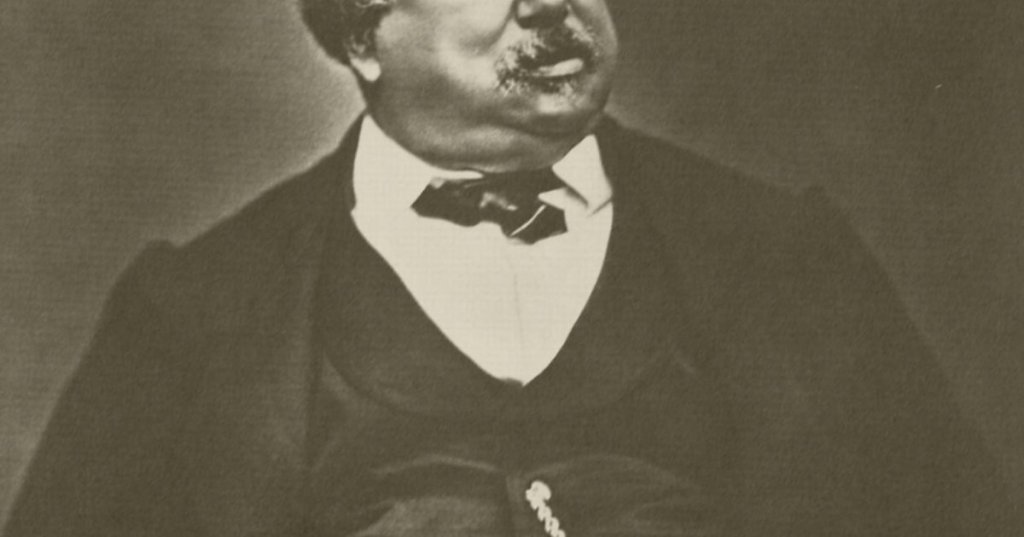
Alexandre Dumas (born July 24, 1802, in Villers-Cotterêts, France; died December 5, 1870, in Puys near Dieppe) lived a life that reads like one of his own novels—fast, ambitious, and fueled by drama. His father, Thomas-Alexandre Dumas, was a celebrated general of the French Revolutionary Wars, and that larger-than-life legacy hung over the family even as money and security did not. After his father’s death in 1806, Dumas grew up without the cushion his name might suggest, which helps explain the drive you feel in his writing: he’s always pushing forward, always making the next scene happen.
In the early 1820s, Dumas moved to Paris and entered the orbit of power by working at the Palais-Royal as a clerk for the Duke of Orléans (the future King Louis-Philippe). The job gave him proximity to politics and theater at once—exactly the mix that would shape his career. He broke through first as a dramatist: his play “Henri III et sa cour” premiered in 1829 and became a major success, arriving at a moment when Romantic drama was challenging older, stricter rules on the French stage.
The 1840s turned him into a publishing phenomenon. Dumas mastered the serialized novel, releasing fiction in installments that made readers hungry for the next chapter the way modern audiences binge episodes. “The Three Musketeers” appeared in 1844, followed closely by “The Count of Monte Cristo” (also 1844–1846). He became rich and famous—and also famously spent money as quickly as he earned it, building the extravagant Château de Monte-Cristo near Paris in the late 1840s. His later years were more complicated: shifting tastes, financial strain, and political turmoil changed the world around him, but his stories never stopped traveling.
About This Book
“The Three Musketeers” is the ultimate gateway drug to French adventure fiction: a young Gascon, d’Artagnan, rides into Paris with more courage than cash and crashes into the elite world of the King’s Musketeers—Athos, Porthos, and Aramis. What follows is a chain reaction of duels, disguises, secret letters, and high-stakes loyalty tests, all set against the glittering danger of 17th-century France. Dumas threads real historical figures into the plot—King Louis XIII, Cardinal Richelieu, and the political chessboard of the era—while keeping the story moving with cliffhangers that still feel modern.
Why does it matter? Because this book practically invented the pace and pleasure we now associate with blockbuster storytelling. It’s not just swordplay and swagger; it’s a novel about friendship under pressure, reputation as currency, and the way institutions (court, church, military) pull people into moral compromises. The famous motto—“All for one, and one for all”—lands because Dumas earns it through conflict. Every alliance is tested, every vow has a cost, and even the most charming scenes carry an undertow of political consequence.
Why Read a Modern Translation?
A modern, accessible English translation matters for “The Three Musketeers” because the book’s magic depends on speed, banter, and momentum—exactly the qualities that can get muffled by stiff, antiquated phrasing. Dumas wrote for a wide audience and for serialization; the prose is meant to move, sparkle, and snap into the next twist. A modern rendering helps today’s readers feel the jokes, the flirtation, the insults, and the sudden turns of danger without stopping to decode 19th-century English conventions that were never part of Dumas’s original voice.
This Edition
This post contains affiliate links. As an Amazon Associate, we earn from qualifying purchases.
 Classics Retold
Leave a comment