Category: Russian Literature

  • Bogdanov Dreamed Communism Before Lenin Banned Him

    Bogdanov Dreamed Communism Before Lenin Banned Him

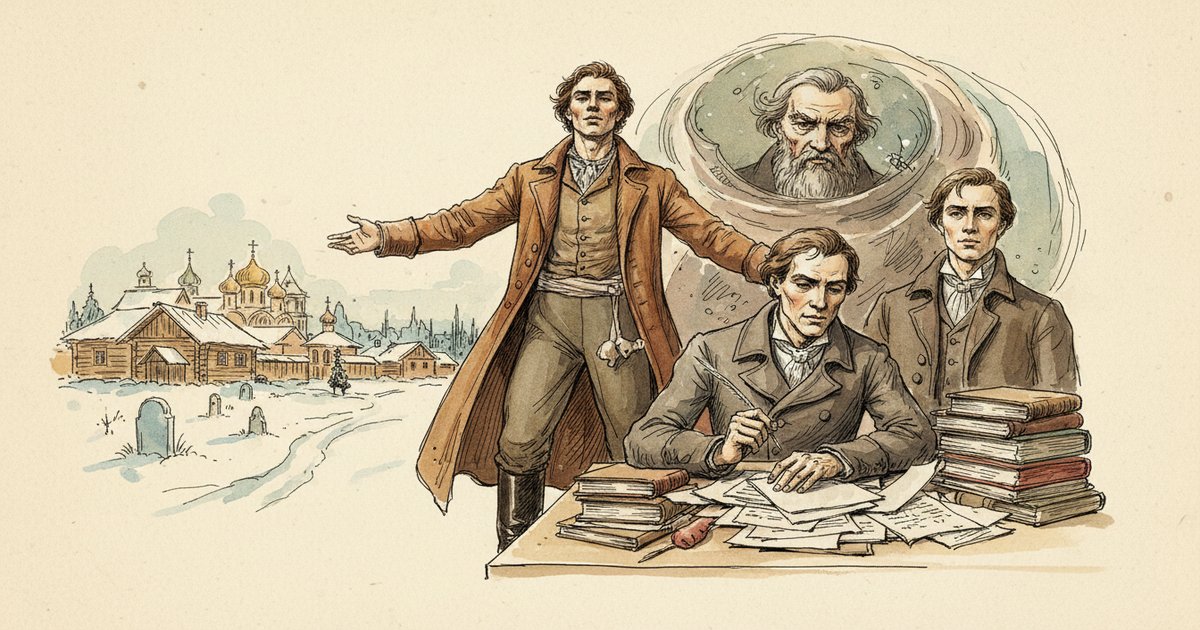
    In 1908, Alexander Bogdanov sat down and wrote the communist future. Not a pamphlet. Not a manifesto. A novel — set on Mars, detailed enough to include a functioning economy, a healthcare system, and a philosophy of collective work that no Bolshevik faction had yet managed to agree on. He called it Krasnaya Zvezda. Red Star. Lenin read it. He said nothing complimentary. Within a year, Bogdanov had been expelled from the party leadership.

    That sequence — dream the future, get punished for it — is the key to understanding both the man and the book. Bogdanov wasn’t expelled for incompetence. He was expelled because he had a different answer to the central question of the revolution: not just how to seize power, but what kind of human being would emerge on the other side. Lenin wanted the party. Bogdanov wanted the culture. The distinction sounds abstract until you read the novel, at which point it becomes the entire argument.

    What makes Red Star strange to read now is how specifically it fails. Not in the way science fiction usually fails — wrong about technology, wrong about the future’s surface features. Bogdanov was wrong about the wrong things: he imagined a Martian civilization that had solved the production problem and now had to deal with the human problem, the question of whether collective life could actually generate the conditions for individual flourishing. That, it turns out, is still the question. The Soviet century got stuck on it. We are not obviously past it.

    The Bolshevik Who Kept Building After He Lost

    Alexander Bogdanov was born Alexander Malinovsky in 1873, expelled from Moscow State University for political organizing before he’d finished his first year, and completed his medical degree in Kharkiv while working in the margins of every institution he entered. The exile and the improvisation were not accidents. They were a pattern. His whole intellectual life was built around the question of what happens when you can’t rely on existing structures — when the system you inherit is either unavailable or wrong, and you have to construct the alternative yourself.

    He joined the Social Democrats, became one of Lenin’s closest collaborators in the early Bolshevik years, and then became a problem. The break wasn’t political in the narrow sense. It was philosophical. Bogdanov had developed a position he called Empiriomonism — a theory of knowledge arguing that experience was the foundation of reality, that matter and mind weren’t opposites but aspects of a single organized process. Lenin attacked it in a 250-page book, Materialism and Empiriocriticism, in 1909. The attack was also an expulsion. Bogdanov was out. He was thirty-six.

    What he did next matters for how you read the novel. He didn’t retreat. He founded Proletkult — the proletarian culture movement — which at its peak in 1920 enrolled half a million workers in studios and workshops across Russia, teaching them to make art on their own terms rather than receive culture from above. He wrote Tektology, a three-volume general theory of organization that predated cybernetics by three decades and described the structural laws governing all complex systems, from cells to economies. Neither project was subsidized by the party he no longer belonged to. Both were built from scratch, in the margins, the way everything Bogdanov did was built.

    Then he founded the Institute of Blood Transfusion in Moscow in 1926 and conducted eleven experimental transfusions on himself, convinced that exchanging blood across age groups might offer a form of shared physiological rejuvenation. In 1928, the twelfth transfusion killed him. The blood came from a student with malaria and tuberculosis, and Bogdanov died within weeks. The blood transfusion is not a footnote to the novel. In Red Star, written twenty years before his death, Bogdanov’s Martians practice exactly this: they exchange blood across the collective to share vitality, to build biological solidarity alongside economic solidarity. He was not writing metaphor. He was writing what he actually believed was possible. That the experiment killed him does not make the belief absurd. It makes it legible — the work of a man who had decided that if the future was worth imagining, it was worth testing on himself.

    A Utopia With Its Doubts Still In

    Red Star follows Leonid, a Russian revolutionary recruited by a Martian named Menni to travel to Mars and observe its civilization. That is the skeleton. The actual substance of the novel is something closer to a guided tour with a political argument running underneath it the whole time. Bogdanov shows us Martian factories where work is voluntary and rotated — no one locked into a single trade for life. He shows us hospitals where blood is shared across the collective. He shows us communal buildings whose architecture is described with the precision of someone who had thought hard about how physical space shapes human behavior. Every detail is load-bearing. He is not decorating a story. He is modeling a society and insisting you take the model seriously.

    What separates Red Star from Soviet agitprop — even the agitprop that came later and claimed Bogdanov as a precursor — is that the Martians are not perfect and the novel does not pretend they are. They are running out of resources. They face a calculation that the book refuses to make comfortable: to survive long-term, they may need to colonize another planet. Earth is the candidate. The debate among the Martians over whether to displace or exterminate humanity is conducted with genuine philosophical seriousness. One faction argues for elimination on utilitarian grounds, methodically, without villainy. Bogdanov does not resolve the argument with a speech or a convenient plot turn. He lets it sit. A utopia willing to have that argument about itself is doing something most utopias won’t.

    Leonid’s position in all this is unstable in ways that feel deliberate. He is a guest and a specimen, an earthling being shown a future he can barely metabolize. When he falls in love with a Martian woman, the relationship reveals the limits of his own formation more than it tests hers. He is generous, intelligent, and still not free of the habits Earth installed in him — the possessiveness, the status anxiety, the sense that love is a claim rather than an exchange. Bogdanov is making a specific point: the revolutionary individual, however sincere, carries the old world in his nervous system. Culture changes slower than politics. You can seize the means of production on a Tuesday and still be a jealous man by Thursday.

    That is the argument, and it is why the book got Bogdanov expelled. Lenin’s model of the revolution required a vanguard party that would drag history forward through political will. Bogdanov’s model required a transformation of the human being first — a new culture, new habits, new ways of experiencing work and desire and solidarity. The party could not produce that transformation; it could only impose forms on people who remained, underneath, the same. Red Star is a novel about what happens when a society tries to do the harder thing. It is also, read from here, a precise diagnosis of what the Soviet century failed to become.

    The Translation Landscape

    For most of the twentieth century, Red Star was inaccessible to English readers — circulated among specialists, appearing occasionally in bibliographies of early Soviet science fiction without being available to anyone who wasn’t reading Russian. That changed in 1984, when Loren Graham and Richard Stites edited a scholarly edition for Indiana University Press that included both Red Star and its 1912 sequel, Engineer Menni, along with substantial critical apparatus. The Graham-Stites translation remains the academic standard: careful, accurate, and equipped with historical context that a reader new to Bogdanov’s world genuinely needs. Its limitation is the one that afflicts most academic translations — it prioritizes fidelity to the source and to the scholarly record over the rhythms of a reader encountering the prose for the first time. It reads as a document. Bogdanov wrote a novel, and the distinction matters.

    This translation takes a different approach. The sentence-level decisions here favor velocity — Bogdanov’s prose in Russian has an argumentative momentum, a quality of ideas arriving faster than expected, and the translation works to preserve that rather than flatten it for annotation. A passage like Leonid’s first view of the Martian factory floor, which in the Graham-Stites version has the measured pace of an official report, here has the quality of a man struggling to understand something that exceeds his categories. The difference is not in what the sentence says. It is in what it feels like to read it. That distinction is what a literary translation is for. The Graham-Stites edition is essential for scholars. This is the edition for everyone else.

    Why This Translation?

    Red Star has spent most of its life as a curiosity — cited by historians of Soviet culture, admired by scholars of science fiction, rarely read. This edition is designed to change that. The translation is clean enough that a reader with no background in Russian revolutionary politics can enter the novel directly; the introduction supplies the necessary context without front-loading the reading experience with a lecture. Bogdanov wrote for a general audience with urgent intentions. This translation is calibrated to meet that intention rather than enshrine it behind glass.

    The Classics Retold edition is available in paperback here. For readers coming to Bogdanov for the first time — through an interest in the history of socialism, in early science fiction, or simply in the question of what serious political imagination actually looks like when it’s doing serious work — this is the edition to start with. It takes him seriously as a writer. That, given everything he staked on his ideas, is the least the book is owed.

    What is Red Star about?

    Red Star is a 1908 utopian science fiction novel by Russian Bolshevik Alexander Bogdanov. A Russian revolutionary named Leonid is recruited to travel to Mars, where he observes a fully realized communist civilization — collective ownership, voluntary labor, shared healthcare, communal child-rearing — and discovers that even a society that has solved material scarcity must still contend with individual psychology, desire, and moral conflict. The novel doubles as a political argument about what a revolution needs to do to the human being, not just to the economy.

    Is Red Star actually science fiction, or is it mainly political theory?

    It is both, and that tension is the point. Red Star belongs to the tradition of utopian fiction alongside Wells’s A Modern Utopia and Bellamy’s Looking Backward, but it is more argumentative and more honest about internal contradictions than most utopias of its era. It is genuinely readable as a novel — fast, strange, with a protagonist whose limitations are as interesting as the world he moves through. The political theory is embedded in the fiction rather than appended to it.

    What happened to Bogdanov after Red Star?

    He was expelled from the Bolshevik leadership by Lenin in 1909 over philosophical disagreements, then went on to found Proletkult (a mass proletarian arts movement enrolling hundreds of thousands of workers), write Tektology (a general systems theory that prefigured cybernetics by decades), and establish the Institute of Blood Transfusion in Moscow. He died in 1928 from an experimental transfusion he performed on himself — an experiment that directly echoes the collective blood-sharing practices he had imagined for his Martians twenty years earlier.

    How does Red Star differ from Soviet propaganda?

    Fundamentally. Where Soviet propaganda presented the communist future as inevitable and internally harmonious, Red Star gives its Martian utopia genuine moral dilemmas — including a sustained debate about whether to colonize or destroy Earth’s population, conducted without cartoon villainy on either side. Bogdanov was interested in the human problems that would survive a successful revolution, not in celebrating the revolution itself. That is a large part of why Lenin found him inconvenient, and why the novel still reads as a real argument rather than a relic.

    Recommended Edition
    Red Star — Alexander Bogdanov
    Modern English translation

    Kindle →Paperback →

    Frequently Asked Questions

    What exactly is Red Star and why did Bogdanov write it?

    Red Star is a 1908 science fiction novel set on Mars that depicts a fully functioning communist society in vivid detail. Bogdanov wrote it because he believed the Bolshevik movement needed a concrete vision of what post-revolutionary society would actually look like, not just theoretical arguments about overthrowing capitalism.

    How did Bogdanov’s Martian communism differ from Lenin’s revolutionary vision?

    Bogdanov’s Mars operated through voluntary cooperation and scientific rationality rather than party discipline and centralized control. His fictional society prioritized collective decision-making and individual development, while Lenin favored a vanguard party structure that would guide the masses toward revolution.

    Why did Lenin turn against Bogdanov so quickly after Red Star was published?

    Lenin viewed Bogdanov’s detailed alternative vision as a direct challenge to his leadership and ideological authority within the Bolshevik faction. By 1909, Lenin had orchestrated Bogdanov’s expulsion from the party leadership, seeing his philosophical independence as a threat to revolutionary unity.

    What happened to Bogdanov after Lenin banned him from the Bolshevik leadership?

    Bogdanov continued his scientific and literary work outside mainstream Bolshevik politics, founding the Proletarian Culture movement and pursuing his theories about blood transfusion. He died in 1928 during a self-experiment with blood exchange, never reconciling with Lenin or the Soviet system that emerged.

  • Crime and Punishment: Best Translation? A 2026 Guide for Modern Readers

    If you are buying Crime and Punishment, the translation matters more than most readers realize. This is not just a book of ideas. It is a book of pressure: fever, shame, panic, self-justification, and the terrible intimacy of a mind trying to out-argue its own conscience. A translation that sounds merely respectable can flatten all of that into dutiful Russian gloom. A translation that gets it right preserves the heat.

    That is the real question with Dostoevsky. Not which version is most scholarly, not which one has the most prestigious introduction, not which translator is most revered in graduate seminars. The real question is simpler: which translation keeps the novel alive? Which one lets Raskolnikov sound like a brilliant, sick, dangerous young man rather than a museum exhibit in a frock coat?

    Why Crime and Punishment Is So Translation-Sensitive

    Dostoevsky does not write with classical balance. He writes in surges. People interrupt themselves. Ideas arrive half-formed and then harden into obsession. A sentence can begin in reason and end in delirium. That volatility is not accidental. It is the whole mechanism of the novel. If a translator smooths the texture too much, Crime and Punishment stops feeling like a moral emergency and starts feeling like a famous book you are supposed to admire from a distance.

    Raskolnikov is the best test. He is not merely intelligent; he is intellectually cornered by his own intelligence. He keeps trying to think his way out of guilt, and the language has to carry that instability. You need the arrogance, the fever, the sudden collapses into pity or terror. Get the tone wrong and he becomes either melodramatic or dull. Get it right and you feel the novel tightening around him chapter by chapter.

    The Main English Translation Camps

    There are, broadly, three ways English readers meet Crime and Punishment. First, the older public-domain tradition, represented most famously by Constance Garnett. Garnett matters historically and she remains readable in a plain, serviceable way. But she often sounds tidier than Dostoevsky really is. The language can feel softened, the edges filed down, the nerves calmed. If you want a nineteenth-century English literary texture, Garnett is still useful. If you want maximum voltage, she is rarely the best choice.

    Then there is the high-fidelity modern camp, most commonly associated with Pevear and Volokhonsky. Their defenders value exactness, verbal closeness, and a refusal to beautify Dostoevsky into something more polished than he is. Sometimes that produces real force. Sometimes it also produces English that feels slightly knotted, as if you are reading the pressure of the Russian syntax through a pane of glass. For some readers, that is honesty. For others, it is drag.

    The third camp is the readable-modern approach: translations that want the book to move in English while preserving Dostoevsky’s ferocity. For most contemporary readers, this is where the best experience usually lives. The ideal version does not embalm the text under scholarly reverence, but it also does not paraphrase away the strangeness. It keeps the novel urgent.

    Best Crime and Punishment Translation for Most Readers

    For most readers, the best translation is the one that makes the novel feel immediate without making it feel simplified. That means clear dialogue, supple pacing, and enough roughness to preserve Dostoevsky’s instability. If a version reads too ceremonially, the book dies. If it reads too casually, the moral pressure leaks out. The sweet spot is English that feels modern in movement but still haunted by the original’s unrest.

    That is why the best recommendation for most readers is not the most literal translation and not the most famous older one. It is the version that keeps the pages turning while preserving psychological abrasion. You should feel trapped with Raskolnikov, not merely informed about him. The right translation makes you understand why this novel feels less like a philosophical case study than like a fever you catch.

    Find Your Best Crime and Punishment Translation

    Choose the edition that gives you Dostoevsky’s full pressure — readability, philosophical force, and emotional voltage intact.

    If You Want Maximum Fidelity Instead

    If you are the sort of reader who would rather feel the grain of the Russian even at the cost of some English elegance, then a more literal modern translation may be the right choice. You may prefer a version that preserves awkwardness where awkwardness is part of the effect, even if it occasionally slows the prose. That is a legitimate preference. Crime and Punishment is, after all, a novel of friction, and some readers want that friction exposed rather than managed.

    But fidelity is not a simple virtue. A translation can be formally loyal and still fail as reading. The point is not to choose the version that looks most severe on paper. The point is to choose the version that gives you the novel’s actual experience. Sometimes that means closeness. Sometimes it means re-creating force rather than word order.

    Which Edition Should You Actually Buy?

    If you are reading Crime and Punishment for the first time, buy the edition that feels alive in English. Prioritize readability, tonal tension, and dialogue that sounds human under stress. If you are returning to the novel and want a stricter encounter with the Russian texture, then choose a more literal version and accept the slower gait as part of the bargain. If you want older public-domain flavor, Garnett still has a place — just know that you are reading a historical English Dostoevsky, not necessarily the most electrically convincing one.

    The wrong way to choose is by prestige alone. The right way is to ask what this novel requires. It requires dread, intellectual pride, moral claustrophobia, and sudden bursts of pity. It requires a translator who can keep all of that moving at once. The best Crime and Punishment translation is the one that makes you forget you are doing homework and remember, with a bit of alarm, that you are in the hands of a genius who understands exactly how a human being rationalizes the unforgivable.

    Frequently Asked Questions

    Which translation of Crime and Punishment is best for first-time readers in 2026?

    The Oliver Ready translation (Penguin Classics, 2014) is the strongest choice for most modern readers — it keeps Dostoevsky’s fractured, feverish rhythm without smoothing it into polished literary prose. The Pevear and Volokhonsky version is widely available and respected, but its deliberate roughness can feel like an obstacle before you’ve learned to trust the book.

    What is wrong with the older Constance Garnett translation of Crime and Punishment?

    Garnett’s version, still reprinted in many cheap editions, normalizes Dostoevsky’s sentences into calm, grammatically tidy English, which kills the psychological pressure that drives Raskolnikov’s chapters. She also made outright omissions and softened the more hysterical passages — fine for 1914, but a real loss now that we know how deliberate Dostoevsky’s chaos was.

    Does the Pevear and Volokhonsky translation of Crime and Punishment live up to its reputation?

    It earns its reputation for fidelity — Pevear and Volokhonsky preserve repetitions, verbal tics, and syntactic awkwardness that earlier translators cleaned up, and those details matter to how Raskolnikov’s mind sounds. The trade-off is that the English occasionally reads like a demonstration of Russian grammar rather than a novel, which can distance first-time readers from the story’s momentum.

    Is there a Crime and Punishment translation that handles Raskolnikov’s internal monologues especially well?

    Oliver Ready’s translation is the most successful at rendering the monologues as genuine thought rather than literary speech — the self-interruptions, the circular justifications, and the moments where Raskolnikov almost catches himself in a lie all land with the right kind of unease. Michael Katz’s Norton Critical Edition translation is also worth considering for readers who want an accessible text alongside substantial contextual scholarship.

  • Chichikov Is Russia’s Greatest Con Man

    Chichikov Is Russia’s Greatest Con Man

    Looking for the best Russian literature translations to start with? This guide sorts the strongest modern editions by readability, style, and first-time-reader value — so you can pick the right Dostoevsky, Tolstoy, and Gogol before you waste time on the wrong version.

    Find Your Best Dostoevsky Translation

    Use this guide to compare readability, fidelity, and modern flow before choosing an edition.

    Russian literature has the best novels ever written, the worst reputation for accessibility, and the most confusing translation landscape of any tradition in world fiction. The reputation is partly a product of the novels themselves — they are long, they carry many characters with multiple names each, and they assume a reader willing to sit with ambiguity for six hundred pages — and partly a product of bad pedagogy. Most English readers who gave up on Tolstoy or Dostoevsky gave up on a bad translation, which is a different problem entirely.

    What makes Russian literature distinctive — what separates it from the French novel’s irony, the English novel’s social comedy, the American novel’s restless self-invention — is its insistence on moral seriousness as the primary business of fiction. Russian novelists did not write to entertain, though the best of them entertain enormously. They wrote because they believed that fiction was the place where the largest questions actually got answered: whether goodness is possible, whether suffering has meaning, whether a human being can be held responsible for what history made them. They refused to let the reader off the hook. You cannot finish The Brothers Karamazov or Anna Karenina or Dead Souls with the comfortable sense that the book has resolved something on your behalf. The books insist that you resolve it yourself, and they are constructed precisely to make that resolution difficult.

    These reading guides exist to address both problems: the translation question, which is specific and answerable, and the larger question of how to read these books in a way that makes their ambitions legible. The Russian novel is not difficult because it is obscure. It is demanding because it is serious, and seriousness requires a different kind of attention than most contemporary fiction asks for.

    Classics Retold’s role here is curatorial, not scholarly. What we do is read the available translations, identify which ones recover the moral urgency of the original and which ones domesticate it into something more comfortable and less true, and then make a clear recommendation so that you can spend your reading time with the book rather than researching its publishing history. A translation that smooths Dostoevsky’s jagged, repetitive, almost feverish prose into elegant English sentences has not improved the novel. It has replaced it with a different novel — one that is easier to read and less worth reading. The translations we recommend are the ones that understood this, and our guides explain specifically what they got right and why it matters.

    Where to Start

    Start with Crime and Punishment. Not because it is the greatest of Dostoevsky’s novels — it isn’t; that distinction belongs to The Brothers Karamazov — but because it is the most immediately propulsive. The premise is stated in the title: a murder happens, and then the novel examines, with extraordinary psychological precision, what that act does to the person who committed it. It reads like a thriller written by someone interested in the soul. From there, The Brothers Karamazov — slower to start, immeasurably larger in ambition. Tolstoy’s Resurrection is the entry point for readers who want to start with the moral dimension of Russian fiction before committing to the full scale of War and Peace.

    Gogol and the Comic Tradition

    Before Dostoevsky, before Tolstoy, before any of the great moral machinery of the Russian novel got assembled, there was Nikolai Gogol — and Gogol was funny. Genuinely, disruptively, uncomfortably funny, in a way that the later Russian tradition would absorb but never quite replicate. Dostoevsky said that all Russian literature came out of Gogol’s overcoat, referring to the short story The Overcoat, in which a copying clerk’s entire identity becomes invested in a new coat, and then the coat is stolen, and then the clerk dies, and then his ghost haunts the city stealing coats from officials. It is simultaneously a tragedy and a farce, and it is impossible to say at any point which one is primary.

    Dead Souls is the novel that extends this sensibility across an entire society. The premise is a marvel of comic invention: a minor official named Chichikov travels the Russian provinces purchasing the names of dead serfs — serfs who are legally still alive on paper because the census hasn’t yet caught up with their deaths — in order to use them as collateral for loans. Every landowner he visits is rendered in exquisite satirical detail, each one a different variety of provincial stupidity, greed, and self-delusion. The novel is the funniest sustained piece of writing in nineteenth-century Russian literature, and its portrait of provincial stagnation, of a society operating entirely on bureaucratic fictions, anticipates everything Chekhov would do fifty years later. Gogol planned it as the first part of a trilogy — a kind of Russian Divine Comedy, with Chichikov eventually ascending from corruption to redemption. He completed the second part, became convinced it was spiritually dangerous, burned it, and died shortly afterward. What survives is the fragment he didn’t burn: one complete part and the charred edges of an ambition too large to finish.

    The Government Inspector is Gogol at his most purely comic — a play rather than a novel, and the most economical demonstration of his genius. A traveling nonentity named Khlestakov arrives in a provincial town and is mistaken by the local officials for a government inspector traveling incognito. Rather than correct the error, he allows them to bribe him, flatter him, and compete for his approval, until he has extracted everything the town has to offer and departed, leaving behind a community that has revealed, in its desperate performance of rectitude, every corruption it was trying to conceal. Chekhov called it the perfect Russian play, which is not a small thing for Chekhov to have said.

    Gogol
    Dead Souls (The Adventures Of Chichikov): A New Translation

    Turgenev — The Bridge

    Ivan Turgenev is the most elegant of the Russian novelists and the most European — he spent most of his adult life in Paris and Baden-Baden, writing about Russia from the outside with the lucidity that distance sometimes provides and sometimes falsifies. His novels are short by Russian standards, beautifully structured, and emotionally precise in a way that Dostoevsky’s aren’t and doesn’t need to be. For readers who find Dostoevsky’s intensity too much and Tolstoy’s scale too daunting, Turgenev is the correct entry point — the Russian novelist who will not overwhelm you, who will instead give you a clear and beautiful object to hold while you orient yourself to the larger tradition.

    Fathers and Sons, published in 1862, introduced the word “nihilism” to the European political vocabulary, and it did so through a character — Bazarov, the young doctor who believes in nothing — who is drawn with far more complexity than the word has ever deserved. Turgenev neither celebrates Bazarov nor condemns him. He watches him with the same patient, slightly melancholy attention he brings to everything, and he allows Bazarov’s contradictions — his contempt for sentiment and his susceptibility to it, his rejection of beauty and his helplessness before it — to accumulate until they become something that feels not like a political argument but like a human life. The novel enraged both the radicals, who thought Turgenev was mocking them, and the conservatives, who thought he was celebrating them. He was doing neither. He was writing a novel.

    Dostoevsky — The Novelist Who Broke the Form

    Dostoevsky wrote under financial pressure for most of his life, gambling his advances away and writing against deadlines that would have destroyed a less obsessive writer. The conditions produced a body of work that is formally unlike anything in any other tradition — novels that feel simultaneously overloaded and inevitable, that pile character upon character and idea upon idea until the structure seems about to collapse, and then hold.

    Crime and Punishment is the argument that ideas have consequences — that a theory about human exceptionalism, followed to its logical conclusion, produces a specific kind of moral catastrophe. Raskolnikov is wrong, but his wrongness is intelligible, and Dostoevsky never lets you feel superior to him. Our guide examines why this remains the most disturbing novel about intellectual pride ever written. The scene that makes this clearest is not the murder itself but what comes after: Raskolnikov returning to the scene, ringing the bell of the apartment, standing in the dark stairwell for no reason he can articulate. Dostoevsky understood, before psychology had the vocabulary to describe it, that guilt does not announce itself as guilt. It announces itself as compulsion — as a need to go back, to touch the wound, to stand again in the place where everything changed.

    The Brothers Karamazov is the larger argument — about faith and doubt, about fathers and sons, about whether goodness is possible in a world that contains the suffering of children. The novel contains the Grand Inquisitor chapter, which is one of the most concentrated pieces of philosophical writing in any language, embedded inside a family drama that works completely on its own terms. Our second guide to the novel, on Alyosha’s radicalism, addresses the character most often misread as simply passive or saintly. The historical detail that sharpens the novel’s central argument is worth knowing: Dostoevsky wrote it in the immediate aftermath of a series of real child-abuse cases that had been reported in Russian newspapers, cases he followed obsessively. Ivan’s challenge to Alyosha — his catalogue of the suffering of children as the unanswerable argument against a benevolent God — was not a philosophical exercise. It was assembled from the public record, and Dostoevsky knew that his readers would recognize the cases. The philosophical chapter is built on a foundation of specific, documented horror.

    Dostoevsky’s The Idiot is his most personal novel — the story of a man of genuine goodness placed inside a society that has no place for him. Prince Myshkin is not simple. He is Dostoevsky’s attempt to write a truly good man, and the novel is his honest account of what happens to such a man in the real world. Dostoevsky himself suffered from epilepsy, and he gave the condition to Myshkin — including, with painful precision, the moments of extraordinary clarity that precede a seizure, the sense of everything suddenly becoming luminous and connected, followed immediately by collapse. The novel asks whether those moments of perception are more real than ordinary consciousness or less. It does not answer the question. It is not that kind of novel.

    Dostoevsky
    The Idiot: A New TranslationThe Brothers Karamazov: A New TranslationCrime and Punishment: A New TranslationMemoirs from the House of the Dead : A New TranslationHumiliated And Insulted: A New TranslationPoor People: A New Translation

    Tolstoy — The Moralist Who Couldn’t Stop Writing

    Tolstoy lived to eighty-two and spent the last thirty years of his life trying to give away his money, renounce his property, and live as a peasant — while continuing to write, unable to stop, producing moral treatises and stories and the complete rewriting of his earlier novels in light of his religious conversion. The conversion didn’t make him a better novelist. It made him a more interesting one.

    Resurrection, published in 1899, is the post-conversion Tolstoy working at full power — a novel about a man who ruined a woman’s life and spends the book attempting, inadequately, to repair it. It is leaner than Anna Karenina, angrier than War and Peace, and more immediately readable than either. Our guide addresses why it is so consistently underrated in English, and what the best translations do with Tolstoy’s late prose style, which is deliberately plain in a way that bad translations flatten into nothing. The scene that announces what kind of novel this is comes early: Nekhlyudov, the protagonist, sits on a jury and recognizes the woman in the dock as Katyusha, whom he seduced and abandoned years before. The recognition is rendered without melodrama — Tolstoy gives you Nekhlyudov’s internal evasions, the small adjustments of self-perception by which a man avoids confronting what he has done, with a clinical precision that is more devastating than any authorial condemnation would have been. Tolstoy does not need to tell you Nekhlyudov is wrong. He shows you exactly how Nekhlyudov tells himself he isn’t.

    Tolstoy
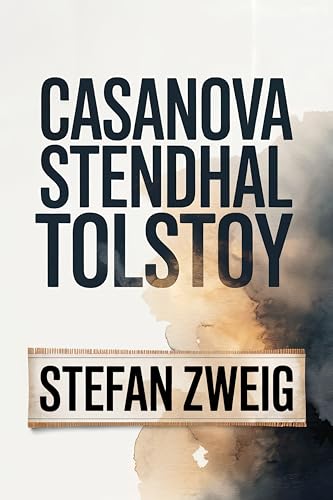
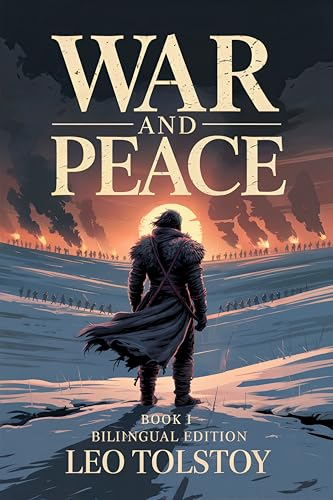
    Anna Karenina: Book I: A New TranslationThe Kreutzer Sonata: A New TranslationWar and Peace: Volume 1: A New TranslationCasanova, Stendhal, Tolstoy (Adepts in Self-Portraiture): A New TranslationWar and Peace - Part One: 1805, Dawn of War: A New Bilingual TranslationResurrection: 2025 Translation

    Chekhov and the Short Story

    Anton Chekhov did not simply write shorter fiction. He invented a different kind of fiction — one that ends not with a resolution but with a shift in understanding, sometimes so subtle that you finish the story and only realize ten minutes later that everything has changed. The Lady with the Dog, The Bishop, Ward No. 6: each of these is a complete world in under twenty pages, with the density of compression that only becomes possible when a writer has decided to trust the reader entirely and explain nothing. Chekhov’s great technical discovery was that the significant moment in a story is almost never the moment of apparent crisis. It is the moment just before or just after, when a character glimpses something true about themselves and then, immediately, looks away.

    His plays — The Cherry Orchard, Three Sisters, Uncle Vanya — operate on the same principle at greater length. Nothing happens. Everything changes. Characters talk past each other for three acts while their lives quietly collapse around them, and the comedy and the tragedy are so thoroughly interwoven that Chekhov, famously, insisted his plays were comedies while his directors, including Stanislavski, kept staging them as elegies. They were both right, which is what makes the plays inexhaustible. A production that plays the grief straight and a production that plays the absurdity straight will both find everything they need in the text, and both will miss half of it.

    Chekhov was a practicing physician his entire writing life, maintaining a rural medical practice while producing the stories and plays that would reshape world literature. The clinical precision of his fiction — the refusal to editorialize, the exact observation of what people actually do rather than what they say they do, the attention to physical detail as a carrier of psychological information — comes directly from that training. He had spent years watching people in extremity, noting the gap between how they described their condition and what their condition actually was. He brought exactly that observational discipline to the page. When a Chekhov character says they are fine, you know precisely how to read the two actions that follow the statement.

    Translation Wars — Which Version to Read

    The translation question in Russian literature is more consequential than in any other tradition, because the stakes are higher. A bad Flaubert translation produces a duller novel. A bad Dostoevsky translation produces a different novel — one with melodramatic characters who speak in exclamation points, where the original has characters who speak in the rhythms of actual human desperation.

    The Constance Garnett translations, which introduced Russian literature to English readers in the early twentieth century, are now known to contain systematic errors — compression, smoothing, occasional outright invention. They are not the translations to read. For Dostoevsky, the Pevear and Volokhonsky translations restored the original’s roughness and repetition, which Garnett had polished away. For Tolstoy, the question is more contested — Pevear and Volokhonsky’s War and Peace has been criticized for preserving French phrases that Tolstoy’s original audience would have understood, but that contemporary English readers find disruptive. Aylmer Maude’s Tolstoy translations, made with the author’s approval, remain a strong alternative. Each of our guides addresses the specific translation question for the book in question. The concrete difference between a good and a bad translation is most visible in dialogue: Garnett’s Raskolnikov tends toward theatrical declaration, while the translation we recommend gives him the halting, circular, self-interrupting speech of a man whose mind is running faster than his ability to organize it — which is exactly what Dostoevsky wrote, and exactly what the character requires.

    Reading Order

    The instinct to read Russian literature chronologically — start with Pushkin, work forward to Chekhov — is understandable and usually counterproductive. The better approach is to start with the novel that interests you most and follow the connections from there. Crime and Punishment leads naturally to The Brothers Karamazov; The Brothers Karamazov leads to The Idiot, which is earlier but assumes a reader who already understands what Dostoevsky is doing. Tolstoy is a separate tradition within the same tradition — his moral seriousness is related to Dostoevsky’s but arrives at different conclusions by a different route. Read them in whatever order sustains your momentum. The novels will connect themselves.

    Frequently Asked Questions

    What is the best Russian novel to read first?

    Crime and Punishment is the right starting point for most readers. It is the most immediately gripping of the major Russian novels — propulsive in the way a thriller is propulsive, but with a psychological and moral depth that thriller writing almost never achieves. It is also self-contained in a way that The Brothers Karamazov isn’t, which makes it a forgiving entry point: you don’t need to know anything about the Russian tradition to be gripped by Raskolnikov’s deterioration, and by the time you finish you will understand what the tradition is for.

    Which translation of Dostoevsky should I read?

    For most readers, the Pevear and Volokhonsky translations are the edition featured here and the right choice. Their crucial contribution was restoring the roughness and repetition of Dostoevsky’s prose — the qualities that Garnett smoothed away in the belief that she was improving the text. This matters because Dostoevsky’s style is not incidental to his meaning: the lurching, self-interrupting, compulsive quality of his sentences is how he renders a particular kind of consciousness, and a translation that tidies this up has rendered a different consciousness entirely.

    Do I need to know Russian history to understand Russian literature?

    No, but a handful of landmarks will make the novels more legible. The institution of serfdom — abolished in 1861, within living memory for every writer discussed here — shapes the moral landscape of virtually all nineteenth-century Russian fiction. The autocratic power of the Tsar, the persistent revolutionary movements that operated in response to it, and the specific tension between Westernizing reformers and Slavophile traditionalists form the political backdrop. You don’t need to study any of this before reading; the novels themselves will teach you what you need to know, and our guides supply historical context at the points where it becomes directly relevant to what is happening on the page.

    How do I keep track of Russian characters and their names?

    The convention that bewilders most first-time readers is the Russian practice of addressing people by different names depending on context and intimacy: a character may be called by his first name, his patronymic, a diminutive, a nickname, and a surname in the same novel, sometimes in the same chapter. The practical solution is to keep a simple list — most good editions include a character guide at the front, and the translation we recommend for each book will tell you whether one is provided. The deeper reassurance is that the confusion diminishes quickly: after fifty pages with Raskolnikov, Rodya, Rodion Romanovich, and Rodion Raskolnikov, your brain resolves them into a single person without effort, because Dostoevsky’s characterization is strong enough that the person is unmistakable regardless of which name is being used.

    This post contains affiliate links. As an Amazon Associate, we earn from qualifying purchases.

    Recommended Edition
    Dead Souls (The Adventures Of Chichikov) — Nikolai Gogol
    Modern English translation

    Kindle →Paperback →

  • Dostoevsky Wrote Crime and Punishment for Money

    Dostoevsky Wrote Crime and Punishment for Money

    1914 Public Domain

    “On an exceptionally hot evening early in July a young man came out of the garret in which he lodged in S. Place and walked slowly, as though in hesitation, towards K. bridge.”

    2026 Modern Translation

    It was a suffocating evening in early July, and Raskolnikov left his room as if escaping something — though what he was escaping, he couldn’t have said. He walked toward the bridge without any clear intention, which was itself a kind of intention.

    Read the Modern Translation →

    Looking for the best Crime and Punishment translation? This guide compares readability, tone, and philosophical force so you can choose the right edition before you buy — especially if you want Dostoevsky without dead Victorian drag.

    Find Your Best Dostoevsky Translation

    Use this guide to compare readability, fidelity, and modern flow before choosing an edition.

    Raskolnikov has already decided. Before the axe falls, before the pawnbroker opens her door, before any of the novel’s machinery of guilt and punishment begins to turn — he has reasoned his way to murder and found the logic airtight. The extraordinary man, he argues, is not bound by ordinary law. History proves it: Napoleon killed thousands and we named streets after him. What is one old woman — a louse, really, a parasite who hoards money and torments borrowers — weighed against the good that money could do in a better pair of hands? Dostoevsky lets the argument breathe. He doesn’t interrupt it with an authorial wink. And the terrible thing, the thing that makes Crime and Punishment still feel like a live wire, is that Raskolnikov is not wrong. Not exactly.

    That is the novel’s thesis, and it is also its trap. Dostoevsky wrote a book whose intellectual premise holds — and then spent 550 pages showing what it costs to be a person who holds it. Not what it costs morally, in some abstract ledger, but what it costs in the body, in sleep, in the ability to sit in a room without feeling the walls move. Raskolnikov’s suffering is not punishment from above. It is the structural consequence of having made himself into the kind of creature who could kill. The horror is not that he was wrong. The horror is that being right was not enough to make him human.

    What keeps this from being a simple cautionary tale is how seriously Dostoevsky takes the student’s intellect. Raskolnikov is not a fool corrupted by bad philosophy. He is a gifted law student who has read history carefully and drawn conclusions that are, on the surface, difficult to refute. The novel opens not with violence but with a mind rehearsing its own justifications — Raskolnikov talking himself through the plan one more time, almost against his will, as though the logic has its own momentum. That opening section reads less like a novel beginning than like an argument that has been running so long it can no longer find its own start point. That is intentional. By the time the axe falls, Dostoevsky has made you understand the murder before you have witnessed it.

    A Writer Who Knew the Weight of the Condemned

    Dostoevsky began drafting Crime and Punishment in 1865, fifteen years after standing in front of a Tsarist firing squad and waiting to die. The execution was theater — a last-minute commutation, the whole thing staged for psychological effect — but the four years in a Siberian labor camp that followed were not. He slept in a barracks with murderers. He watched men he’d spoken to hanged. He came back from Siberia not softened but cracked open, and what poured through was a fascination with the interior life of people who had done unforgivable things. The labor camp gave him his subject matter the way a disease gives a doctor their specialty: intimately, personally, without choice.

    He wrote the novel in debt, in grief — his first wife and his brother had both died the year before — and under contract pressure that forced him to serialize it in monthly installments before it was finished. That breathlessness is in the prose. Scenes arrive before the reader is ready. Characters speak past each other in ways that feel less like literary technique and more like the actual texture of people under pressure. Dostoevsky was not constructing a moral fable at a comfortable distance. He was writing from inside the state he was describing.

    There is also the matter of where he was writing it. Dostoevsky drafted much of Crime and Punishment in Wiesbaden, Germany, where he had traveled to gamble — and had lost almost everything. He was living in a cheap hotel, surviving on tea and bread, being refused meals by the proprietor who no longer trusted his credit. The specific physical misery of those months — the small room, the hunger, the shame of debt, the inability to stop thinking even when thinking was making everything worse — is Raskolnikov’s misery almost to the letter. The cramped St. Petersburg garret in which Raskolnikov paces, the dingy stairwells, the sense of the city pressing in from all sides: Dostoevsky knew all of that not as observed detail but as lived condition.

    What that biography unlocks in the reading: Raskolnikov’s theory of the extraordinary man is not a straw man Dostoevsky built to knock down. It is a theory Dostoevsky took seriously, tested against his own experience of suffering and survival, and found — not wrong, but catastrophically insufficient. Every biographical fact in this novel is load-bearing.

    The Crime Is in Chapter One. The Punishment Is Everywhere Else.

    The murder happens early, and Dostoevsky is specific about it in a way that most literary fiction refuses to be. The pawnbroker dies. Her half-sister, who was not part of the calculation, also dies, because she walked in at the wrong moment and Raskolnikov had already crossed the line that made a second killing easier than the first. This is the novel’s first proof of its thesis: the extraordinary man’s logic does not account for the woman who walks in. Abstract reasoning about lice and Napoleons has no protocol for the unexpected witness who is herself entirely innocent. The theory breaks on contact with the actual, specific, irreducible person standing in the doorway.

    What follows is not guilt in any simple sense. Raskolnikov does not spend the novel weeping. He spends it feverish, dissociating, arguing, seducing, confessing and recanting, helping strangers compulsively, degrading himself in ways he doesn’t fully understand. Dostoevsky renders the fragmentation of a consciousness that has used its own intelligence against itself — a mind too sharp to lie to itself successfully, not yet ready to tell the truth. The scenes with the investigator Porfiry are not a cat-and-mouse thriller. They are two men who each understand exactly what the other knows, playing a game whose real subject is whether Raskolnikov will find his own way out. When that ending comes — specific, quiet, nothing like the catharsis you’ve been bracing for — it doesn’t resolve the argument. It simply shows you where the argument always was going to end up.

    The scene that best captures this psychological unraveling is Raskolnikov’s first meeting with Porfiry, which nominally concerns a watch Raskolnikov had pawned. Within minutes, both men know that they know. Porfiry circles the conversation with a maddening politeness, asking Raskolnikov about his published article on crime — the very article in which Raskolnikov laid out his extraordinary-man theory in print, under his own name. Raskolnikov defends the article with the same logic he used to justify the murder, and Dostoevsky lets him do it cleanly, without making him flinch. The effect is deeply uncomfortable. You watch a man argue in public for his right to have done exactly what he has done, and the argument still does not fall apart. What falls apart is the man making it.

    Sonya and the Other Side of the Argument

    The novel’s counterweight to Raskolnikov is not Porfiry, who is intellect playing against intellect. It is Sonya Marmeladova — a teenager forced into prostitution by her family’s poverty, who has lost almost everything and chosen, incomprehensibly to Raskolnikov, not to become hard. Sonya does not argue with his theory. She cannot match it on its own terms, and Dostoevsky does not pretend otherwise. What she offers instead is a fact: she is still there. She has survived conditions that by Raskolnikov’s logic should have destroyed either her body or her soul, and she has done it not through willpower or theory but through something that looks, embarrassingly, like faith.

    The scene in which Raskolnikov asks Sonya to read him the story of Lazarus from the New Testament is one of the most discussed passages in the novel, and it earns that attention. Raskolnikov does not ask out of piety. He asks because he wants to see what she does with it — whether she believes it, whether it holds up under pressure. Sonya reads the passage about the dead man raised after four days in the tomb with a trembling conviction that is neither performance nor argument. Dostoevsky gives her the whole scene without irony. And Raskolnikov, watching her, cannot dismiss it. Not because he is converted, but because he recognizes something in her relationship to that story that his own relationship to his theory does not have: the capacity to be inhabited, not just deployed.

    Why This Translation (translated by David Petault)

    The challenge with Dostoevsky in English has always been tonal: Victorian translations made him stiff; some modern ones made him breezy. The translation we recommend keeps the fever. The dialogue lands like dialogue actually lands — in interruptions, deflections, the wrong thing said at the wrong moment — and Raskolnikov’s internal monologue moves at the speed of a mind that cannot stop thinking even when thinking is destroying it. If you have read this novel before in another translation and found it slow, this is the version that will change your mind. If you haven’t read it yet, start here. The paperback is available on Amazon, and it is the kind of book you will want in your hands rather than on a screen — something about holding it makes the weight feel appropriate.

    One specific place where translation choices become visible: Raskolnikov’s internal address to himself. In Russian, Dostoevsky shifts registers constantly — formal one moment, conversational the next, occasionally sarcastic, occasionally almost tender. Earlier English versions flattened this into a consistent literary register that made Raskolnikov sound like a man giving a lecture to himself. The edition featured here preserves the shifts. When Raskolnikov mocks his own hesitation — talking himself out of calling off the murder, catching himself hoping he won’t find the pawnbroker at home — the voice sounds like an actual internal argument, not a theatrical soliloquy. That tonal fidelity is what makes the difference between a reader who finishes this novel and one who stalls at page sixty.

    Raskolnikov was right that the world is divided into ordinary people and those who dare to act outside the law. He just made a fatal miscalculation about which kind he was.

    What is the best English translation of Crime and Punishment?

    For readers coming to Dostoevsky for the first time, Crime and Punishment: A New Translation is the strongest modern choice. Unlike the Victorian-era translations that preserve archaic phrasing at the cost of clarity, this version renders Dostoevsky’s Russian into direct, contemporary English without sacrificing the novel’s psychological intensity. The dialogue breathes, the interior monologue flows, and Raskolnikov’s fractured logic lands with the urgency it demands. If previous translations felt like a slog, this one is the reason to try again.

    Is Crime and Punishment worth reading in 2026?

    Yes — arguably more so now than in previous decades. Raskolnikov’s central obsession, the idea that certain individuals stand above ordinary moral law, speaks directly to an era saturated with exceptionalism and ideological self-justification. The novel’s real subject is not murder but the psychology of a man who must live inside a theory he cannot actually inhabit. That tension — between what we tell ourselves and what we are — has not aged. Crime and Punishment: A New Translation removes the linguistic distance that once made this feel like a historical artifact and puts you inside Raskolnikov’s mind with uncomfortable immediacy.

    How does Crime and Punishment compare to The Idiot?

    Both novels center on a figure who cannot fit the society around him, but the dynamics run in opposite directions. Raskolnikov in Crime and Punishment is undone by pride — his tragedy is self-inflicted and propelled by cold, abstract reasoning. Prince Myshkin in The Idiot: A New Translation is undone by goodness — his tragedy is that sincerity itself becomes a destructive force in a cynical world. Crime and Punishment is tighter, more claustrophobic, easier to enter. The Idiot is looser and stranger, and in some ways more devastating. Read Crime and Punishment first; The Idiot rewards you more once you know what Dostoevsky is capable of.

    What should I read after Crime and Punishment?

    The natural next step is The Idiot: A New Translation, available at classicsretold.com. It shares Dostoevsky’s preoccupation with moral failure and social cruelty but shifts the focal lens from guilt to innocence, making it the ideal companion read. If you want to go further, The Brothers Karamazov: A New Translation, also at classicsretold.com, is where Dostoevsky synthesizes everything — faith, doubt, family violence, and the problem of suffering — into his most expansive and complete work. Together, these three novels form the core of his achievement and each new translation makes the progression genuinely readable rather than merely obligatory.

    Frequently Asked Questions

    Recommended Edition
    Crime and Punishment — Fyodor Dostoevsky
    Modern English translation

    Kindle →Paperback →

    More from Fyodor Dostoevsky
    The IdiotThe Brothers KaramazovMemoirs from the House of the DeadHumiliated And Insulted

    This post contains affiliate links. As an Amazon Associate, we earn from qualifying purchases.

  • Ivan’s Grand Inquisitor Predicted Our Century

    Ivan’s Grand Inquisitor Predicted Our Century

    Looking for the best Brothers Karamazov translation? This guide helps you choose between the major English versions by readability, voice, and philosophical depth — so you can start with the edition that actually fits the reader you are.

    Find Your Best Dostoevsky Translation

    Use this guide to compare readability, fidelity, and modern flow before choosing an edition.

    In Book Two of The Brothers Karamazov, a dissolute landowner publicly humiliates his own son in a monastery courtyard, and the son — Alyosha — kneels to kiss his father’s hand. Not in submission. Not in shame. Dostoevsky is careful about this: Alyosha does it without irony, without performance, because he has genuinely decided that this broken, lecherous old man deserves tenderness. Everyone in the scene is embarrassed by the gesture. Alyosha isn’t. That gap — between Alyosha’s response and what every other character thinks is appropriate — is the thesis of the entire novel.

    We remember The Brothers Karamazov for Ivan’s rebellion: the Grand Inquisitor speech, the catalog of children’s suffering, the argument that no heaven is worth its price in innocent blood. It is a magnificent argument, and Dostoevsky wrote it knowing he was handing the skeptics their best weapon. But the novel’s real provocation isn’t Ivan. It’s the younger brother standing quietly in the corner, refusing to be tragic about it. The radical move in this book isn’t doubt. It’s Alyosha’s insistence on loving specific people, badly, in person, right now — as an answer to everything Ivan says. Dostoevsky bets the whole novel on that answer landing.

    Whether you find it convincing is your business. But the wager is real, the stakes are real, and nearly a hundred and fifty years later no one has quite settled the argument.

    The Man Who Gave the Devil His Best Lines

    Dostoevsky finished The Brothers Karamazov in 1880, four months before he died. He was sixty, epileptic, perpetually in debt, and had spent four years in a Siberian prison camp for his involvement in a radical reading circle — an experience that destroyed his health and, depending on who you ask, either broke or completed him. He came out of Omsk in 1854 believing in human suffering as a kind of knowledge unavailable to theory. Not because suffering is ennobling — he never said that — but because it puts you in contact with concrete reality in a way that abstractions don’t. Ivan Karamazov is the smartest character in the novel and the most helpless. That’s not an accident. Dostoevsky built Ivan from his own pre-Siberia self and then put him in a room with everything theory cannot fix.

    The four brothers map four dispositions Dostoevsky had watched ruin people: sensualism, intellectual pride, cynicism, and — in Alyosha — something he thought might be the only alternative. What made him a novelist rather than a moralist was that he refused to stack the deck. Dmitri’s passion has genuine dignity. Ivan’s arguments are genuinely right, on their own terms. The novel gives every voice its full weight, which is why it reads as crisis rather than sermon, and why readers who come in as Ivan leave unsettled in ways they didn’t expect.

    The biographical fact that matters most here: Dostoevsky wrote the novel’s climactic courtroom chapters — where a man is convicted of a crime he didn’t commit, on the basis of reasonable-sounding evidence — while Russian courts were becoming newly famous for their rationalism and procedural fairness. He was writing about what happens when a system is correct and still catastrophically wrong. That is not a nineteenth-century problem.

    There is one more biographical thread worth pulling. Dostoevsky had lost a son — his three-year-old boy Alyosha — to an epileptic fit in 1878, just as he was beginning the novel. He gave the dead child’s name to the character he most wanted to defend. That is not a coincidence you can set aside. The tenderness he writes into Alyosha Karamazov has grief in it, and the novel’s argument for love-as-answer carries the particular urgency of a man who had recently been handed a reason to make Ivan’s argument himself and chose not to.

    A Novel Built Like a Trap

    The surface is a murder plot: old Fyodor Karamazov is found dead, his eldest son Dmitri is the obvious suspect, and the youngest, Alyosha, moves between his brothers trying to hold things together with his hands. But the murder is a container. What Dostoevsky is actually building is a sustained examination of three incompatible responses to the same world: Dmitri who feels everything and understands nothing, Ivan who understands everything and feels nothing useful, and Alyosha who operates by a logic neither of his brothers can access or dismiss.

    The novel’s specific achievement — what keeps it from being a philosophical tract — is that it never lets Alyosha win by being right. He wins, when he wins, by being present. There’s a scene where a group of boys have been torturing a dying child, and Alyosha sits with the child’s father, a humiliated army captain, in a moment of such precise attention that the chapter becomes almost unbearable to read. Nothing is resolved. No argument is made. Dostoevsky just shows someone paying full attention to another person’s suffering without trying to explain it away. That — not the Grand Inquisitor, not the courtroom, not the theological debates — is the move the novel is staking everything on.

    The trap the novel sets for the reader is this: you arrive expecting Ivan to be the one who unsettles you, and he does, but then Dostoevsky quietly turns the camera. By the final chapters, when Alyosha stands before a group of grieving schoolboys at a graveside and tells them to remember this moment of goodness — this specific afternoon, these specific faces — the novel has shifted what it’s asking. It is no longer asking whether God exists. It is asking whether you are capable of the kind of attention Alyosha is demonstrating right now. Most readers find that second question harder.

    The Grand Inquisitor: What It Actually Says

    It is worth being precise about Ivan’s argument because it is so often misrepresented. Ivan does not say God doesn’t exist. He says he is “returning the ticket.” He accepts, for the sake of argument, that there may be a divine harmony awaiting humanity at the end of history — a moment of cosmic reconciliation that explains all suffering. His objection is moral, not metaphysical: he refuses to accept any final harmony that is purchased with the suffering of a single tortured child. The Grand Inquisitor chapter that follows is Ivan’s prose poem, in which Christ returns to sixteenth-century Seville, is arrested by the Church, and the Inquisitor explains to him, at length, why humanity cannot bear the freedom Christ came to offer. The Inquisitor’s case is airtight. People want bread and certainty, not the terrifying liberty of choosing good for its own sake. The chapter ends with Christ kissing the old man on the lips and walking out. No argument. No rebuttal. Just a gesture — which is, of course, exactly what Alyosha does throughout the novel. Dostoevsky plants the answer to Ivan’s challenge inside Ivan’s own chapter, and most readers miss it the first time.

    Why This Translation (translated by David Petault)?

    The challenge with Dostoevsky in English is that his syntax is deliberately ungainly — characters interrupt themselves, loop back, contradict mid-sentence — and translators have often smoothed this into something more tractable and, in doing so, removed the texture that makes the voices distinct. The translation we recommend prioritizes idiosyncrasy over elegance, keeping the rough edges that signal which Karamazov brother is speaking before you’ve seen a dialogue tag. For a novel whose entire argument depends on three voices being genuinely different from each other, that’s not a minor editorial choice. It’s the difference between reading The Brothers Karamazov and reading a summary of it in period costume. The Brothers Karamazov: A New Translation is available in paperback — the version worth sitting with.

    The specific test case for any translation of this novel is the Grand Inquisitor chapter, and close behind it is Dmitri’s confession scene in Book Nine, where he is interrogated through the night and the prose has to sustain a kind of feverish, looping energy for thirty pages without collapsing into chaos. In editions that over-tidy Dostoevsky’s Russian into smooth English paragraphs, that chapter reads like a formal deposition. In the edition featured here, it reads like a man talking faster than he can think — which is precisely what Dmitri is doing, and precisely why we believe him even when we know he shouldn’t be believed. That distinction is the whole game.

    How to Actually Read This Book

    A practical note, because The Brothers Karamazov has a reputation for being impenetrable that it only partially deserves. The first hundred pages are the hardest. Dostoevsky front-loads the novel with the monastery scenes and the theological debates, and readers who are expecting a nineteenth-century thriller sometimes lose patience before the murder happens. Stick with it. The payoff for that patience is that when the thriller machinery finally kicks in — and it does, hard — you understand exactly what is at stake for each person, which makes the courtroom scenes among the most gripping in all of fiction. A useful heuristic: if you find yourself impatient with the early chapters, read the Grand Inquisitor section (Book Five, Chapter Five) on its own first. It is self-contained enough to work as a standalone piece, and once you have read it you will find you cannot stop thinking about it, which tends to solve the patience problem.

    It also helps to know going in that Dostoevsky originally planned The Brothers Karamazov as the first volume of a two-part novel. The second volume — which would have followed Alyosha into adulthood and shown what his particular form of goodness actually produces in the world — was never written. Dostoevsky died before he could begin it. What we have is therefore a novel that ends on a question it was always going to answer in a sequel that doesn’t exist. Alyosha stands at that graveside with the boys, and we don’t know what happens next. Some readers find that unbearable. Most, eventually, find it exactly right.

    Frequently Asked Questions

    What is the best English translation of The Brothers Karamazov?

    For readers coming to Dostoevsky for the first time, the modern translation featured here is an excellent starting point. Unlike older Victorian-era renderings that can feel stiff or archaic, this version prioritizes natural, contemporary English while staying faithful to the emotional intensity and philosophical weight of the original Russian. The dialogue breathes, the characters feel immediate, and the novel’s famous Grand Inquisitor chapter lands with the force Dostoevsky intended.

    Is The Brothers Karamazov worth reading in 2026?

    The Brothers Karamazov remains one of the most relevant novels ever written. Its central conflicts — faith versus doubt, free will versus determinism, the guilt that binds families together — speak directly to questions readers are still wrestling with today. The murder plot is gripping enough to hold any thriller fan, but underneath it Dostoevsky is asking whether a just God can exist in a world where children suffer. That question has not aged a day.

    How does The Brothers Karamazov compare to The Idiot?

    Both novels are pinnacles of Dostoevsky’s mature period, but they reward readers differently. The Idiot centers on a single luminous figure — Prince Myshkin — and traces how a genuinely good man is destroyed by a corrupt society. The Brothers Karamazov is broader and more architecturally ambitious: three brothers, a murder, a trial, and a sustained argument about the soul of Russia and the existence of God. Readers who want psychological intimacy often prefer The Idiot; those who want Dostoevsky at full orchestral scale reach for The Brothers Karamazov. Both are available in modern translations at classicsretold.com.

    What should I read after The Brothers Karamazov?

    Two natural follow-ups are available at classicsretold.com. If you want to stay inside Dostoevsky’s world, The Idiot: A New Translation is the ideal next step — it shares the same moral seriousness and psychological depth, but the pace is more concentrated and the tragedy more personal. If you want to see where Dostoevsky’s mature vision began, Crime and Punishment: A New Translation is essential reading: the story of Raskolnikov’s murder and its psychological aftermath is both the most accessible entry point to Dostoevsky and one of the most gripping crime novels in literary history.

    Is The Brothers Karamazov based on a real murder case?

    The novel draws on a real case that Dostoevsky encountered while serving in the Siberian prison camp at Omsk: a fellow prisoner named Dmitri Ilyinsky had been convicted of patricide and was widely believed to be innocent. Dostoevsky later discovered that Ilyinsky was indeed wrongly convicted, and the injustice lodged in his memory for decades before becoming the structural engine of the novel. The courtroom chapters — in which compelling circumstantial evidence convicts an innocent man — carry that specific outrage, which is why they still read as something more than plot mechanics.

    How long does it take to read The Brothers Karamazov?

    At a comfortable reading pace of around thirty to forty pages an hour, most readers finish the novel in fifteen to twenty hours — roughly two to three weeks of evening reading. The pacing is uneven by design: the early monastery sections are dense and slow, while the interrogation and trial chapters in the second half move at something close to thriller speed. Readers who know this going in tend to find the slow opening far less daunting.

    Recommended Edition
    The Brothers Karamazov — Fyodor Dostoevsky
    Modern English translation

    Kindle →Paperback →

    More from Fyodor Dostoevsky
    The IdiotCrime and PunishmentMemoirs from the House of the DeadHumiliated And Insulted

    This post contains affiliate links. As an Amazon Associate, we earn from qualifying purchases.

  • Tolstoy Wrote Resurrection to Save His Soul

    Tolstoy Wrote Resurrection to Save His Soul

    Now I have enough. Let me write this.

    In the spring of 1898, Leo Tolstoy sat down to finish a novel he had been avoiding for a decade. He was seventy years old. He had written War and Peace and Anna Karenina. He had renounced his copyrights, given away his estate, and scandalized his wife by sleeping on a peasant’s cot. And still the story that Anatoly Koni had told him years earlier — about a nobleman who seduces an orphan girl, abandons her, and then finds her on trial before his own jury — would not leave him alone. Because it was not just Koni’s story. Tolstoy had done something very like it himself. Before his marriage, he seduced a household serf named Masha, got her dismissed, and watched her disappear into a life he never inquired after. He told his biographer this near the end of his life, calling it one of the two crimes he could never forget. Resurrection is the novel he built around the second one.

    This is what separates Resurrection from virtually everything else in the Russian canon: it is a confession that does not know how to stop. Tolstoy’s thesis — the one driving every courtroom scene, every Siberian march, every argument between Nekhlyudov and his own reflection — is that guilt is not a feeling to be managed but a debt to be paid. Not metaphorically. Literally. The novel’s moral engine is the question of what a man actually owes when he has destroyed someone’s life. And Tolstoy, unlike his hero, already knew the answer was more than he had paid.

    That the novel got written at all was partly an accident of solidarity. Tolstoy rushed it to completion to raise money for the Dukhobors, a pacifist Christian sect facing Tsarist persecution, and sold the rights to fund their emigration to Canada. He generated enough to send them — and in the process got himself excommunicated from the Russian Orthodox Church in 1901. The institution he spent three hundred pages indicting returned the favor by declaring him anathema. He framed the letter.

    The Man Who Needed to Be Punished

    Tolstoy was born in 1828 into the Russian nobility and spent his twenties doing what Russian noblemen did: gambling, drinking, keeping serfs, fighting in the Caucasus, and writing with extraordinary precision about all of it. His early diaries record his seductions with the same forensic clarity he brought to battle scenes — which is to say, he watched himself sin and took careful notes. This habit of self-observation, which makes Boyhood and Sevastopol Sketches so uncomfortable to read, is exactly what makes Resurrection so devastating. Nekhlyudov is not a villain Tolstoy invented. He is a Tolstoy he remembered.

    The spiritual crisis Tolstoy underwent in his fifties — documented in A Confession, published 1882 — didn’t arrive as an abstract philosophical event. It arrived as a reckoning. He looked at his life, at the serfs he had owned and the women he had used, and concluded that the class system that had made him comfortable was a crime he had been participating in since birth. After that crisis, every major work he produced was an argument: against the Church, against property, against violence, against the comfortable numbness of his own caste. Resurrection is where the argument gets a body — specifically, Katyusha Maslova’s body, in a Siberian prison, still alive despite everything Nekhlyudov set in motion.

    That biographical fact — that Tolstoy was writing against his own past — changes every scene. When Nekhlyudov squirms in his velvet theater seat while Katyusha marches in chains through the mud two miles away, the discomfort is not fictional. It is Tolstoy’s. He knew that seat. He had been comfortable in it for thirty years before he finally found it intolerable.

    What the Novel Actually Does to You

    Resurrection opens with Nekhlyudov called to jury duty, recognizing the defendant, and feeling — not guilt yet, but the precise, nauseating sensation of being caught. The book’s first hundred pages track his self-justifications with a detail that is almost clinical: how he tells himself she won’t remember, that she’s made her choices, that the system is unjust and therefore his individual guilt is diffuse. Tolstoy spent fifty years developing the ability to transcribe moral evasion from the inside, and here he turns it on a character who shares his original sins. The effect is not comfortable. By the time Nekhlyudov decides to follow Katyusha to Siberia — not to save her, exactly, but because he has no other way to live with himself — the reader has already seen every exit he considered and rejected.

    What Katyusha gives him is not forgiveness. That is the novel’s sharpest move. She doesn’t want his guilt, his proposals, or his conscience. She wants to be left alone to become someone else. The resurrection of the title is not Nekhlyudov’s dramatic moral transformation — it is Katyusha’s slow, unwitnessed rebuilding of herself into a person who no longer needs him. Tolstoy, who spent his life writing women he half-understood, got her right. She is the character who survives the novel intact, and she does it by refusing to be anyone’s redemption.

    Why This Translation (translated by Sergey Adana)

    This 2025 edition brings Resurrection into contemporary English without flattening the moral intensity that makes the novel essential — the dialogue lands with the weight of argument, the courtroom sequences read with the pacing of a thriller, and the Siberian chapters carry the cold they were written to carry. Pick up the paperback here and read the book Tolstoy got excommunicated for finishing.

    “`html

    What is the best English translation of Resurrection by Leo Tolstoy?

    The 2025 translation of Resurrection is among the most accessible modern English renderings of Tolstoy’s final great novel. Unlike older Victorian-era translations that carry stiff, dated prose, this edition prioritizes natural contemporary English while preserving Tolstoy’s moral intensity and narrative rhythm. Readers who found previous translations slow or archaic will find this version significantly easier to stay with from start to finish.

    Is Resurrection by Tolstoy worth reading in 2026?

    Yes, without qualification. Resurrection follows a nobleman forced to confront the human wreckage left by his own moral failures—a premise that lands harder in 2026 than Tolstoy could have anticipated. Its critique of institutional religion, corrupt courts, and class indifference reads less like a 19th-century sermon and more like a dispatch from the present. The 2025 translation removes the prose friction that kept many readers at arm’s length, making the novel’s emotional argument easier to absorb.

    How does the 2025 translation of Resurrection compare to Anna Karenina: Book I: A New Translation?

    Both translations share a commitment to idiomatic modern English over literal fidelity, but they serve different reading experiences. Anna Karenina: Book I is a social novel—dense with character, status anxiety, and domestic drama. Resurrection is leaner and more polemical; Tolstoy wrote it with a specific moral purpose, and that urgency comes through in the prose. Readers who want psychological complexity across a large cast should start with Anna Karenina. Readers who want a single relentless moral argument rendered in clean, propulsive prose should start with Resurrection.

    What should I read after the 2025 translation of Resurrection?

    The two strongest follow-up reads available at classicsretold.com are The Idiot: A New Translation and The Brothers Karamazov: A New Translation. The Idiot pairs naturally with Resurrection because both novels place a spiritually sincere protagonist inside a society designed to destroy sincerity. The Brothers Karamazov is the deeper commitment—longer, more philosophically demanding—but readers who finish Resurrection hungry for more of that same collision between faith and moral failure will find Dostoevsky’s masterpiece a direct and devastating continuation.


    “`

    See the Difference: Old vs. New Translation

    Translation Comparison
    Older Translation
    Although the sun was already sinking behind the distant white walls of the town, and although the air had become cooler and more transparent, the streets were yet full of people, of carriages and cabs. The waggons loaded with things of all sorts were still rolling through the macadamised roads, and the noise of wheels and the clatter of horses’ hoofs on the stone pavement were heard from all sides. The people who were walking about in the streets, the men in their long coats and the women in light dresses, were all in a hurry, and seemed to be going in different directions, though in reality they were all going to the same place.
    This Translation
    The sun was already dropping behind the white walls of the city, the air had turned cool and clean — yet the streets still churned with life. Wagons ground over the cobblestones, horses clattered, voices rose and fell. Men in long coats, women in summer dresses — everyone moved as though bound for somewhere urgent and entirely their own, though really they were all going to the same place.
    Opening passage, Chapter 1
    Recommended Edition
    Resurrection — Leo Tolstoy
    Modern English translation

    Kindle →Paperback →

    More from Leo Tolstoy
    Anna KareninaThe Kreutzer SonataWar and PeaceWar and Peace - Part One

    This post contains affiliate links. As an Amazon Associate, we earn from qualifying purchases.

  • Ivan Karamazov Solved the God Problem

    Ivan Karamazov Solved the God Problem

    If you are deciding where to begin with Alyosha Karamazov or The Brothers Karamazov, this guide gives you the clearest modern entry point — with translation context, reading guidance, and the best edition for readers who want moral force without mush.

    Find Your Best Dostoevsky Translation

    Use this guide to compare readability, fidelity, and modern flow before choosing an edition.

    Halfway through The Brothers Karamazov, a boy named Ilyusha Snegiryov throws stones at his schoolmates. He is small and outnumbered and crying while he does it. His father, a broken ex-captain named Snegiryov, has just been dragged through the street by his beard — humiliated in public by Dmitri Karamazov over a debt — and Ilyusha has heard about it and cannot do anything. So he throws stones. One of them catches Alyosha Karamazov in the finger, hard enough to draw blood. And then Ilyusha bites the same finger, slow and deliberate, looking directly at Alyosha while he does it.

    Dostoevsky is telling you something in that moment. Alyosha is the novel’s designated saint — gentle, patient, sent into the world by his elder Father Zosima to love it. He means well. He means nothing but well. And none of that keeps a desperate child from biting down.

    This is the argument the novel makes, and it makes it without flinching: goodness is not a solution. It is a practice. Alyosha cannot fix his father Fyodor’s lechery, cannot stop his brother Dmitri’s spiral, cannot answer Ivan’s intellectual demolition of God with anything as clean as a counter-argument. What he can do is stay. Listen. Show up again the next day. Dostoevsky spent his life watching Russia argue about whether the soul could be saved by reason, by revolution, or by the Church — and his answer, buried in a young monk who keeps getting things wrong, is that salvation, if it exists at all, is made of something far more ordinary and far more stubborn than any of that.

    The Man Who Earned the Right to Write This

    Dostoevsky began The Brothers Karamazov in 1878, the year his three-year-old son Alyosha died of epilepsy — the same disease Dostoevsky had suffered since his twenties, possibly triggered by the night he stood in front of a firing squad in 1849 and waited to be shot. The Tsar commuted the sentence at the last moment. Dostoevsky spent the next four years in a Siberian labor camp. He came back changed in every direction: deeper in faith, more broken, more clear-eyed about suffering in a way that reads, even now, as almost unbearable in its accuracy.

    That biography is not incidental. The reason Ivan Karamazov’s rebellion against God lands so hard — the famous speech about children’s suffering, which has rattled readers for a hundred and forty years — is that it was written by someone who could not dismiss the argument. Dostoevsky had watched children suffer. He had suffered. He had come out the other side still believing, but belief for him was not comfort. It was a wound that refused to close. Every serene line Father Zosima speaks carries the weight of everything Dostoevsky could not answer, only survive.

    He finished the novel in 1880, one year before he died. He had intended a second volume, following Alyosha into the world as an adult. He never wrote it. What remains is a book about preparation — a young man being made, by grief and argument and love, into someone who might one day matter. We never see the day.

    Three Brothers, One Unbearable Question

    The plot involves a murdered patriarch and the question of which son did it. But the real architecture is philosophical, and it runs on a single question: can a good life be justified without God? Dmitri — passionate, self-destructive, operatically guilty about everything except the one thing he’s accused of — represents the body’s claim on human beings. Ivan represents the mind’s. His “Grand Inquisitor” chapter, in which he imagines Christ returning to sixteenth-century Seville only to be imprisoned by the Church that claims to worship him, is one of the most devastating pieces of prose in the Western canon. The Inquisitor tells Christ that humans cannot bear freedom, that the Church has corrected his mistake by taking it away. Christ says nothing. He kisses the old man on the lips and walks out.

    Dostoevsky gives Ivan the best lines and then shows you what Ivan’s logic does to a person who lives inside it. The novel’s answer to the Grand Inquisitor is not a rebuttal. It is Alyosha kneeling in a field at night, weeping, pressing his face to the earth, feeling something break open in him that he cannot name. Dostoevsky does not explain it. He just shows you what the man looks like afterward: someone who has been changed by contact with the world and will now go find Ilyusha Snegiryov and try again.

    Why This Translation (translated by David Petault)

    Most English readers know The Brothers Karamazov through translations that are either faithful and airless or fluid and slightly wrong — the Russian collapsed into something too tidy, the voices flattened into a single literary register. This 2025 translation restores what matters most: the difference between the way Dmitri talks (loud, lurching, always one sentence from tears) and the way Ivan talks (precise, controlled, cold in a way that reads as grief in disguise) and the way Alyosha talks (plain, direct, almost bare). Dostoevsky built his argument in the gaps between those voices. A translation that blurs them loses the book.

    Volume One covers Books 1 through 7 — from the disastrous family reunion at the monastery through Ivan’s rebellion and Alyosha’s breaking point — which is to say it covers everything that makes the novel essential. The paperback is available now. Pick it up here. Read slowly. Ivan’s argument will get inside you. That’s what it’s supposed to do.

    What is the best English translation of The Brothers Karamazov for modern readers?

    For readers coming to Dostoevsky in 2025, this new translation of The Brothers Karamazov (Vol. 1, Books 1–7) is one of the most accessible options available. Unlike older Victorian-era translations that preserve archaic syntax at the expense of readability, this 2025 version renders Dostoevsky’s dense psychological prose in natural, contemporary English without softening the novel’s theological weight or dramatic intensity. It is an ideal entry point for first-time readers and a worthwhile revisit for those who struggled with earlier editions.

    Is The Brothers Karamazov still worth reading in 2026?

    The Brothers Karamazov remains one of the most searching examinations of faith, doubt, guilt, and family dysfunction ever written. The questions Dostoevsky poses — whether God’s existence can justify human suffering, whether a son bears responsibility for a father’s death — are no less urgent in 2026 than they were in 1880. This 2025 translation makes Books 1–7 especially approachable, letting the philosophical arguments in the Grand Inquisitor chapter land with full force on a contemporary audience.

    How does The Brothers Karamazov compare to The Idiot as a starting point for Dostoevsky?

    Both novels are masterworks, but they demand different things from a reader. The Idiot: A New Translation centers on a single luminous character — Prince Myshkin — and moves through Saint Petersburg society with a more contained emotional scope. The Brothers Karamazov is broader and more philosophically ambitious, juggling three brothers, a murder plot, and Dostoevsky’s full theological vision across multiple volumes. Readers who want immediate emotional immersion often find The Idiot easier to enter; those drawn to ideas and moral argument tend to be more gripped by Karamazov from the start.

    What should I read after finishing The Brothers Karamazov (Vol. 1, Books 1–7)?

    The most natural next step is The Brothers Karamazov: A New Translation, which continues the complete novel through its devastating conclusion. If you want to stay in Dostoevsky’s world but shift registers entirely, The Idiot: A New Translation — available at classicsretold.com — offers a quieter, more intimate tragedy built around one of literature’s most memorable protagonists. Both are available in modern translations designed with the same clarity and literary care as this volume.

    See the Difference: Old vs. New Translation

    Translation Comparison
    Older Translation
    The Karamazov family consisted of a landowner of our district, Fyodor Pavlovitch Karamazov, whose sudden and mysterious death, which occurred just thirteen years ago and which I shall describe in its proper place, is still remembered among us and will long continue to be spoken of. I shall say nothing at all about his business affairs and shall confine myself only to saying that he was one of the most singular and strange characters, of a type, however, that is by no means uncommon even in Russia, of a type consisting of persons who are not only vicious and dissolute, but who combine with these qualities a singular incapacity for business.
    This Translation
    Fyodor Pavlovich Karamazov — landowner, libertine, and buffoon — met his end thirteen years ago under circumstances so strange that our district speaks of it still. He was a man of a kind Russia produces in abundance: not merely corrupt, but gloriously, industriously corrupt, with a genius for squandering both money and dignity, and a cheerful indifference to either loss.
    Opening passage, Chapter 1 — The History of a Family
    Recommended Edition
    The Brothers Karamazov (Vol. 1, Books 1-7) — Fyodor Dostoevsky
    Modern English translation

    Kindle →Paperback →

    More from Fyodor Dostoevsky
    The IdiotThe Brothers KaramazovCrime and PunishmentMemoirs from the House of the Dead

    This post contains affiliate links. As an Amazon Associate, we earn from qualifying purchases.

  • Dostoevsky Made Goodness the Villain

    Dostoevsky Made Goodness the Villain

    Looking for the best translation of The Idiot? This guide compares readability, emotional precision, and tonal fidelity so you can choose the edition that preserves Myshkin’s strangeness without flattening Dostoevsky into fog.

    Find Your Best Dostoevsky Translation

    Use this guide to compare readability, fidelity, and modern flow before choosing an edition.

    Imagine you want to write a novel about a genuinely good person. Not a saint in a stained-glass window, not a moral exemplar dispensing wisdom from a comfortable distance — a real, breathing, utterly good human being dropped into a world that runs on money, appetite, and performance. Now imagine that such a person, by their sheer goodness, destroys nearly everyone they touch. That is the trap Dostoevsky set for himself in the winter of 1867, broke and gambling-addicted in Geneva, writing The Idiot in frantic serialized installments while his debts compounded and his infant daughter died. He called it the hardest thing he had ever attempted. He called it, privately, a failure. He was wrong on the second count, and the first only makes the novel more extraordinary.

    Prince Lev Myshkin arrives in St. Petersburg on a train from Switzerland, returning to Russia after years abroad being treated for epilepsy. He has almost no money, almost no social armor, and absolutely no capacity for pretense. He says what he means. He remembers the face of a woman he saw in a photograph and immediately tells her she has suffered. He refuses to lie to spare anyone’s feelings — not out of cruelty, but because it simply does not occur to him. In a society built on elaborate performances of status and desire, he walks around like an open wound. Within days, two women are in love with him. A man wants to murder him. A family has been upended. And Myshkin, who intended nothing except kindness, watches it all spiral toward catastrophe with the helpless clarity of someone who can see exactly what is happening but cannot stop it, because stopping it would require him to be someone other than who he is.

    This is not a parable about goodness being punished. It is something far more uncomfortable than that. It is a novel about the cost of being truly seen — and the violence that cost extracts from everyone involved.

    The Man Who Bet His Life on a Character

    Dostoevsky had been obsessed with the problem for years. In his notebooks: “The positively good and beautiful man.” That phrase appears and reappears like a splinter he couldn’t work out. He had tried it before — in earlier sketches, in secondary characters — and knew it resisted fiction the way water resists a fist. Beautiful goodness is static. Drama requires friction. Every previous attempt had either produced a prig or a phantom.

    What saved The Idiot — what made Myshkin possible — was the epilepsy. Dostoevsky knew epilepsy from the inside. He had been having seizures since his twenties, possibly since the traumatic arrest and mock execution in 1849, when he stood in front of a firing squad in Semyonovsky Square and was reprieved at the last moment by a theatrical imperial messenger. He described the aura before a grand mal seizure as a moment of such total harmony, such absolute rightness with the universe, that he would have traded years of his life not to lose it. Myshkin has these moments too. They are the key to his character: a man who has genuinely touched some absolute, pre-social goodness, and who carries it back into ordinary life where it cannot survive — where it becomes legible only as strangeness, as idiocy.

    He finished the novel in 1869 with none of the satisfaction he had hoped for. “I did not succeed in expressing even one-tenth of what I wanted,” he wrote to his niece. But readers recognized something in it immediately. Turgenev, who disliked Dostoevsky personally, admitted the scenes with Nastasya Filippovna — the ruined woman who tears money from a fireplace to humiliate the man who bought her — were unlike anything else in Russian literature. He was right. They still are.

    Dostoevsky’s Military Service After Siberia: The Years That Made Myshkin Possible

    Most accounts of Dostoevsky’s life skip from his mock execution in 1849 to the publication of The Idiot in 1868 as though nothing of consequence happened in between. In fact, those years are where the novel was made. After four years in the Omsk labor camp, the tsar’s commutation of his sentence carried a condition: military service. Dostoevsky was assigned as a private — stripped of his rank as an officer, stripped of his title, stripped of his right to publish — in the 7th Siberian Line Battalion in Semipalatinsk, a garrison town near the Kazakh steppe. He served there from 1854 to 1859. He was thirty-three when he arrived and nearly forty when he left.

    What military service after Siberia gave him was proximity. Proximity to soldiers, to peasants, to provincial bureaucrats, to the full social range of Russian life below the educated elite he had known in St. Petersburg. He read voraciously — his commanding officer, a sympathetic man named Wrangel, quietly arranged access to books and periodicals the military regulations technically forbade. He fell into an unhappy first marriage with a consumptive widow named Marya Dmitrievna. He began writing again, cautiously, in the margins of duty. And he watched what happened to a man who had seen the worst and come back changed: how the world received him, how he received it, how the gap between interior life and exterior function became the central fact of existence. Prince Myshkin’s strangeness — his inability to perform the social codes everyone around him takes for granted — is Dostoevsky’s own strangeness, distilled. He had spent the better part of a decade living outside normal society by force. He knew exactly what it felt like to return.

    By 1859, when he was finally permitted to return to Russia proper and resume publishing, he had been gone long enough that literary Petersburg had moved on. The new realists, Turgenev and Goncharov among them, had set the terms of Russian fiction in his absence. The Idiot is partly a rejoinder to that tradition: a novel that takes the realist form and fills it with something the realists had deliberately excluded — the irrational, the prophetic, the genuinely sacred. That refusal to make peace with secular rationalism is what makes Myshkin such a disruptive presence. He is not a critique of society from inside it. He is something that arrived from elsewhere.

    A Demolition Disguised as a Drawing-Room Novel

    What The Idiot does, structurally, is use the conventions of the 19th-century social novel against themselves. There are dinner parties and marriage proposals and scandals and estates. There is a romantic triangle — a quadrangle, really — that would be at home in Trollope or Turgenev. But Dostoevsky keeps breaking the frame. Characters give speeches that go on too long, that double back on themselves, that admit things people in novels are not supposed to admit. Myshkin tells a story about a public execution — guillotine, France, Dostoevsky’s own memory from Paris — in such precise, suffocating detail that the room goes quiet in a way that feels physically wrong for a drawing-room scene. The novel keeps doing this: placing you in the expected container and then filling it with something that won’t fit.

    Nastasya Filippovna is the other center of gravity, and she is one of the great female characters in all of Russian literature — which means she has often been underread as a victim. She is not a victim. She is the smartest person in most rooms she enters, and she knows it, and she hates herself for what was done to her before the novel begins with a clarity that functions like a weapon. Her relationship with Myshkin is not a romance. It is two people who see each other completely, and that mutual recognition is what makes it impossible. He pities her with a pity so total it approaches love. She knows the difference. The novel knows the difference. That distinction — between pity and love, between witnessing suffering and relieving it — is where The Idiot does its real philosophical work.

    Why This Translation (translated by David Petault)

    The history of The Idiot in English is a history of choices made under competing pressures — fidelity to the Russian sentence structure that can feel meandering to modern ears, or fluency that sometimes shaves off the roughness Dostoevsky needs. The novel is not polished. Its power comes partly from its haste, its instability, the way it lurches forward like a man who knows he’s running out of time. This new paperback translation restores that quality: the dialogues feel inhabited rather than translated, the long monologues build pressure rather than dissipating it, and Myshkin’s particular manner of speech — candid, slightly off-rhythm, disarmingly direct — finally sounds like a voice rather than an approximation of one. If you have only encountered The Idiot in older English versions, you have not quite met it yet. Pick this one up. Some books need to be re-encountered, and this is one of them.

    Prince Lev Myshkin arrives in St. Petersburg on a train from Switzerland, returning to Russia after years abroad being treated for epilepsy. He has almost no money, almost no social armor, and absolutely no capacity for pretense. He says what he means. He remembers the face of a woman he saw in a photograph and immediately tells her she has suffered. He refuses to lie to spare anyone’s feelings — not out of cruelty, but because it simply does not occur to him. In a society built on elaborate performances of status and desire, he walks around like an open wound. Within days, two women are in love with him. A man wants to murder him. A family has been upended. And Myshkin, who intended nothing except kindness, watches it all spiral toward catastrophe with the helpless clarity of someone who can see exactly what is happening but cannot stop it, because stopping it would require him to be someone other than who he is.

    Further reading: More books by Fyodor Dostoevsky · Explore Russian Literature

    What is the best English translation of The Idiot by Dostoevsky?

    For readers coming to Dostoevsky for the first time, this new translation of The Idiot stands out for its modern, accessible prose that strips away the stiffness of older Victorian-era renderings. Where classic translations can feel archaic or over-literal, this version preserves the psychological intensity and dark humor of the original Russian while reading naturally in contemporary English. It is an ideal entry point for anyone who found earlier translations dense or dated.

    Is The Idiot worth reading in 2026?

    Prince Myshkin’s story — a genuinely good man destroyed by a society that cannot understand goodness — has only grown more relevant. In an era of performative cynicism and social-media cruelty, Dostoevsky’s portrait of sincere innocence navigating a corrupt world cuts as sharply as ever. The novel’s questions about beauty, suffering, and moral integrity are not period pieces; they are permanent. A modern translation makes those questions available to a reader who might otherwise never pick up a nineteenth-century Russian novel.

    How does The Idiot compare to The Brothers Karamazov?

    Both novels are driven by Dostoevsky’s obsessive interest in faith, free will, and the capacity for human cruelty, but they operate at different registers. The Idiot is narrower and more intimate — a single tragic figure at its center — while The Brothers Karamazov sprawls across a family, a murder, and the full architecture of Dostoevsky’s philosophical worldview. Readers who find The Idiot emotionally devastating but want greater structural ambition and theological depth should move directly to The Brothers Karamazov: A New Translation, which applies the same modern translation approach to his undisputed masterwork.

    What should I read after The Idiot?

    Two titles from the classicsretold.com catalog make natural follow-ups. Start with Crime and Punishment: A New Translation — it shares The Idiot’s claustrophobic psychological intensity and its preoccupation with guilt and redemption, and many readers find it the most immediately gripping of all Dostoevsky’s novels. After that, The Brothers Karamazov: A New Translation is the logical culmination: longer and more demanding, but the payoff is proportionate. Both are available in the same modern translation style, so the reading experience remains consistent across all three books.

    Recommended Edition
    The Idiot — Fyodor Dostoevsky
    Modern English translation

    Kindle →Paperback →

    More from Fyodor Dostoevsky
    The Brothers KaramazovCrime and PunishmentMemoirs from the House of the DeadHumiliated And Insulted

    This post contains affiliate links. As an Amazon Associate, we earn from qualifying purchases.