Category: German literature

  • Kafka Never Finished The Trial. It Shows.

    Kafka Never Finished The Trial. It Shows.

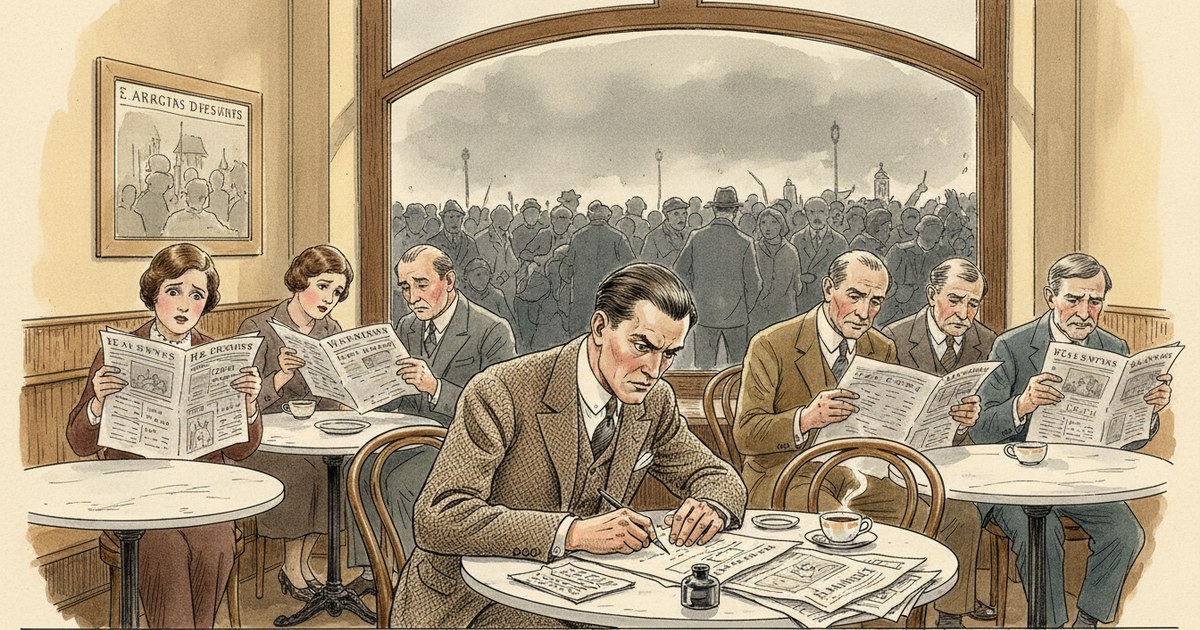
    On the morning of his thirty-first birthday, Josef K. is arrested by two men who eat his breakfast and cannot tell him what he’s charged with. He is not taken anywhere. He goes to work. He comes home. The trial, whatever it is, proceeds without him—or rather, it proceeds through him, feeding on his attempts to stop it. Kafka wrote that opening scene in a single night in August 1914, six weeks after the assassination in Sarajevo and three days after Germany declared war on Russia. He was also, that same week, breaking off his engagement to Felice Bauer for the first time.

    The conjunction matters. The Trial is not about bureaucracy in the abstract. It’s about the specific horror of a man who believes, somewhere beneath his panic, that the charge against him might be real—and who cannot ask what it is because naming it would confirm it. Every procedural absurdity K. encounters, every painter and lawyer and cathedral priest who offers to help, is an escape route that leads deeper in. Kafka understood that mechanism from the inside. He had spent years in it.

    What he finished in those months of 1914 and 1915—he never declared the novel done, left chapters in a drawer, told Max Brod to burn everything—was not a political allegory but something closer to a portrait of guilt that has outrun its cause. Josef K. doesn’t know what he did. Neither do we. That is not a mystery to solve. It is the condition of the book.

    The novel’s unfinished state is itself part of the argument. Kafka left at least two chapters in incomplete drafts and never settled on their placement in the sequence. When Max Brod assembled the manuscript for publication in 1925, he was making editorial decisions Kafka had never sanctioned, about which scenes belonged, in what order, with what weight. The Trial we read is partly Brod’s construction—which means the book about a man who never fully understands the proceedings against him reaches us through proceedings its author never fully authorized. That irony is either accidental or too perfect to be accidental, and either way it belongs to the novel.

    The Man Who Administered His Own Sentence

    Kafka spent eleven years as a senior claims officer at the Workers’ Accident Insurance Institute in Prague, assessing industrial injury compensation for men who had lost fingers, hands, whole limbs to machines their employers had not bothered to guard. He was good at it. He wrote meticulous reports, proposed safety reforms, understood bureaucratic machinery in the way a mechanic understands an engine—by having spent years watching it fail people. His literary reputation has often turned him into a pale, tubercular visionary isolated from the world, but the biographical record is more uncomfortable than that: he was competent and embedded, and he hated that he was.

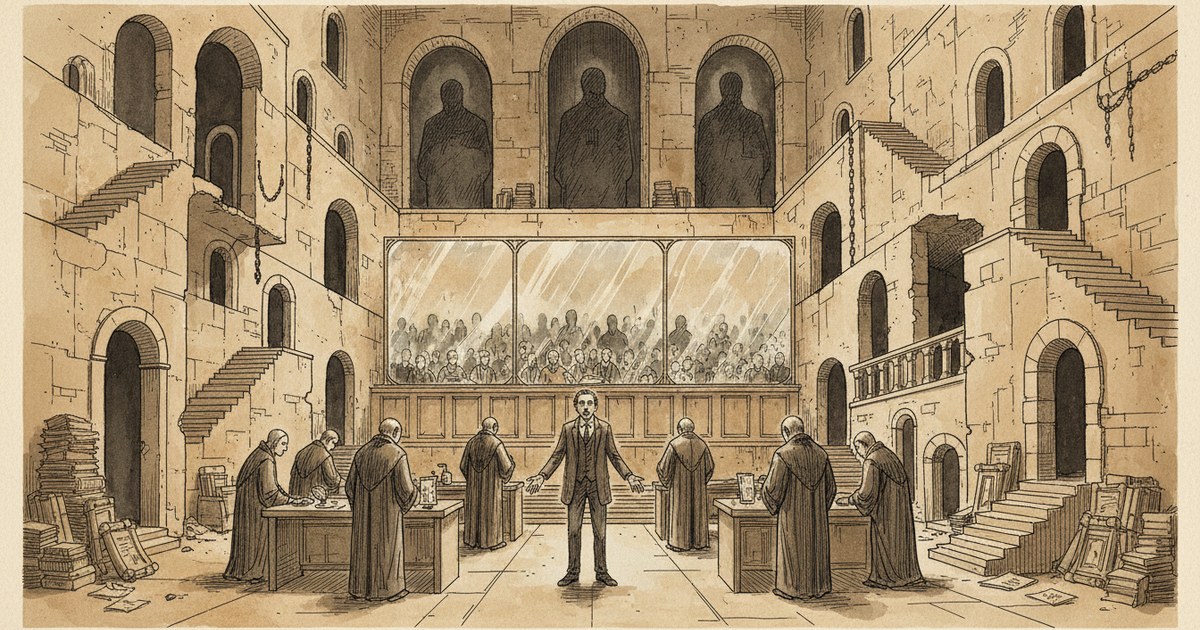
    The engagement to Felice lasted, in its fractured way, from 1912 to 1917. In his diary entries from those years, Kafka describes writing as the only thing that gave him the right to exist, and marriage as something that would extinguish writing, and the inability to choose between them as a kind of permanent verdict. When he writes, in The Trial, about a court that operates in attic rooms above ordinary apartments—that holds its sessions in buildings where families are also cooking dinner and children are doing homework—he is not imagining Kafkaesque abstraction. He is describing what it feels like to carry a proceeding inside you while the world continues its ordinary operations all around you.

    He was diagnosed with tuberculosis in 1917, the year he finally broke the engagement for good. He died in 1924. He was forty. Max Brod published The Trial the following year, against explicit instructions. Whether that was friendship or betrayal is a question the novel, characteristically, refuses to answer.

    Prague in 1914 adds another layer that tends to get lost in the English-language reception of the novel. Kafka was a German-speaking Jew in a Czech city that was itself inside the Austro-Hungarian Empire—three identities, none of them fully his, none of them fully comfortable. He wrote in German, worked in German, but lived among Czech speakers. He was subject to laws made in Vienna by administrators he had never met and would never see. The court that tries Josef K. has no single location, no named jurisdiction, no identifiable nationality. For Kafka that was not an invented absurdity. It was Tuesday.

    What the Court Already Knows

    The genius of the novel is not its surrealism—it is its precision. The court’s logic is not random; it is perfectly consistent, internally, once you accept its first premise: that accusation and guilt are the same thing. Every character K. consults confirms this premise while appearing to contest it. The painter Titorelli explains with cheerful expertise that acquittals are theoretical. The lawyer Huld explains that the most effective strategy is to avoid annoying the lower clerks. The priest in the cathedral explains that the doorkeeper in the parable was not cruel—he was only doing his job. Each explanation is coherent. Each one closes another door.

    What makes the novel land, still, is that K. is not passive. He fights. He organizes. He drafts a petition. He fires his lawyer and decides to represent himself. His energy and intelligence are completely genuine, and they are completely useless, and Kafka is not cruel about this—he is something worse than cruel, he is accurate. The final chapter, where two men in frock coats arrive at K.’s apartment on the eve of his thirty-second birthday, is four pages long and written with the flat procedural clarity of an official report. K. does not resist. He has been preparing for this since the first page, and so have we, and when the knife turns, the sentence Kafka gives us is not dramatic. It is administrative. That economy is the whole argument.

    The parable of the doorkeeper—”Before the Law”—deserves a moment on its own, because Kafka published it as a standalone story in 1915, while the novel sat unfinished in a drawer. A man from the country spends his entire life waiting at a door that was built only for him, and never enters. The doorkeeper never forbids him; he only implies that entry is not currently advisable. The man waits, bribes the doorkeeper, grows old, and dies at the threshold. In the cathedral scene of the novel, a priest offers K. this parable as consolation—or instruction—or warning—and then spends several pages explaining that its meaning is disputed and that all interpretations are equally valid. Kafka embeds the parable, then immediately demonstrates that even the parable cannot be read without the court’s interference. There is no outside text. There is no vantage point from which the system looks comprehensible.

    The Architecture of Dread: How the Novel Is Built

    One of the things that gets missed in summary is how strange the novel’s structure actually is. It does not build toward revelation in the way a thriller does, or collapse inward in the way a tragedy does. It accumulates. Each chapter introduces a new figure—the washerwoman, the flogger in the lumber room, the manufacturer, the painter—who seems to represent a new avenue of escape or understanding, and each chapter ends with that avenue quietly sealed. The lumber room scene is the most startling example: K. opens a door at his bank and finds, in a storage space he walks past every day, the two guards who arrested him being flogged by a man in leather. He shuts the door. He comes back the next evening and opens it again. They are still there, in the same positions, still being flogged, as though nothing has moved. The scene has no resolution because the novel is not interested in resolution. It is interested in the door you keep opening even when you know what’s behind it.

    This structural logic—repetition without progress, motion without direction—is what gives The Trial its particular texture of dread. It does not feel like suspense because suspense implies that something might yet be resolved. It feels like recognition: the slow accumulation of evidence that you already knew this was how it would go.

    Why This Translation (translated by David Petault)

    Kafka’s German is not ornate. It is the language of forms and memos—precise, impersonal, faintly polite—turned toward material that strips politeness to its skeleton. A translation that reaches for elegance misses the point; one that flattens into plainness loses the constant, quiet pressure of a bureaucratic register being used to describe a man’s destruction. The translation we recommend holds that tension. The sentences read the way official correspondence reads when you know it contains something terrible: smooth on the surface, load-bearing underneath. If you have not read The Trial in English before, or if you read it in a version that felt distant or dated, this is the edition to go back with. Find it here: The Trial: A New Translation.

    The older Muir translation, which dominated the English-language reading of Kafka for decades, has real virtues—it was made by people who knew Kafka’s circle and cared deeply about his work—but it was also made in the 1930s, and it shows. Certain words that carried precise bureaucratic weight in Kafka’s German got rendered into English equivalents that have since drifted in meaning, or that carried literary connotations Kafka was deliberately avoiding. The modern English edition featured here strips those accretions away. When K. receives a summons, it reads like a summons. When an official speaks to him with impeccable courtesy about something monstrous, the courtesy lands the way it should: not as warmth, but as the most unsettling thing in the room.

    The court, the novel insists, was always already in session. You were just the last to know.

    Further reading: More books by Franz Kafka · Explore German Literature

    Frequently Asked Questions

    What is the best English translation of The Trial by Franz Kafka?

    The translation we recommend on this page is the modern English edition linked above, which preserves Kafka’s precise, bureaucratic register without the archaic phrasing that makes older versions feel dated. The Muir translation held the field for decades and remains historically significant, but its 1930s English has drifted far enough from current usage that it creates a distance Kafka never intended—his German was contemporary and clipped, not literary and elevated. For a first read or a reread, the modern edition featured here is the cleaner entry point.

    Is The Trial worth reading in 2026?

    More than ever. Kafka wrote about a man prosecuted by a system that never explains its charges, and that premise has only grown more relevant in an era of algorithmic decisions, opaque institutions, and bureaucratic dead ends that defy appeal. The Trial resonates in 2026 not as historical curiosity but as a diagnostic tool — a novel that names something most people feel but struggle to articulate.

    How does The Trial compare to The Castle by Kafka?

    Both novels trap their protagonists in systems designed to frustrate, but the emotional texture differs significantly. The Trial moves with the urgency of a legal proceeding spiraling toward an unknown verdict — it is tighter, more propulsive, and more claustrophobic. The Castle is slower and more expansive, following a land surveyor who can never quite reach the authority he seeks. Readers who find The Trial gripping often describe The Castle as its philosophical counterpart: same machinery, longer rope.

    What should I read after The Trial by Kafka?

    The Stefan Zweig Collection — available in two volumes of new translations at classicsretold.com — is the natural next step. Zweig was Kafka’s contemporary, writing in the same Central European literary tradition, and shares Kafka’s interest in psychological pressure and institutional dread. Volume 1 introduces Zweig’s novellas and stories at their most concentrated; Volume 2 extends that range. Together they offer a fuller portrait of the era that produced The Trial.

    Did Kafka finish writing The Trial?

    No. Kafka wrote the novel intensively between August 1914 and January 1915 but never declared it complete, leaving several chapters in draft form and the chapter sequence unresolved. When he died in 1924 he left instructions for Max Brod to destroy all his unpublished work; Brod ignored those instructions and assembled the manuscript for publication in 1925, making editorial choices about chapter order and inclusion that Kafka had never sanctioned. The novel we read today is partly Brod’s construction—a fact that sits uncomfortably alongside a story about proceedings that never fully disclose their own logic.

    What does “Before the Law” mean in The Trial?

    “Before the Law” is a parable Kafka published as a standalone story in 1915 and also embedded in the cathedral chapter of The Trial, where a priest recites it to Josef K. as a kind of instruction. A man from the country spends his entire life waiting at a door built only for him, discouraged from entering by a doorkeeper who never explicitly forbids it, and dies at the threshold without ever passing through. Kafka then uses the following pages to show the priest and K. disputing what the parable means—whether the doorkeeper was deceiving the man, whether the man deceived himself, whether any reading is more valid than another—without resolution. The parable is not an explanation of the novel. It is a demonstration that explanations do not help.

    Curated pick
    The Trial — Franz Kafka
    Modern English translation

    Kindle →Paperback →

    More from Franz Kafka
    The CastleAmerika (The Man Who Disappeared)A Country Doctor And Other StoriesMetamorphosis

    This post contains affiliate links. As an Amazon Associate, we earn from qualifying purchases.
  • Nietzsche Wrote Scripture for Godless Men

    Nietzsche Wrote Scripture for Godless Men

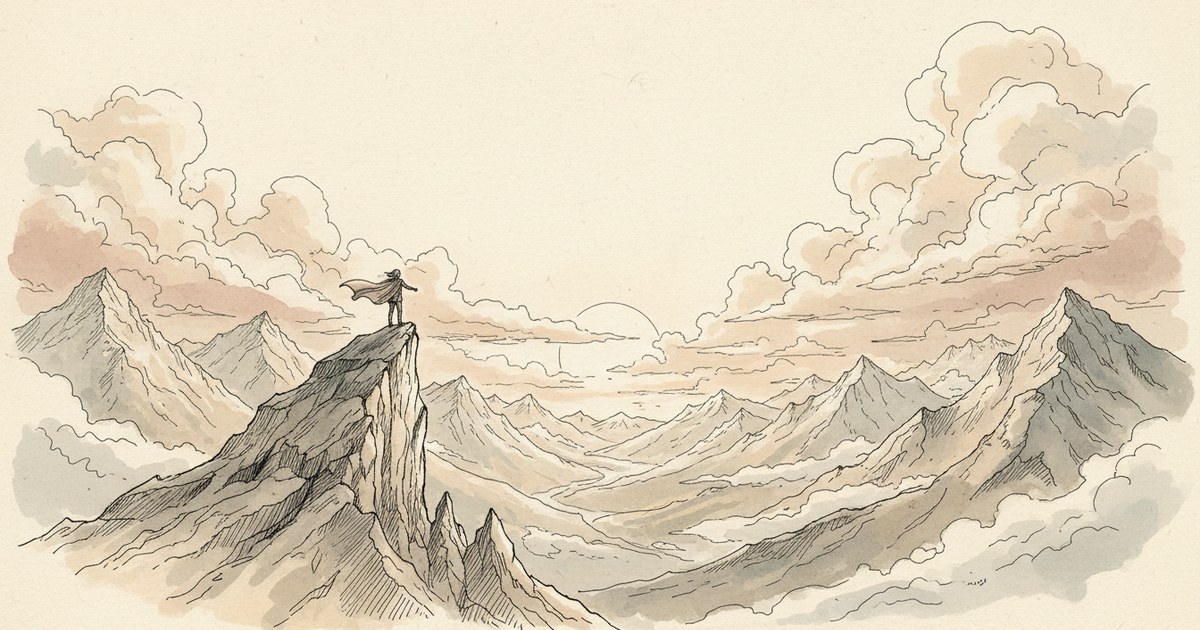
    In the autumn of 1882, Friedrich Nietzsche sat in a boarding house in Genoa, watching the Mediterranean light fail, and began drafting the speech a madman gives in a marketplace. The madman has a lantern. It is midday. He is looking for God. “We have killed him,” the madman says to the crowd that is laughing at him—”you and I.” Then he asks the question that stops the laughter cold: “What festivals of atonement, what sacred games shall we have to invent?”

    That scene—from The Gay Science, which preceded Thus Spoke Zarathustra—is where the argument begins, and Nietzsche never let it end. The death of God was not a theological position. It was a diagnosis: Western civilization had built its entire architecture of meaning on a foundation it could no longer defend, and the building was still standing only because no one had told the inhabitants. Thus Spoke Zarathustra is what Nietzsche wrote next. It is not an answer. It is the question asked at full volume, in the form of a prophet who comes down from his mountain to find that humanity is not ready to hear him.

    Zarathustra speaks. The crowd listens politely and asks for a tightrope walker. Nietzsche understood this was the likeliest outcome.

    The Philosopher Who Diagnosed His Own Century

    He was born in 1844 in Röcken, a small Prussian village, the son of a Lutheran pastor who died of brain disease when Friedrich was four. That biographical fact is not incidental. Nietzsche grew up in a house where faith was the atmosphere, then watched it removed. He became a child prodigy, a professor of classical philology at Basel at twenty-four—the youngest ever appointed—before the migraine attacks and the eye problems and the nausea made sustained academic work impossible. By his mid-thirties he had resigned his professorship, lost the friendship of Wagner over what he called Wagner’s capitulation to Christianity and German nationalism, and was writing books that sold fewer than two hundred copies. He was, in the specific way of the nineteenth century, a man who had arrived too early at a conclusion everyone would eventually have to face.

    What his biography explains about Zarathustra is its loneliness—not as a mood, but as a structural argument. Zarathustra keeps returning to his cave. He gives his wisdom to crowds and they miss it. He finds disciples and sends them away because he wants followers who will surpass him, not worship him. The book’s most famous concept, the Übermensch—the Overman—is precisely this: not a superman in the comic-book sense, but a human being who has stopped requiring God as an excuse not to be fully, terrifyingly responsible for the meaning of their own existence. Nietzsche wrote this in the years he spent alone in Swiss and Italian boarding houses, surviving on plain food and walking through alpine terrain for hours each day because it was the only thing that relieved the headaches. The philosophy of self-overcoming was written by a man who had very little self left to spare.

    He completed the fourth and final part of Zarathustra in 1885. Six years later he collapsed in Turin, found embracing the neck of a horse that had been whipped in the street. He spent the last eleven years of his life in mental silence, cared for by his sister—who would later, with catastrophic consequences, align his work with German nationalism. He never knew his books had finally found their readers. He never knew what would be done to his ideas.

    The Book That Refuses to Be Summarized

    Thus Spoke Zarathustra is structured like a gospel—four parts, a prophet, parables, disciples—but it behaves like a grenade thrown at every gospel that preceded it. Its central chapters include “On the Three Metamorphoses,” where Nietzsche describes the human spirit moving from camel (the beast that bears all burdens willingly) to lion (the beast that can say no) to child (the beast that can begin again, free of obligation to what came before). This is not mysticism. It is a map of a specific psychological passage: out of inherited meaning, through the violence of negation, into the terrifying freedom of self-authorship. Anyone who has spent time sitting with a commitment—to a religion, a career, a relationship, an identity—that has gone hollow knows exactly what the camel stage feels like from the inside. Nietzsche just named it.

    The chapter called “On the Vision and the Riddle” contains the concept of eternal recurrence—the thought experiment that if time is infinite and matter finite, every moment must repeat, endlessly, including your worst ones—delivered as a confrontation with a dwarf on a mountain path who keeps whispering “gravity” in Zarathustra’s ear. The question eternal recurrence poses is not cosmological. It is: would you choose this life again if you had to live it forever? It is the most brutal possible test of whether you have actually made peace with the life you are living. Most readers find the chapter unexpectedly physical—there is a gate, a gateway, a serpent, a shepherd who bites the serpent’s head off, and Zarathustra laughing. It is the closest Nietzsche ever gets to writing a seizure in prose.

    Why This Translation (translated by David Petault)

    The problem with most English editions of Zarathustra is that they preserve the nineteenth-century formality—the “thou”s and “thee”s, the inverted syntax—in a way that creates a reverent distance from the text. That distance is exactly wrong. Nietzsche was writing in deliberate opposition to reverence. He wanted the book to feel urgent, spoken, direct. This new translation works in the idiom of contemporary English without flattening the strangeness of the original: the aphorisms still land like blows, the passages of lyric intensity still lift off the page, but the reader is not required to climb through archaic diction to reach the argument. The result is a Zarathustra that reads the way it must have felt in German—dangerous, beautiful, slightly unhinged, and alive.

    You can find the paperback edition here. Nietzsche asked what festivals of atonement we would invent to replace what we had killed. We are still answering. We will be for a while.

    Further reading: More books by Friedrich Nietzsche · Explore German Literature

    “`html

    What is the best English translation of Thus Spoke Zarathustra for modern readers?

    For readers approaching Nietzsche today, Thus Spoke Zarathustra: A New Translation in Modern Accessible English stands out as one of the most reader-friendly editions available. Older Victorian-era translations preserve a certain grandeur but frequently obscure meaning behind archaic diction. This modern accessible translation prioritizes clarity without sacrificing the philosophical depth or rhetorical force of Nietzsche’s original German—making it the practical first choice for anyone who wants to actually understand what Zarathustra is saying, not just admire its ornament.

    Is Thus Spoke Zarathustra worth reading in 2026?

    Yes, and arguably more than ever. Nietzsche’s central preoccupations in Thus Spoke Zarathustra—the death of inherited values, the will to create meaning in a disenchanted world, and the danger of herd conformity—map directly onto anxieties that define contemporary life. The book does not offer comfort; it offers a mirror. Thus Spoke Zarathustra: A New Translation in Modern Accessible English makes that confrontation available to readers who might have bounced off denser Victorian editions, which means its core provocation reaches a wider audience in 2026 than it could have a generation ago.

    How does Thus Spoke Zarathustra compare to The Gay Science as an entry point into Nietzsche?

    The Gay Science is where Nietzsche announces the death of God and introduces the eternal recurrence in compressed, aphoristic bursts—it is analytical and probing. Thus Spoke Zarathustra: A New Translation in Modern Accessible English is where those same ideas are dramatized, expanded into parable and prophecy. Readers who prefer argument should start with The Gay Science; readers drawn to narrative and vision will find Zarathustra more immediate. The two books are complementary rather than redundant, and reading them in sequence gives a fuller picture of Nietzsche’s thought than either provides alone.

    What should I read after Thus Spoke Zarathustra?

    After the sustained intensity of Nietzsche, many readers benefit from a writer who applies philosophical seriousness to human psychology at the level of individual lives rather than sweeping proclamations. Stefan Zweig is the natural next step. The Stefan Zweig Collection – Volume 1: A New Translation and Stefan Zweig Collection – Volume 2: A New Translation, both available at classicsretold.com, collect Zweig’s finest novellas—works that examine obsession, fate, and the fragility of identity with a precision that quietly echoes Nietzschean themes while remaining grounded in character and story. They are accessible, psychologically rich, and rewarding immediately after the more demanding philosophical terrain of Zarathustra.


    “`

    Curated pick
    Thus Spoke Zarathustra — Friedrich Nietzsche
    Modern English translation

    Kindle →Paperback →

    More from Friedrich Nietzsche
    The Gay ScienceThe Will to PowerThe Birth of TragedyBeyond Good and Evil

    This post contains affiliate links. As an Amazon Associate, we earn from qualifying purchases.

  • Zweig Knew Europe Was Already Dead

    Zweig Knew Europe Was Already Dead

    In a smoke-filled rail car cutting through the Austrian Alps, or perhaps on the rain-slicked deck of a steamer bound for Rio, a Stefan Zweig story begins. It starts with a glance, a dropped glove, or a nervous tic. Within three pages, the protagonist is no longer a traveler; they are a casualty of their own hidden history. There is a specific, thrumming velocity to Zweig’s prose—a “nervous energy,” he called it—that collapses the distance between the 1920s and tonight. He does not build tension so much as he unmasks the obsession that was already there, waiting for the right catalyst to explode.

    To read Zweig for the first time is to realize that the “modern” psychological thriller was perfected nearly a century ago in a Viennese study. During the 1930s, he was the most translated author in the world, a literary superstar whose novellas were consumed like prestige television is today. Yet, his massive bibliography of biographies, essays, and fiction can feel like an intimidating labyrinth for the uninitiated. You need a map not because his work is difficult, but because it is so potent that starting in the wrong place is like jumping into a high-speed centrifuge without a harness.

    The “Zweig momentum” is his signature. He understood that human beings are essentially stable structures held together by very thin wires of social convention. His stories are the sound of those wires snapping. Whether it is a world chess champion losing his mind to a silent internal adversary or a woman spending her entire life in the shadow of a single, unrequited encounter, Zweig’s focus never wavers from the internal conflagration. He was the great chronicler of the “amok”—the moment when the civilized mind surrenders to the irresistible pull of a singular, devastating impulse.

    The Architect of the Vanishing World

    To understand why Zweig wrote with such desperate urgency, one must look at the map of Europe that was dissolving beneath his feet. Born in 1881 to a wealthy Jewish family in Vienna, Zweig was a true child of the Habsburg Empire’s golden twilight. He lived in a world where “security” was the highest virtue, where the currency was stable, the theaters were full, and the progress of humanity seemed inevitable. He was a pacifist, a polyglot, and a European in the deepest sense of the word, counting Sigmund Freud, Auguste Rodin, and Romain Rolland as his closest peers. His Vienna was the laboratory of the modern soul, and he was its most sensitive recording instrument.

    This “World of Yesterday,” as he later titled his definitive memoir, was not just a place but a state of mind. When the First World War shattered the borders of Europe, and the rise of Nazism subsequently turned his books into fuel for bonfires, Zweig became a man without a country. His life became a frantic flight: from Vienna to London, then New York, and finally to Petrópolis, Brazil. He watched from afar as the cosmopolitan, humanist culture he inhabited was systematically erased. Every novella he wrote in exile was an attempt to preserve the psychological complexity of a civilization that was being replaced by the blunt force of ideology.

    This sense of impending loss is what gives his biographies of figures like Marie Antoinette or Erasmus their peculiar bite. He wasn’t interested in dry dates; he was looking for the moment where a person’s character collided with the machinery of history. His suicide in 1942, a joint pact with his wife Lotte in Brazil, was the final, tragic testament to his belief that the Europe he loved was gone forever. He died believing the “darkness” had won, yet his work remains the most vibrant evidence we have of the light that preceded it. He didn’t just record history; he captured the feeling of living through its disintegration.

    The Essential Starting Points

    If you are standing at the threshold of Zweig’s library, the first door you should open is Chess Story (also known as The Royal Game). It is the ultimate concentration of his style, written in the final months of his life. Set on a passenger liner, it depicts a confrontation between a mechanical, brutal world chess champion and a mysterious passenger who learned the game while in solitary confinement by the Gestapo. It is a terrifying exploration of how the mind can save itself through obsession, only to be destroyed by that same salvation. It is short, jagged, and impossible to put down—a perfect entry point into his “nervous” narrative drive.

    From there, move to Letter from an Unknown Woman. This is Zweig at his most emotionally operatic. A famous novelist receives a letter from a woman he does not remember, detailing a lifelong devotion that has dictated her every move, her every sacrifice, and her eventual ruin. In the hands of a lesser writer, this would be melodrama; in Zweig’s hands, it is a clinical and devastating study of how the human heart can build a cathedral out of a ghost. It shows his remarkable ability to inhabit the interior lives of his characters, peeling back the layers of social propriety to reveal the raw nerves beneath.

    Finally, no one should consider themselves a reader of Zweig without experiencing The World of Yesterday. It is frequently cited as the greatest memoir of the 20th century, and for good reason. It is the biography of an era rather than a man. Zweig barely mentions his own marriages or private scandals; instead, he chronicles the death of a dream. He takes you from the coffee houses of fin-de-siècle Vienna to the trenches of the Great War and the chilling silence of a London flat as the second war begins. It is the essential companion to his fiction, providing the context for the “psychological velocity” that defines his creative output.

    Why the Right Translation Changes Everything

    For decades, Stefan Zweig was a victim of his own popularity. Because he was so widely read, many early English translations were rushed to market, resulting in prose that felt stiff, Victorian, and strangely distant. This was a tragedy, because Zweig’s German is anything but stiff. He wrote with a breathless, cinematic quality, favoring rhythm and psychological precision over flowery ornamentation. If you read an older edition, you might find the plots compelling but the “voice” muffled, as if you are watching a brilliant film through a dusty lens.

    This is why the modern resurgence of Zweig is so vital. Newer translations, such as the ones featured in the Classics Retold editions, focus on recapturing that specific “nervous energy” that Zweig intended. A modern English translation understands that Zweig’s sentences are designed to mimic the pulse of his characters—speeding up during moments of panic, slowing down during the agony of reflection. By stripping away the linguistic cobwebs of the mid-20th century, these editions allow the psychological sharpness of his work to pierce through. You aren’t just reading a story about 1920; you are feeling the immediacy of 1920.

    If you are ready to begin your journey, we highly recommend The Stefan Zweig Collection Vol 2. This curated volume brings together several of his most vital novellas, including Chess Story, in a format that prioritizes the visceral impact of his prose. It is designed to be the definitive starting point for the contemporary reader, offering a bridge into the mind of a writer who understood our private obsessions better than we often understand them ourselves. You can find this essential edition here: The Stefan Zweig Collection Vol 2. It is more than a book; it is an invitation to a lost world that feels hauntingly familiar.

    Is Stefan Zweig’s work difficult to read?

    Not at all. In fact, Zweig was known for his extreme readability and fast-paced narratives. While his themes are psychologically deep, his prose is remarkably clear and direct. He intentionally avoided the dense, philosophical digressions common in many of his German-speaking contemporaries, preferring the “velocity” of a well-told story that focuses on character and action.

    Why is he often called a “chronicler of the lost world”?

    Zweig lived through the total collapse of the European cultural order. Because he was born into the stable, wealthy environment of the Austro-Hungarian Empire and died in exile during WWII, his work captures the specific transition from a world of security and humanism to one of total war and ideology. He felt a personal responsibility to document the “soul” of the Europe that was being destroyed.

    Did Stefan Zweig write full-length novels?

    Zweig was primarily a master of the “novella”—a format longer than a short story but shorter than a novel. He felt this length was perfect for exploring a single psychological obsession without losing momentum. While he did write one full-length novel, Beware of Pity, his most famous and influential fiction remains his shorter, more concentrated works.

    Why did his popularity decline and then suddenly return?

    After his death in 1942, Zweig’s brand of high-humanism and psychological focus fell out of fashion in favor of more overtly political or experimental literature. However, in the 21st century, readers have rediscovered his uncanny ability to describe the fragility of civilization and the complexity of the human mind. His work feels incredibly relevant in an era of global uncertainty and rapid social change.

    Curated pick

    The Stefan Zweig Collection - Volume 2

    The Stefan Zweig Collection – Volume 2 — Stefan Zweig
    Modern English translation

    Kindle →
    Paperback →