Category: German literature

  • Kafka Never Saw America. He Understood It.

    Kafka Never Saw America. He Understood It.

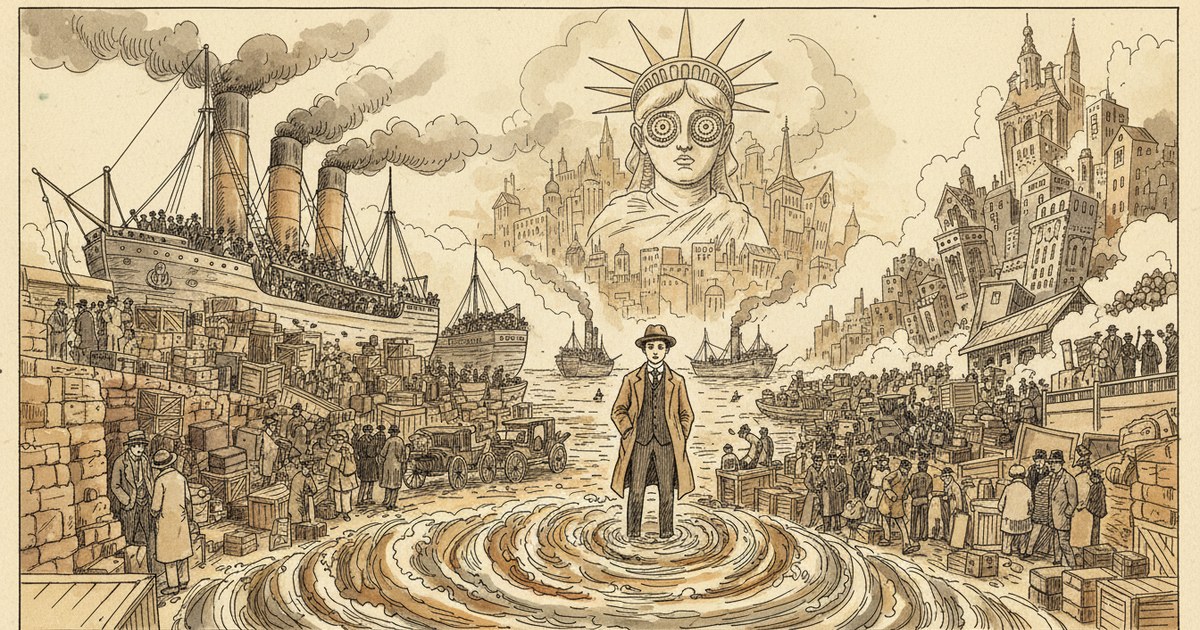
    In the first paragraph of Amerika, the Statue of Liberty is holding a sword. Not a torch — a sword. Kafka knew the statue held a torch. He had seen photographs. He made the change deliberately, and Max Brod, who edited the manuscript after Kafka’s death, noted it without correcting it. That detail — the sword where the torch should be — is the entire novel condensed into a single image: America as a place that promises liberation and delivers something sharper.

    Karl Rossmann is sixteen years old. He has been sent from Prague to New York in disgrace after a servant girl seduced him and bore his child. His family’s solution was deportation. He arrives in the harbor with almost nothing, goes below deck to retrieve a forgotten umbrella, and immediately gets lost in the corridors of the ship. He hasn’t touched American soil and he is already trapped in a maze not of his making. The rules of the ship’s lower decks are obscure to him. He learns them by breaking them. This is Kafka’s America: a system whose regulations you discover only at the moment of violation.

    The thesis running through this novel — left unfinished, unpublished in Kafka’s lifetime, reconstructed from fragments by Brod — is that meritocracy is the cruelest myth a society can sell to its newcomers. Karl Rossmann is not Gregor Samsa. He hasn’t been transformed into anything monstrous. He is simply young, poor, foreign, and without leverage, which in America, Kafka argues, is transformation enough. The novel’s real subject is not a continent. It is the machinery of arbitrary power dressed in the language of fairness.

    The Man Who Read About a Country He Never Visited

    Kafka never went to America. He never left Central Europe in any meaningful sense — a few trips to Paris, a sanatorium in Italy toward the end of his life, the recurring dream of escape that never quite materialized. What he had instead was a shelf of books about the place and an imagination trained by years of working as an insurance claims officer in Prague, processing the applications of factory workers who had been injured in industrial accidents and were trying to extract compensation from a system designed, through procedural refinement, to deny them.

    That job is where the novel lives. Kafka spent his working days watching people who were objectively owed something — money, recognition, remedy — navigate bureaucratic machinery that acknowledged their existence, logged their paperwork, assigned their cases numbers, and then, through a process of technical objection and procedural delay, gave them nothing. He was not cruel. He was a conscientious officer who understood that the machine was not malicious — it was indifferent, and indifference at scale produces the same result as malice. Karl Rossmann doesn’t encounter villains in Amerika. He encounters structures that are perfectly polite about destroying him.

    For source material Kafka read Arthur Holitscher’s travel account Amerika: Today and Tomorrow, published in 1912, and Benjamin Franklin’s Autobiography. From Holitscher he took the physical texture — the hotels, the road networks, the disorienting scale of the cities. From Franklin he took the myth: the self-made man, the immigrant who arrives with nothing and earns everything through industry and virtue. Kafka read the Franklin myth not as inspiration but as mechanism. If the logic holds that anyone can rise through merit, then failure is always the failure of the individual. Karl Rossmann is not at fault. He is simply outmaneuvered, at every turn, by people who understand the rules and have no reason to explain them.

    Kafka started writing what he called simply “The Stoker” — the first chapter — in 1911. He read it aloud to his friends. They laughed. It was funnier than anything he had written before, quicker, less airless than the pieces that would become The Trial and The Castle. He kept writing through 1912 and then stopped, as he stopped with nearly everything, because the ending he could see — a chapter set in the Nature Theatre of Oklahoma, a vast enterprise promising a place for everyone who comes — felt true to the book’s logic but impossible to finish. Max Brod published the manuscript after Kafka’s death in 1927 under the title Amerika, which Kafka had not chosen. A later scholarly edition restored the title from the manuscript itself: Der Verschollene — The Man Who Disappeared.

    What the Book Does That The Trial Doesn’t

    The Trial is suffocation from the first page. Amerika is something stranger — it moves, it breathes, it is almost picaresque. Karl Rossmann travels. He meets people. He finds work, loses it, finds different work, loses that too. There is a screw-tightening quality to Josef K.’s story that Amerika deliberately refuses: each time Karl falls, the novel offers a ledge, a kindness, a new beginning. Kafka lets you believe in recovery just long enough to make the next collapse feel like your own failure of imagination.

    The stoker chapter, which Kafka published separately and considered his best single piece of prose, is the argument in miniature. Karl befriends a stoker in the ship’s engine room — a man who believes he has been wronged by his superior, a Romanian named Schubal — and helps him bring the grievance before the ship’s captain. A hearing is convened. Witnesses are called. Karl’s own uncle, wealthy, American, whom he didn’t know existed, appears among the spectators. The stoker argues his case with passionate conviction and some evidence. And then, almost without anyone deciding anything, the room’s attention drifts. The captain moves on. The uncle approaches Karl. The stoker’s case simply stops being heard. No verdict. No adjournment. The ship docks. The stoker vanishes from the novel permanently. That is all Kafka needs to say about justice.

    What Kafka understood about power is that it rarely says no outright. It just stops listening. The novel is structured around this: characters who are enormously verbose about their authority and their fairness and their reasonableness, and who, at the decisive moment, simply do something else. Karl’s uncle takes him in, establishes clear rules for his stay, and one evening — because Karl was a guest at a party he’d been told to avoid, and stayed past midnight — writes him a letter of expulsion. The letter is warm. It is meticulous. It is absolute. The uncle does not shout or threaten. He closes the door and that is the end of Karl’s life in New York.

    There is a housekeeper named Brunelda who appears late in the surviving manuscript and dominates every scene she occupies — enormous, exhausted, imperious, unable to stand without assistance. She is helplessness as power: she needs constant attendance and exerts complete control over the two men who provide it. In her Kafka managed something almost impossible, a figure who is simultaneously victim of her own condition and tyrant within her immediate sphere. She is too specific, too grotesquely physical, too uncomfortable to laugh at cleanly, to be reduced to what she represents. She is simply there, needing everything, giving nothing, impossible to leave.

    The Translation Landscape

    Kafka wrote in German that is precise, formal, and deliberately flat. That flatness is load-bearing. It creates the gap between the events — which are often appalling — and the bureaucratic register in which they are recorded, and it is that gap where the novel’s particular dread lives. A translation that allows the prose to become expressive, to inflect toward the emotional tone the reader might expect, collapses the gap and with it the effect. Getting the flatness right without making the English feel inert is the central problem for any translator of this novel.

    The Edwin and Willa Muir translation, published in 1938, was the first English version and remained standard for decades. It is dated now — their Amerika reads as a period piece, the prose occasionally ornate in ways that work against Kafka’s particular blankness, the diction carrying a slight mustiness that wasn’t a problem in 1938 and increasingly is now. It remains historically important and is largely unavoidable in the scholarship, but it is hard to recommend over later versions for a first reading. Michael Hofmann’s translation, published by Penguin under the title The Man Who Disappeared, is the benchmark of the modern English versions. Hofmann is a poet as well as a translator, and his ear for cadence is exact. He makes Kafka sound contemporary without making him sound casual — a genuinely difficult achievement. Where Hofmann occasionally smooths a compound sentence that Kafka left deliberately ungainly, Mark Harman’s translation for Schocken — Amerika: The Missing Person — preserves the friction. Harman is more literal in approach, scrupulous about Kafka’s tendency toward what feels like legal precision in syntax. The choice between Hofmann and Harman is a legitimate one depending on whether you want the more musical or the more exacting version of the same novel.

    Why This Translation?

    This translation, the edition Classics Retold has selected, addresses that central problem of flatness by keeping the prose plain at the sentence level while building rhythm across paragraphs, so that the cumulative weight of Karl’s reversals arrives with more force than any single sentence could carry. The scene where Karl is fired from the Hotel Occidental — publicly, before the assembled staff, accused in front of everyone of a violation he barely understands — is handled without italics, without a swelling of the prose toward the tragic. The translation simply records what happens, in the order it happens, and the restraint is exactly right. When the prose doesn’t tell you how to feel, you feel it more.

    This edition is available in paperback here. If you have read The Trial and think you know what Kafka sounds like, Amerika will revise that. It is funnier, faster, and stranger in its unfinishedness — the Oklahoma chapters have a quality almost of improvisation, a last-reel brightness, and because Kafka never wrote past them the novel ends not in darkness but in suspension, which may be worse. Start with the stoker. Pay attention to the moment the room stops listening, because it happens so quickly, and so politely, that you might miss it — which is precisely what Kafka intended.

    Frequently Asked Questions

    What kind of reader should start with Kafka Never Saw America. He Understood It.?

    Readers interested in Franz Kafka and strong literary stakes will find Kafka Never Saw America. He Understood It. a good entry point because it combines narrative momentum with a clear thematic payoff.

    Is Kafka Never Saw America. He Understood It. difficult to read today?

    Not especially. The challenge is usually tone and context, not plot. A modern translation helps the book feel immediate without flattening its historical texture.

    Why choose this translation of Kafka Never Saw America. He Understood It.?

    The best reason is clarity without loss of character. A strong translation preserves the author’s pressure, rhythm, and emotional temperature while removing needless stiffness.

    What should readers notice most in Kafka Never Saw America. He Understood It.?

    Pay attention to how the book builds its tension through scene, voice, and moral pressure rather than summary. That is usually where the work still feels most alive.

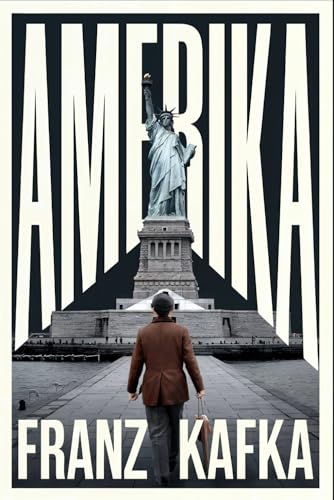
    Amerika (The Man Who Disappeared): A New Translation
    Recommended Edition
    Amerika (The Man Who Disappeared): A New Translation
    by Franz Kafka
    New TranslationPaperbackClassics Retold
    aBuy on Amazon
    Also available: Kindle
    More from Franz Kafka
    The Trial: A New Translation
    The Castle: A New Translation
    A Country Doctor And Other Stories: In the Penal Colony, The Judgment: A New Translation
    Metamorphosis: A New Translation in Modern Accessible English
    This post contains affiliate links. As an Amazon Associate, we earn from qualifying purchases.
  • Balzac Wrote Himself to Death

    Balzac Wrote Himself to Death

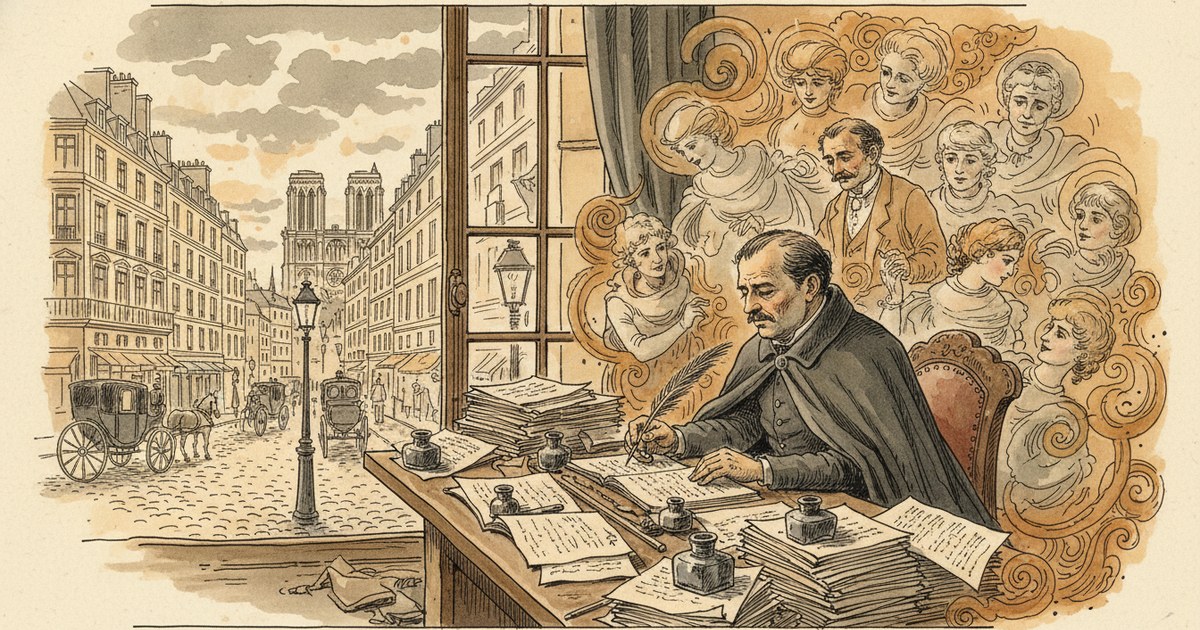
    Balzac wrote at night, in a monk’s robe, at a desk covered in manuscript pages and empty coffee cups. He slept four hours. He wrote fifteen. He kept himself upright on coffee — fifty cups a day by some accounts — and when his body gave out in August 1850, he was fifty-one years old, his heart badly enlarged, his legs so swollen he could barely walk. He had spent thirty years running from creditors, reinventing himself in print, promising Ewelina Hańska in Ukraine a Paris house worthy of a countess, all of it funded by the next manuscript and the one after that. He died two months after he finally married her. He had just moved into the house.

    Stefan Zweig opens his biography here: not with the childhood in Tours, not with the failed law apprenticeship, but with the engine. The obsession first. By the time you are two pages in, it is clear that Zweig is not writing a conventional literary life. He is trying to explain what it costs to become Balzac — and what it costs to be the kind of writer who cannot stop. That these questions were not abstract for Zweig makes the book something more than biography. It makes it a document of self-recognition, written by a man who was looking into a mirror he did not entirely want to see.

    Zweig finished this manuscript in late 1941, in Petrópolis, Brazil, having fled Austria, then London, then New York. On February 22, 1942, he and his wife Lotte took their lives together. The biography was published in German in 1946, edited posthumously by Richard Friedenthal. The fact that Zweig did not survive to see it in print is not a piece of sad context — it is the frame through which every sentence about Balzac’s self-destruction must be read.

    The Biographer Who Recognized the Disease

    Zweig was born in Vienna in 1881, the son of a wealthy Jewish textile manufacturer, which gave him the financial independence to become exactly the kind of European cosmopolitan that the twentieth century was designed to destroy. He built one of the finest private libraries in Austria, traveled compulsively, corresponded with Freud and Romain Rolland and Richard Strauss, and by the 1920s was among the most widely translated writers in the German language. His novellas — Chess Story, The Post-Office Girl, Beware of Pity — are models of psychological compression. His biographies are something else: long, architectured arguments about how exceptional people are consumed by their own natures or by history.

    His subjects form a typology. Fouché, the survivor, who bent with every political wind and outlasted everyone. Mary Queen of Scots, the romantic, destroyed by a character she could not moderate. Erasmus, the humanist, crushed between Luther and Rome because he refused to choose a side. In each case Zweig is interested in the relationship between a person’s defining quality and their undoing — how the thing that made them remarkable also made them fragile. Balzac fits this pattern, but he is the fullest version of it, because Balzac’s defining quality was creative will so extreme it read as pathology.

    The biographical detail that unlocks Zweig’s angle: he began serious work on this book after being forced out of Austria in 1934. Everything that follows was written in exile — the chapters on Balzac’s Paris composed in cities Zweig was only passing through. A man writing about a man who never left Paris, who turned even his debts into fictional material, who died in the apartment he had fantasized about for two decades. There is something in the distance between Zweig’s displacement and Balzac’s furious rootedness that sharpens every observation into argument.

    Zweig understood obsession from the inside. He wrote the Balzac biography the way Balzac wrote novels: fast, driven, against the clock. By 1941, Zweig had watched everything he had built — the Vienna library, the European network of writers and artists, the idea of a cosmopolitan civilization that transcended national borders — vanish completely. Balzac had spent his life running from creditors. Zweig spent his last years running from something larger. The biography is, quietly, a meditation on what you do when the thing you’ve been outrunning finally catches you.

    Nearly a Hundred Novels, All of Them Overdue

    Zweig’s central argument is that La Comédie humaine — nearly a hundred novels and stories, more than two thousand named characters, an entire society rendered in systematic detail — cannot be explained by talent alone. What produced it was a specific, unrepeatable combination of ambition, debt, and a constitution that could sustain punishment no sane person would voluntarily accept. Balzac did not write in spite of his financial chaos; he wrote because of it. The creditors provided the pressure. Without the pressure, there might not have been the books.

    Zweig is specific about the mechanism, and this specificity is what separates the biography from hagiography. Balzac would draft a novel quickly, send a rough manuscript to the printer, receive proofs, and then rewrite — not corrections, but wholesale reconceptions, in the margins. Publishers charged him for each round of typesetting. He went through seven or eight proof cycles on some books. The costs compounded the debts. The debts demanded more books. It was not a sustainable system; it was a permanent emergency that he had learned to live inside. Zweig traces this not with pity but with something closer to awe and alarm in equal measure.

    The book’s strongest passages are on what Zweig calls Balzac’s “double life”: the public figure who projected wealth and success he did not have — the extravagant dinners, the planned silver mines, the Sardinian estate that existed only in prospectuses — and the nocturnal writer who actually funded it. Every promise Balzac made to Ewelina Hańska across eighteen years of correspondence, every guarantee of a Paris house and a life commensurate with her title, was underwritten by manuscripts. By books he had not yet written. By coffee and four hours of sleep.

    Zweig does not editorialize about this excessively. He lays it out, piece by piece, and lets the accumulation do the work. By the time he reaches Balzac’s final years — the house finally purchased, Ewelina finally arrived, Balzac too ill to enjoy any of it — the reader has been made to understand the mechanism so thoroughly that the ending feels not like tragedy but like physics. This is what Zweig does best: he makes the outcome feel inevitable without making it feel dismissible.

    The Translation Landscape

    Zweig’s Balzac has had a difficult English-language history. Published posthumously in German in 1946, it appeared in an English translation shortly afterward, but that edition went out of print and spent decades as a library curiosity — well-regarded among Zweig scholars, essentially unavailable to general readers. For most of the late twentieth century, if you wanted to read it in English, you hunted for a copy. That inaccessibility kept the book marginal in Anglophone literary culture in a way that distorted Zweig’s reputation: the novellas stayed in print, the biographies mostly didn’t, and readers who knew Chess Story often had no idea this book existed.

    The older English translation, where findable, is serviceable but dated in its rhythms. Zweig’s German prose has a particular architecture — long sentences that build analytical momentum through subordinate clauses, then break into short declarative statements when he wants to land a point. The structure is not ornamental; it is argumentative. Translations that break his longer sentences into shorter ones to read more smoothly in English lose the pressure those sentences are designed to create. A passage in an earlier translation describing Balzac’s proof-correction method reads as biographical summary. In this new translation, the same passage reads as diagnosis. The difference is in how the sentence is allowed to accumulate before it resolves.

    Readers who know Zweig through the Pushkin Press editions — the novellas, or the Fouché biography, or the memoir The World of Yesterday — will find this translation consistent with that contemporary approach to his prose: the sentences are given their length, the register stays elevated without becoming stiff, and the moments of sudden directness are not smoothed over. The translation does not try to make Zweig sound like a contemporary writer. It makes him sound like himself.

    Why This Translation?

    The argument for this edition is not only that it restores an unavailable book to print, though that matters in itself. The argument is that it translates Zweig’s prose in a way that serves his actual purpose, which is to make Balzac’s creative self-destruction comprehensible as a lived system rather than a colorful anecdote. That requires the sentences to work the way Zweig built them. When they do, the biography stops being a historical curiosity and becomes what it was always meant to be: a serious account of what extreme ambition looks like from the inside, written by someone with first-hand knowledge of the subject.

    The Classics Retold edition is available in paperback here. If you have read the novellas and want to see what Zweig could do at full length, this is the answer. If you have read Balzac and want to understand how it was possible, this is also the answer. But the reason to read it — the reason it stays with you — is simpler than either of those: Zweig finished writing about a man who worked himself to death, put down his pen, and did not survive to see the book published. That fact does not explain the biography. It completes it.

    Frequently Asked Questions

    What kind of reader should start with Balzac Wrote Himself to Death?

    Readers interested in Stefan Zweig and strong literary stakes will find Balzac Wrote Himself to Death a good entry point because it combines narrative momentum with a clear thematic payoff.

    Is Balzac Wrote Himself to Death difficult to read today?

    Not especially. The challenge is usually tone and context, not plot. A modern translation helps the book feel immediate without flattening its historical texture.

    Why choose this translation of Balzac Wrote Himself to Death?

    The best reason is clarity without loss of character. A strong translation preserves the author’s pressure, rhythm, and emotional temperature while removing needless stiffness.

    What should readers notice most in Balzac Wrote Himself to Death?

    Pay attention to how the book builds its tension through scene, voice, and moral pressure rather than summary. That is usually where the work still feels most alive.

    Balzac: A Biography: New Translation
    Recommended Edition
    Balzac: A Biography: New Translation
    by Stefan Zweig
    New TranslationPaperbackClassics Retold
    aBuy on Amazon
    Also available: Kindle
    More from Stefan Zweig
    The Stefan Zweig Collection - Volume 1: A New Translation
    The Stefan Zweig Collection - Volume 2: A New Translation
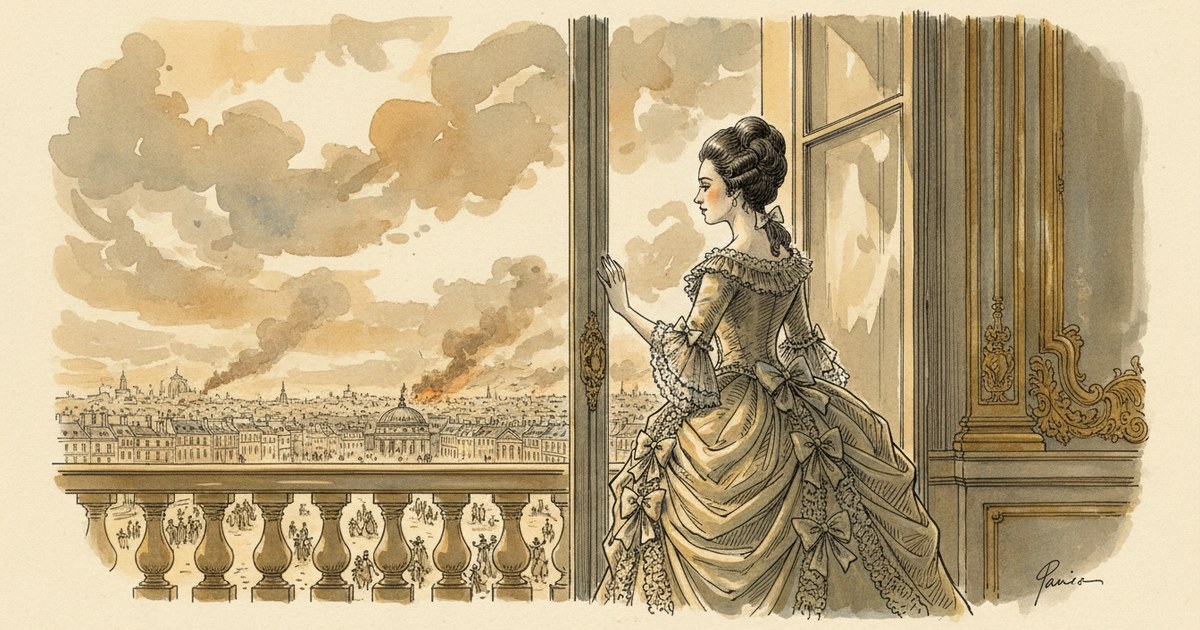
    Marie Antoinette: The Portrait of an Average Woman: A New Translation
    The Stefan Zweig Collection - Volume 3: A New Translation
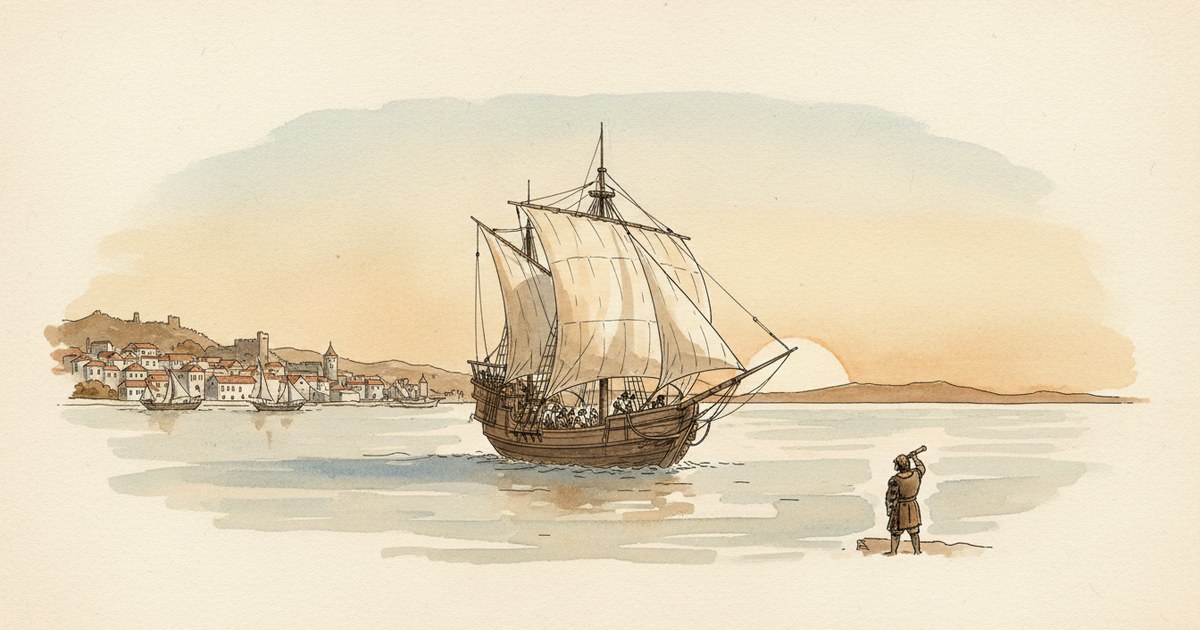
    Magellan: Conqueror of the Seas: A New Translation
    The Stefan Zweig Collection - Volume 4: A New Translation
    Twenty-Four Hours In The Life Of A Woman: A New Translation
    The Stefan Zweig Collection - Volume 5: A New Translation
    This post contains affiliate links. As an Amazon Associate, we earn from qualifying purchases.
  • The Apollonian Spirit Is a Beautiful Lie

    The Apollonian Spirit Is a Beautiful Lie

    In January 1872, a twenty-seven-year-old professor of classical philology at Basel submitted a manuscript that his colleagues would spend the next decade trying to discredit. Ulrich von Wilamowitz-Moellendorff, who would become the most important classicist of the age, published a pamphlet within months calling it “a tissue of hallucinations.” Friedrich Nietzsche had committed a specific offense: he had read the Greeks as if they were trying to tell us something true about suffering, and written it up not as philological treatise but as philosophy — worse, as advocacy. University enrollment in his classical studies courses dropped immediately. He never recovered his standing in the field. The Birth of Tragedy cost him his academic career in classics. It also inaugurated an entirely different career, one that would outlast most of the nineteenth century’s scholarly reputations by several centuries.

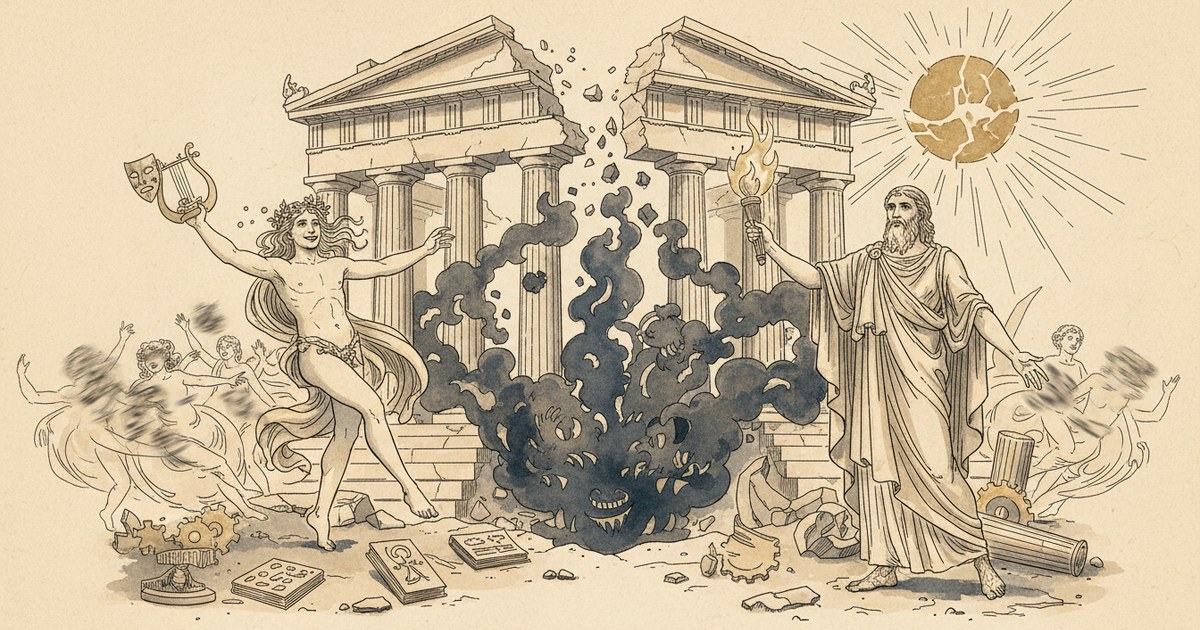
    The argument is this. Two drives run through all human experience: the Apollonian, which organizes, clarifies, and makes suffering bearable; and the Dionysian, which dissolves, intoxicates, and forces confrontation with what we spend most of our lives avoiding. Western culture, Nietzsche contends, has spent two thousand years pretending the first one won. It didn’t. The Greeks knew this — which is why their greatest art form placed a chorus of ecstatic worshippers at the center of the stage, surrounding the suffering individual, reminding the audience that the hero’s anguish was both particular and universal, meaningless and necessary, all at once. When Oedipus learns what he has done, no Apollonian beauty of form can protect him. The tragic form is precisely that: it doesn’t look away. It stares, and it asks you to find that staring endurable.

    Once Nietzsche shows you the seam, you can’t unsee it. The Apollonian spirit is not civilization’s foundation but its most elegant lie. Every time a culture decides that suffering is an anomaly — something to be solved, smoothed over, or medicated — it makes the choice Nietzsche says the Socratic tradition encoded into philosophy two and a half millennia ago. The Birth of Tragedy is not a historical study of Athenian drama. It is a diagnosis delivered with the urgency of someone who thinks the patient is running out of time.

    The Philologist Who Refused to Stay in His Lane

    Nietzsche was born in 1844 in Röcken, Saxony, the son of a Lutheran pastor who died when Friedrich was four. That early loss was not merely biographical. It left him inside a household organized around faith and music — his mother played piano, his sister sang — without the figure who might have given that framework its doctrinal anchor. He grew up Lutheran in habit and temperament while becoming a disbeliever in fact, and the gap between longing for transcendence and refusing its institutional scaffold runs directly through everything he wrote, including this first book.

    He was prodigiously gifted as a student. Leipzig’s philology faculty passed his name to Basel before he had completed his doctorate; they simply offered him the professorship. He arrived in Switzerland at twenty-four. It was in Basel that he met Wagner, and the friendship became consuming. The Birth of Tragedy is, among other things, a philosophical case for why Wagner’s music drama was the rebirth of Greek tragedy — an argument Nietzsche would later disown with spectacular venom. But in 1872, he meant every word of it, and that sincerity is what gives the book its reckless energy. He wasn’t decorating a position. He was betting his professional life on one.

    His writing has the quality of someone moving fast toward a cliff he can sense but not see. The mental collapse of 1889, the decade of incapacity, the posthumous capture of his manuscripts by his sister Elisabeth — who edited and in some cases falsified them to serve the nationalist ends Nietzsche had explicitly opposed — all of this matters to how he reads. The Birth of Tragedy predates the full velocity of that trajectory, but the urgency is already there: the sense that the argument must land completely, now, because there may not be another chance to make it.

    He taught at Basel for ten years before his health forced resignation. He wrote in bursts, in rented rooms, in physical agony from headaches and deteriorating eyesight. The books that followed — Untimely Meditations, Thus Spoke Zarathustra, Beyond Good and Evil, On the Genealogy of Morality — are all, in different registers, developments of the same uncomfortable recognition this first book reached in 1872: that the stories a civilization tells about itself are not descriptions of how it works but instructions for how to avoid knowing.

    What the Tragic Chorus Actually Does

    The modern reader’s instinct is to skim the chapters on the Dionysian mysteries and get to the philosophy. That’s a mistake. Nietzsche’s central claim is inseparable from its embodied, performative dimension. The chorus in Greek tragedy was not a narrative device. It was a collective body in a state of controlled ecstasy — experiencing something that isolated individuals could not survive. The individual onstage suffers and is destroyed. The chorus endures. What the audience witnesses is not simply the hero’s fall but the friction between principium individuationis — the illusion of the bounded self — and the Dionysian undercurrent that swallows individuals without ceasing. That friction is what produces the cathartic effect Aristotle described and never adequately explained.

    This is what Socrates destroyed, in Nietzsche’s reading. Euripides introduced the reasoning, debating, self-justifying character — drama as argument rather than as ritual — and once dialogue replaced ecstasy at the center of the stage, tragedy became something else. Philosophy convinced itself that human life could be organized toward intelligibility, that suffering was a problem to be solved rather than a mystery to be borne. Nietzsche names this the Socratic optimism that has governed Western thought ever since: the belief that understanding is comfort, that if we can explain the Oedipus myth we have done something useful with it. He thinks we have done the opposite.

    The section on music is the most personally urgent passage in the book. Nietzsche argues that music is the direct expression of the Dionysian — not representation, not symbol, but the thing itself in motion. Words and images, Apollo’s domain, organize experience into something graspable. Music undoes that. The German romantic tradition, and Wagner above all, is for the young Nietzsche the vehicle through which the Dionysian returns to a culture that had spent centuries trying to forget it. He is entirely serious about this. The seriousness is contagious even if you reject the claim.

    Readers coming to this book from Beyond Good and Evil or the Genealogy will find a different register — warmer, more earnest, less aphoristic. Nietzsche later called it “badly written, ponderous, embarrassing,” but what he was disowning was the Wagner enthusiasm, not the core argument. That argument — that beauty requires the full acknowledgment of horror, not its removal — he never abandoned. He just found colder, sharper ways to make it.

    The Translation Landscape

    Walter Kaufmann’s 1967 translation, published by Vintage and bundled with “The Case of Wagner” and “Nietzsche Contra Wagner,” set the standard that most academic courses still use. Kaufmann brings deep philosophical literacy and a fluency that makes the argument accessible; his introduction remains one of the better short orientations to Nietzsche in English. The weakness is a certain period smoothness. The translation domesticates Nietzsche’s abruptness, and some of the aphoristic sharpness gets buffed away in service of readability. Passages that should feel like provocations read instead like considered positions. For coursework and first encounters with the intellectual architecture, Kaufmann is still defensible — but it is Nietzsche at reduced temperature.

    Shaun Whiteside’s Penguin Classics translation (1993) corrects this in places — the prose is less mediated, more willing to let Nietzsche’s syntax be strange when the German is strange. But the scholarly apparatus is thin, which can strand the general reader when the classical allusions pile up. Douglas Smith’s Oxford World’s Classics edition (2000) restores some of that context with a solid critical introduction, though Smith’s English occasionally flattens the rhetorical pitch of Nietzsche’s more incendiary passages, making them sound cooler and more resolved than they are. The Classics Retold edition approaches the text differently: modern sentence rhythms without sacrificing fidelity, with enough contextual support for a reader who is serious but not steeped in nineteenth-century German philosophy. It reads as something written under urgency — which is exactly what the original was.

    Why This Translation Earns Its Place on the Shelf

    The challenge with any Nietzsche translation is tonal range. He moves between lyric, polemic, and analysis sometimes within a single paragraph, and the translator who can hold all three registers without falling into lecture mode is rare. This edition manages it with unusual consistency. Where Kaufmann smooths and Smith occasionally stiffens, this translation leans into the argumentative heat — the sentences feel pressed from urgency rather than organized from above. The result is a Birth of Tragedy that lands as the young provocation it was, not as the classic it has since been carefully canonized into.

    If you are encountering Nietzsche for the first time, this is where to start — not because it is the easiest introduction but because it is the most honest one. The book that nearly ended his academic career, that Wagner praised and the classicists savaged, that Nietzsche himself later tried to qualify with a preface full of embarrassed footnotes — this translation gives you the thing raw, before anyone had time to decide what it meant. The Classics Retold edition is available in paperback here, and it is the edition we recommend for readers who want Nietzsche before he became Nietzsche.

    Is The Birth of Tragedy a good starting point for Nietzsche?

    It is the best starting point. The essential Nietzschean tension — between order and chaos, beauty and horror, the Apollonian lie and the Dionysian truth — appears here in its most concentrated and most energetic form. Later books sharpen individual arguments; this one lays the whole framework in a single gesture, and the earnestness of the young Nietzsche makes the stakes feel higher, not lower.

    Do I need a background in classical studies to read it?

    No. Nietzsche assumes familiarity with Aeschylus, Sophocles, and Euripides, but a well-annotated translation will carry you through the classical references. What the book actually requires is a willingness to take seriously the proposition that Greek tragedy was doing something philosophically urgent — not just aesthetically beautiful — and that the modern world is poorer for having lost whatever it was doing.

    How does The Birth of Tragedy differ from Nietzsche’s later works?

    It is warmer and more earnest than the Nietzsche most readers know from Thus Spoke Zarathustra or Beyond Good and Evil. The aphoristic style hadn’t crystallized yet. This is Nietzsche making a sustained argument — one long bet on a single thesis — rather than the fragmentary, compressed mode of the later books. Both registers are worth reading. They illuminate each other in ways that neither fully anticipates.

    What exactly is the Apollonian and Dionysian distinction?

    Apollo represents the drive toward form, individuation, clarity, and beauty — the illusion that experience can be organized into something coherent and survivable. Dionysus represents the drive toward dissolution, collective ecstasy, and confrontation with the undifferentiated ground beneath individual existence. Nietzsche’s claim is that great art, and Greek tragedy specifically, holds both in tension simultaneously — and that modern Western culture, by systematically suppressing the Dionysian, has made itself shallower than it knows.

    Recommended Edition
    The Birth of Tragedy — Friedrich Nietzsche
    Modern English translation

    Kindle →Paperback →

  • Power Isn’t What Nietzsche Actually Meant

    Power Isn’t What Nietzsche Actually Meant

    In the winter of 1887, Friedrich Nietzsche was writing in a rented room in Nice, barely able to read by lamplight, his eyesight collapsing, his stomach wrecked, his books selling in the dozens. He filled notebook after notebook with fragments — arguments interrupted by counter-arguments, aphorisms crossed out and rewritten, outlines that kept shifting. He called this mass of material his magnum opus and never finished it. His sister Elisabeth found the notebooks after his breakdown in 1889, arranged them to her liking, added a title he had sketched and abandoned, and published the result as The Will to Power in 1901. The Nazis later adopted it as a philosophical handbook. Most people who invoke Nietzsche today are, without knowing it, invoking Elisabeth’s editorial decisions as much as her brother’s thought.

    This is the contaminated inheritance of one of the most misread philosophers in the Western tradition. The phrase “will to power” has been used to justify domination, conquest, and the cult of the strongman — everything Nietzsche spent his career attacking. He despised German nationalism. He broke with Wagner over it. He called the German state “the coldest of all cold monsters.” The misreading isn’t accidental; it required effort, selective quotation, and a sister with political ambitions. What the notebooks actually contain — when read whole, in sequence, without Elisabeth’s arrangement — is something far stranger and more demanding: a diagnosis of European nihilism and a proposal for what comes after the death of God that has nothing to do with domination and everything to do with the difficulty of creating value from scratch.

    The thesis of this translation is also a corrective act. Power, in Nietzsche’s usage, does not mean power over others. It means the capacity to impose form on chaos — to take the raw material of existence, with its suffering and contingency and absence of inherent meaning, and make something of it that holds together. The will to power is the will to become the author of your own values rather than inheriting them secondhand from a tradition you no longer believe. That is a harder thing to sell than domination. It is also the thing Nietzsche was actually arguing.

    The Best Translation of The Birth of Tragedy

    Three translations define the field. Walter Kaufmann’s 1967 Vintage edition remains the standard: precise, readable, footnoted without being pedantic. Ronald Speirs’s Cambridge edition (2000) is more literal and favoured in academic contexts. Douglas Smith’s Oxford World’s Classics is the most accessible prose — good for first-time readers who want the ideas without the Victorian stiffness of the older Haussmann translation. This edition offers a modern English text that prioritises readability without softening the argument.

    The Philosopher Who Philosophized with a Hammer

    Nietzsche was born in 1844 in Röcken, a village in Prussian Saxony, the son of a Lutheran pastor who died of a brain disease when Friedrich was four. He grew up in a household of women — mother, sister, grandmother, aunts — and later said this gave him an intimate understanding of resentment, not because the women were resentful but because he watched what happened when intelligent people were given no outlet for their intelligence. He was a prodigy: appointed professor of classical philology at Basel at twenty-four, before he had even finished his doctorate. His first book, The Birth of Tragedy, argued that Greek culture was built not on serene rationality but on the tension between Apollonian order and Dionysian chaos — a reading so unorthodox that it effectively ended his academic career before it began. His colleagues stopped citing him. Students stopped enrolling in his courses. He spent the rest of his working life outside the university, writing in cheap rooms across Switzerland and Italy and France, in poor health, largely ignored.

    The isolation matters because it shaped the texture of his prose. He was not writing for a lecture hall. He was writing for a hypothetical reader who might exist sometime in the future — the “philosopher of the future” he kept invoking — and this gave his style its peculiar combination of intimacy and provocation. He is always addressing someone directly, always trying to disturb rather than reassure. The aphoristic form he developed in his middle period was not a stylistic affectation; it was the only form adequate to his project, which was to think against the grain of systematic thought. A system, he believed, was a comfort — a way of pretending the world was more orderly than it was. Fragments were honest. They left the contradictions intact.

    By the time he was assembling the notebooks that would become The Will to Power, he had already written his best work: Thus Spoke Zarathustra, Beyond Good and Evil, On the Genealogy of Morality. The notebooks were a laboratory, not a finished argument, and reading them as such — as the working papers of a thinker in motion rather than a completed doctrine — changes what you find in them. The will to power, in this context, is not a conclusion. It is a hypothesis he is still testing.

    What the Notebooks Are Actually Saying

    The core argument, assembled across hundreds of fragments, runs something like this: European civilization has been sustained for two thousand years by a system of values — Christian morality, the idea of objective truth, the belief in a purpose to history — that is now unsustainable because it has destroyed its own foundations. The scientific worldview that Christianity helped create has turned its methods back on Christianity and found it wanting. God is dead not because anyone killed him but because the intellectual tools Christianity gave us make it impossible to believe in him any longer. The consequence is nihilism: the sense that nothing means anything, that all values are arbitrary, that there is no ground beneath the ground. Nietzsche did not celebrate this. He was terrified by it. The question he was trying to answer was: what do you do next?

    His answer is what makes the book urgent rather than merely historical. You do not find new foundations — there are no new foundations to find. You become the kind of person who does not need foundations, who can say yes to existence without requiring that existence justify itself on metaphysical grounds. The Übermensch — so often translated as “Superman” and so often pictured as a blond conqueror — is actually a figure of extreme self-discipline and creative responsibility: someone who has internalized the full weight of nihilism and still chooses to create, to value, to act. This is not a comfortable idea. It is one of the most demanding things ever asked of a reader. And the translation here renders it with enough precision and enough readability that the demand actually lands.

    Why This Translation

    The history of English-language Nietzsche is a history of choices that shaped what readers were allowed to think. The Walter Kaufmann translations — dominant for decades — are accurate but interpretive, smoothing over the jagged edges of Nietzsche’s style in ways that domesticate his strangeness. This new translation restores the abruptness, the tonal shifts, the moments where Nietzsche sounds like he is arguing with himself, because those moments are the argument. For anyone who has bounced off Nietzsche before, or who has read him only through secondary sources and received ideas, The Will to Power: A New Translation is the version that gives you the philosopher rather than the myth.

    The real Nietzsche is harder than the myth — and considerably more useful to anyone who has ever had to build meaning in the absence of the scaffolding they expected to find.

    More from Friedrich Nietzsche

    Thus Spoke Zarathustra: A New Translation in Modern Accessible English

    Recommended Edition

    The Will to Power: A New Translation

    The Will to Power: A New Translation — Friedrich Nietzsche
    Modern English translation

    Kindle →Paperback →

    Frequently Asked Questions

    What did Nietzsche actually mean by “will to power” if not domination over others?

    Nietzsche used “will to power” to describe a drive toward self-overcoming — the urge to impose form on chaos, to create, to master one’s own instincts and limitations. The political reading that equates it with conquest or racial superiority was largely a distortion introduced after his death by his sister Elisabeth, who edited his unpublished notebooks to serve her own ideological ends.

    Why did Nietzsche leave the “will to power” material unfinished as a magnum opus?

    By 1887–88, Nietzsche was writing under severe physical strain in Nice — near-blind, chronically ill, working in fragments — and he abandoned the single-volume project, scattering its ideas across Beyond Good and Evil, On the Genealogy of Morality, and his later notebooks. He never authorized a unified “Will to Power” book; the posthumous compilation bearing that title was assembled by his editors, not by him.

    How does Nietzsche’s concept of power differ from Social Darwinist interpretations that borrowed his language?

    Social Darwinists read power as survival of the strongest, a biological competition with winners and losers. Nietzsche explicitly rejected that reading — he thought the herd, the weak, and the resentful could dominate whole civilizations through moral pressure, which meant raw physical force had nothing to do with the kind of power he found interesting or dangerous.

    Is the notebook material from Nietzsche’s Nice period reliable as a guide to his mature philosophy?

    The Nice notebooks are valuable as a window into his working method — the crossed-out lines and shifting outlines show how provisional his thinking was — but they should be read alongside the books he actually finished and published, not treated as a secret final doctrine. Treating the fragments as more authoritative than the polished works inverts the relationship Nietzsche himself established between draft and finished thought.

  • The Man Who Saw Europe Die

    The Man Who Saw Europe Die

    In the winter of 1900, a young man in a good overcoat walked the length of the Ringstrasse and felt, with the particular certainty of the gifted and the young, that he was standing at the center of the world.

    Vienna at the turn of the century was not merely a city. It was a proposition — the argument, made in stone and music and coffee and lamplight, that civilization was a permanent achievement, that the long work of culture had arrived somewhere worth arriving. The Ringstrasse itself was the proposition made architectural: that boulevard of imperial ambition, lined with museums and opera houses and parliament buildings dressed in Hellenistic robes, announcing that this city, this empire, this Europe had inherited antiquity’s mantle and intended to wear it well. Stefan Zweig, twenty years old, a poet by vocation and a bourgeois by birth, walked its length and believed every word of it.

    He would spend the next four decades watching the argument collapse. And he would spend those same decades writing — furiously, tenderly, obsessively — as though the act of description could hold the thing described in place a little longer. It could not. But what he left behind is something rarer than preservation: it is testimony, the account of a man who loved a world, watched it die, and had the literary gifts to say what exactly was lost.

    The Republic of Letters, and Its Most Famous Citizen

    By 1930, Stefan Zweig was the most translated author in the world. Not the most celebrated in any single country — that crown belonged, depending on the season, to Thomas Mann or to Romain Rolland — but across languages, across borders, across the precisely the range of European and South American cultures he had spent his life cultivating, no one moved more copies. The novellas sold in Paris and São Paulo and Warsaw and Tokyo. The biographical essays — what he called his “spiritual portraits” of historical figures — were read by people who had never opened a history book and would not have described themselves as readers of biography. He had found the tone that the age wanted: intimate but not sentimental, erudite but not pedantic, morally serious without the hectoring quality that makes moral seriousness exhausting.

    The friendships he accumulated read like the roster of a civilization’s greatest achievement. He corresponded with Rainer Maria Rilke for years, two Austrians writing to each other in a German so careful it was practically a private dialect. He visited Auguste Rodin in Meudon and wrote about the sculptor’s workshop with an attention so precise you can still smell the clay. He and Romain Rolland maintained a friendship that survived the First World War, two pacifists writing across the lines of a conflict that made pacifism feel like either cowardice or sainthood depending on which side of the Rhine you stood. With Sigmund Freud, his older contemporary in Vienna, he shared a reverence for the interior life, for the proposition that what happens in the mind is as consequential as anything that happens in the street.

    What bound all of these relationships was a shared faith — and it was, at bottom, a faith — in what Zweig called the European idea. Not a political program, not a bureaucratic arrangement, but a cultural reality: the sense that a writer in Vienna and a writer in Paris and a writer in Prague were, at some level, citizens of the same republic. They read the same books, argued about the same ideas, moved through the same coffeehouses when they visited each other’s cities. He was, in the fullest sense, a European writer — not Austrian, not German-speaking, but something that the twentieth century would systematically set about destroying: a man whose identity was constituted by culture rather than nation.

    The Viennese coffeehouse was, for Zweig, the physical embodiment of this ideal. He understood it the way that later generations would understand the internet: as an infrastructure for a particular kind of sociability, a place where you could sit for four hours over a single coffee, read every newspaper in six languages, and encounter the sculptor, the journalist, the philosopher, and the politician at adjacent tables. The coffeehouse was classless in a way that Austrian society was not — or rather, it performed the suspension of class distinctions with enough theatrical conviction that the performance became, for a few hours each afternoon, a reality. It was also radically international. In the Café Landtmann or the Central, the question of which nation had produced you was less interesting than the question of what you had read recently and what you thought about it.

    Zweig’s own work was animated by precisely this spirit. His biographical essays — on Erasmus, on Mary Queen of Scots, on Magellan, on Mary Baker Eddy — were not conventional biographies in any academic sense. They were acts of imaginative identification, attempts to inhabit another consciousness across the distances of time and language. He was drawn consistently to figures who stood at the intersection of history and private experience, to people whose inner lives were thrown into violent relief by the events surrounding them. Erasmus, who watched the Reformation tear apart the humanist project he had devoted his life to, was in many ways Zweig’s mirror: the intellectual who believed in reason and persuasion and watched power prove them inadequate.

    The World That Ended

    January 30, 1933. Adolf Hitler became Chancellor of Germany, and Stefan Zweig’s world — the specific, irreplaceable, painstakingly constructed world he had spent his life inhabiting — began its final movement.

    The speed of the collapse was, in retrospect, astonishing. Within weeks, his books were being removed from German libraries. Within months, the intellectual culture of central Europe had been subjected to a kind of surgical removal, with Jewish writers and artists and academics extracted from the body politic with a thoroughness that was itself a kind of negative tribute to their centrality. Zweig had been, all his adult life, so thoroughly assimilated into European literary culture that his Jewishness had seemed, to him and to most of his correspondents, a biographical fact rather than a defining identity. The Nazis corrected this misapprehension with characteristic brutality.

    He left Austria in 1934, before the Anschluss made leaving compulsory, and settled in Bath — of all places, Bath, that most Georgian of English cities, a place of limestone crescents and conducted orderliness that must have felt, after Vienna, like living inside a very well-maintained museum exhibit. He worked there, writing the libretto for Richard Strauss’s opera Die Schweigsame Frau, but the collaboration became its own small scandal when the Nazi authorities insisted that Zweig’s name be removed from the program. Strauss, choosing the opera over the friendship, eventually complied. It was a minor betrayal in a decade of catastrophic ones, but it had the particular sting of the personal.

    London, then Bath, then New York — the geography of exile has its own grammar, and Zweig was learning it word by word. He understood, before many of his contemporaries were willing to admit it, that the world he had known was not merely threatened but already over — that the question was not whether the Europe of the Ringstrasse and the Café Central would survive, but whether anything of it could be carried forward into whatever came next. The autobiography he was writing in these years, The World of Yesterday, was composed in that spirit: not as a memoir in the usual sense, not as an account of a life that continued, but as a monument to a civilization in the process of its own demolition.

    He arrived in Brazil in 1940, settling eventually in Petrópolis, a mountain town outside Rio de Janeiro that the Portuguese royal family had once used as a summer retreat from the coastal heat. It was, in its way, another place of displaced grandeur, another city that had once been at the center of something and now existed in the pleasant irrelevance of the postimperial. Zweig worked there, completed The World of Yesterday, continued the essay on Montaigne he had been writing for years. He was fifty-nine years old, in good health, professionally productive, living in a country that was not at war and had no immediate intention of becoming so. By any external measure, he had survived.

    On the night of February 22, 1942, he and his wife Lotte took lethal doses of barbiturates and lay down together to die. They were found the following afternoon, arranged on the bed with a composure that suggested the act had been considered and prepared. The note he left was addressed to his friends in Brazil — not to posterity, not to the literary world, but to the specific people who had shown him kindness in a country not his own — and it explained, with characteristic lucidity, that he was ending his life not from hopelessness about his personal circumstances but from exhaustion at watching the world he belonged to be destroyed. He was, he wrote, too tired to begin again.

    The distinction matters. This was not a man brought low by failure or obscurity or the ordinary cruelties that literary careers can inflict. He was, at his death, still widely read, still respected, still capable of work he believed in. What had been destroyed was not his career but his civilization — the community of readers and writers and artists across whose network of relationships his identity had been constituted. Without that network, the work itself felt, to him, like speaking into a room from which everyone had left. He was not wrong. The Europe he described in The World of Yesterday was already an archaeological site, and he was old enough to know it.

    What the Books Hold

    It is tempting — and not entirely inaccurate — to read Zweig’s suicide as the last paragraph of his autobiography, the gesture that completed the argument the book had been making. He had lived through the world he described; he chose not to outlive it. But this reading, for all its elegance, does a disservice to the actual work, which is neither an elegy nor a suicide note but something more demanding and more generous: a sustained act of attention to human experience, offered in the belief that such attention is worthwhile regardless of what happens to the civilization that produces it.

    The novellas — Letter from an Unknown Woman, The Royal Game, Amok, Beware of Pity — are extraordinary pieces of narrative engineering, stories that move with the propulsive efficiency of plot while carrying, in their interiors, a weight of psychological observation that belongs to a much slower literary tradition. The chess story in particular, written in his final years, has about it the quality of a last testament: a tale of a man who survives imprisonment by retreating entirely into the life of the mind, learning chess from a smuggled book, playing both sides against each other until the interior game threatens to consume him. It is the story of intellectual civilization as a form of resistance, and it was written by a man who had spent a decade watching intellectual civilization fail to resist anything.

    What has brought him back to readers in recent years — the new translations, the reissued collections, the renewed critical interest — is not nostalgia for the Belle Époque, though a certain nostalgia is probably inevitable. It is, rather, the particular quality of his prose attention: the sense that human experience, rendered with sufficient care and honesty, yields something that outlasts the historical moment that produced it. The coffeehouse is gone. The Ringstrasse still stands, but the empire it was built to celebrate is a century in the ground. The republic of letters — that informal, idealistic, cosmopolitan network of writers and readers that Zweig devoted his life to — exists now only in fragments and approximations.

    But the books remain. They sit on the shelf with the patient authority of all good writing, waiting for the reader who needs to be told that there was once a world where culture was taken seriously as a form of human achievement, where the life of the mind was understood to be as consequential as any other kind of life, where a young man in a good overcoat could walk the length of a great boulevard and feel, not without justification, that he was at the center of something worth being at the center of. That world is gone. What Zweig left behind is the most precise account we have of what it felt like to inhabit it — and to watch it end.

    Read Zweig in a Translation That Does Him Justice

    The Stefan Zweig Collection brings together his finest novellas and biographical portraits in a modern English translation that preserves his musicality without the stiffness of the Victorian-era versions.

    Explore the Collection on Amazon →

    Recommended Edition
    The Stefan Zweig Collection – Volume 1 — Stefan Zweig
    Modern English translation

    Kindle →Paperback →

    Frequently Asked Questions

    Who is “the young man in the good overcoat” the author describes walking the Ringstrasse?

    The figure is left deliberately unnamed in the opening passage, functioning less as a biographical subject than as a composite type — the confident, cultivated European who believed in 1900 that progress was irreversible. The author uses this anonymous walker to set up the central irony: that certainty would not survive the century he was just entering.

    What does the author mean when he calls Vienna “a proposition”?

    He means that fin-de-siècle Vienna was not just a place but an argument — a claim, built into its architecture, coffeehouses, and concert halls, that Western civilization had achieved something durable. The book then tracks how systematically that argument was refuted over the following five decades.

    Is “The Man Who Saw Europe Die” structured as a biography, a history, or something else?

    The book sits between genres: it uses one life as a lens to focus a broader historical collapse, moving between personal memoir and political chronicle as the century darkens. Readers who expect a conventional biography will find the historical analysis intrudes constantly — and that intrusion is the point.

    How much does the author rely on primary sources versus retrospective accounts of this period?

    The opening sections draw heavily on diaries, letters, and contemporaneous journalism from Vienna circa 1900, giving the early chapters their ground-level texture. As the narrative moves toward 1914 and beyond, the author increasingly works from retrospective memoirs, a shift he acknowledges creates a different kind of knowledge — shaped by what survivors already knew had been lost.

  • Nietzsche Wasn’t Writing Philosophy. He Was Warring.

    Nietzsche Wasn’t Writing Philosophy. He Was Warring.

    Here’s the post:

    In the winter of 1887, Friedrich Nietzsche was going blind. He wrote in short, furious bursts — ten minutes at a stretch before the pain forced him to stop — filling notebooks with fragments that he knew, even then, he would never fully organize. He called the project The Will to Power. He described it as “the philosophy of the future.” What he meant was: everything I believe that polite Europe isn’t ready to hear.

    He never finished it. What survives are the shards — aphorisms, reversals, hammer-blows against pity, against democracy, against the comfortable Christian idea that suffering has a redemptive purpose. For over a century, editors assembled those shards into something that looked like a book. Most translations buried what was actually there: not a system, but an assault. A man thinking at the limit of what thought can bear, daring the reader to follow.

    This translation doesn’t bury it. It restores the ferocity.

    The Man Who Declared War on the Nineteenth Century

    Nietzsche was born in 1844 into the household of a Lutheran pastor who died insane when Friedrich was four. That biographical fact matters: he grew up inside the very moral framework he would spend his life demolishing, and he knew its architecture from the inside. He wasn’t attacking Christianity from the outside. He was executing it from within.

    At twenty-four he was appointed professor of classical philology at Basel — the youngest the university had ever hired — before he had even completed his doctorate. He was supposed to become one of those careful German scholars who spend forty years annotating Greek footnotes. Instead, he published The Birth of Tragedy, which scandalized the field, then walked away from the academy entirely at thirty-four, citing health. The real reason was simpler: he had something more urgent to do.

    What followed was fifteen years of near-total solitude — boarding houses in Switzerland and northern Italy, failing eyesight, crippling migraines, no steady income, almost no readers. In that isolation he wrote the books that would remake the twentieth century. The productivity of his collapse is one of the stranger facts in literary history: Thus Spoke Zarathustra, Beyond Good and Evil, On the Genealogy of Morality, the Twilight of the Idols — all produced in a decade of increasing physical ruin. The suffering isn’t incidental. It’s in the prose. When Nietzsche writes about what it costs to think freely, he isn’t making an abstraction.

    He collapsed completely in Turin in January 1889, throwing his arms around a horse being flogged in the street. He spent the last eleven years of his life in psychiatric care, unable to write, while his sister Elisabeth — an anti-Semite he despised — took control of his archives and shaped his legacy into something he would have found obscene. The Nazis would later claim him. The irony is that The Will to Power contains, explicitly, his contempt for German nationalism, for race theory, for everything they wanted to conscript him into. His sister edited carefully. Most early translators followed her lead.

    What the Book Actually Does

    Strip away the mythologizing and The Will to Power is asking one question with the patience of a surgeon: why do human beings consistently choose frameworks that diminish them? Why do we build moral systems that punish strength, celebrate victimhood, and call the result virtue? Nietzsche doesn’t ask this academically. He asks it as diagnosis — and the diagnosis is urgent because, in his view, the patient is all of Western civilization.

    The book moves by accumulation rather than argument. An aphorism on the nature of truth. Then one on what resentment does to a culture over centuries. Then a passage on the artist as the only honest figure in a dishonest age. None of it resolves neatly, because Nietzsche understood that his subject — power, value, the will to create meaning — resists neat resolution. What lands, reading it, is not a doctrine but a pressure: the feeling of being forced to examine something you had agreed, without quite deciding, not to look at.

    There is a moment — fragment 585 in most editions — where he defines the will to power not as domination over others but as self-overcoming. The drive to become more than you are, against every internal resistance. Read in isolation it sounds like motivational copy. Read in the full context of what precedes it — his dissection of how slave morality inverts this drive into guilt, how institutions codify that inversion into law — it lands like an accusation. He is not writing about Napoleons. He is writing about what happens to ordinary people who learn to mistake their own diminishment for decency.

    Why This Translation

    The translation collected in this edition was chosen for one reason: it doesn’t smooth Nietzsche’s edges. Where earlier versions tidied his syntax into readable English, this one preserves the rhythm of a man thinking in real time — the sudden pivots, the sentences that seem to contradict the one before them, the moments where the argument breaks open and something rawer comes through. If Nietzsche’s prose has a right to be difficult, this translation lets it be difficult. Reading it feels less like studying a philosopher and more like being in the room when one is working — which is precisely what these fragments are.

    For readers who have encountered Nietzsche only through reputation — through the misreadings, the appropriations, the undergraduate shorthand — this is the version that makes the case for why he matters. Not because he gives answers, but because the questions he forces are ones that serious people keep arriving at, alone, late, without quite knowing how to name them. He named them. He went to war over them. This is the record.

    Recommended Edition
    The Will to Power — Friedrich Nietzsche
    Modern English translation

    Kindle →Paperback →

    Frequently Asked Questions

    Was Nietzsche actually planning to publish The Will to Power as a finished book?

    No — the manuscript was a collection of notebook fragments he wrote during a period of near-blindness in 1887, composed in ten-minute bursts before the pain stopped him. What was later published as The Will to Power was assembled and shaped by his sister Elisabeth Förster-Nietzsche, who had her own ideological agenda that distorted his intentions significantly.

    Why does the post describe Nietzsche as “warring” rather than philosophizing?

    Because Nietzsche’s late writing style — aphoristic, aggressive, written under physical duress — reads less like systematic argument and more like combat: against Christianity, against German nationalism, against the comfortable moral assumptions of his era. The fragments from 1887 onward aren’t propositions to be evaluated; they’re attacks designed to destabilize the reader’s existing framework.

    What does “the philosophy of the future” actually mean in Nietzsche’s own terms?

    He wasn’t predicting a school of thought — he was announcing that the values he was dismantling had no replacement yet, and that building one was someone else’s problem, someone not yet born. The phrase is a provocation, not a promise: he was diagnosing a cultural void, not filling it.

    How did Nietzsche’s deteriorating eyesight shape the ideas themselves, not just the writing conditions?

    Writing in forced fragments meant he couldn’t construct the long chains of reasoning that traditional philosophy depended on, which pushed him toward compression and intensity over coherence. Some scholars argue the aphoristic form wasn’t a stylistic choice so much as a physical constraint that accidentally became his most powerful tool.

  • Nietzsche Wrote This Before He Broke.

    Nietzsche Wrote This Before He Broke.

    In 1872, Friedrich Nietzsche was twenty-seven years old and already a full professor at Basel. He had never finished his doctorate — the university waived the requirement because his professors considered him too obviously brilliant to bother with formalities. He was writing letters to Wagner almost weekly. He believed he had found, in the Greeks, the secret to saving German culture from its own mediocrity. Then he published The Birth of Tragedy, and his colleagues stopped speaking to him.

    The classicists hated it. Ulrich von Wilamowitz-Moellendorff, then a twenty-four-year-old doctoral student who would go on to become the most influential classicist of his generation, published a pamphlet demolishing the book point by point. His central charge: that Nietzsche had ignored the evidence when it didn’t suit him, that he had written not scholarship but a manifesto dressed in academic clothes. He was not entirely wrong. But he missed what the book actually was — not a study of ancient Greece, but the first time Nietzsche announced what he thought human beings were for.

    This is the book that starts everything. Not the most famous Nietzsche, not the one throwing hammers at idols and declaring God dead — but the young one, still half in love with Wagner, still believing that art could redeem a civilization. The argument he makes here will haunt everything he writes afterward, even when he turns against it. Fourteen years later, he would add a preface calling it “badly written, ponderous, embarrassing,” riddled with Hegelian influence he’d rather forget. He was right about all of that. He also couldn’t bring himself to disown the central thesis. Neither can you, once you’ve read it.

    The Professor Who Was Already Leaving the Academy

    Nietzsche was born in 1844 in Röcken, a village in Prussian Saxony. His father, a Lutheran pastor, died of a brain disease when Friedrich was four. That loss — early, absolute, surrounded by the language of theology — left a specific mark. The preacher’s cadence runs through every line of this book, the rhythms of a man who learned to address congregations before he learned to address seminars. When the prose suddenly lifts and turns incantatory, that’s not rhetoric for effect. That’s where he grew up.

    By twenty-four, he held the Basel professorship without submitting a doctoral dissertation. His letters from this period read like dispatches from someone who has just found his people and his purpose simultaneously. He visited Wagner repeatedly at Tribschen, the villa on Lake Lucerne. Wagner was forty years older, already famous, building his opera house at Bayreuth. He recognized in Nietzsche a gifted propagandist. What Nietzsche found in Wagner was something more precarious: confirmation that his thesis about the Greeks was actually a thesis about Germany, and that art — specifically, music drama — was the vehicle through which a culture might be dragged back from its comfortable, rational, newspaper-reading self-satisfaction.

    He was also, in this period, a devoted reader of Schopenhauer. The World as Will and Representation gave him the architecture for what becomes the Dionysiac in this book: the impersonal ground of existence beneath the forms we impose on it, the will that has no purpose or destination, that simply surges and suffers. Nietzsche takes that metaphysics and does something Schopenhauer never quite managed — he asks what it means for art, and specifically for why the Greeks, who saw the worst of existence clearly, chose to make tragedies about it rather than look away.

    The 1886 “Attempt at Self-Criticism,” written as a preface to the second edition, is worth reading alongside the main text. Nietzsche is mortified by his younger self’s Wagner enthusiasm, by the academic armor weighing down the prose, by what he calls the book’s “Romanticism.” But notice what he doesn’t retract: the Apollo/Dionysus framework, the critique of Socratic optimism, the argument that there exists a kind of knowledge so devastating that the only honest response is tragic art rather than consoling philosophy. The young professor who embarrassed himself in print was, in the one place that mattered, right.

    Two Gods, One Stage — What Tragedy Actually Required

    The book’s central claim is unfussy once you strip the academic apparatus: Greek tragedy worked because it held two irreconcilable things in tension simultaneously. Apollo, god of dreams and sculptural form, represents the individual — the bounded self, the image that makes the world bearable by imposing shape on it. Dionysus, god of intoxication and dissolution, represents the ground beneath the individual — the formless surge of existence that swallows selfhood whole. Tragedy was the art form that put both gods on stage at once. The Apolline structure (the characters, the plot, the spoken verse) contained the Dionysiac content. Audiences felt, through the music and the chorus, the dissolution of their individual selves, and then the Apolline frame brought them back. They returned knowing something they couldn’t have known otherwise.

    The treatment of the Greek chorus is where this argument becomes specific and surprising. Nietzsche inverts the standard reading: the chorus is not the audience’s surrogate commenting on the action. The chorus is primary. The individual characters on stage are Apolline visions that the Dionysiac chorus generates — the plot you’re watching is the dream-image produced by an ecstatic collective body. This matters because it explains why Euripides, in Nietzsche’s account, destroyed tragedy: by rationalizing the chorus out of existence and foregrounding psychologically comprehensible individual characters, he made the drama interesting rather than overwhelming. He drained the Dionysiac undertow, and tragedy became theater.

    The Socrates chapters are the sharpest part of the book. Nietzsche introduces “aesthetic Socratism” — the formula he attributes to Socrates: virtue is knowledge, sin is ignorance, the good man is the happy man. This is not a philosophical critique of Socratic argument on its own terms. It’s a diagnosis of a pathology: the conviction that understanding is redemption, that everything terrible dissolves before sufficient rational analysis. The book’s thesis is that Socrates is, in a specific sense, the enemy of tragic art — not because he was personally hostile to it, but because his epistemological optimism makes tragic knowledge literally unthinkable. Once you believe suffering can be fully explained, you no longer need tragedy to survive the encounter with it.

    There is a passage where Nietzsche compares the tragic hero to Hamlet. Not because Hamlet hesitates — Nietzsche has no patience for that reading — but because Hamlet has looked into the nature of things and knows that action changes nothing at its root. “Knowledge kills action,” Nietzsche writes; “action requires the veil of illusion.” The Dionysiac man sees what the Apolline veil conceals, and is momentarily unable to move. What art does, what tragedy does, is give him a form in which that knowledge can be survived. That is not a modest claim about the role of the arts. It is an argument about why human beings need tragedy the way they need sleep.

    The Translation Landscape

    Walter Kaufmann’s translation, first published by Vintage in 1967, was the standard English text for most of the twentieth century and remains widely used. Kaufmann was a superb Nietzsche scholar, and his version has a real intellectual grace — the prose moves well, the philosophical vocabulary is handled with confidence. The drawback is a certain domestication. The incantatory surges, the places where Nietzsche’s prose goes ecstatic and almost musical, tend to get leveled into readability. You get the argument clearly; you sometimes lose the fever. Ronald Speirs’s 1999 Cambridge edition, prepared with an introduction by Raymond Geuss, is philosophically careful and precise where Kaufmann occasionally smooths. The critical apparatus is excellent. The tradeoff is that it reads, in places, as a translation — the seams show, and the stranger registers feel reined in.

    Douglas Smith’s Oxford World’s Classics edition handles the key technical terms — Rausch (intoxication), das Ur-Eine (the Primordial Unity), the compound adjectives Nietzsche coins to distinguish his two categories — with reliable consistency, and the scholarly framing is useful for first-time readers. What the Classics Retold edition brings to this field is an editorial commitment to preserving Nietzsche’s full tonal range without normalizing the stranger passages into standard academic prose. The book contains, by design, a built-in contradiction: it is simultaneously a scholarly treatise and something close to a manifesto. Kaufmann resolves that tension toward the scholarly. This edition lets it remain unresolved, which is the honest choice.

    Why This Translation Reads the Way Nietzsche Intended

    The translation featured in the Classics Retold edition treats Nietzsche’s register shifts as features rather than problems to solve. The analytical passages are rendered with the precision the argument demands — the Apollo/Dionysus distinction has to be philosophically exact, or the entire edifice wobbles. But the lyric passages, the places where Nietzsche is writing as someone who has genuinely experienced the Dionysiac and is reaching for something that resists propositional language, are given their strangeness. The description of the Dionysiac state as the dissolution of the principium individuationis, where “the subjective vanishes to complete self-forgetfulness,” reads in over-rationalized versions as a philosophical proposition. In this translation, it reads as an account of an experience — which is what Nietzsche intended, and the difference is not small.

    This edition is also the most practical entry point for a book that can feel forbidding on first approach. The text itself is short — under two hundred pages. The argument is radical but not obscure. What Nietzsche is asking here — why human beings make art about suffering, and what it does for them that nothing else can — has not become less urgent. If you have ever finished a tragedy and felt, inexplicably, better rather than worse, Nietzsche has the closest thing to an explanation. This translation is available on Amazon in paperback — the right place to begin with a book that, once read, has a way of not leaving you alone.

    What is The Birth of Tragedy about?

    The Birth of Tragedy argues that Greek tragedy succeeded because it held two opposing forces in tension: the Apolline impulse toward form, individuality, and dream, and the Dionysiac impulse toward dissolution, intoxication, and the annihilation of the bounded self. When Socratic rationalism entered Greek culture, Nietzsche argues, it destroyed the conditions that made tragedy possible — by insisting that existence could be made fully intelligible, and that intelligibility was sufficient redemption. The book ends with the claim that German music, and Wagner in particular, offered a path back to tragic culture. Nietzsche later disowned the Wagner sections. He kept everything else.

    Is The Birth of Tragedy a good introduction to Nietzsche?

    It is the best introduction in one specific sense: it shows you the question that everything Nietzsche subsequently writes is trying to answer, revise, or escape. The prose is denser than Thus Spoke Zarathustra, and the academic apparatus can slow you down in places. But the central argument is clear and the stakes are immediately apparent. Reading The Birth of Tragedy first means that when Nietzsche later attacks Socratism, romantic pessimism, or Wagnerian nationalism, you already understand what he’s defending against — and why the defense matters to him personally.

    Why did Nietzsche’s colleagues reject the book?

    The classical philologists, led by Wilamowitz-Moellendorff’s demolishing pamphlet, objected that Nietzsche had ignored inconvenient evidence and written advocacy rather than scholarship. The charge was largely accurate. What they didn’t account for was the possibility that Nietzsche’s questions — about what tragedy was for, about the psychological conditions that made it possible — were not philological questions at all, and that no amount of careful source citation would have answered them. The dispute was real, but the two sides were not arguing about the same thing.

    How does the Apollo and Dionysus framework work in practice?

    Apollo represents the dream — the image, the individual form, the beautiful structure that makes existence bearable by giving it shape. Dionysus represents intoxication — the dissolution of the self into a larger, terrifying, undifferentiated ground of being. Nietzsche argues that Greek tragedy required both simultaneously: the Dionysiac experience (loss of self, encounter with the horror beneath appearances) was given an Apolline form (the plot, the characters, the stage architecture) that allowed audiences to survive the encounter and return, altered. Tragedy without the Dionysiac becomes melodrama. Tragedy without the Apolline becomes raw chaos. The Greeks, briefly, held both at once — and that equilibrium is what Nietzsche spends the rest of his career trying to recover.

    Recommended Edition
    The Birth of Tragedy — Friedrich Nietzsche
    Modern English translation

    Kindle →Paperback →

  • Valera Predicted Every Academic’s Fatal Weakness

    Valera Predicted Every Academic’s Fatal Weakness

    Looking for the best Stefan Zweig translation in English? This guide compares readability, emotional precision, and modern accessibility so you can start with the edition that captures his full voice before the world ended.

    Find Your Best Zweig Translation

    Use this guide to compare editions before you choose your next read.

    The reputation of German-language literature precedes it badly. Dense. Philosophical. Difficult. The kind of reading that requires a degree you don’t have and a patience you haven’t cultivated. That reputation is partly earned — there is a tradition of German prose that is genuinely demanding — and mostly misleading. Kafka is not difficult. Zweig is not difficult. Nietzsche wrote aphorisms designed to be read in a single sitting and felt in the gut. The difficulty, where it exists, is the difficulty of any serious literature: it asks you to think while you read.

    German-language literature in this context means what it has always meant to those who study it seriously: literature written in German, regardless of nationality. Kafka was Czech. Zweig was Austrian. Nietzsche was German but spent most of his productive years in Italian boarding houses and Swiss mountains, writing in deliberate exile from the culture that had formed him. The language is the tradition; the borders are secondary.

    Translation matters more with German than with almost any other European language, and the reason is structural. German syntax is architecturally inverted: the verb arrives at the end of the clause, sometimes at the end of a very long clause, and the reader must hold the entire construction in suspension before the meaning resolves. A sentence that begins with a subject, accumulates qualifications, piles on subordinate clauses, and finally delivers its verb at the last possible moment creates a particular kind of suspense — intellectual, syntactical, almost physical. A bad translation flattens this into English word order and loses that suspense entirely. What was a carefully engineered delay becomes a simple declaration. The sentence still means the same thing, technically. But it no longer does the same thing to the reader. This is why two translations of the same Kafka novel can feel like two entirely different books.

    The role of a reading guide in this context is not to translate but to curate — to identify the editions that preserve what the original was doing, that make responsible choices about the impossible trade-offs between fidelity and readability, and that carry the reader as close as possible to the experience of reading the German. The translations featured here have been selected on exactly those grounds. Where a newer translation corrects the distortions of an older one, that is noted. Where the translation question is genuinely contested — as it is with Kafka, where scholars still disagree — the reasoning behind the recommended edition is explained. The goal is to get you to the right book by the right route.

    Where to Start

    Start with Zweig. Not because he is the greatest — he would himself resist that claim — but because he is the most immediately available. The World of Yesterday is the place to begin: a memoir of a civilization in the process of destroying itself, written by a man who understood what he was watching. From Zweig, move to Kafka, whose work is short enough to read in a weekend and strange enough to occupy a lifetime. Nietzsche is for when you want to understand the philosophical atmosphere that produced both of them.

    Goethe and the Classical Tradition

    Before Kafka, before Nietzsche, before the catastrophes that defined the German twentieth century, there was Goethe — and Goethe is where German literary ambition was first fully articulated. Johann Wolfgang von Goethe spent sixty years writing Faust, a work in two parts that remains the founding document of German literary aspiration. The premise is familiar: a man sells his soul to the devil. What makes Goethe’s version different, and what makes it the central myth of the German tradition, is what Faust wants in exchange. Not pleasure. Not power. Not wealth. Knowledge. Faust wants to understand everything, and when he realizes he cannot, he makes his bargain. Part I of Faust is approachable and genuinely dramatic — the compact with Mephistopheles, the seduction and destruction of Gretchen, the scenes that have entered the culture so thoroughly that most readers recognize them without having read the source. Part II is a different matter entirely: an allegorical journey through classical mythology, medieval empire, and aesthetic philosophy that is one of the most demanding works in any language and one of the most rewarding for those who persist. The gap between the two parts is not merely a matter of difficulty. It is a gap between a young man’s energy and an old man’s wisdom, between drama and vision.

    The Sorrows of Young Werther, published in 1774, is Goethe at his most immediate and, historically, his most dangerous. The novel invented a type — the hypersensitive young man overwhelmed by feeling, unable to fit himself into a world of practical compromises, in love with a woman he cannot have. Werther shoots himself at the end. What Goethe cannot have anticipated, though perhaps should have, was the response: a wave of copycat suicides across Europe, young men dressed in Werther’s costume — blue coat, yellow waistcoat — found dead with the novel open beside them. It was the first literary contagion, and it established something that would define the German Romantic tradition: the idea that literature was not merely about life but capable of acting on it, for better or catastrophically for worse.

    Friedrich Schiller was the other half of what literary historians call the Weimar Classical period — Goethe and Schiller working in the same small city in the 1790s and early 1800s, in correspondence and competition, defining what German literature was supposed to be. Where Goethe was synthetic and comprehensive, Schiller was urgent and political. His plays — The Robbers, Mary Stuart, William Tell — were the democratic conscience of German literature, written while the aristocracy still ran everything and while the French Revolution was demonstrating, at enormous cost, what happened when the people ran out of patience. Schiller believed in freedom as a philosophical principle and dramatized it in historical settings because the present was too dangerous. The plays remain stageable and urgent. Mary Stuart in particular — two queens, one prisoner, one throne — is as tightly constructed a political drama as anything in the European repertoire.

    Goethe & The Classical Tradition
    Doctor Faustino's Illusions: Modern English Translation

    Nietzsche — The Philosopher Who Wrote Like a Novelist

    Nietzsche is almost always read wrong in English — either as a proto-fascist whose work was corrupted by his sister, or as a self-help writer whose aphorisms can be extracted and applied to productivity. Both readings miss the point by a wide margin. Nietzsche was a philologist who became a philosopher because he found philosophy too timid, and his work is best understood as a sustained attack on the complacency of European culture in the second half of the nineteenth century.

    Thus Spoke Zarathustra is the most ambitious of his books and the strangest — a philosophical poem in the form of a prophet’s wanderings, deliberately written to resist summary. Our guide to Nietzsche’s best books addresses the reading order question, which matters more with Nietzsche than with almost any other writer: start in the wrong place and the whole project looks unhinged. Start in the right place and it looks like the most lucid critique of modernity anyone has written.

    The right place is not Zarathustra. Before that book becomes legible, Nietzsche needs to be read in his aphoristic mode — The Gay Science, where the declaration that God is dead first appears, not as a triumphant announcement but as a terrifying diagnosis; or Beyond Good and Evil, where the critique of morality is made with surgical precision rather than prophetic heat. The aphorisms are short, often brilliant, sometimes maddening, and they establish the vocabulary and the concerns that Zarathustra then dramatizes. Read in this order, the famous passage in The Gay Science — the madman running through the marketplace with a lantern at midday, crying that we have killed God and asking whether we understand what we have done — lands with the force Nietzsche intended: not as atheist celebration but as existential reckoning. We have destroyed the foundation of our values, he is saying, and we have not yet begun to understand what that means.

    Nietzsche
    Thus Spoke Zarathustra: A New Translation in Modern Accessible EnglishThe Gay Science: A New TranslationThe Will to Power: A New TranslationThe Birth of Tragedy: A New TranslationBeyond Good and Evil : A New TranslationUntimely Meditations: A New Translation

    Kafka — The Writer Who Named a Century

    Franz Kafka published almost nothing in his lifetime and instructed his friend Max Brod to burn the manuscripts after his death. Brod did not comply. The three unfinished novels and the complete stories that survived constitute one of the strangest and most influential bodies of work in any language — work so distinctive that it generated its own adjective, a word that now describes experiences Kafka himself would have recognized instantly.

    The Trial is the place to start: Josef K., arrested without charge and prosecuted without ever learning the nature of his crime, navigating a legal system that operates according to its own opaque logic. The novel was written in 1914 and 1915, before the century gave it its full resonance. The opening sentence — “Someone must have made a false accusation against Josef K., for he was arrested one morning without having done anything wrong” — is one of the most precisely engineered first sentences in European literature. The passive construction is not an accident: the accusation arrives from nowhere, made by no one identifiable, and the grammatical structure enacts the very condition it describes. Everything that follows is an attempt to find the subject of that sentence, the someone who accused him. The attempt fails. The system is not corrupt in any simple sense; it simply operates according to logic that the accused cannot access, and the horror is that this is presented as entirely normal.

    The Castle is the companion piece — a land surveyor arrives in a village and spends the entire novel attempting, and failing, to make contact with the authorities who summoned him. Both novels end mid-sentence. Both are complete.

    What makes The Castle distinct from The Trial is the texture of the failure. Where Josef K. is prosecuted, K. the land surveyor is simply ignored — worse, perhaps, in its way. He can see the Castle from the village. He can telephone it, and someone always answers. But the answers are evasive, the appointments are canceled, the officials are perpetually unavailable, and the villagers have long since accommodated themselves to a system of endless deferral. There is a scene in which K. speaks at length with a minor official named Bürgel in the middle of the night, and Bürgel explains — exhaustively, almost generously — exactly the circumstances under which a petitioner might successfully bring his case before the authorities. The circumstances are fantastically specific and happen to match K.’s situation precisely. K. falls asleep during the explanation. It is one of the funniest and most devastating scenes in modern literature.

    The translation question matters enormously with Kafka. His German is precise, spare, and almost affectless — a style that has been consistently over-dramatized in older English translations. The Muir translations, which introduced Kafka to English readers in the 1930s, impose a Gothic atmosphere that isn’t there in the original. More recent translations by Breon Mitchell and others correct this. Our guides address the specific translation choices for each book.

    Kafka
    The Trial: A New TranslationThe Castle: A New TranslationThe Carpathian Castle: A New TranslationAmerika (The Man Who Disappeared): A New TranslationA Country Doctor And Other Stories: In the Penal Colony, The Judgment: A New TranslationMetamorphosis: A New Translation in Modern Accessible English

    Stefan Zweig — Europe’s Most Readable Writer

    Stefan Zweig was the most widely read writer in Europe in the 1920s and 1930s — translated into more languages than any contemporary, published in editions that sold in the millions, celebrated from Brazil to Japan. Then came the war, exile, and death by suicide in Petrópolis in 1942. For thirty years after his death, he was largely forgotten in the English-speaking world. The rediscovery, which began in the 1990s and accelerated in the 2010s, has been nearly complete — Zweig is now recognized as one of the essential witnesses to what Europe was before it destroyed itself.

    The World of Yesterday is his memoir, written in exile, covering the Vienna of his youth through the catastrophes of both World Wars. It is one of the great documents of the twentieth century — not as history, exactly, but as testimony: the account of a man who understood, in real time, that he was watching the end of a world. Our essay Zweig Knew the World Was Already Over examines what made his vision so precise. His Jewish Legends represent a different, quieter Zweig — the writer working within a tradition rather than observing one collapse.

    The passage in The World of Yesterday that stops most readers is the description of Vienna before the First World War — a city of coffee houses and concert halls, of intellectual conversation and cosmopolitan ease, where it seemed genuinely possible that European civilization was ascending toward something rather than teetering above an abyss. Zweig describes this world not with naive nostalgia but with the particular anguish of someone who knows what came after. He is writing the memoir in 1941, in exile in Brazil, his Austrian passport cancelled, his books burned. The Vienna he describes is gone so completely that it requires an act of imagination to believe it existed. What makes the book devastating is that Zweig provides that imagination and then takes it away. You understand what was lost because he makes you see it, and then he makes you watch it disappear.

    Stefan Zweig
    The Stefan Zweig Collection - Volume 1: A New TranslationThe Stefan Zweig Collection - Volume 2: A New TranslationMarie Antoinette: The Portrait of an Average Woman: A New TranslationThe Stefan Zweig Collection - Volume 3: A New TranslationMagellan: Conqueror of the Seas: A New TranslationThe Stefan Zweig Collection - Volume 4: A New Translation

    The Twentieth Century Beyond Kafka and Zweig

    The German-language tradition did not begin with Kafka and Zweig, and it did not end with them. The twentieth century produced several other writers whose work is essential to any serious engagement with the tradition — and whose absence from English reading lists says more about the accidents of literary fashion than about their quality.

    Thomas Mann is the great German novelist in the way that Tolstoy is the great Russian novelist — a writer of such comprehensive ambition and sustained achievement that the tradition orients itself around him. Buddenbrooks, published in 1901 when Mann was twenty-six, is the great German family novel: four generations of a Lübeck merchant family in decline, the commercial instinct fading as the artistic one strengthens, told with the precision of a surgeon and the sympathy of a son. Mann was drawing on his own family history, and the emotional accuracy is inseparable from the formal control — the novel spans decades and dozens of characters without losing its thread or its feeling. The Magic Mountain, published in 1924, is more demanding and more rewarding in proportion: a young man named Hans Castorp arrives at a Swiss sanatorium to visit a cousin for three weeks and stays seven years. In those seven years, while Castorp debates philosophy with the tuberculosis patients and drifts through an extended holiday from ordinary life, Europe drifts toward war. The sanatorium is a symbol so fully realized that it stops feeling like a symbol and starts feeling like a place.

    Bertolt Brecht approached the literary tradition from the theatre rather than the novel, and what he built there was designed to work against everything theatre had been doing. The Threepenny Opera and Mother Courage and Her Children are the two essential works — the first a savage comic opera set among criminals and beggars, the second a study of a woman who follows armies to profit from war and loses everything she values to the same war she profits from. Brecht invented what he called the epic theatre, a set of techniques designed to prevent empathy — to interrupt the audience’s identification with the characters before it could produce the comfortable catharsis of conventional drama. He wanted audiences to think rather than feel, to remain critical observers rather than become absorbed participants. He was largely right that the theatre had been making audiences feel rather than think, and his corrective, however uncomfortable in the experience, produced plays that remain politically alive in ways that most theatre of the same period does not.

    W.G. Sebald is the great late discovery of German-language literature — a writer who was almost unknown until his sixties and who died in a car accident in 2001, leaving four major prose works and a question about what else he might have written. The Rings of Saturn, The Emigrants, and Austerlitz are prose works that move between memoir, history, and fiction without announcing which mode they are currently inhabiting. Photographs are embedded in the text without captions. Narrators speak in voices that are and are not Sebald’s own. The subject, always, is what time does to memory, what history does to individuals, and what German culture did to European Jewish life and then suppressed. Sebald spent most of his adult life in England, teaching German literature at the University of East Anglia, and his displacement is present in everything he wrote — a German writer who could not write in Germany about Germany, circling the subject from the outside, in English exile.

    How to Read German-Language Literature

    The tradition is large and the entry points matter. A few practical orientations:

    Start with Zweig or Kafka, not Goethe or Nietzsche. This is not because Goethe and Nietzsche are inferior — they are not — but because they require more context to read productively. Zweig is immediately available: his prose translates well, his subjects are human-scale, and his memoir The World of Yesterday provides a historical orientation to the whole period that makes subsequent reading richer. Kafka’s stories are short enough to read in a single sitting and strange enough to reward rereading indefinitely. Both writers give you an experience before they give you a system. Start with the experience.

    With Kafka, the translator matters enormously. This is not a minor scholarly preference — it is a practical reading question. The older Muir translations, which many older paperback editions still use, impose a Gothic drama on Kafka’s prose that is not present in the German original. His style is spare, precise, almost bureaucratic — the horror comes from the flatness of the description, not from elevated diction or atmospheric language. More recent translations correct this and return Kafka’s prose to the affectless register where its real power lives. The edition featured here has been chosen with this in mind.

    With Nietzsche, read the aphoristic books before Zarathustra. The Gay Science and Beyond Good and Evil are the preparation. They establish the vocabulary, the concerns, and the targets of Nietzsche’s critique in a form that is self-contained and immediately graspable — each aphorism is a complete unit of thought. Zarathustra, approached after these, becomes a dramatization of positions already understood. Approached cold, it can seem merely eccentric.

    Do not skip Austria. The Austrian literary tradition — Zweig, Robert Musil, Thomas Bernhard, Ingeborg Bachmann — is as rich as the German, and quite different in tone. Where the German tradition tends toward the systematic and the ambitious, the Austrian tends toward the ironic and the self-aware. Musil’s The Man Without Qualities is the great unfinished novel of the twentieth century, a work of such sustained intelligence and dark comedy that its incompletion feels appropriate — a novel about a civilization that ran out of time, left unfinished by a writer who ran out of time. Bernhard’s novels are tirades, monologues of such sustained venom and precision that they become their own form of music. Bachmann’s prose and poetry are among the most formally exacting works in the tradition. The Austrian tradition is not a footnote to the German. It is a parallel conversation.

    The Larger Context

    German-language literature does not exist in isolation. The tradition was in constant conversation with the French realists — Flaubert’s influence on the German novel was direct and acknowledged, and understanding Madame Bovary illuminates what the German novelists were responding to and reacting against. The philosophical tradition — Kant, Hegel, Schopenhauer, Nietzsche — runs beneath the fiction like a current, surfacing visibly in Kafka and Zweig and in the Austrian writers who came after them.

    Reading German-language literature seriously means reading across these borders — between fiction and philosophy, between Austria and Germany, between the nineteenth century and the catastrophes of the twentieth. The writers in this tradition were not working in separate rooms. They were participants in a single long argument about what European civilization was and what it was becoming. The argument ended badly. The books remain.

    Frequently Asked Questions

    What is the best German novel to start with?

    The two most reliable entry points are Zweig’s The World of Yesterday and Kafka’s The Trial. Zweig is the more immediately accessible of the two — his memoir reads with the momentum of a novel and provides historical orientation that enriches everything else in the tradition. Kafka’s The Trial is slightly more demanding but short enough to read in a weekend, and it remains one of the most viscerally immediate works in any language.

    Is German literature really as difficult as its reputation suggests?

    The reputation is real but applied too broadly. There is genuinely demanding work in the tradition — Musil’s The Man Without Qualities, Hegel’s Phenomenology of Spirit, Goethe’s Faust Part II — that requires sustained attention and some preparation. But Kafka’s stories are not difficult. Zweig’s prose is not difficult. Nietzsche’s aphorisms are designed for immediate impact. The difficulty, where it exists, is the difficulty of seriousness rather than obscurity: these writers expect you to think while you read, which is a different thing from being inaccessible.

    Which German-language authors are most important?

    Any serious list would include: Goethe, the founding figure of the literary tradition; Nietzsche, the philosopher who rewrote the terms of European thought; Kafka, whose three novels and stories generated their own adjective and their own tradition; Thomas Mann, the great German novelist of the twentieth century; Stefan Zweig, the essential witness to prewar European culture; Bertolt Brecht, who reinvented what theatre was for; W.G. Sebald, the great late voice on memory, history, and suppressed guilt; and Robert Musil, whose unfinished The Man Without Qualities is one of the most sustained acts of literary intelligence in the European tradition.

    Does it matter which translation of Kafka I read?

    Yes, significantly. Kafka’s German is spare, precise, and almost affectless — the horror of his fiction comes directly from the flatness of its register, the way catastrophic events are described in the tone of an office memorandum. The older Muir translations, which introduced Kafka to English readers in the 1930s and which many older paperback editions still carry, impose a Gothic atmosphere on this prose that is not present in the original and that fundamentally changes the reading experience. More recent translations restore the affectless precision that makes Kafka’s work distinctive, and the translation we recommend has been selected specifically for this quality.

    This post contains affiliate links. As an Amazon Associate, we earn from qualifying purchases.

    Recommended Edition
    Doctor Faustino’s Illusions — Juan Valera
    Modern English translation

    Kindle →Paperback →

  • Zweig Wrote Europe’s Suicide Note

    Zweig Wrote Europe’s Suicide Note

    Interested in Stefan Zweig but unsure where to start? This guide helps you find the best translation and edition for a first read — with guidance on Zweig’s tone, range, and why this moment matters.

    Find Your Best Zweig Translation

    Use this guide to compare editions before you choose your next read.

    Good — I know enough about Zweig from memory context. Let me think through this post carefully before writing: the thesis, the structure, the opening scene.

    The thesis: Zweig didn’t write about loss — he wrote from inside a civilization’s last hours, and that specific temporal position is what makes his prose feel like no other. He knew the world was already over while everyone else still thought it was recoverable.

    Opening: something specific — the moment Zweig arrived in Brazil in 1941, or better, a concrete scene from his writing itself.

    In 1942, Stefan Zweig sat down in Petrópolis, Brazil — a hill town where German-speaking exiles had gathered like sediment — and wrote a suicide note. He and his wife Lotte had taken barbiturates. Before they died, he finished polishing his memoir. That’s the detail that matters: the revision came last. Even at the end, the prose had to be right.

    This is not a man who wrote about catastrophe from a safe distance. Zweig was born into the gilded final decades of the Austro-Hungarian Empire and watched, with complete clarity, as everything he loved was methodically dismantled — the cafés, the correspondence, the cultivated European mind that believed art was a kind of shelter. By the time he reached South America, he had lost his Austrian passport, his library, his country, and most of his friends. What he hadn’t lost was the discipline to keep writing, and the particular quality of attention that comes from watching the world end in slow motion while everyone around you insists it isn’t happening.

    That quality — call it lucid grief — is what makes The Stefan Zweig Collection, Volume 4 feel unlike almost anything else in the German literary canon. These are not stories about tragedy. They are stories written by someone who had already accepted the tragedy, which is a different thing entirely, and a much colder, much more honest thing.

    Now I’ll write the full post properly.

    Good. I have what I need. Let me write the full post now.

    In 1942, Stefan Zweig sat down in Petrópolis, Brazil — a hill resort where displaced Europeans had gathered like the last frost of a vanishing season — and finished polishing his memoir before swallowing the barbiturates. That detail matters: the revision came last. Even at the end, the sentence had to be right.

    This is not a writer who observed catastrophe from a safe remove. Zweig was born into the gilded final decade of the Austro-Hungarian Empire, came of age in Vienna’s literary salons, and watched — with a clarity that never became numbness — as everything he believed in was stripped away by degrees: the cafés, the passport, the republic of letters he had spent his life inhabiting. By the time he reached South America, he had outlived his country. What stayed with him, and what you feel on every page of his fiction, was the particular quality of attention that comes from understanding, before the fact, that a civilization is already finished.

    That understanding is the thesis of The Stefan Zweig Collection, Volume 4. These stories do not dramatize loss. They are written from inside it — which is a colder, more honest, and ultimately more devastating position.

    The Last European

    Zweig grew up in a world that trained him to believe that culture was a form of safety. Vienna at the turn of the century was arguably the most intellectually dense city on earth: Freud was mapping the unconscious, Klimt was dismantling portraiture, Schnitzler was writing the plays that polite society attended while pretending to be scandalized. Zweig moved through all of it — not as a tourist, but as a participant. He corresponded with Romain Rolland, collected Goethe manuscripts, wrote the authorized biography of Erasmus. He believed in a cosmopolitan Europe the way a man believes in his own house.

    The First World War cracked that belief. The Anschluss of 1938 destroyed what remained. Zweig fled to London, then to Bath, then to New York, then to Brazil, each move registering another degree of irreversibility. What biographers tend to underplay is how directly this trajectory shaped his fictional method: the tighter the exile, the tighter the prose. His novellas are constructed like pressure chambers — a confined space, one or two characters, an accumulation of psychological force with nowhere to go. The Royal Game, written in 1941, is the clearest example: a man who survived Gestapo imprisonment by reconstructing an entire chess library in his memory plays a world champion on an ocean liner, and what looks like a match is actually a portrait of a mind that has eaten itself to survive. Zweig wrote it from experience. Not chess — the rest of it.

    His biographers note that he was famously generous, warm, incapable of holding grudges. His fiction suggests he was also constitutionally unable to lie to himself. Those two qualities together — warmth and ruthless self-honesty — are what make his narrators so hard to dismiss. They always know more than they want to.

    Stories That Already Know the Ending

    Zweig’s method is confession at one remove. In Letter from an Unknown Woman, a writer receives a letter after a woman’s death detailing years of a love he never knew existed — a love she chose to keep secret rather than impose on him. The cruelty is not his indifference; it is the story’s structure, which grants her a voice only after it is too late to matter. Zweig does not editorialize. He simply lets the form make the argument: that some things are only sayable when they can no longer be heard. Amok works on the same principle — a man confesses on a ship at sea to a stranger he will never see again, which is the only confession he can make. Zweig understood that certain truths require the conditions of their own impossibility.

    What a new translation does — what this volume does, when the English finds the right register — is restore the plainness Zweig actually worked in. His German is not ornamented. It is precise, controlled, and deliberately without comfort. Translations that reach for poeticism flatten him. The voice that works is the one that trusts the material: a man telling you something that cannot be fixed, in the clearest language he can manage, because clarity is the only thing he has left to offer.

    Why This Translation

    There are several Zweig translations in print. Some are serviceable. The question for any new edition is whether the translator understood that Zweig’s restraint is the point — that the distance between what his characters feel and what they allow themselves to say is where the story lives. This collection brings four volumes of his work to readers in a modern English that doesn’t flinch from that gap. If you’ve read Zweig in older translations and found him merely sad, try again. The sadness is there, but it is not the subject. The subject is what a precise mind does when it understands, completely, that the world it was built for no longer exists.

    Get the paperback or ebook on Amazon here.

    Zweig knew. He wrote it down anyway. That, in the end, is the only kind of courage that leaves a mark.

    Here’s the raw HTML output:

    In 1942, Stefan Zweig sat down in Petrópolis, Brazil — a hill resort where displaced Europeans had gathered like the last frost of a vanishing season — and finished polishing his memoir before swallowing the barbiturates. That detail matters: the revision came last. Even at the end, the sentence had to be right.

    This is not a writer who observed catastrophe from a safe remove. Zweig was born into the gilded final decade of the Austro-Hungarian Empire, came of age in Vienna’s literary salons, and watched — with a clarity that never became numbness — as everything he believed in was stripped away by degrees: the cafés, the passport, the republic of letters he had spent his life inhabiting. By the time he reached South America, he had outlived his country. What stayed with him, and what you feel on every page of his fiction, was the particular quality of attention that comes from understanding, before the fact, that a civilization is already finished.

    That understanding is the thesis of The Stefan Zweig Collection, Volume 4. These stories do not dramatize loss. They are written from inside it — which is a colder, more honest, and ultimately more devastating position.

    The Last European

    Zweig grew up in a world that trained him to believe that culture was a form of safety. Vienna at the turn of the century was arguably the most intellectually dense city on earth: Freud was mapping the unconscious, Klimt was dismantling portraiture, Schnitzler was writing the plays that polite society attended while pretending to be scandalized. Zweig moved through all of it — not as a tourist, but as a participant. He corresponded with Romain Rolland, collected Goethe manuscripts, wrote the authorized biography of Erasmus. He believed in a cosmopolitan Europe the way a man believes in his own house.

    The First World War cracked that belief. The Anschluss of 1938 destroyed what remained. Zweig fled to London, then to Bath, then to New York, then to Brazil, each move registering another degree of irreversibility. What biographers tend to underplay is how directly this trajectory shaped his fictional method: the tighter the exile, the tighter the prose. His novellas are constructed like pressure chambers — a confined space, one or two characters, an accumulation of psychological force with nowhere to go. The Royal Game, written in 1941, is the clearest example: a man who survived Gestapo imprisonment by reconstructing an entire chess library in his memory plays a world champion on an ocean liner, and what looks like a match is actually a portrait of a mind that has eaten itself to survive. Zweig wrote it from experience. Not chess — the rest of it.

    His biographers note that he was famously generous, warm, incapable of holding grudges. His fiction suggests he was also constitutionally unable to lie to himself. Those two qualities together — warmth and ruthless self-honesty — are what make his narrators so hard to dismiss. They always know more than they want to.

    Stories That Already Know the Ending

    Zweig’s method is confession at one remove. In Letter from an Unknown Woman, a writer receives a letter after a woman’s death detailing years of a love he never knew existed — a love she chose to keep secret rather than impose on him. The cruelty is not his indifference; it is the story’s structure, which grants her a voice only after it is too late to matter. Zweig does not editorialize. He simply lets the form make the argument: that some things are only sayable when they can no longer be heard. Amok works on the same principle — a man confesses on a ship at sea to a stranger he will never see again, which is the only confession he can make. Zweig understood that certain truths require the conditions of their own impossibility.

    What a new translation does — what this volume does, when the English finds the right register — is restore the plainness Zweig actually worked in. His German is not ornamented. It is precise, controlled, and deliberately without comfort. Translations that reach for poeticism flatten him. The voice that works is the one that trusts the material: a man telling you something that cannot be fixed, in the clearest language he can manage, because clarity is the only thing he has left to offer.

    Why This Translation

    There are several Zweig translations in print. Some are serviceable. The question for any new edition is whether the translator understood that Zweig’s restraint is the point — that the distance between what his characters feel and what they allow themselves to say is where the story lives. This collection brings four volumes of his work to readers in a modern English that doesn’t flinch from that gap. If you’ve read Zweig in older translations and found him merely sad, try again. The sadness is there, but it is not the subject. The subject is what a precise mind does when it understands, completely, that the world it was built for no longer exists. You can get the paperback on Amazon.

    Zweig knew. He wrote it down anyway. That, in the end, is the only kind of courage that leaves a mark.

    Recommended Edition
    The Stefan Zweig Collection – Volume 4 — Stefan Zweig
    Modern English translation

    Kindle →Paperback →

    What is the best English translation of The Stefan Zweig Collection – Volume 4?

    This modern translation of The Stefan Zweig Collection – Volume 4 is among the most accessible English renderings of Zweig’s work available today. Rather than preserving the stiffness that plagues older academic translations, it prioritizes natural prose rhythm and contemporary readability while remaining faithful to Zweig’s original German voice — his psychological intensity, his compression of emotion, his gift for the telling detail. For readers coming to Zweig for the first time, this edition is the recommended starting point.

    Is The Stefan Zweig Collection – Volume 4 worth reading in 2026?

    Yes. Zweig’s preoccupations — the fragility of civilized life, the weight of private shame, the way history crushes the individual — feel more urgent now than they did when he wrote them. Volume 4 gathers stories that probe loyalty, obsession, and moral compromise in ways that map cleanly onto contemporary anxieties. Readers consistently report that Zweig’s novellas hit harder on re-read, precisely because the world keeps supplying new contexts for them.

    How does The Stefan Zweig Collection – Volume 4 compare to The Stefan Zweig Collection – Volume 1?

    Volume 1 is the natural introduction — it front-loads Zweig’s most celebrated and immediately gripping pieces, giving new readers an efficient case for why he matters. Volume 4 rewards the reader who already trusts him. The stories here are quieter in their setup but more unsettling in their conclusions, with Zweig willing to leave more unresolved. If Volume 1 is the argument, Volume 4 is the demonstration of how deep that argument runs.

    What should I read after The Stefan Zweig Collection – Volume 4?

    The most direct next step is The Stefan Zweig Collection – Volume 1: A New Translation, which anchors the series and contains several of Zweig’s defining pieces — essential context for everything Volume 4 builds on. After that, The Stefan Zweig Collection – Volume 2: A New Translation extends the range further, covering different phases of his career and a broader emotional register. Both are available in the same modern translation series.

  • Stefan Zweig Wrote Europe’s Obituary Early

    Stefan Zweig Wrote Europe’s Obituary Early

    Looking for the best English translation of The World of Yesterday? This guide compares the major versions by readability, completeness, and modern flow — so you get Zweig without the static.

    Find Your Best Zweig Translation

    Use this guide to compare editions before you choose your next read.

    In the winter of 1934, Stefan Zweig sat in his study in Salzburg and watched the Austrian police drag his neighbor from his house. He wrote nothing about it that day. What he wrote instead was a story about a man paralyzed by obsession — a chess player who teaches himself to survive solitary confinement by replaying games in his mind until the games start replaying him. The indirection was not cowardice. It was Zweig’s method: approach the catastrophe sideways, find the human nerve running beneath the historical event, press until it tells you something true.

    That method is why he sold more books in the 1920s and 1930s than almost any other writer alive. And it is why, decades after his death in a Brazilian exile he described as “the world of my own language” having sunk — he is more urgently readable now than most of his contemporaries who reported directly from the wreckage. Zweig did not document Europe’s collapse. He dissected the psychology that made collapse possible: the desire for certainty in uncertain times, the intoxication of surrender, the strange dignity people maintain when everything around them has stopped making sense.

    Volume Three of The Stefan Zweig Collection gathers work from across that period — the novellas, the portraits, the psychological studies — and asks you to sit with a sensibility that was simultaneously of its moment and eerily ahead of it. This is not a memorial. It is a diagnosis.

    The Man Who Memorized Everything Because He Knew It Would Disappear

    Zweig was born in Vienna in 1881 into the kind of Jewish bourgeois comfort that taught its children that culture was a shield. His father made money in textiles; his mother’s family had banking connections. What the household actually worshipped was literature, music, the life of the mind — the secular religion of educated Central European Jews who believed, genuinely believed, that Beethoven and Goethe were armor against barbarism. Zweig absorbed this faith completely. He was collecting autographs of famous composers and writers as a teenager, visiting Rodin in Paris at twenty-two, corresponding with Rilke, Rolland, Gorky, Freud. He built one of the largest private autograph collections in the world. He was archiving a civilization in the only way available to him.

    That biographical fact changes how you read him. The obsessive completeness of his psychological portraits — the way he will follow a character’s interior weather through every microclimate of a single afternoon — comes from a man who understood that the afternoon might not be recoverable later. His 1927 essay collection Adepts in Self-Portraiture analyzed Casanova, Stendhal, and Tolstoy not as historical figures but as case studies in how consciousness records itself under pressure. The pressure he was studying was always, obliquely, his own: what does a person do when the world they built their identity inside begins to liquefy?

    The answer Zweig kept arriving at was: they feel it more precisely than they can say it. And so the only honest form was one that tracked feeling with the fidelity of a seismograph — the novella, the psychological miniature, the portrait that holds a face still long enough to read what’s actually happening behind the eyes.

    What is easy to miss, reading Zweig from a distance, is how completely the geography of his life enforced this method. Vienna at the turn of the century was a city whose streets ran on an unspoken agreement: you did not say certain things directly. The Habsburg court, the censors, the social proprieties of a city that contained a dozen mutually suspicious ethnic groups — all of it created a culture in which indirection was not evasion but survival. Zweig learned to read between lines before he learned to write them. When he describes the Vienna of his youth in his memoir — the coffee houses where you could sit for hours over a single cup, reading every newspaper in Europe, talking to Klimt or Mahler or Freud as if proximity to genius were simply what Tuesday afternoons were for — he is describing a world in which the surface was gorgeous and the foundation was already cracked. He knew both things. He wrote about the surface because it was beautiful. He wrote about the cracks because he could not look away.

    What The World of Yesterday Actually Is

    Before going further into the fiction, it is worth being precise about the memoir, because readers sometimes arrive at Zweig’s work without knowing which book is which. The World of Yesterday is not a novel. It is the autobiography Zweig completed in 1941, in a rented house in Petrópolis, Brazil, fourteen months before he and his wife Lotte swallowed lethal doses of barbiturates and were found together on their bed. He finished the manuscript, mailed it to his publisher, and then stopped. The book was published posthumously in 1942.

    The memoir covers roughly sixty years — from his pampered Vienna childhood through the First World War, the brief golden decade of the 1920s when it seemed Europe might rebuild itself, the rise of National Socialism, his flight from Salzburg, his years in London, his crossing to New York, his final refuge in Brazil. What makes it unusual as autobiography is that Zweig is almost never the protagonist of his own story. He keeps stepping aside to describe the civilization around him — the coffee house culture, the literary friendships, the collective euphoria of August 1914 that he witnessed with horror while almost everyone he knew was swept up in it. He writes about the war’s opening weeks: crowds cheering in the streets of Vienna, young men throwing flowers at troop trains, a mood of almost erotic release. He was one of the very few people he knew who stood on the pavement and felt only dread. That scene — the writer watching his entire social world lose its mind while he stays lucid — is the emotional engine of everything that follows.

    The Anthea Bell translation, published by Pushkin Press and the University of Nebraska Press, is the one worth reading. Bell had the rare gift of letting an author’s rhythm lead — her Zweig sentences breathe the way Zweig sentences are supposed to breathe, long and subordinate-rich and patient, building toward a weight that arrives only when the clause finally closes. Earlier English translations exist, produced in the 1940s when speed was more important than fidelity, and they have the slightly clipped quality of wartime prose. Bell restored the unhurriedness, which is inseparable from the book’s meaning: a man writing at the very end of his life, with nowhere to go, in no particular hurry to reach a conclusion he already knows.

    Stories That Work Like Pressure Applied to a Single Point

    The pieces collected in Volume Three share a structural logic that looks simple until you try to describe what it’s doing. Zweig isolates a person at the moment when an ordinary life develops a hairline fracture — a letter read in the wrong order, a meeting that should not have happened, a secret held one hour past the point where honesty was still possible — and then he follows the fracture. Not to its social consequences, not to its moral lesson, but into the specific phenomenology of what it feels like from the inside when your self-understanding fails to load.

    In “Amok,” a colonial doctor encounters a woman whose request strips away every professional and moral identity he has constructed for himself. What makes the story brutal is not the situation — it’s Zweig’s refusal to let the doctor’s collapse be anything other than completely legible, completely human, completely the kind of thing you recognize before you want to admit you recognize it. That recognition is what Zweig is after. He is not interested in people who fail because they are weak. He is interested in people who fail precisely at the point of their greatest competence, because what they are competent at turns out to be insufficient for what life is actually asking.

    The translation throughout this volume earns the work. Zweig’s German has a quality difficult to render — a syntactic patience, a willingness to extend the subordinate clause until the reader is held inside a thought the way a character is held inside a feeling — and a translation that cuts for readability loses the very mechanism by which Zweig creates unease. This version preserves the texture. When a sentence runs long, it runs long because that is where Zweig is applying pressure, and you feel the pressure.

    The compression Zweig achieves in his best novellas is worth pausing over, because it is easy to mistake it for simplicity. Take the opening setup of “Burning Secret”: a bored baron at an Alpine resort decides to befriend a twelve-year-old boy as a way of gaining access to the boy’s mother. Zweig gives you that calculation in a single paragraph, without editorializing, and then immediately switches to the boy’s perspective — what it feels like to be suddenly chosen, admired, elevated by an adult who treats you as an equal for the first time. The boy has no idea what is happening. The reader knows exactly what is happening. That gap, held open for the length of the story, is Zweig’s instrument. He plays it with the kind of controlled cruelty that only a writer who genuinely likes people can manage.

    The Historical Moment That Made Him Possible — and Then Erased Him

    Zweig’s rise and fall tracks almost perfectly with the arc of European liberal humanism. He came of age in the last years of the Habsburg Empire, when Vienna was simultaneously the most cosmopolitan city in the world and one of the most politically unstable. He published his first poems at nineteen. By his mid-thirties he was one of the most translated authors in Europe, his books appearing in French, English, Russian, Spanish — a fact he took not as personal triumph but as evidence that the idea of a shared European culture was real, was working, was something you could build a life on. He was a genuine internationalist at a moment when internationalism still had a chance.

    What the 1930s did to him was not just political. It was epistemological. The thing he had organized his entire existence around — the belief that culture was a counterweight to barbarism — turned out to be wrong in a way that left no exit. The professors who had taught Goethe went on to administer concentration camps. The audiences who had wept at Wagner also cheered at Nuremberg. Zweig could not find a way to revise his worldview that did not require him to discard everything that had made his life feel meaningful. His 1942 note, left with the manuscript of The World of Yesterday, said he lacked the energy to begin again. He was sixty. He was not exaggerating. He had watched his entire operating system become obsolete and had no replacement.

    Reading him now, that failure is part of what makes him so useful. He is a case study in what happens to a certain kind of sensibility — cultivated, humane, politically serious without being ideologically rigid — when history stops cooperating. He does not resolve into a lesson. He resolves into a question: what do you do when the things you built your life on turn out to be insufficient? It is a question that has not gotten less relevant.

    Why This Translation

    There are older English-language Zweig editions — competent, period-appropriate, now slightly glazed with the formality of their moment. What this new translation restores is the sense that Zweig is writing toward you specifically, across time, about something that did not resolve when he died. The Stefan Zweig Collection — Volume Three is available in paperback on Amazon, translated with the care that a writer of this precision requires: every sentence carrying its weight, nothing softened, the full diagnostic force intact.

    He knew the world he loved was going to burn. He watched it burn. Then he wrote about the people who had been standing in it — not the famous ones, not the historically significant ones, but the ones with a secret they couldn’t tell anyone, a feeling they couldn’t name, a moment in which everything changed and no one around them noticed. That is the Europe he distilled. That is what survives him.

    One thing that distinguishes the translation we recommend from its predecessors is its handling of what might be called Zweig’s rhetorical patience — the moments when he builds a paragraph to a point and then keeps going, adding one more clause, one more qualification, because the feeling he is describing has not quite finished arriving. Older editions tended to break these passages into shorter sentences, which is understandable as a stylistic choice but wrong as an interpretive one. The length is the meaning. A reader who encounters a Zweig sentence cut short has encountered a different writer.

    Recommended Edition
    The Stefan Zweig Collection – Volume 3 — Stefan Zweig
    Modern English translation

    Kindle →Paperback →

    Frequently Asked Questions

    What is the best English translation of The World of Yesterday?

    The Anthea Bell translation, published by Pushkin Press in the UK and the University of Nebraska Press in the US, is the standard recommendation. Bell captures Zweig’s characteristic elegance without over-smoothing his melancholy, and she preserves the long, patient sentences that earlier translations routinely broke apart. Earlier translations exist but are considerably weaker — they were produced quickly in the 1940s and have the slightly clipped quality of wartime prose.

    Is The World of Yesterday worth reading in 2026?

    The World of Yesterday is one of the essential documents of the twentieth century — not because it is cheerful, but because it is precise. Zweig watched an entire civilization dismantle itself and wrote the account in exile, knowing he would not return. That combination of intimate witness and historical distance is irreplaceable, and the specific sequence he describes — prosperity, cultural confidence, collective euphoria, then sudden catastrophic collapse — has not lost its instructional force. It reads in three to four hours and stays considerably longer.

    Is The World of Yesterday a novel or a memoir?

    It is a memoir — a first-person account of Zweig’s life from his Vienna childhood through his final years of exile in Brazil. The prose is literary enough to read like a novel, but the events, the friendships with Rodin, Rilke, Freud, and Romain Rolland, and the historical catastrophes, are his own. It was completed in 1941 and published posthumously in 1942, after Zweig and his wife Lotte died by suicide in Petrópolis, Brazil, in February of that year.

    How does The World of Yesterday compare to Zweig’s fiction?

    The memoir operates at a different register than the novellas — less compressed, more elegiac. Readers who come to Zweig through the fiction often find the memoir more immediately moving because it gives the biographical source for everything the fiction was circling. Readers who start with the memoir often find the novellas — particularly Chess Story and Burning Secret — feel like the fictional counterpart of the same sensibility, the same questions about survival and disintegration worked out through imagined characters rather than remembered ones.

    Why did Stefan Zweig die by suicide if he had survived exile?

    Zweig and his wife Lotte died in Petrópolis, Brazil, on February 22, 1942 — the same day he finished mailing the manuscript of The World of Yesterday to his publisher. The note he left cited exhaustion and the conviction that his world, specifically the world of European humanism and the German language that had made his work possible, had been destroyed beyond recovery. He was sixty years old, physically safe, and materially comfortable; what was gone was the civilization his entire identity had been built inside. The suicide is often read as the final act of The World of Yesterday itself — the writer who could not outlive the world he had just finished describing.