
Looking for the best Crime and Punishment translation? This guide compares readability, tone, and philosophical force so you can choose the right edition before you buy — especially if you want Dostoevsky without dead Victorian drag.
Find Your Best Dostoevsky Translation
Use this guide to compare readability, fidelity, and modern flow before choosing an edition.
Raskolnikov has already decided. Before the axe falls, before the pawnbroker opens her door, before any of the novel’s machinery of guilt and punishment begins to turn — he has reasoned his way to murder and found the logic airtight. The extraordinary man, he argues, is not bound by ordinary law. History proves it: Napoleon killed thousands and we named streets after him. What is one old woman — a louse, really, a parasite who hoards money and torments borrowers — weighed against the good that money could do in a better pair of hands? Dostoevsky lets the argument breathe. He doesn’t interrupt it with an authorial wink. And the terrible thing, the thing that makes Crime and Punishment still feel like a live wire, is that Raskolnikov is not wrong. Not exactly.
That is the novel’s thesis, and it is also its trap. Dostoevsky wrote a book whose intellectual premise holds — and then spent 550 pages showing what it costs to be a person who holds it. Not what it costs morally, in some abstract ledger, but what it costs in the body, in sleep, in the ability to sit in a room without feeling the walls move. Raskolnikov’s suffering is not punishment from above. It is the structural consequence of having made himself into the kind of creature who could kill. The horror is not that he was wrong. The horror is that being right was not enough to make him human.
What keeps this from being a simple cautionary tale is how seriously Dostoevsky takes the student’s intellect. Raskolnikov is not a fool corrupted by bad philosophy. He is a gifted law student who has read history carefully and drawn conclusions that are, on the surface, difficult to refute. The novel opens not with violence but with a mind rehearsing its own justifications — Raskolnikov talking himself through the plan one more time, almost against his will, as though the logic has its own momentum. That opening section reads less like a novel beginning than like an argument that has been running so long it can no longer find its own start point. That is intentional. By the time the axe falls, Dostoevsky has made you understand the murder before you have witnessed it.
A Writer Who Knew the Weight of the Condemned
Dostoevsky began drafting Crime and Punishment in 1865, fifteen years after standing in front of a Tsarist firing squad and waiting to die. The execution was theater — a last-minute commutation, the whole thing staged for psychological effect — but the four years in a Siberian labor camp that followed were not. He slept in a barracks with murderers. He watched men he’d spoken to hanged. He came back from Siberia not softened but cracked open, and what poured through was a fascination with the interior life of people who had done unforgivable things. The labor camp gave him his subject matter the way a disease gives a doctor their specialty: intimately, personally, without choice.
He wrote the novel in debt, in grief — his first wife and his brother had both died the year before — and under contract pressure that forced him to serialize it in monthly installments before it was finished. That breathlessness is in the prose. Scenes arrive before the reader is ready. Characters speak past each other in ways that feel less like literary technique and more like the actual texture of people under pressure. Dostoevsky was not constructing a moral fable at a comfortable distance. He was writing from inside the state he was describing.
There is also the matter of where he was writing it. Dostoevsky drafted much of Crime and Punishment in Wiesbaden, Germany, where he had traveled to gamble — and had lost almost everything. He was living in a cheap hotel, surviving on tea and bread, being refused meals by the proprietor who no longer trusted his credit. The specific physical misery of those months — the small room, the hunger, the shame of debt, the inability to stop thinking even when thinking was making everything worse — is Raskolnikov’s misery almost to the letter. The cramped St. Petersburg garret in which Raskolnikov paces, the dingy stairwells, the sense of the city pressing in from all sides: Dostoevsky knew all of that not as observed detail but as lived condition.
What that biography unlocks in the reading: Raskolnikov’s theory of the extraordinary man is not a straw man Dostoevsky built to knock down. It is a theory Dostoevsky took seriously, tested against his own experience of suffering and survival, and found — not wrong, but catastrophically insufficient. Every biographical fact in this novel is load-bearing.
The Crime Is in Chapter One. The Punishment Is Everywhere Else.
The murder happens early, and Dostoevsky is specific about it in a way that most literary fiction refuses to be. The pawnbroker dies. Her half-sister, who was not part of the calculation, also dies, because she walked in at the wrong moment and Raskolnikov had already crossed the line that made a second killing easier than the first. This is the novel’s first proof of its thesis: the extraordinary man’s logic does not account for the woman who walks in. Abstract reasoning about lice and Napoleons has no protocol for the unexpected witness who is herself entirely innocent. The theory breaks on contact with the actual, specific, irreducible person standing in the doorway.
What follows is not guilt in any simple sense. Raskolnikov does not spend the novel weeping. He spends it feverish, dissociating, arguing, seducing, confessing and recanting, helping strangers compulsively, degrading himself in ways he doesn’t fully understand. Dostoevsky renders the fragmentation of a consciousness that has used its own intelligence against itself — a mind too sharp to lie to itself successfully, not yet ready to tell the truth. The scenes with the investigator Porfiry are not a cat-and-mouse thriller. They are two men who each understand exactly what the other knows, playing a game whose real subject is whether Raskolnikov will find his own way out. When that ending comes — specific, quiet, nothing like the catharsis you’ve been bracing for — it doesn’t resolve the argument. It simply shows you where the argument always was going to end up.
The scene that best captures this psychological unraveling is Raskolnikov’s first meeting with Porfiry, which nominally concerns a watch Raskolnikov had pawned. Within minutes, both men know that they know. Porfiry circles the conversation with a maddening politeness, asking Raskolnikov about his published article on crime — the very article in which Raskolnikov laid out his extraordinary-man theory in print, under his own name. Raskolnikov defends the article with the same logic he used to justify the murder, and Dostoevsky lets him do it cleanly, without making him flinch. The effect is deeply uncomfortable. You watch a man argue in public for his right to have done exactly what he has done, and the argument still does not fall apart. What falls apart is the man making it.
Sonya and the Other Side of the Argument
The novel’s counterweight to Raskolnikov is not Porfiry, who is intellect playing against intellect. It is Sonya Marmeladova — a teenager forced into prostitution by her family’s poverty, who has lost almost everything and chosen, incomprehensibly to Raskolnikov, not to become hard. Sonya does not argue with his theory. She cannot match it on its own terms, and Dostoevsky does not pretend otherwise. What she offers instead is a fact: she is still there. She has survived conditions that by Raskolnikov’s logic should have destroyed either her body or her soul, and she has done it not through willpower or theory but through something that looks, embarrassingly, like faith.
The scene in which Raskolnikov asks Sonya to read him the story of Lazarus from the New Testament is one of the most discussed passages in the novel, and it earns that attention. Raskolnikov does not ask out of piety. He asks because he wants to see what she does with it — whether she believes it, whether it holds up under pressure. Sonya reads the passage about the dead man raised after four days in the tomb with a trembling conviction that is neither performance nor argument. Dostoevsky gives her the whole scene without irony. And Raskolnikov, watching her, cannot dismiss it. Not because he is converted, but because he recognizes something in her relationship to that story that his own relationship to his theory does not have: the capacity to be inhabited, not just deployed.
Why This Translation (translated by David Petault)
The challenge with Dostoevsky in English has always been tonal: Victorian translations made him stiff; some modern ones made him breezy. The translation we recommend keeps the fever. The dialogue lands like dialogue actually lands — in interruptions, deflections, the wrong thing said at the wrong moment — and Raskolnikov’s internal monologue moves at the speed of a mind that cannot stop thinking even when thinking is destroying it. If you have read this novel before in another translation and found it slow, this is the version that will change your mind. If you haven’t read it yet, start here. The paperback is available on Amazon, and it is the kind of book you will want in your hands rather than on a screen — something about holding it makes the weight feel appropriate.
One specific place where translation choices become visible: Raskolnikov’s internal address to himself. In Russian, Dostoevsky shifts registers constantly — formal one moment, conversational the next, occasionally sarcastic, occasionally almost tender. Earlier English versions flattened this into a consistent literary register that made Raskolnikov sound like a man giving a lecture to himself. The edition featured here preserves the shifts. When Raskolnikov mocks his own hesitation — talking himself out of calling off the murder, catching himself hoping he won’t find the pawnbroker at home — the voice sounds like an actual internal argument, not a theatrical soliloquy. That tonal fidelity is what makes the difference between a reader who finishes this novel and one who stalls at page sixty.
Raskolnikov was right that the world is divided into ordinary people and those who dare to act outside the law. He just made a fatal miscalculation about which kind he was.
Also worth reading
What is the best English translation of Crime and Punishment?
For readers coming to Dostoevsky for the first time, Crime and Punishment: A New Translation is the strongest modern choice. Unlike the Victorian-era translations that preserve archaic phrasing at the cost of clarity, this version renders Dostoevsky’s Russian into direct, contemporary English without sacrificing the novel’s psychological intensity. The dialogue breathes, the interior monologue flows, and Raskolnikov’s fractured logic lands with the urgency it demands. If previous translations felt like a slog, this one is the reason to try again.
Is Crime and Punishment worth reading in 2026?
Yes — arguably more so now than in previous decades. Raskolnikov’s central obsession, the idea that certain individuals stand above ordinary moral law, speaks directly to an era saturated with exceptionalism and ideological self-justification. The novel’s real subject is not murder but the psychology of a man who must live inside a theory he cannot actually inhabit. That tension — between what we tell ourselves and what we are — has not aged. Crime and Punishment: A New Translation removes the linguistic distance that once made this feel like a historical artifact and puts you inside Raskolnikov’s mind with uncomfortable immediacy.
How does Crime and Punishment compare to The Idiot?
Both novels center on a figure who cannot fit the society around him, but the dynamics run in opposite directions. Raskolnikov in Crime and Punishment is undone by pride — his tragedy is self-inflicted and propelled by cold, abstract reasoning. Prince Myshkin in The Idiot: A New Translation is undone by goodness — his tragedy is that sincerity itself becomes a destructive force in a cynical world. Crime and Punishment is tighter, more claustrophobic, easier to enter. The Idiot is looser and stranger, and in some ways more devastating. Read Crime and Punishment first; The Idiot rewards you more once you know what Dostoevsky is capable of.
What should I read after Crime and Punishment?
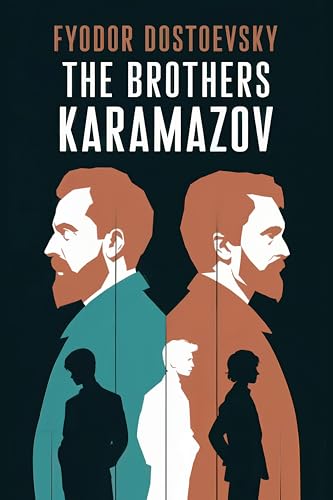
The natural next step is The Idiot: A New Translation, available at classicsretold.com. It shares Dostoevsky’s preoccupation with moral failure and social cruelty but shifts the focal lens from guilt to innocence, making it the ideal companion read. If you want to go further, The Brothers Karamazov: A New Translation, also at classicsretold.com, is where Dostoevsky synthesizes everything — faith, doubt, family violence, and the problem of suffering — into his most expansive and complete work. Together, these three novels form the core of his achievement and each new translation makes the progression genuinely readable rather than merely obligatory.
Frequently Asked Questions




This post contains affiliate links. As an Amazon Associate, we earn from qualifying purchases.
Leave a Reply