The Divine Comedy Made Famous Dante—Exile Nearly Broke Him—Why This Modern Translation Still Hits
Who Was the Author?
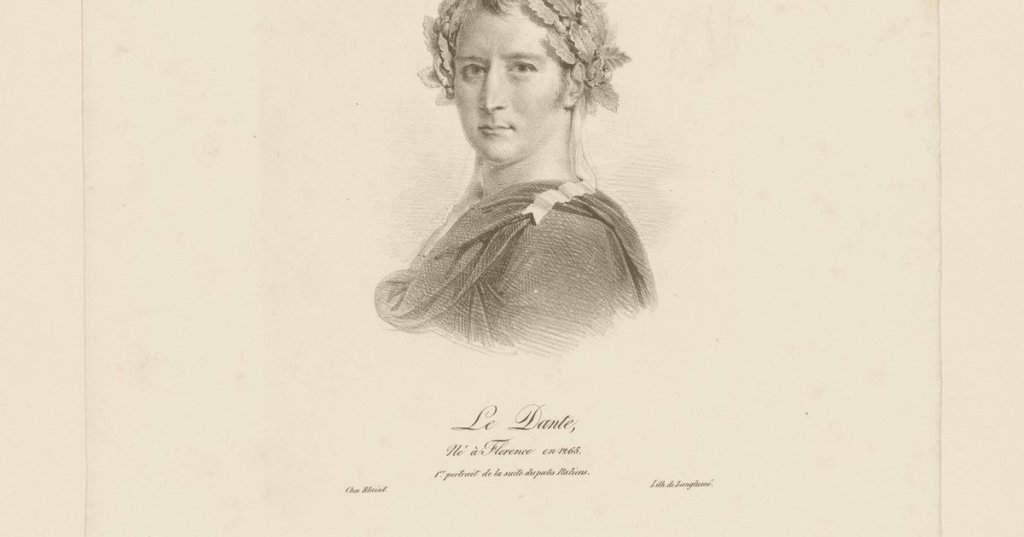
Dante Alighieri (c. 1265–1321) was born in Florence, a city that was rich, loud, and politically combustible—exactly the kind of place that can make a poet famous and a citizen disposable. He fought as a young man in Florence’s conflicts, including the Battle of Campaldino in 1289, and he grew up amid the bitter factionalism that split Italian city-states. His early life also carried a private legend: his idealized love for Beatrice Portinari (1266–1290), who became a central spiritual figure in his writing.
By 1300 Dante had entered civic life in a serious way, serving as one of Florence’s priors. That role put him in the crossfire when the city’s politics fractured between the White and Black Guelphs, and when Pope Boniface VIII pushed influence into Florentine affairs. In 1302, while Dante was away on a diplomatic mission, the Black Guelphs gained control; he was convicted on contested charges of corruption and barratry. The sentence was ruinous: exile, heavy fines, and the threat of death by burning if he returned.
Exile turned Dante into a wanderer across Italy—moving among courts and patrons, writing with the fierce clarity of someone who has lost home, status, and safety. In his final years he lived in Ravenna, where he completed the poem that would outlive every faction that tried to erase him. Dante died there in 1321, likely after contracting illness on a journey connected to a diplomatic mission. Florence would later regret its banishment, but it never got him back; his tomb remains in Ravenna.
About This Book
The Divine Comedy is Dante’s epic journey through the afterlife—Inferno, Purgatorio, and Paradiso—written in the early 14th century. The setup is instantly gripping: Dante the pilgrim gets lost in a dark wood and is guided first by the Roman poet Virgil, then by Beatrice, through realms that are at once spiritual map, political commentary, and psychological X-ray. Along the way he meets sinners, penitents, and saints, and each encounter feels like a scene with consequences: choices are not abstract here; they shape a soul.
Why does it matter now? Because it’s one of the sharpest portraits ever written of how humans justify themselves—and how they change, or refuse to. Dante’s hell is not just fire and drama; it’s a study of obsession, denial, and the stories people tell to make wrongdoing sound inevitable. His purgatory is slow work: accountability, community, and the painful dignity of becoming better. And his heaven is the boldest part: an attempt to write about joy, order, and love as something intellectually serious, not sentimental. Even if you don’t share Dante’s medieval theology, the poem’s emotional logic—fear, pride, longing, remorse, hope—still reads like real life.
Why Read a Modern Translation?
A modern, accessible English translation matters with The Divine Comedy because the poem is fast-moving and densely allusive: it name-drops politics, theology, classical myth, and Florentine grudges with zero pause. When the language is too archaic or the syntax too knotted, new readers end up spending their attention on decoding rather than experiencing the scenes. A contemporary rendering can keep Dante’s momentum—his urgency, his dark humor, his sudden tenderness—so the story lands as a living narrative instead of a museum piece. You can always circle back for scholarly notes later; the first win is getting pulled through the journey.
This Edition
This post contains affiliate links. As an Amazon Associate, we earn from qualifying purchases.
 Classics Retold
Leave a comment