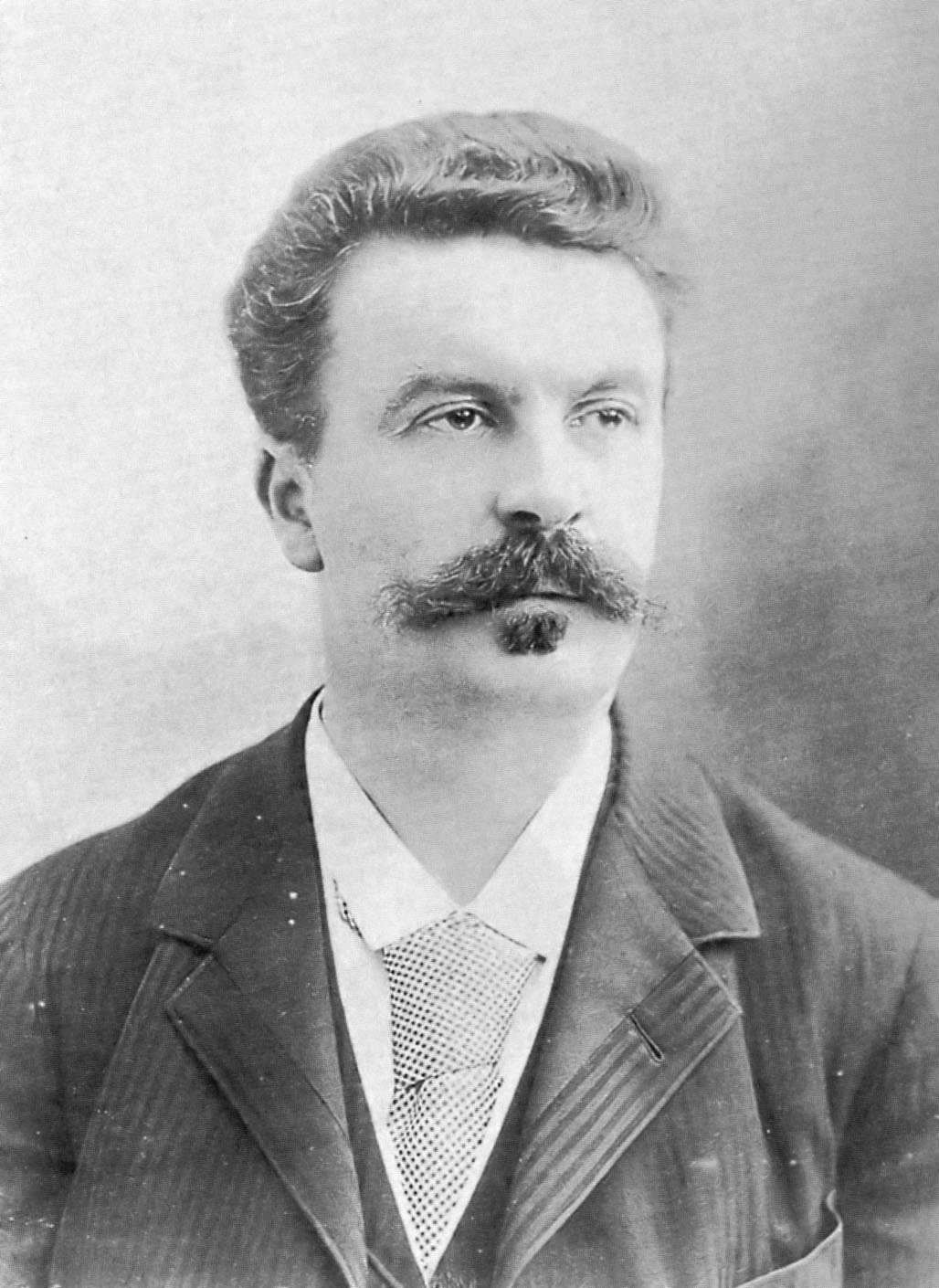
Guy de Maupassant published his first great story in 1880, and in the ten years that followed he wrote around three hundred more, along with six novels. Then his health and his mind gave way, and he died in 1893, at forty-two. The speed matters when you decide where to start. Nobody has to read all of it. The stories are short and cruel and finished in one sitting, which makes him the easiest great French writer to try and the one most often badly served by cheap reprints.
Start with David Coward’s Oxford World’s Classics collection, A Day in the Country and Other Stories: 27 stories, including “The Necklace” and “Le Horla.” If you want a single novel, take Bel-Ami in Douglas Parmée’s Penguin translation. The table has the edition we would buy for each way in. Here are the picks: A Day in the Country and Other Stories and Bel-Ami.
Which Maupassant first, and which edition


Why the stories come first
Maupassant was a short-story writer who also wrote novels, and most readers meet him in that order. The stories are where his method is clearest: a few pages, a plain surface, one turn of the screw. A clerk’s wife borrows a necklace. A coach party shuns the prostitute who then saves them. A man is haunted by something he cannot see. He wrote them for the Paris newspapers, and they read like it, with no wasted sentence and no sermon. Flaubert, his mentor, drilled him in exactly that economy.
The novels are worth knowing, and Bel-Ami is the one that sells, but they ask for more patience than the stories do. Take them second.
A reading order that works
Begin with a collection of twenty or thirty stories and read them out of order. Look for the ones everyone knows, “The Necklace” and “Boule de Suif,” then the ghost stories, then the Normandy peasant pieces, which are the funniest and the grimmest. In Coward’s Oxford volume that includes “Le Horla,” Maupassant’s account of a man who feels another presence taking over his house, and one of the best short pieces of unease in French. Our guide to bilingual French classics uses the same author as a first real French read.
After the stories, read Bel-Ami (1885). Georges Duroy is a penniless ex-soldier who talks his way into journalism and into the beds of the women who can help him, and the book watches a charming nobody rise on other people’s vanity. It is cynical and quick. Then Pierre and Jean (1888), shorter and more controlled, about a family quarrel over an inheritance, and prefaced by Maupassant’s own essay on what a novel should do. Last, A Life (1883), the first of his novels and the saddest: a gentle girl leaves a convent and meets a husband who is not what he seemed.
Why the translation matters for Maupassant
His French is plain, and that is the difficulty. There is no ornament to hide behind. A translator who tidies, explains or adds a flourish ruins the dry, deadpan tone that makes the stories work, and the cruelty needs to land without comment. Old public-domain versions, which are what most cheap reprints use, are the usual offenders: they are Victorian in diction and soften the sexual and social edges. A modern translation with notes is the better buy for nearly everyone, and the cost difference is a few dollars.
We do not quote lines here. The wording is the point, and we would rather you read a page of each in a bookshop sample.
The books, one by one
The story collections: Coward for range, Colet for a classic Penguin, Appelbaum for French
David Coward’s Oxford World’s Classics collection holds 27 stories, including “The Necklace” and “Le Horla,” with an introduction, notes and a bibliography. Coward is a Leeds professor of French who has translated a good deal of Maupassant and Dumas, and readers on r/classicliterature have singled the volume out when asked for recommendations. It is the one we would hand to a newcomer. Roger Colet’s Penguin Classics Selected Short Stories is the older standard, first printed in 1971, and still a sound choice if you prefer Penguin’s layout, though the English shows its age. For a reader learning French, Stanley Appelbaum’s Dover Dual Language volume prints twelve stories with the French on the facing page; his English is deliberately close to the original, so use it as a crib. See the Coward Oxford World’s Classics edition. Also available: the Colet Penguin Classics edition and the Appelbaum Dover edition.
Bel-Ami: Parmée for pace, Mauldon for notes

Douglas Parmée’s Penguin translation is the lively one, with a vigour that suits a book about a man who never stops talking. Margaret Mauldon’s Oxford version, edited by Robert Lethbridge, is the scholarly pick, with fuller notes on Paris journalism, the colonial wars and the politics that Duroy exploits. Both are good; choose Parmée if you want to be carried along, Mauldon if you want the context. See the Parmée Penguin Classics edition. Also available: the Mauldon Oxford World’s Classics edition.
Pierre and Jean: the shortest novel

Two brothers learn that one of them has inherited a fortune from a family friend, and the question of why wrecks the household. Julie Mead’s Oxford translation, introduced by Robert Lethbridge, is the edition we could confirm, and it carries the preface Maupassant wrote on the art of the novel, a short piece worth the price on its own.
A Life: the sad one
Jeanne leaves her convent school full of hope and spends the rest of the book losing it, to a husband, a son and the slow passing of the seasons on a Norman estate. Roger Pearson’s Oxford translation, titled A Life: The Humble Truth, is the modern edition. It is a hard book to give to someone who wants a cheerful evening.
See the Pearson Oxford World’s Classics edition
Gift editions
We could not confirm a current clothbound or hardcover English Maupassant in a modern translation. The hardcovers that turn up are secondhand copies of early twentieth-century printings and print-on-demand reprints, and we would not give one. A better gift is the Coward Oxford collection with an Audible membership, below. For other ideas see our guide to the best hardcover classics and our classic book gifts.
Listen to it
Maupassant suits the ear: a story runs fifteen or twenty minutes, about the length of a commute. The recordings we could confirm use older public-domain translations, so treat them as a way to hear the stories and not as the text to quote.
- Complete Original Short Stories of Guy de Maupassant, Volume I, read by Cate Barratt. Runs 4 hours 32 minutes. Listen on Audible.
- The Short Stories of Guy de Maupassant, read by Richard Mitchley, Jake Urry and Ian Holm. Runs 2 hours 17 minutes. Listen on Audible.
New Audible members can usually try a membership free. See Audible membership options.
Common questions
Which Maupassant story should I read first?
“The Necklace” for the twist, “Boule de Suif” for the one that made his name, and “Le Horla” if you like ghost stories. Any good collection has the first and often all three.
Do I read the novels or the stories?
The stories first. They are his best work and they show you in an hour whether you like his voice. Bel-Ami is the novel to try next.
Is a cheap public-domain edition fine?
For a free sample, yes. To own a copy, no: the old translations are stiffer and have no notes, and a modern Oxford or Penguin costs only a little more.
Can I read Maupassant to learn French?
Yes. He is the usual first classic for learners, because his sentences are clean and his stories end quickly. See our bilingual French guide for the editions.
Where does he fit with Zola and Flaubert?
He was Flaubert’s protege and a friend of Zola’s circle, and he is the short-form counterpart of both. Read Zola for the weight of a whole society and Maupassant for one bad evening.
Keep reading
- The best bilingual French classics, for reading Maupassant in French
- Where to start with Zola, for the naturalist novel Maupassant lived beside
- Where to start with Victor Hugo
- Which Balzac novel to read first
- The best classic audiobooks