Category: Italian Literature

  • Best Translation of The Divine Comedy: A 2026 Reader’s Guide

    Why the translation choice matters

    Dante is unusually dependent on translation because almost every sentence asks the English reader to choose between competing goods: music, clarity, theology, political context, and narrative speed. Take the famous opening of the Inferno: Dante is “midway” through life, lost in a dark wood, and unable to find the straight path. In one English version, the line feels like solemn Victorian poetry; in another, like a densely annotated medieval text; in a modern prose version, like the beginning of a psychological crisis.

    None of those approaches is automatically wrong. Dante wrote in terza rima, a chain-rhyme structure that is nearly impossible to reproduce naturally in English. A translator who preserves rhyme may capture something of the poem’s propulsion, but may also bend English into stiffness. A translator who abandons rhyme can give the reader a cleaner path through the story, but loses some of the architecture that made Dante’s poem feel inevitable.

    That is why “the best translation” of The Divine Comedy depends on the reader. A student writing a paper needs notes, historical context, and close fidelity. A first-time reader may need a version that makes Hell, Purgatory, and Paradise legible before asking them to admire the engineering. This guide treats Classics Retold as a curator: we compare the major English editions, explain the tradeoffs, and point readers toward the version that best fits the way they intend to read Dante.

    The major English editions

    The English tradition of Dante translation is long and uneven. Henry Wadsworth Longfellow gave American readers a monumental nineteenth-century Dante, literal and dignified but now often remote. John Ciardi made Dante energetic and teachable for mid-century classrooms, though his rhymes can feel forceful. Allen Mandelbaum and C.H. Sisson moved toward cleaner modern verse. Robin Kirkpatrick and Anthony Esolen represent two different contemporary scholarly approaches: Kirkpatrick more formally ambitious, Esolen more conservative and commentary-rich.

    For many readers, the practical question is not which translation is “greatest” in the abstract, but which edition will actually be read to the end. The Divine Comedy is three books, a theological universe, a political revenge machine, a love poem, and a map of the soul. The edition has to match the reader’s patience, background, and purpose.

    Edition Translator Year Best for Tradeoff
    Penguin Classics Robin Kirkpatrick 2006–2007 Readers who want a serious modern poetic edition Formally ambitious, but sometimes less immediately clear
    Oxford World’s Classics C.H. Sisson 1993 Readers who want restrained, readable blank verse Less of Dante’s chain-rhyme momentum
    Modern Library Anthony Esolen 2002–2004 Readers who want traditional theology and extensive notes Can feel heavy for casual reading
    Bantam Classics Allen Mandelbaum 1980–1984 College courses and balanced literary reading Clear and respected, but not the most vivid for every reader
    New American Library John Ciardi 1954–1970 Readers who want drive, voice, and classroom energy Rhyming choices can date the language
    Modern accessible prose edition Contemporary English adaptation Recent First-time readers who want narrative clarity Loses the poetic form and much of the terza rima effect

    Side-by-side passage comparison

    The opening of the Inferno is the simplest test case. The Italian begins: “Nel mezzo del cammin di nostra vita / mi ritrovai per una selva oscura, / ché la diritta via era smarrita.” The scene is not merely geographical. Dante is morally lost, spiritually frightened, and suddenly aware that the ordinary path of life has vanished beneath him.

    Longfellow (1867) Kirkpatrick-style modern verse Modern accessible prose
    Midway upon the journey of our life / I found myself within a forest dark, / For the straightforward pathway had been lost. Halfway along the road we have to go, / I found myself obscured in a great forest, / bewildered, and I knew I had lost the way. In the middle of my life’s journey, I found myself lost in a dark forest, having strayed from the right path.

    What the differences reveal

    Longfellow preserves dignity and distance. “Forest dark” sounds memorable, but it also tells you immediately that you are reading an older English Dante. The inversion is beautiful if you like nineteenth-century poetic diction; it is a barrier if you want Dante’s fear to feel immediate.

    A modern verse translation tries to keep some of the poem’s motion while making the sentence less antique. The result can be strong, but the pressure of lineation and rhythm still shapes the English. That pressure matters: Dante’s poem is not simply a story told in verse, but an argument made through form. Readers who care about the poem as poetry should not ignore that.

    Modern prose gives up the contest with Dante’s form and aims at comprehension. The advantage is obvious: the reader understands the situation at once. The disadvantage is just as real: Dante’s architecture becomes less audible. A prose edition can be the right doorway into the poem, especially for a first reading, but it should not be mistaken for the full poetic experience.

    Which translation to read

    If you are reading Dante for a course, or if you want one edition with serious literary authority, start with Robin Kirkpatrick’s Penguin Classics or Allen Mandelbaum’s Bantam translation. Both give you a Dante that can support study, rereading, and argument. Kirkpatrick is more formally adventurous; Mandelbaum is often smoother.

    If you want theological and historical guidance, Anthony Esolen’s Modern Library edition is a strong choice. It is not the lightest way into Dante, but it takes the poem’s Christian architecture seriously and gives readers a framework for the references, doctrines, and political grudges that otherwise pass by in a blur.

    If this is your first encounter with The Divine Comedy and you mostly want to understand the journey before studying the machinery, choose a clear modern English edition. You will sacrifice rhyme and some poetic density, but you may gain the thing that matters most on a first reading: enough momentum to keep going from the dark wood to the final vision.

    A readable modern edition to consider

    For readers who want Dante in direct contemporary English, the edition linked below is best understood as an accessible reading copy, not as a replacement for the major scholarly translations. It is for the reader who wants the story, the moral drama, and the emotional movement of the poem without stopping every few lines to decode older diction or formal compromises.

    That makes it a useful first Dante, especially for book clubs, younger readers, and anyone who has bounced off the poem before. If you later want the full poetic and scholarly apparatus, move on to Kirkpatrick, Mandelbaum, Esolen, or another annotated verse edition. Classics Retold recommends this kind of modern prose edition as an entry point: a way into Dante, not the final word on Dante.

    Related guides on Classics Retold

    For more context on Dante’s life, exile, and the political imagination behind the poem, these related guides may help before or after reading the Comedy.

    The Divine Comedy: A New Translation in Modern Accessible English

    Curated pick
    The Divine Comedy: A New Translation in Modern Accessible English
    by Dante Alighieri
    New TranslationPaperbackEdition to consider

    aView on Amazon

    Also available: Kindle

    More from Dante Alighieri

    This post contains affiliate links. As an Amazon Associate, we earn from qualifying purchases.

    Frequently Asked Questions

    Which translation should first-time readers choose in 2026?

    Robin Kirkpatrick’s 2006 Penguin Classics translation offers the best balance of readability and fidelity to Dante’s meaning for new readers. His prose maintains the narrative momentum while preserving the theological and political nuances that make Dante’s journey meaningful. The extensive but unobtrusive notes help readers navigate references without interrupting the story’s flow.

    Should I read a verse translation that preserves Dante’s poetry or a prose version for clarity?

    Prose translations like Kirkpatrick’s or Mark Musa’s sacrifice Dante’s intricate rhyme schemes but deliver clearer meaning and faster reading. Verse translations such as Anthony Esolen’s maintain the musical quality but can feel forced when English grammar conflicts with Italian rhythm. Choose verse if you plan to read aloud or want the full aesthetic experience, prose if you prioritize understanding the story and ideas.

    Do I need a translation with extensive footnotes and commentary?

    Heavy annotation helps with Dante’s countless references to 13th-century politics, classical mythology, and medieval theology, but it can fragment your reading experience. Robert Hollander’s translation includes the most comprehensive notes for serious students, while Kirkpatrick provides just enough context to keep you oriented. Start with moderate annotation—you can always consult scholarly editions later for deeper study.

    How do modern translations compare to classic versions like Longfellow’s?

    19th-century translations like Longfellow’s preserve Victorian literary elegance but use archaic language that obscures Dante’s direct, conversational tone. Modern translators better capture Dante’s immediacy and political bite, though they sometimes lose the grandeur that made earlier versions feel epic. Contemporary readers will find modern translations more accessible, while Longfellow remains valuable for understanding how English literature absorbed Dante’s influence.
  • The Prince Was a Desperate Job Application

    The Prince Was a Desperate Job Application

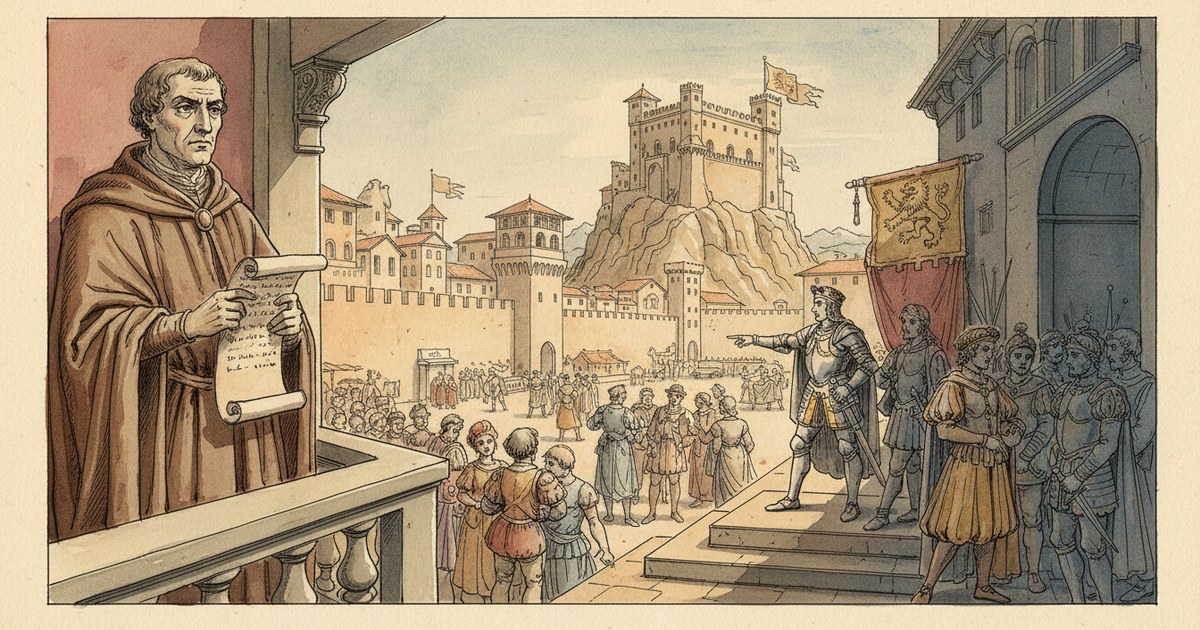
    In the winter of 1513, Niccolò Machiavelli was writing letters from a farm outside Florence that described his days with brutal precision: check the bird traps in the morning, argue with woodcutters at the local inn through the afternoon, then change into his best clothes at nightfall and sit at his desk to read the ancients. He called this ritual “entering the courts of old men.” He was forty-three, recently tortured on the strappado — a device that suspended prisoners by the wrists tied behind their back, then dropped them, dislocating the shoulders — and banned from Florence on suspicion of conspiring against the Medici family, who had just retaken the city and ended the republic he had spent fourteen years serving.

    The Prince came out of that winter. Not as a work of political philosophy, exactly — that framing flatters it into abstraction. It was a job application. Machiavelli dedicated it to Lorenzo de’ Medici, and the message beneath the formal dedication was simple: I understand power better than anyone you currently employ. Give me a position. He never got one.

    That context doesn’t diminish the book. It explains why it reads the way it does. The Prince is ruthless, undeceived, and oddly intimate because it was written by a man who had been inside the machinery of the Florentine state, watched it destroyed, survived torture for his association with it, and then sat down to reconstruct exactly how power works and why most rulers misuse it. This isn’t abstraction dressed up as political theory. It’s a diagnosis written by someone who had already been operated on.

    Fourteen Years in the Engine Room

    Machiavelli joined the Florentine chancery in 1498, at twenty-nine, as Second Chancellor — a position with no prestige and enormous responsibility. He drafted the republic’s diplomatic correspondence, handled the logistics of military campaigns, and was sent on missions to Cesare Borgia, Louis XII of France, and the Holy Roman Emperor. For fourteen years he watched how power actually worked, and what he saw was not glory or statecraft. It was men making decisions under pressure, most of them badly, for reasons they either didn’t understand or couldn’t admit to themselves.

    The missions mattered. When Machiavelli spent four months in 1502 watching Cesare Borgia consolidate his grip on the Romagna — including the episode at Sinigaglia where Borgia lured his rebellious captains to a meeting and had them strangled — he wasn’t disgusted. He was taking notes. Borgia became the closest thing The Prince has to a positive model: a man who understood that fortune could be seized, that cruelty deployed decisively was preferable to cruelty dragged out, and that the appearance of virtue mattered more than virtue itself. The fact that Borgia ultimately failed — because his father Pope Alexander VI died at precisely the wrong moment — only sharpened Machiavelli’s thesis about the limits of individual genius against bad timing.

    The republic fell in 1512. Spanish troops restored the Medici; the republic Machiavelli had served was dissolved; he was dismissed, arrested, and put to the strappado on the suspicion of involvement in an anti-Medici conspiracy. He maintained his innocence through the torture — a small and terrible detail the letters confirm — and was released when a general amnesty came through on the election of a Medici pope. He retreated to the farm in Sant’Andrea in Percussina, where his family had property, and spent the next years writing.

    The biography explains the voice. Machiavelli had no academic reputation to protect, no patron yet secured. What he had was fourteen years of firsthand observation and nothing left to lose. The Prince reads like someone who has finally decided to say what he actually thinks — partly because the audience he was writing for might actually use it, and partly because the alternative was arguing with woodcutters for the rest of his life.

    The Architecture of Undeceived Power

    Most political philosophy tells rulers what they should do. The Prince tells them what works. That distinction is the engine of the book’s notoriety, and also its lasting relevance. When Machiavelli writes in Chapter 17 that it is much safer to be feared than loved, when one of the two must be lacking, he isn’t celebrating fear. He’s noting that love is contingent on circumstances while fear, properly maintained, is a more reliable mechanism of control. The argument is empirical before it is moral, which is what makes it feel subversive even now.

    The chapter on Cesare Borgia is where the book’s method is most visible. Machiavelli walks through Borgia’s conquest of the Romagna step by step, including the appointment of Remirro de Orco as the region’s brutal administrator, followed by Remirro’s public execution once the population had grown too resentful — the body “cut in two pieces” left in the piazza at Cesena, to demonstrate that Borgia both controlled order and bore no personal responsibility for the cruelty that had imposed it. Machiavelli describes this as a masterstroke. He means it. The passage is uncomfortable not because it glorifies violence but because the logic is sound.

    The book’s strangest turn comes at the end. After twenty-five chapters of dispassionate analysis — mercenaries, the proper use of cruelty, the management of religion as a political instrument — Machiavelli closes with an exhortation to liberate Italy from foreign domination. The shift in register is jarring: from cold technician to patriot. The most convincing reading is that both registers are sincere. The man who analyzed Borgia with something close to admiration and the man who wanted the Medici to unite Italy were the same man, writing from the same desperate position, hoping the same argument might finally move someone powerful enough to act on it.

    What survives all of this is precision. Machiavelli does not hedge. He makes a claim, supports it with an example, and moves on. There are no qualifications inserted to protect him from criticism; the book proceeds as though its conclusions are obvious once stated. That quality — the refusal of comfortable ambiguity — is why The Prince is still read, still argued over, still assigned to students who find it either liberating or horrifying, often both at once.

    The Translation Landscape

    The scholarly standard for English readers is Harvey Mansfield’s translation for the University of Chicago Press, first published in 1985 and revised in 1998. Mansfield is a political philosopher himself, and his version is precise to the point of stiffness: he preserves the syntax of Machiavelli’s Italian in ways that occasionally require rereading, and his notes are indispensable if you want to understand what Machiavelli is doing with specific classical references. This is the version to read if you’re writing a dissertation on Renaissance political thought. Tim Parks’s translation for Penguin Modern Classics, published in 2009, is the best available reading text from a major press — Parks is a novelist as well as a translator, and his version has a propulsive quality the more scholarly editions lack. He renders the central claim of Chapter 17 as “being feared is far safer than being loved,” which is both accurate and reads as a complete thought rather than a proposition awaiting resolution. The older W.K. Marriott translation from 1908, which is public domain and appears in dozens of cheap reprints and digital editions, has the advantage of being free and the disadvantage of feeling as though it was written for a reader who would never confuse political analysis with impropriety. Marriott’s Machiavelli is stately in ways the original is not.

    The difference between these versions becomes most visible where Machiavelli is being deliberately brutal. In Chapter 8, on those who seize power through crime, Mansfield renders the key phrase as “well-used cruelties” — technically correct, and the irony lands. Parks goes with “carefully managed” cruelties, which is slightly smoother but loses the edge of Machiavelli calling something cruel and useful in the same breath. the edition linked below favors directness: the language is modern without being casual, and the priority throughout is that the argument comes through without resistance. For a first reader who wants to understand what Machiavelli is actually saying — rather than navigate the footnotes of what a classicist thinks he meant — that priority matters more than it might initially seem.

    Why This Translation?

    The case for this edition is simple: Machiavelli’s argument is not difficult. The Italian is lucid, the structure is logical, and the prose is direct to the point of bluntness. What obscures The Prince for modern readers is rarely the ideas — it’s the translation. Versions made for academic use, or carrying the rhetorical habits of earlier centuries, or prioritizing fidelity to Machiavelli’s syntax over clarity in English, put a layer of resistance between the reader and the argument. This translation, available in paperback on Amazon, strips those habits away. The sentences end where they should. The chapter on whether it’s better to be loved or feared reads like a conversation rather than a lecture. The exhortation at the close arrives with the force Machiavelli intended.

    Machiavelli’s genius was for clarity — the kind that makes powerful people uncomfortable because it names what they’re doing and declines to call it anything else. This is the edition to hand someone who has heard about The Prince for years and finally wants to read it without feeling the argument somewhere behind the prose, never quite arriving.

    Is The Prince actually a guide to becoming a tyrant?

    Not exactly. Machiavelli is describing how power works, not prescribing what a ruler should want. Many of the behaviors he analyzes — Borgia’s calculated cruelties, the management of fear, the strategic use of religion — he treats as effective rather than admirable. The rulers who fail in his examples are not those who are too ruthless; they’re the ones who are cruel when unnecessary, or merciful when it will cost them, or who rely on fortune rather than preparation. The book has been read as a how-to manual, a satirical exposure of real political practice, and a work of straightforward political science. What it isn’t is simple advocacy for cruelty.

    Do I need to know Italian Renaissance history to follow the argument?

    No. Machiavelli uses Italian figures — Cesare Borgia, Francesco Sforza, the Medici, the Sforzas of Milan — as examples, but the argument he’s making is about power structures that appear in any era. Most good editions include brief notes identifying who these people were, and the edition linked below is designed for readers coming to the text fresh. The contextual notes are enough to follow the argument without a prior course in fifteenth-century Italian politics.

    How long is The Prince, and how should I read it?

    The core text is short — around 80 to 100 pages depending on the edition, with 26 chapters. It can be read in a single sitting, and Machiavelli’s structure rewards that kind of sustained attention: the argument builds from chapter to chapter, and the abrupt tonal shift in the final chapter hits harder if you’ve moved through the preceding analysis without a long break. the edition linked below preserves that compactness without padding.

    Is this translation suitable for courses and book clubs?

    Yes. The modern prose makes it easier to engage with the argument directly rather than parsing archaic sentence structures — which matters whether you’re analyzing it for a course or discussing it around a table. The translation handles the passages most likely to spark debate — on cruelty, on the role of religion, on fortune and free will in Chapter 25 — in plain language that keeps the focus on what Machiavelli is actually claiming, rather than on the period furniture of how he’s phrasing it.

    Curated pick
    The Prince — Niccolò Machiavelli
    Modern English translation

    Kindle →Paperback →

  • Dante Put His Enemies in Hell

    Dante Put His Enemies in Hell

    Dante Alighieri stands at the edge of a frozen lake, the very bottom of the universe, and he is shivering. It is not just the metaphysical chill of the Ninth Circle of Hell; it is the physical weight of the journey. To get here, he has climbed over the shaggy, frozen flanks of Lucifer himself. He has smelled the sulfur of the Malebolge and heard the wet, rhythmic thud of Farinata degli Uberti rising from a tomb of fire like a man who holds all of Hell in great scorn. Dante is not a ghost drifting through a dreamscape; he is a man with boots on the ground, breathing hard, checking his pulse against the silence of the damned.

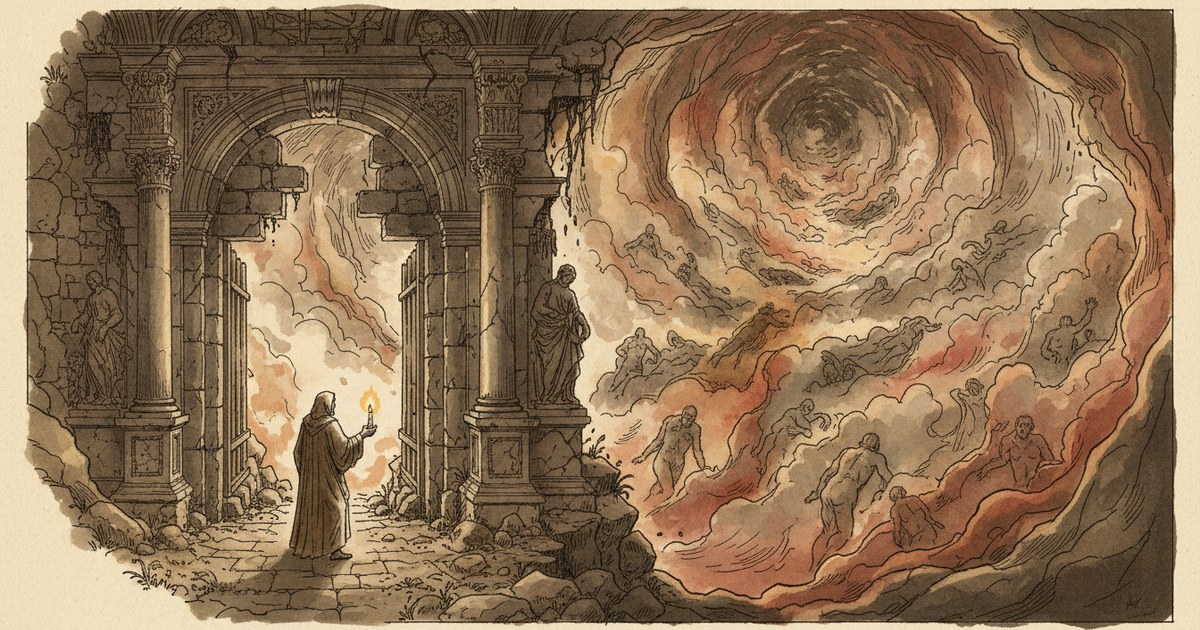
    The problem with most English translations of the Divine Comedy is that they forget the boots. They treat the poem as a cathedral of theology or a museum of medieval politics, forgetting that it is, first and foremost, a physical descent. When Dante enters the gate of Hell, he doesn’t just read the famous warning about abandoning hope; he hears a “tumult that resounds forever in that air timelessly stained.” He feels the sting of wasps and the grit of the sand. If a translation doesn’t make you feel the claustrophobia of the descent and the dizzying verticality of the climb, it has failed the poet.

    The Divine Comedy is a journey of momentum. Dante did not write it to be studied in a vacuum; he wrote it to save his life and to burn his enemies. It is a work of high art born from the low dirt of political exile. To read it correctly is to move through the circles with the same urgency Dante felt when he realized he would never see the stone walls of Florence again. The best translation is the one that keeps you moving, refusing to let the heavy machinery of 14th-century Italian verse stall the engine of the narrative.

    The Exile Who Turned Vengeance Into Light

    Dante Alighieri did not set out to write the greatest poem of the Middle Ages from a comfortable study in Tuscany. He wrote it in the bitter shadow of a death sentence. In 1302, while serving as a diplomat in Rome, the political tides in Florence shifted. The “Black” Guelphs took power, and Dante, a leader of the “White” Guelphs, was charged with corruption and barratry. He was fined, his property was seized, and he was told that if he ever set foot in Florence again, he would be burned at the stake. He spent the rest of his life as a wanderer, eating the “salty bread” of others and climbing the stairs of patrons who viewed him as a useful intellectual ornament.

    This biographical trauma is the furnace that forged the Comedy. When you read the Inferno, you are reading a hit list. Dante populates Hell with the very men who destroyed his life—popes, politicians, and neighbors who betrayed the city he loved. But the genius of the work is how he transforms this petty, personal vengeance into a universal architecture of justice. His exile forced him to look at the world from the outside, stripped of his status and his home. It turned a provincial politician into a cosmic cartographer. He wasn’t just writing about the afterlife; he was writing a map for a soul lost in a “dark wood,” which was his specific, agonizing reality in the years following his banishment.

    Then there is Beatrice. She was not a wife or a long-term lover, but a girl he saw twice—once when they were nine, once when they were eighteen. Her death in 1290 shattered him. In the Vita Nuova, he promised to write of her “what hath never been written of any woman.” The Divine Comedy is the fulfillment of that promise. Beatrice is the gravity of the poem; she is the reason Dante endures the horrors of the pit and the rigors of the mountain. Every theological argument and every political rant in the poem is anchored by the physical memory of a woman’s face. A translation that loses this heartbeat of longing in favor of dry academic precision misses the point of Dante’s entire existence.

    The Trap of the Terza Rima

    The 14,233 lines of the Divine Comedy are written in terza rima—a demanding interlocking rhyme scheme (ABA, BCB, CDC) that Dante invented. In Italian, a language where almost every word ends in a vowel, this is natural, melodic, and propulsive. In English, a language that is “rhyme-poor” and consonants-heavy, terza rima is a death trap. Translators who try to force English into Dante’s exact structure often end up with “translationese”—clunky, inverted sentences and archaic word choices that exist only to satisfy the rhyme. They sacrifice the meaning and the “physicality” of the poem on the altar of its skeleton.

    This is the fundamental translation problem. Do you prioritize the music or the movement? If you choose the music (the rhyme), you often lose the momentum. Blank verse, the unrhymed iambic pentameter of Shakespeare and Milton, is often a better fit for the English ear, providing a dignified structure without the forced gymnastics of rhyme. Prose translations offer the most literal accuracy but lose the “sacred” elevation of the work. The challenge for a modern curator is finding the version that honors the poetic impulse without letting the 14th-century mechanics stall the 21st-century reader’s experience of the journey.

    Dante himself called the work a Comedy because it begins in darkness and ends in light, and because it was written in the “vulgar” tongue—the language of the people, not the Latin of the elite. He wanted to be understood. He used street slang, technical jargon from weavers and blacksmiths, and visceral descriptions of bodily functions. A translation that sounds too much like a Victorian hymn or a legal brief betrays Dante’s “vulgar” energy. We need a Dante who breathes, sweats, and swears, not one who is encased in the amber of “thee” and “thou.”

    Mapping the Modern Contenders

    For decades, John Ciardi’s translation was the standard for American students. Ciardi understood that terza rima was impossible in English, so he created a “rhymed-triple” version that captured the spirit of the tercets without the forced rigidity. His Inferno is gritty and fast-paced, though some readers find his 1950s sensibilities a bit dated today. Allen Mandelbaum’s version, appearing in the 1980s, offered a more “classical” feel—stately, accurate, and rhythmic. Mandelbaum is excellent for the reader who wants to feel the epic weight of the work, but his Dante can occasionally feel a bit more like a statue than a man in a hurry.

    the edition linked below of the Divine Comedy approaches the text from a different angle. As curators, we asked: “How do we make the reader feel the cinematic scale of the poem?” Our modern accessible edition focuses on clarity and the “visual” momentum of the narrative. We strip away the linguistic clutter that often obscures Dante’s vivid imagery. When Dante describes the giant Antaeus picking him up and setting him down “like the mast of a ship,” we want you to feel the wind and the vertigo. We treat the poem not as a relic to be dusted, but as a script for a journey that is happening right now.

    This version is designed for the reader who has always been intimidated by the footnotes. While the political squabbles of 1300s Florence are essential context, they shouldn’t stop the flow of the story. the edition linked below embeds that context into the rhythm of the verse, allowing the reader to experience the Comedy as Dante intended—as a gripping, high-stakes climb toward the stars. It prioritizes the “physicality” that defines the poem, ensuring that the momentum of the descent is never lost to the tercets.

    Why the Classics Retold Selection?

    The Divine Comedy is a massive undertaking, and the version you choose determines whether you finish the climb or get stuck in the mud of the Styx. We recommend the Classics Retold modern translation because it refuses to be boring. It recognizes that Dante was a man of action—an explorer of the soul who used the most vivid language available to describe the indescribable. This edition captures the “cinematic” feel of the three realms, making the complex theology feel as immediate as a heartbeat and the political vengeance as fresh as today’s headlines.

    To experience the full arc of the journey from the depths of the pit to the final, blinding light of the Empyrean, we suggest starting with an edition that doesn’t require a PhD to navigate. You can find the edition linked below of The Divine Comedy in paperback, which serves as the perfect companion for your own descent into the circles of the afterlife. It is a guide built for movement, clarity, and the raw power of Dante’s original vision.

    What is the best order to read the Divine Comedy?

    You must start at the beginning with Inferno. While Purgatorio is often considered the most “human” and Paradiso the most beautiful, the narrative arc of the poem requires the physical and moral descent of Hell to make the subsequent climb meaningful. Dante’s transformation is a linear journey; skipping ahead is like starting a movie in the final act.

    Do I need to know Italian history to understand the book?

    While the poem is filled with Dante’s contemporaries and specific Florentine politics, a good modern translation will provide enough context within the text or through brief notes to keep you grounded. The universal themes—justice, love, betrayal, and the search for meaning—are powerful enough to carry the reader even if they don’t know every Guelph and Ghibelline by name.

    Why is it called a “Comedy” if it’s about Hell?

    In the 14th century, a “comedy” was simply a narrative that began in trouble and ended in a happy resolution (unlike a tragedy, which begins in high status and ends in ruin). Additionally, Dante wrote it in the “common” Italian tongue rather than the “tragic” and elevated Latin, making it a “vulgar” or common work accessible to the people.

    Is the Divine Comedy purely a religious text?

    No. While its framework is Catholic theology, the Comedy is equally a work of political philosophy, autobiography, and psychological exploration. It is a study of human nature under pressure. Even for non-religious readers, the poem’s insights into the “hells” we create for ourselves and the “mountains” we must climb to find peace remain some of the most profound in Western literature.

    Curated pick

    The Divine Comedy

    The Divine Comedy — Dante Alighieri
    Modern English translation

    Kindle →
    Paperback →