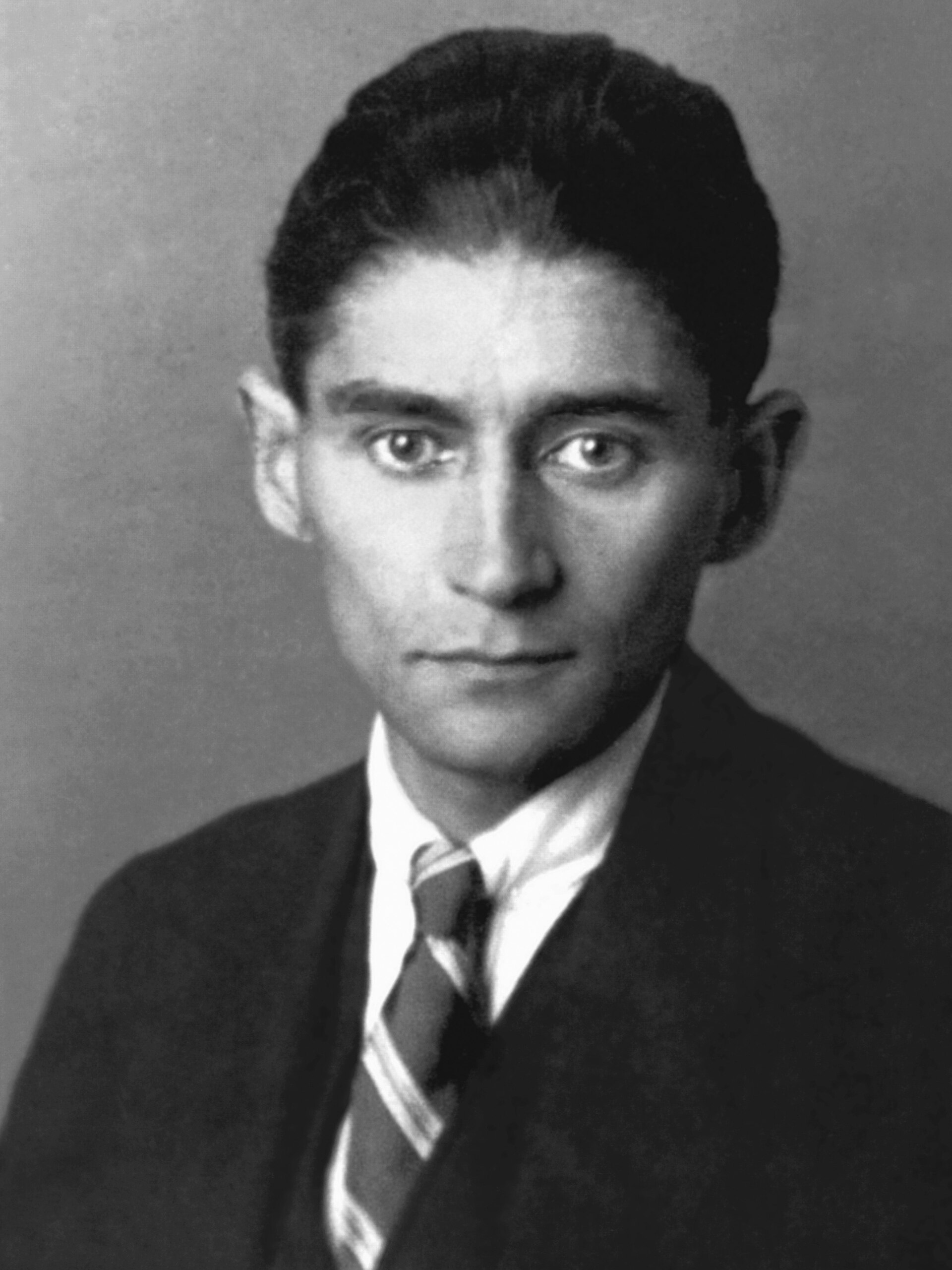
When Franz Kafka died of tuberculosis in 1924, he left instructions that his friend Max Brod should burn what remained in his desk. Brod refused. He edited the unfinished manuscripts of The Trial, The Castle and Amerika, arranged chapters that Kafka had never put in order, and published all three within three years. Everything English readers knew of Kafka for half a century came through that rescue, then through the Muirs’ translations of it, and the story is still being corrected.
Start with The Metamorphosis in Susan Bernofsky’s Norton translation, or Michael Hofmann’s Penguin if you want the whole short-story Kafka in one book. Read The Trial next in Breon Mitchell’s Schocken translation, then The Castle in Mark Harman’s, and keep the Complete Stories for last. The table has the editions we would buy for each job.
Which Kafka book first, and which edition


What order to read Kafka in
Kafka published very little in his lifetime: a handful of story collections and The Metamorphosis in 1915. The three novels were left unfinished, and the version you read depends on which edition of the German text your translator followed. That fact drives most of our advice.
Our order is this. The Metamorphosis first, because it is short enough to finish in an evening and contains the whole method: an absurd event treated as a practical problem, a family reorganising itself around it, and a prose style that never raises its voice. If you like it, go straight to The Trial, where a bank clerk is arrested one morning by men who will not say what he is accused of. It is the best-known Kafka and the one most readers need a good translation of, because it is sold in several competing versions. Then The Castle, a land surveyor who cannot get past the officials who summoned him, which is longer, slower and funnier than people expect. Keep Amerika for later, since it is the sunniest of the three and the least like the Kafka of legend. The stories, from “In the Penal Colony” to “A Hunger Artist” and “A Report to an Academy”, can be read at any point, and many readers use them as a break between novels.
If you would rather read about him before the books, we have two essays on the novels: Kafka’s justice works in reverse, on The Trial, and Kafka never saw America, he understood it, on Amerika.
Why Kafka is hard to translate
Kafka wrote in the plain, legalistic German of a Prague insurance office. The sentences are long and exact, the vocabulary is ordinary, and nothing is ever explained. A translator has to decide how much of that flatness to keep. Smooth it into good English and the books begin to sound like fables with a moral. Keep it and the English can read as stiff, repetitive, even clumsy, and that is closer to what Kafka wrote.
The first problem is the oldest. The opening of The Metamorphosis turns on the German word Ungeziefer, which refers to an unclean creature that does not belong in a house, and English has no exact match. The Muirs gave readers a gigantic insect, and that became the familiar picture. Stanley Corngold went to monstrous vermin, and changed the dreams from uneasy to unsettling. Bernofsky, according to her own afterword as summarised by reviewers, chose some sort of monstrous insect to keep the original’s ambiguity. Hofmann is described as choosing the specific over the ambiguous. We could not read a verified copy of any of these openings this session, so we will not quote them: open the first page of each in a shop and compare.
The second problem is the text. Brod’s editions of the novels tidied punctuation, smoothed Kafka’s habits and, in The Trial, fixed an order of chapters that the manuscript does not strictly support. Scholars later prepared critical editions that restored what Kafka wrote, and the Schocken Kafka Library translations of The Trial and The Castle follow them. The Muirs worked from Brod. That is the real division in English Kafka: the Muir tradition, graceful and older, against the restored-text translations, rougher and closer.
The book-by-book guide
The Metamorphosis: start here

Gregor Samsa wakes as something he cannot get out of bed as, and the first thing he worries about is being late for work. Susan Bernofsky’s 2014 Norton translation, with an introduction by David Cronenberg, is the one we would hand a new reader: modern, clean, and honest about the ambiguity of that first word. Her translation also appears in a Norton Critical Edition with essays, for students. Stanley Corngold’s version, now in the Modern Library with essays by writers including Philip Roth, W. H. Auden and Walter Benjamin, is the reader’s choice if you want the criticism along with the text. Joyce Crick’s translation for Oxford World’s Classics, with an introduction by Ritchie Robertson, is another good option, and it comes bundled with other stories. See the Bernofsky translation. Also available: the Norton Critical Edition, the Corngold Modern Library edition and the Crick Oxford World’s Classics.
The stories: Hofmann for a modern voice

Michael Hofmann is a poet as well as a translator, and his Penguin Modern Classics collection reads like it: short, hard sentences with no padding. It holds The Metamorphosis, the early prose pieces of Meditation and other stories, with an introduction by Hofmann himself. For most readers this is the better single purchase than the story alone, because it shows how varied Kafka is at short length. Penguin also issues the same translation in a Classics Deluxe Edition. See the Hofmann collection. Also available: the Penguin Classics Deluxe Edition.
The Trial: pick the text first, then the translator

Josef K. is arrested on his thirtieth birthday and spends the rest of the novel looking for the court that charged him. Breon Mitchell, a Germanist at Indiana University, translated the restored text for Schocken in 1999, working from the critical edition that returns the chapters to the sequence and division the manuscript supports. This is the translation we recommend, because it is the closest English comes to what Kafka left, and it reads fast. Idris Parry’s Penguin translation is the standard alternative: plainer in its choices and well liked, but based on an older arrangement of the text. The Muirs’ translation, the first in English and published in 1937, is still the one many readers grew up on, and it is the version to try if you want the older, more formal Kafka. Penguin has also announced a clothbound edition in Parry’s translation, listed on Amazon for March 2027. See the Mitchell translation. Also available: the Parry Penguin Modern Classics edition.
The Castle: the Kafka who stops mid-sentence

K. arrives in a snowbound village, claiming to be the land surveyor the Castle has sent for, and never reaches the officials who supposedly employ him. Kafka abandoned the manuscript in 1922, and the novel breaks off in the middle of a sentence. Mark Harman’s Schocken translation, which won the Modern Language Association’s Lois Roth Award in 1999, keeps that ending, and keeps the long sentences that earlier translators broke up. Reviewers say it reveals more comedy and energy than the Muirs’ version. Anthea Bell’s Oxford World’s Classics translation is the easier read and has notes and an introduction by Ritchie Robertson. We prefer Harman for a reader who has already finished one Kafka, and Bell for one who wants the novel to move. See the Harman translation. Also available: the Bell Oxford World’s Classics edition.
Amerika: read it last
Kafka never went to America, and his first novel sends a teenage immigrant there anyway, to a country of lifts, hotels and employment offices. Michael Hofmann’s New Directions translation goes back to the manuscript, and Mark Harman has also translated it for Schocken, with an audiobook read by George Guidall. We have not confirmed an Amazon edition we are ready to recommend over the others, so we leave the buying decision here and point you to our essay on the book, Kafka never saw America, he understood it.
The Complete Stories: the one to own

Nahum N. Glatzer’s Schocken collection gathers all Kafka’s shorter fiction, with a foreword by John Updike. Most of the stories are in the Muirs’ translations, with some by Tania and James Stern, so it is the old Kafka, formal and a little grave. If you want everything in a single volume, it is the one to buy, and a good companion to a modern translation of the novels.
David Wyllie: the free option
David Wyllie’s translations of The Metamorphosis and The Trial are the ones most often found as free ebooks. They are serviceable and they cost nothing, but they are not the best of the field. Read a chapter before you spend money on anything else, and if it grips you, a paid translation will grip harder.
The man behind the books
Kafka worked by day at the Workers’ Accident Insurance Institute in Prague, writing reports on factory injuries, and wrote at night, mostly in bursts. He announced engagements and broke them. When he died at forty, he was known to a few readers. Max Brod saved the books; Willa and Edwin Muir gave them to English; and the quiet precision of their versions shaped what a generation thought Kafka sounded like.
That is why the choice of edition matters here more than with most writers. A reader of the Muirs, a reader of Mitchell and a reader of Harman can come away with three slightly different Kafkas, and none of them is wrong. If you can, read the older and a newer translation of the same chapter side by side.
Gift editions
The small cloth hardcover is the best gift: Michael Hofmann’s Metamorphosis in the Little Clothbound Classics series, with a Coralie Bickford-Smith design, is pocket-sized and cheap enough to give with something else. See the Little Clothbound edition. For a larger gift, the Penguin Classics Deluxe Edition of the Hofmann collection is the dressier copy. See the Deluxe Edition. The Schocken Complete Stories is the usual choice for a reader who already loves him. We looked for Everyman’s Library hardcovers of The Trial and The Castle, which Amazon lists from 1992, but could not confirm the translators on those listings, so we have left them out. For other gift ideas, see our guide to the best hardcover classics and our classic book gifts.
Listen to it
Kafka is quiet on the page and quietly funny aloud, and a steady narrator suits him.
- The Trial, Breon Mitchell’s translation, read by George Guidall. Runs 8 hours 53 minutes. Listen on Audible.
- The Castle, Mark Harman’s translation, read by George Guidall. Runs 11 hours 49 minutes. Listen on Audible.
- Metamorphosis, David Wyllie’s translation, read by Greg Wagland. Runs 2 hours 24 minutes. Listen on Audible.
- The Trial, Metamorphosis, Amerika and more, a BBC Radio 4 full-cast drama collection with David Tennant and Miriam Margolyes. Runs 8 hours 6 minutes. Listen on Audible.
New Audible members can usually try a membership free. See Audible membership options.
Common questions
Should I read The Trial or The Metamorphosis first?
The Metamorphosis for most people, because it is short and complete. The Trial if you already know you want a novel and are happy to be unsettled for 300 pages.
Which Metamorphosis translation is best?
Bernofsky for a clean modern text, Hofmann if you also want the other stories, Corngold if you want the critical essays. They disagree most about the first sentence, so try that page in a shop.
Does it matter that The Trial and The Castle are unfinished?
It matters for the edition more than for the reading. The restored-text translations by Mitchell and Harman show the gaps and the order honestly. The older ones read as more finished than the manuscripts are.
Is the Muir translation still worth reading?
Yes, as the version that introduced Kafka to English and for the grave, formal voice it gives him. Most of the Complete Stories is still in their English. Just know that it follows Brod’s arrangement, not the manuscripts.
Where do I stop if I only want a taste?
After The Metamorphosis and two or three of the shorter stories, such as “A Hunger Artist”. If you want more, you will know it.
Keep reading
- Kafka’s justice works in reverse, on The Trial
- Kafka never saw America, he understood it, on Amerika
- Where to start with Dostoevsky, for the other great reader of the inner life
- The best translations of Stefan Zweig, for another writer of the German-speaking world
- The best hardcover classics