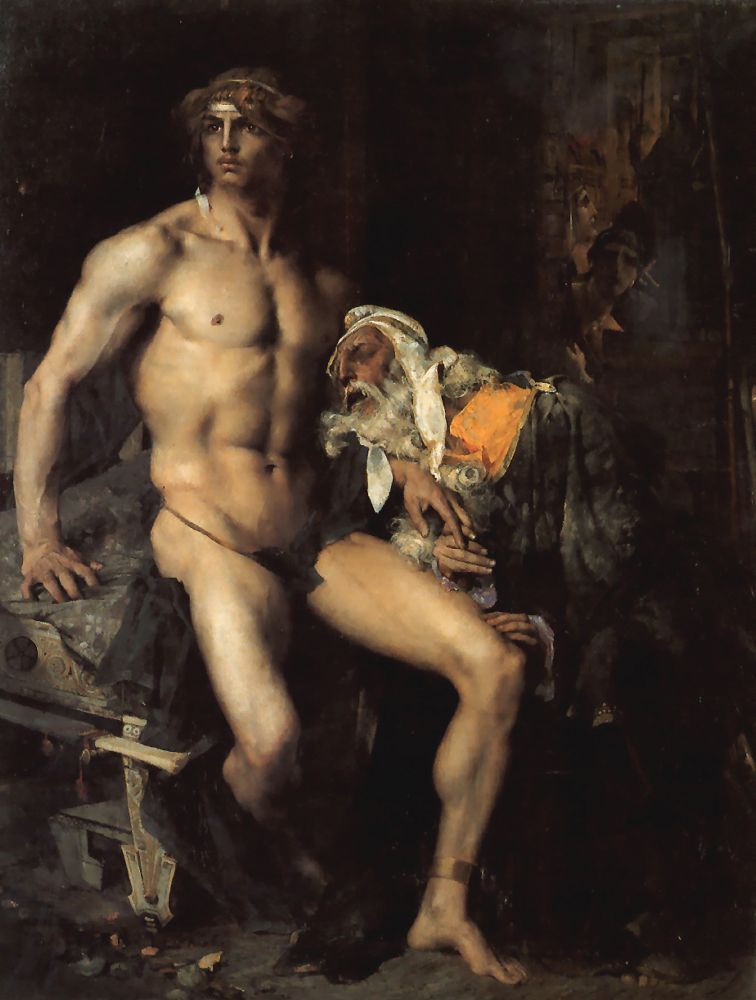
Suzanne Collins has said where Panem came from. The name is Latin for the “bread” in “bread and circuses”, the Roman habit of buying a crowd’s silence with food and spectacle. The Games grew from the gladiator films she watched as a child, she has said, and from the Greek myth of Theseus and the Minotaur, in which a city sends its young to be killed in a maze. Her sources are older than any novel on this list, so the books below are a thematic shelf, not a bibliography: Collins does not credit them, and we are not claiming she does.
Quick pick: Zamyatin’s We in Clarence Brown’s Penguin translation, the 1921 novel that Orwell reviewed in 1946 and the strangest book here. For one famous name, buy Nineteen Eighty-Four in the Signet paperback. For a gift, give the Everyman’s Library hardcover of Orwell or the new slipcase Fahrenheit 451. Zamyatin: We in the Penguin edition. Orwell: Signet Classics.
The Hunger Games: Sunrise on the Reaping opened in theaters on November 20, 2026 (Lionsgate). It is the film of Collins’s own prequel novel about the young Haymitch Abernathy, not an adaptation of any book below. If you came out of it wanting grown-up stories about states that stage cruelty, these six are where we would go.
Six classic dystopias, and the edition to buy


The order matters less than the question each book asks. Collins asks what happens when a state makes its cruelty a show and the audience keeps watching. Zamyatin, Orwell and Huxley each answer a different way: the state that counts everyone, the state that watches everyone, the state that pleases everyone. Bradbury, Jackson, Atwood and Ishiguro answer smaller and more personal ones.
Why translation matters for We
Five of these books were written in English. We was not, and it is the one where your choice of edition changes the book. Zamyatin finished it around 1921 in Russia. Soviet readers could not buy it for decades; the novel did not appear in the USSR until 1988. Several cheap listings of We on Amazon carry Gregory Zilboorg’s older translation rather than a modern one, so look for the translator on the listing before you buy. Our two picks both name theirs.
Zamyatin writes in short bursts, with odd punctuation and a narrator, D-503, who thinks in mathematical figures and then loses his grip on them. A translator has to decide whether to make that voice smooth or let it jar. That is the real difference between the versions below.
The editions, one by one
Yevgeny Zamyatin, We: Clarence Brown’s translation

Brown’s translation is our first pick because the Penguin edition is easy to find and names its translator. We have not set the translations side by side line by line, because we could not check printed wording for each. The Penguin paperback is the one to buy if you want the most widely stocked edition of We in a named translation. It is a worse choice if you want a foreword that frames the book for a modern reader.
Yevgeny Zamyatin, We: Natasha Randall’s translation

Randall’s translation, in the Modern Library Classics paperback, comes with a foreword by the science-fiction writer Bruce Sterling, and listings note that it was shortlisted for the 2008 Oxford-Weidenfeld Translation Prize. It is the newer English version, which suits a reader who wants the book in current idiom. Mirra Ginsburg’s older translation, from Bantam, also circulates in used and reissued copies. If you want the single most recommended modern edition and do not care about the Penguin name, Randall is a sound choice.
George Orwell, Nineteen Eighty-Four: Signet Classics

Published in 1949 and the book every list starts with. Winston Smith’s world has no bread and no circuses, only a telescreen that watches back. The Signet Classics mass-market paperback is the cheapest respectable copy, with an afterword and bibliography. It is a poor choice for a long read or a gift, because the print is small and the paper thin. For a copy with a foreword, the Penguin Modern Classics edition (Pimlott foreword, 2000) is the other standard paperback.
Aldous Huxley, Brave New World: Harper Perennial Modern Classics

Huxley’s 1932 novel is the cold twin of Orwell’s. Where Orwell fears the boot, Huxley fears a population that is kept docile by comfort, drugs and entertainment, which is closer to Collins’s circus than anything in Orwell. Read it second if you read both. The Harper Perennial Modern Classics paperback is the standard copy. It is less gripping than Orwell, so readers who want a plot should start elsewhere.
Ray Bradbury, Fahrenheit 451: Simon & Schuster

Bradbury’s 1953 novel is the shortest and easiest start, a fireman who burns books and starts to read them. The standard Simon & Schuster paperback is the copy to read. It suits a younger or reluctant reader better than any other book here, and it is the least bleak.
Shirley Jackson, The Lottery and Other Stories: FSG Classics

The title story ran in The New Yorker in 1948 and drew a flood of angry letters. It is the closest thing on this list to a reaping: a village gathers, and one person is chosen. The FSG Classics paperback, with an introduction by A. M. Homes, collects the story with twenty-four others, so you also get Jackson’s quieter domestic dread. Buy it if you want one afternoon of unease rather than a novel.
Margaret Atwood, The Handmaid’s Tale: Anchor

Atwood’s 1985 novel is narrated by a woman with almost no power, in a state built on theocratic control of bodies. It is slower and more inward than the Games. The Anchor paperback carries an introduction by Atwood.
Kazuo Ishiguro, Never Let Me Go: Vintage International

Ishiguro’s 2005 novel is the quietest dystopia here and the one with no rebellion at all, which is exactly why readers who finish Collins often find it the most disturbing. The Vintage International paperback is the standard edition. Do not read a plot summary first.
Editions worth owning as gifts
Nineteen Eighty-Four in Everyman’s Library

The Everyman’s Library hardcover is the one to give a reader who already owns a battered paperback. Our guide to the best hardcover classics covers the series.
Fahrenheit 451, Deluxe Slipcase Edition
Simon & Schuster published this hardcover in November 2025, with sprayed edges, a ribbon marker and designed endpapers, per its listing. It is the best-looking gift on the list, and it is a gift, not a copy for the commute.
See the Deluxe Slipcase Edition of Fahrenheit 451
The Handmaid’s Tale: The Graphic Novel

Renée Nault’s illustrated hardcover (Nan A. Talese, 2019, 240 pages) adapts the novel in pictures, with Atwood’s text. It suits a visual reader or a teenager new to the book.
Listen to it
- Nineteen Eighty-Four, read by Simon Prebble, 11 hours 22 minutes. Listen on Audible.
New to Audible? Start with the Audible offer and use the first credit on one of these.
Common questions
Is We a good place to start?
It is short and strange, and readers who like Orwell tend to find it fresh. Start with Orwell or Bradbury if you want a straighter read.
Did Suzanne Collins say these books inspired her?
No. The sources she has named are Roman gladiator games, the Theseus myth and the experience of switching between reality television and war coverage. The books here are a thematic shelf.
Which one is darkest?
Never Let Me Go, for most readers, because nothing in it ever turns into a fight.