
The scene that opens The Count of Monte Cristo is not the imprisonment. It is the arrival. Edmond Dantès, nineteen years old, sails the Pharaon into Marseilles harbor with a dead captain’s commission in his pocket and the assumption that his life is beginning. Dumas gives him two chapters of happiness — the promotion, the proud father, the fiancée — before the trap closes. That pacing is deliberate. You need to know exactly what is being taken before you can understand what the man will become.
The betrayal is triple and precise. Fernand wants Mercedes. Danglars wants the captaincy. Villefort, the king’s prosecutor, reads a letter that implicates his own father in treason and makes a private calculation: one innocent man against his career. He burns the evidence, signs the order, and goes home to dinner. Edmond goes to the Château d’If, a sea-prison off the Marseilles coast where political inconveniences were stored until they became inconvenient to remember. He will be there for fourteen years.
This is the foundational transaction of the novel: Dumas takes everything from his protagonist in the first hundred pages so that the next thousand can ask a single question. Not will he escape — that answer comes soon enough. But what does a man have to become in order to make this right? The answer Dumas arrives at is the book’s most disturbing thesis: perfect revenge requires perfect emptiness. The Count of Monte Cristo works as an instrument of justice only because Edmond Dantès no longer exists. The transformation is the book.
The Man Who Needed a Monster
Alexandre Dumas published The Count of Monte Cristo in serial installments in 1844, in the Journal des Débats, and he wrote it the way he wrote everything — at a velocity that alarmed his contemporaries. His collaborator Auguste Maquet later claimed primary credit for the plotting, and the dispute dragged through French literary gossip for decades. What the argument obscures is that the energy in the prose is distinctly Dumas’s: hot, theatrical, propulsive, with the bones of melodrama carrying the weight of genuine moral inquiry.
Dumas was the illegitimate grandson of a Haitian woman and a French marquis, raised in rural poverty after his father — a Napoleonic general sidelined by Bonaparte’s racial politics — died when Dumas was four. He taught himself to read from his father’s military dispatches, forged a path into Parisian theater through charm and an almost supernatural capacity for work, and spent his entire adult life performing competence in rooms that assumed he didn’t belong there. By the 1840s he was the most widely read novelist in Europe and still fighting for the standing that his talent had demonstrably earned. He knew, at a cellular level, what it cost to construct a persona from nothing.
That knowledge is structural in Monte Cristo. When the Count finally emerges in these early chapters — first as rumor, then as presence — he is the most elaborately performed identity in nineteenth-century fiction. The accent calibrated to the room. The backstory modulated for each listener. The wealth deployed not for pleasure but for leverage. Edmond does not simply find treasure on the island of Monte Cristo. He finds the raw material for becoming whoever the situation requires. What Dumas understood from his own life was that identity is not discovered — it is manufactured, maintained, and deployed with precision. The Count is Dumas’s revenge fantasy in the most literal sense: a man who turns the aristocracy’s own rules into the mechanism of its undoing.
The fourteen years in the Château d’If are not incidental to this. They are the workshop. Abbé Faria, the other prisoner Edmond discovers tunneling through the wrong wall, is one of literature’s great mentors — not because he is warm, but because he is useful. He teaches Edmond languages, chemistry, history, economics, swordsmanship, and how to think like the men who destroyed him. When Faria dies, Edmond takes his place in the burial sack, is thrown from the prison walls into the sea, cuts himself free with a concealed knife, and swims toward an identity he has spent fourteen years constructing. Edmond Dantès drowns in that water. The Count of Monte Cristo surfaces. Dumas’s genius is that he makes this feel like a victory and a bereavement simultaneously.
A Machine Built Before It Fires
What Volume 1 does — and what readers who only know the abridged versions miss entirely — is architecture. These opening chapters are not prologue. They are mechanism. Every character introduced, every social obligation established, every apparent coincidence: Dumas is assembling the instrument that the rest of the novel will operate. He is showing you the parts before he shows you what they do. That is a different kind of suspense than the modern thriller’s accelerating stakes. It is the suspense of watching someone build a clock while you wait to hear it strike.
The pacing earns attention. When Villefort reads the compromising letter and decides to destroy Edmond, Dumas does not cut away. He follows Villefort home and describes the dinner party. The horror is not in the act but in what surrounds it: the wine, the conversation, the social machinery that continues turning without friction. These are not theatrical villains. They are people for whom Edmond’s destruction was a Tuesday afternoon, a problem solved between one obligation and the next. Dumas understood that this kind of cruelty — administrative, convenient, self-justifying — is the kind hardest to answer, because it requires no malice to sustain it.
That understanding is what makes the Count’s eventual revenge so precisely calibrated. He is not planning to kill these people. He is going to arrange for them to destroy each other using their own appetites as the mechanism. The Count studies his enemies the way a watchmaker studies a broken clock: with the cold interest of someone who wants to understand every gear before deciding which one to remove. In one early scene, the Count visits the household of an adversary under a thin pretext, listens, asks questions that sound like small talk, and leaves. He has not threatened anyone. He has not revealed anything. And yet the reader feels, with absolute certainty, that something irrevocable just occurred. That is Dumas working at the height of his technique: you feel the shape of the trap before anyone in the scene knows they are standing in one.
The emotional register Dumas is reaching for is not satisfaction — or not satisfaction only. It is something more uncomfortable: the recognition that becoming capable of perfect revenge requires surrendering the things that made you worth avenging. Edmond Dantès wanted to captain ships and marry Mercedes and take his father to Sunday dinners. The Count of Monte Cristo wants none of this. He wants the mechanism to complete its operation. He has become, in the most precise sense, an instrument. Whether an instrument can also be a man is the question Dumas leaves open at the end of Volume 1, humming like a tuning fork against the silence.
The Translation Landscape
Dumas wrote in idiomatic nineteenth-century French with a theatrical sensibility — characters speak in register, not in naturalism — and that idiom has been a recurring problem for English translators. The novel’s dialogue requires a voice that can hold formal weight without tipping into stiffness, and its narration moves at a speed that punishes prose that pauses to admire itself.
The Robin Buss translation for Penguin Classics (1996) remains the most frequently recommended modern version, and with reason: Buss is unabridged, fluid, and careful about the difference between Dumas’s dramatic declamations and his lighter social comedy. Where Buss occasionally loses ground is in the novel’s most formal registers — the aristocratic drawing-room scenes where period manners demand a slightly stiffer English than his modern prose wants to deliver. The result reads cleanly throughout but can feel tonally flat in precisely the moments that need weight. The Penguin edition also runs to well over a thousand pages in a single volume, which affects how you read: the physical heft works against the propulsive quality that makes Dumas worth reading.
The Victorian-era anonymous translations that circulated through most of the twentieth century — and remain freely available through Project Gutenberg — have the opposite problem. They capture the formal texture but slow down everything else. Dumas’s prose moves the way a good story moves: without calling attention to its own movement. The Victorian translators, working from a different instinct about what serious prose should sound like, sometimes make the Count feel like a committee deliberating in Latinate sentences. Readable as period artifacts; not the right ground for a first encounter with the novel.
David Coward’s translation for Oxford World’s Classics splits the novel across two volumes and provides strong critical apparatus — useful if you want the scholarly frame, less useful if you want the experience Dumas designed, which is forward motion sustained across enormous distance. Coward is reliable and accurate; the footnotes are excellent; the prose does not always trust itself to move without support.
This translation — the edition linked below of Volume 1 — makes a different set of choices. The prose aims for speed without sacrificing register. Theatrical set-pieces retain their deliberateness. What distinguishes it most clearly is the handling of Edmond’s interiority during the Château d’If sequences: the gradual shift from grief to numbness to something harder and more purposeful reads as a genuine arc rather than a time-lapse. Where some translations flatten this passage into summary, this edition treats it as the novel’s emotional center — which it is. The man who emerges from that prison is not the man who entered it, and the translation makes you feel the distance between those two people.
Why This Translation?
The edition you choose for The Count of Monte Cristo shapes the experience in ways that are not obvious until you are fifty pages in and notice whether the prose is carrying you or slowing you down. This is a thousand-page novel at full length. The translation is the ground you walk on for every step of it. A version that works academically but reads with friction will eventually exhaust you before the mechanism has time to fully assemble. A version that reads fast but blurs the formal distinctions loses the contrast that makes the Count’s performances legible as performances.
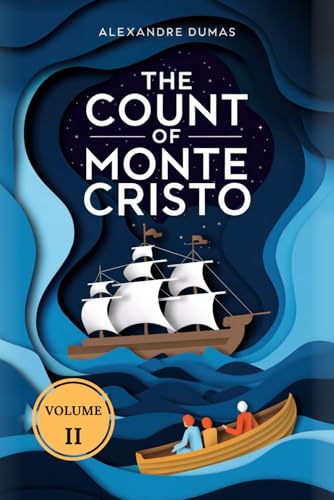
the edition linked below of Volume 1 is available in paperback — the link below goes directly to it. For the reader approaching Dumas for the first time, or returning to him after years with an abridged text, this is the place to start. The trap Dumas builds in Volume 1 only springs in Volume 2, but a trap you don’t feel being set is a trap that can’t surprise you. Dumas’s great achievement is that you feel every gear click into place and still cannot look away when the mechanism fires.
Get the paperback edition of The Count of Monte Cristo, Volume 1 on Amazon.
Frequently Asked Questions
What kind of reader should start with Perfect Revenge Requires Perfect Emptiness?
Readers interested in Alexandre Dumas and strong literary stakes will find Perfect Revenge Requires Perfect Emptiness a good entry point because it combines narrative momentum with a clear thematic payoff.
Is Perfect Revenge Requires Perfect Emptiness difficult to read today?
Not especially. The challenge is usually tone and context, not plot. A modern translation helps the book feel immediate without flattening its historical texture.
Why choose this translation of Perfect Revenge Requires Perfect Emptiness?
The best reason is clarity without loss of character. A strong translation preserves the author’s pressure, rhythm, and emotional temperature while removing needless stiffness.
What should readers notice most in Perfect Revenge Requires Perfect Emptiness?
Pay attention to how the book builds its tension through scene, voice, and moral pressure rather than summary. That is usually where the work still feels most alive.






Leave a Reply