Tag: best translations

  • Chichikov Is Russia’s Greatest Con Man

    Chichikov Is Russia’s Greatest Con Man

    Looking for the best Russian literature translations to start with? This guide sorts the strongest modern editions by readability, style, and first-time-reader value — so you can pick the right Dostoevsky, Tolstoy, and Gogol before you waste time on the wrong version.

    Find Your Best Dostoevsky Translation

    Use this guide to compare readability, fidelity, and modern flow before choosing an edition.

    Russian literature has the best novels ever written, the worst reputation for accessibility, and the most confusing translation landscape of any tradition in world fiction. The reputation is partly a product of the novels themselves — they are long, they carry many characters with multiple names each, and they assume a reader willing to sit with ambiguity for six hundred pages — and partly a product of bad pedagogy. Most English readers who gave up on Tolstoy or Dostoevsky gave up on a bad translation, which is a different problem entirely.

    What makes Russian literature distinctive — what separates it from the French novel’s irony, the English novel’s social comedy, the American novel’s restless self-invention — is its insistence on moral seriousness as the primary business of fiction. Russian novelists did not write to entertain, though the best of them entertain enormously. They wrote because they believed that fiction was the place where the largest questions actually got answered: whether goodness is possible, whether suffering has meaning, whether a human being can be held responsible for what history made them. They refused to let the reader off the hook. You cannot finish The Brothers Karamazov or Anna Karenina or Dead Souls with the comfortable sense that the book has resolved something on your behalf. The books insist that you resolve it yourself, and they are constructed precisely to make that resolution difficult.

    These reading guides exist to address both problems: the translation question, which is specific and answerable, and the larger question of how to read these books in a way that makes their ambitions legible. The Russian novel is not difficult because it is obscure. It is demanding because it is serious, and seriousness requires a different kind of attention than most contemporary fiction asks for.

    Classics Retold’s role here is curatorial, not scholarly. What we do is read the available translations, identify which ones recover the moral urgency of the original and which ones domesticate it into something more comfortable and less true, and then make a clear recommendation so that you can spend your reading time with the book rather than researching its publishing history. A translation that smooths Dostoevsky’s jagged, repetitive, almost feverish prose into elegant English sentences has not improved the novel. It has replaced it with a different novel — one that is easier to read and less worth reading. The translations we recommend are the ones that understood this, and our guides explain specifically what they got right and why it matters.

    Where to Start

    Start with Crime and Punishment. Not because it is the greatest of Dostoevsky’s novels — it isn’t; that distinction belongs to The Brothers Karamazov — but because it is the most immediately propulsive. The premise is stated in the title: a murder happens, and then the novel examines, with extraordinary psychological precision, what that act does to the person who committed it. It reads like a thriller written by someone interested in the soul. From there, The Brothers Karamazov — slower to start, immeasurably larger in ambition. Tolstoy’s Resurrection is the entry point for readers who want to start with the moral dimension of Russian fiction before committing to the full scale of War and Peace.

    Gogol and the Comic Tradition

    Before Dostoevsky, before Tolstoy, before any of the great moral machinery of the Russian novel got assembled, there was Nikolai Gogol — and Gogol was funny. Genuinely, disruptively, uncomfortably funny, in a way that the later Russian tradition would absorb but never quite replicate. Dostoevsky said that all Russian literature came out of Gogol’s overcoat, referring to the short story The Overcoat, in which a copying clerk’s entire identity becomes invested in a new coat, and then the coat is stolen, and then the clerk dies, and then his ghost haunts the city stealing coats from officials. It is simultaneously a tragedy and a farce, and it is impossible to say at any point which one is primary.

    Dead Souls is the novel that extends this sensibility across an entire society. The premise is a marvel of comic invention: a minor official named Chichikov travels the Russian provinces purchasing the names of dead serfs — serfs who are legally still alive on paper because the census hasn’t yet caught up with their deaths — in order to use them as collateral for loans. Every landowner he visits is rendered in exquisite satirical detail, each one a different variety of provincial stupidity, greed, and self-delusion. The novel is the funniest sustained piece of writing in nineteenth-century Russian literature, and its portrait of provincial stagnation, of a society operating entirely on bureaucratic fictions, anticipates everything Chekhov would do fifty years later. Gogol planned it as the first part of a trilogy — a kind of Russian Divine Comedy, with Chichikov eventually ascending from corruption to redemption. He completed the second part, became convinced it was spiritually dangerous, burned it, and died shortly afterward. What survives is the fragment he didn’t burn: one complete part and the charred edges of an ambition too large to finish.

    The Government Inspector is Gogol at his most purely comic — a play rather than a novel, and the most economical demonstration of his genius. A traveling nonentity named Khlestakov arrives in a provincial town and is mistaken by the local officials for a government inspector traveling incognito. Rather than correct the error, he allows them to bribe him, flatter him, and compete for his approval, until he has extracted everything the town has to offer and departed, leaving behind a community that has revealed, in its desperate performance of rectitude, every corruption it was trying to conceal. Chekhov called it the perfect Russian play, which is not a small thing for Chekhov to have said.
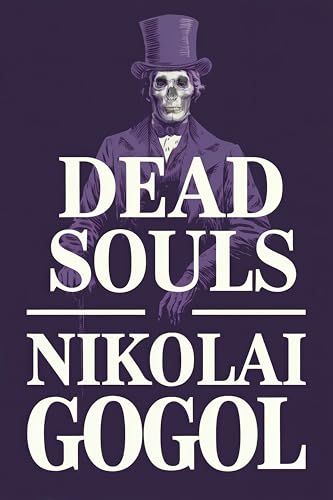
    Gogol
    Dead Souls (The Adventures Of Chichikov): A New Translation

    Turgenev — The Bridge

    Ivan Turgenev is the most elegant of the Russian novelists and the most European — he spent most of his adult life in Paris and Baden-Baden, writing about Russia from the outside with the lucidity that distance sometimes provides and sometimes falsifies. His novels are short by Russian standards, beautifully structured, and emotionally precise in a way that Dostoevsky’s aren’t and doesn’t need to be. For readers who find Dostoevsky’s intensity too much and Tolstoy’s scale too daunting, Turgenev is the correct entry point — the Russian novelist who will not overwhelm you, who will instead give you a clear and beautiful object to hold while you orient yourself to the larger tradition.

    Fathers and Sons, published in 1862, introduced the word “nihilism” to the European political vocabulary, and it did so through a character — Bazarov, the young doctor who believes in nothing — who is drawn with far more complexity than the word has ever deserved. Turgenev neither celebrates Bazarov nor condemns him. He watches him with the same patient, slightly melancholy attention he brings to everything, and he allows Bazarov’s contradictions — his contempt for sentiment and his susceptibility to it, his rejection of beauty and his helplessness before it — to accumulate until they become something that feels not like a political argument but like a human life. The novel enraged both the radicals, who thought Turgenev was mocking them, and the conservatives, who thought he was celebrating them. He was doing neither. He was writing a novel.

    Dostoevsky — The Novelist Who Broke the Form

    Dostoevsky wrote under financial pressure for most of his life, gambling his advances away and writing against deadlines that would have destroyed a less obsessive writer. The conditions produced a body of work that is formally unlike anything in any other tradition — novels that feel simultaneously overloaded and inevitable, that pile character upon character and idea upon idea until the structure seems about to collapse, and then hold.

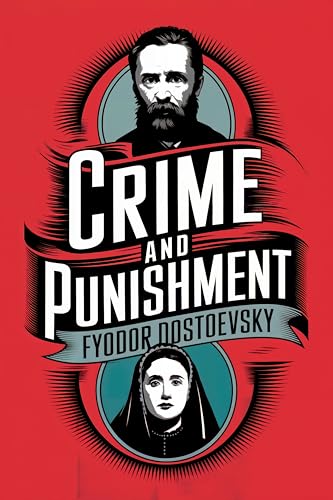
    Crime and Punishment is the argument that ideas have consequences — that a theory about human exceptionalism, followed to its logical conclusion, produces a specific kind of moral catastrophe. Raskolnikov is wrong, but his wrongness is intelligible, and Dostoevsky never lets you feel superior to him. Our guide examines why this remains the most disturbing novel about intellectual pride ever written. The scene that makes this clearest is not the murder itself but what comes after: Raskolnikov returning to the scene, ringing the bell of the apartment, standing in the dark stairwell for no reason he can articulate. Dostoevsky understood, before psychology had the vocabulary to describe it, that guilt does not announce itself as guilt. It announces itself as compulsion — as a need to go back, to touch the wound, to stand again in the place where everything changed.

    The Brothers Karamazov is the larger argument — about faith and doubt, about fathers and sons, about whether goodness is possible in a world that contains the suffering of children. The novel contains the Grand Inquisitor chapter, which is one of the most concentrated pieces of philosophical writing in any language, embedded inside a family drama that works completely on its own terms. Our second guide to the novel, on Alyosha’s radicalism, addresses the character most often misread as simply passive or saintly. The historical detail that sharpens the novel’s central argument is worth knowing: Dostoevsky wrote it in the immediate aftermath of a series of real child-abuse cases that had been reported in Russian newspapers, cases he followed obsessively. Ivan’s challenge to Alyosha — his catalogue of the suffering of children as the unanswerable argument against a benevolent God — was not a philosophical exercise. It was assembled from the public record, and Dostoevsky knew that his readers would recognize the cases. The philosophical chapter is built on a foundation of specific, documented horror.

    Dostoevsky’s The Idiot is his most personal novel — the story of a man of genuine goodness placed inside a society that has no place for him. Prince Myshkin is not simple. He is Dostoevsky’s attempt to write a truly good man, and the novel is his honest account of what happens to such a man in the real world. Dostoevsky himself suffered from epilepsy, and he gave the condition to Myshkin — including, with painful precision, the moments of extraordinary clarity that precede a seizure, the sense of everything suddenly becoming luminous and connected, followed immediately by collapse. The novel asks whether those moments of perception are more real than ordinary consciousness or less. It does not answer the question. It is not that kind of novel.

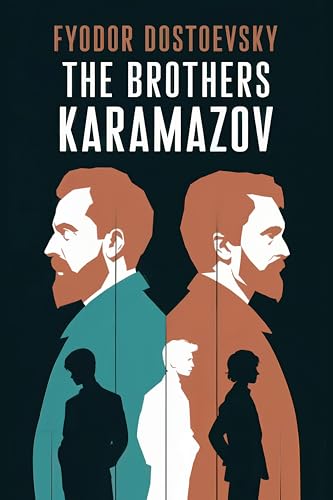
    Dostoevsky
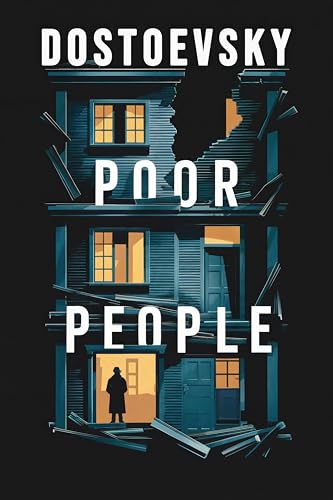
    The Idiot: A New TranslationThe Brothers Karamazov: A New TranslationCrime and Punishment: A New TranslationMemoirs from the House of the Dead : A New TranslationHumiliated And Insulted: A New TranslationPoor People: A New Translation

    Tolstoy — The Moralist Who Couldn’t Stop Writing

    Tolstoy lived to eighty-two and spent the last thirty years of his life trying to give away his money, renounce his property, and live as a peasant — while continuing to write, unable to stop, producing moral treatises and stories and the complete rewriting of his earlier novels in light of his religious conversion. The conversion didn’t make him a better novelist. It made him a more interesting one.

    Resurrection, published in 1899, is the post-conversion Tolstoy working at full power — a novel about a man who ruined a woman’s life and spends the book attempting, inadequately, to repair it. It is leaner than Anna Karenina, angrier than War and Peace, and more immediately readable than either. Our guide addresses why it is so consistently underrated in English, and what the best translations do with Tolstoy’s late prose style, which is deliberately plain in a way that bad translations flatten into nothing. The scene that announces what kind of novel this is comes early: Nekhlyudov, the protagonist, sits on a jury and recognizes the woman in the dock as Katyusha, whom he seduced and abandoned years before. The recognition is rendered without melodrama — Tolstoy gives you Nekhlyudov’s internal evasions, the small adjustments of self-perception by which a man avoids confronting what he has done, with a clinical precision that is more devastating than any authorial condemnation would have been. Tolstoy does not need to tell you Nekhlyudov is wrong. He shows you exactly how Nekhlyudov tells himself he isn’t.

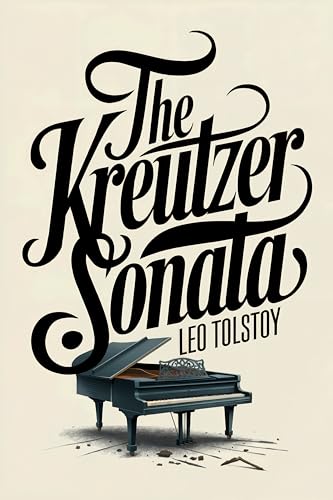
    Tolstoy
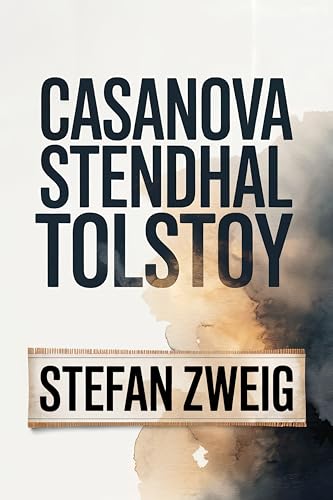
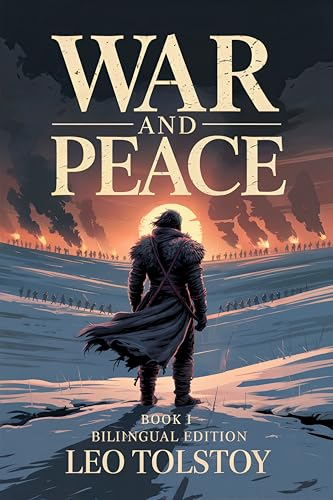
    Anna Karenina: Book I: A New TranslationThe Kreutzer Sonata: A New TranslationWar and Peace: Volume 1: A New TranslationCasanova, Stendhal, Tolstoy (Adepts in Self-Portraiture): A New TranslationWar and Peace - Part One: 1805, Dawn of War: A New Bilingual TranslationResurrection: 2025 Translation

    Chekhov and the Short Story

    Anton Chekhov did not simply write shorter fiction. He invented a different kind of fiction — one that ends not with a resolution but with a shift in understanding, sometimes so subtle that you finish the story and only realize ten minutes later that everything has changed. The Lady with the Dog, The Bishop, Ward No. 6: each of these is a complete world in under twenty pages, with the density of compression that only becomes possible when a writer has decided to trust the reader entirely and explain nothing. Chekhov’s great technical discovery was that the significant moment in a story is almost never the moment of apparent crisis. It is the moment just before or just after, when a character glimpses something true about themselves and then, immediately, looks away.

    His plays — The Cherry Orchard, Three Sisters, Uncle Vanya — operate on the same principle at greater length. Nothing happens. Everything changes. Characters talk past each other for three acts while their lives quietly collapse around them, and the comedy and the tragedy are so thoroughly interwoven that Chekhov, famously, insisted his plays were comedies while his directors, including Stanislavski, kept staging them as elegies. They were both right, which is what makes the plays inexhaustible. A production that plays the grief straight and a production that plays the absurdity straight will both find everything they need in the text, and both will miss half of it.

    Chekhov was a practicing physician his entire writing life, maintaining a rural medical practice while producing the stories and plays that would reshape world literature. The clinical precision of his fiction — the refusal to editorialize, the exact observation of what people actually do rather than what they say they do, the attention to physical detail as a carrier of psychological information — comes directly from that training. He had spent years watching people in extremity, noting the gap between how they described their condition and what their condition actually was. He brought exactly that observational discipline to the page. When a Chekhov character says they are fine, you know precisely how to read the two actions that follow the statement.

    Translation Wars — Which Version to Read

    The translation question in Russian literature is more consequential than in any other tradition, because the stakes are higher. A bad Flaubert translation produces a duller novel. A bad Dostoevsky translation produces a different novel — one with melodramatic characters who speak in exclamation points, where the original has characters who speak in the rhythms of actual human desperation.

    The Constance Garnett translations, which introduced Russian literature to English readers in the early twentieth century, are now known to contain systematic errors — compression, smoothing, occasional outright invention. They are not the translations to read. For Dostoevsky, the Pevear and Volokhonsky translations restored the original’s roughness and repetition, which Garnett had polished away. For Tolstoy, the question is more contested — Pevear and Volokhonsky’s War and Peace has been criticized for preserving French phrases that Tolstoy’s original audience would have understood, but that contemporary English readers find disruptive. Aylmer Maude’s Tolstoy translations, made with the author’s approval, remain a strong alternative. Each of our guides addresses the specific translation question for the book in question. The concrete difference between a good and a bad translation is most visible in dialogue: Garnett’s Raskolnikov tends toward theatrical declaration, while the translation we recommend gives him the halting, circular, self-interrupting speech of a man whose mind is running faster than his ability to organize it — which is exactly what Dostoevsky wrote, and exactly what the character requires.

    Reading Order

    The instinct to read Russian literature chronologically — start with Pushkin, work forward to Chekhov — is understandable and usually counterproductive. The better approach is to start with the novel that interests you most and follow the connections from there. Crime and Punishment leads naturally to The Brothers Karamazov; The Brothers Karamazov leads to The Idiot, which is earlier but assumes a reader who already understands what Dostoevsky is doing. Tolstoy is a separate tradition within the same tradition — his moral seriousness is related to Dostoevsky’s but arrives at different conclusions by a different route. Read them in whatever order sustains your momentum. The novels will connect themselves.

    Frequently Asked Questions

    What is the best Russian novel to read first?

    Crime and Punishment is the right starting point for most readers. It is the most immediately gripping of the major Russian novels — propulsive in the way a thriller is propulsive, but with a psychological and moral depth that thriller writing almost never achieves. It is also self-contained in a way that The Brothers Karamazov isn’t, which makes it a forgiving entry point: you don’t need to know anything about the Russian tradition to be gripped by Raskolnikov’s deterioration, and by the time you finish you will understand what the tradition is for.

    Which translation of Dostoevsky should I read?

    For most readers, the Pevear and Volokhonsky translations are the edition featured here and the right choice. Their crucial contribution was restoring the roughness and repetition of Dostoevsky’s prose — the qualities that Garnett smoothed away in the belief that she was improving the text. This matters because Dostoevsky’s style is not incidental to his meaning: the lurching, self-interrupting, compulsive quality of his sentences is how he renders a particular kind of consciousness, and a translation that tidies this up has rendered a different consciousness entirely.

    Do I need to know Russian history to understand Russian literature?

    No, but a handful of landmarks will make the novels more legible. The institution of serfdom — abolished in 1861, within living memory for every writer discussed here — shapes the moral landscape of virtually all nineteenth-century Russian fiction. The autocratic power of the Tsar, the persistent revolutionary movements that operated in response to it, and the specific tension between Westernizing reformers and Slavophile traditionalists form the political backdrop. You don’t need to study any of this before reading; the novels themselves will teach you what you need to know, and our guides supply historical context at the points where it becomes directly relevant to what is happening on the page.

    How do I keep track of Russian characters and their names?

    The convention that bewilders most first-time readers is the Russian practice of addressing people by different names depending on context and intimacy: a character may be called by his first name, his patronymic, a diminutive, a nickname, and a surname in the same novel, sometimes in the same chapter. The practical solution is to keep a simple list — most good editions include a character guide at the front, and the translation we recommend for each book will tell you whether one is provided. The deeper reassurance is that the confusion diminishes quickly: after fifty pages with Raskolnikov, Rodya, Rodion Romanovich, and Rodion Raskolnikov, your brain resolves them into a single person without effort, because Dostoevsky’s characterization is strong enough that the person is unmistakable regardless of which name is being used.

    This post contains affiliate links. As an Amazon Associate, we earn from qualifying purchases.

    Recommended Edition
    Dead Souls (The Adventures Of Chichikov) — Nikolai Gogol
    Modern English translation

    Kindle →Paperback →

  • Valera Predicted Every Academic’s Fatal Weakness

    Valera Predicted Every Academic’s Fatal Weakness

    Looking for the best Stefan Zweig translation in English? This guide compares readability, emotional precision, and modern accessibility so you can start with the edition that captures his full voice before the world ended.

    Find Your Best Zweig Translation

    Use this guide to compare editions before you choose your next read.

    The reputation of German-language literature precedes it badly. Dense. Philosophical. Difficult. The kind of reading that requires a degree you don’t have and a patience you haven’t cultivated. That reputation is partly earned — there is a tradition of German prose that is genuinely demanding — and mostly misleading. Kafka is not difficult. Zweig is not difficult. Nietzsche wrote aphorisms designed to be read in a single sitting and felt in the gut. The difficulty, where it exists, is the difficulty of any serious literature: it asks you to think while you read.

    German-language literature in this context means what it has always meant to those who study it seriously: literature written in German, regardless of nationality. Kafka was Czech. Zweig was Austrian. Nietzsche was German but spent most of his productive years in Italian boarding houses and Swiss mountains, writing in deliberate exile from the culture that had formed him. The language is the tradition; the borders are secondary.

    Translation matters more with German than with almost any other European language, and the reason is structural. German syntax is architecturally inverted: the verb arrives at the end of the clause, sometimes at the end of a very long clause, and the reader must hold the entire construction in suspension before the meaning resolves. A sentence that begins with a subject, accumulates qualifications, piles on subordinate clauses, and finally delivers its verb at the last possible moment creates a particular kind of suspense — intellectual, syntactical, almost physical. A bad translation flattens this into English word order and loses that suspense entirely. What was a carefully engineered delay becomes a simple declaration. The sentence still means the same thing, technically. But it no longer does the same thing to the reader. This is why two translations of the same Kafka novel can feel like two entirely different books.

    The role of a reading guide in this context is not to translate but to curate — to identify the editions that preserve what the original was doing, that make responsible choices about the impossible trade-offs between fidelity and readability, and that carry the reader as close as possible to the experience of reading the German. The translations featured here have been selected on exactly those grounds. Where a newer translation corrects the distortions of an older one, that is noted. Where the translation question is genuinely contested — as it is with Kafka, where scholars still disagree — the reasoning behind the recommended edition is explained. The goal is to get you to the right book by the right route.

    Where to Start

    Start with Zweig. Not because he is the greatest — he would himself resist that claim — but because he is the most immediately available. The World of Yesterday is the place to begin: a memoir of a civilization in the process of destroying itself, written by a man who understood what he was watching. From Zweig, move to Kafka, whose work is short enough to read in a weekend and strange enough to occupy a lifetime. Nietzsche is for when you want to understand the philosophical atmosphere that produced both of them.

    Goethe and the Classical Tradition

    Before Kafka, before Nietzsche, before the catastrophes that defined the German twentieth century, there was Goethe — and Goethe is where German literary ambition was first fully articulated. Johann Wolfgang von Goethe spent sixty years writing Faust, a work in two parts that remains the founding document of German literary aspiration. The premise is familiar: a man sells his soul to the devil. What makes Goethe’s version different, and what makes it the central myth of the German tradition, is what Faust wants in exchange. Not pleasure. Not power. Not wealth. Knowledge. Faust wants to understand everything, and when he realizes he cannot, he makes his bargain. Part I of Faust is approachable and genuinely dramatic — the compact with Mephistopheles, the seduction and destruction of Gretchen, the scenes that have entered the culture so thoroughly that most readers recognize them without having read the source. Part II is a different matter entirely: an allegorical journey through classical mythology, medieval empire, and aesthetic philosophy that is one of the most demanding works in any language and one of the most rewarding for those who persist. The gap between the two parts is not merely a matter of difficulty. It is a gap between a young man’s energy and an old man’s wisdom, between drama and vision.

    The Sorrows of Young Werther, published in 1774, is Goethe at his most immediate and, historically, his most dangerous. The novel invented a type — the hypersensitive young man overwhelmed by feeling, unable to fit himself into a world of practical compromises, in love with a woman he cannot have. Werther shoots himself at the end. What Goethe cannot have anticipated, though perhaps should have, was the response: a wave of copycat suicides across Europe, young men dressed in Werther’s costume — blue coat, yellow waistcoat — found dead with the novel open beside them. It was the first literary contagion, and it established something that would define the German Romantic tradition: the idea that literature was not merely about life but capable of acting on it, for better or catastrophically for worse.

    Friedrich Schiller was the other half of what literary historians call the Weimar Classical period — Goethe and Schiller working in the same small city in the 1790s and early 1800s, in correspondence and competition, defining what German literature was supposed to be. Where Goethe was synthetic and comprehensive, Schiller was urgent and political. His plays — The Robbers, Mary Stuart, William Tell — were the democratic conscience of German literature, written while the aristocracy still ran everything and while the French Revolution was demonstrating, at enormous cost, what happened when the people ran out of patience. Schiller believed in freedom as a philosophical principle and dramatized it in historical settings because the present was too dangerous. The plays remain stageable and urgent. Mary Stuart in particular — two queens, one prisoner, one throne — is as tightly constructed a political drama as anything in the European repertoire.

    Goethe & The Classical Tradition
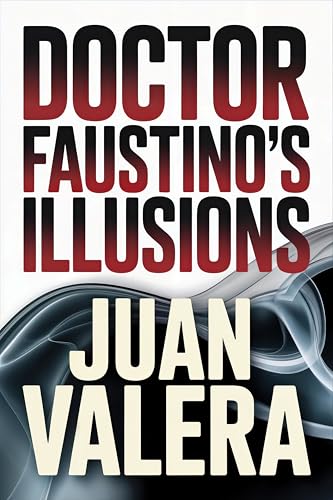
    Doctor Faustino's Illusions: Modern English Translation

    Nietzsche — The Philosopher Who Wrote Like a Novelist

    Nietzsche is almost always read wrong in English — either as a proto-fascist whose work was corrupted by his sister, or as a self-help writer whose aphorisms can be extracted and applied to productivity. Both readings miss the point by a wide margin. Nietzsche was a philologist who became a philosopher because he found philosophy too timid, and his work is best understood as a sustained attack on the complacency of European culture in the second half of the nineteenth century.

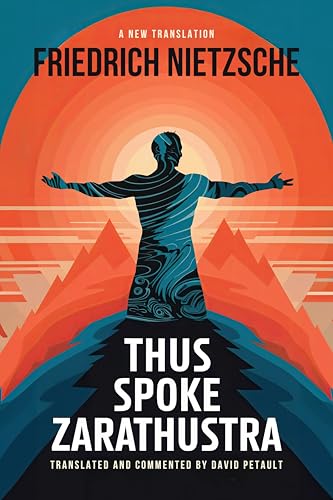
    Thus Spoke Zarathustra is the most ambitious of his books and the strangest — a philosophical poem in the form of a prophet’s wanderings, deliberately written to resist summary. Our guide to Nietzsche’s best books addresses the reading order question, which matters more with Nietzsche than with almost any other writer: start in the wrong place and the whole project looks unhinged. Start in the right place and it looks like the most lucid critique of modernity anyone has written.

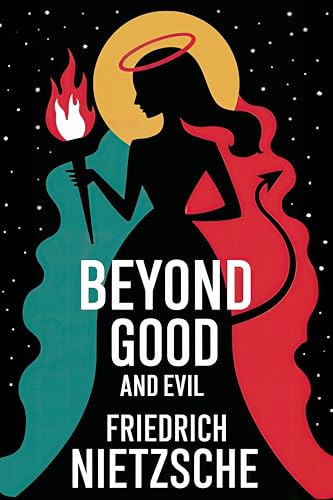
    The right place is not Zarathustra. Before that book becomes legible, Nietzsche needs to be read in his aphoristic mode — The Gay Science, where the declaration that God is dead first appears, not as a triumphant announcement but as a terrifying diagnosis; or Beyond Good and Evil, where the critique of morality is made with surgical precision rather than prophetic heat. The aphorisms are short, often brilliant, sometimes maddening, and they establish the vocabulary and the concerns that Zarathustra then dramatizes. Read in this order, the famous passage in The Gay Science — the madman running through the marketplace with a lantern at midday, crying that we have killed God and asking whether we understand what we have done — lands with the force Nietzsche intended: not as atheist celebration but as existential reckoning. We have destroyed the foundation of our values, he is saying, and we have not yet begun to understand what that means.

    Nietzsche
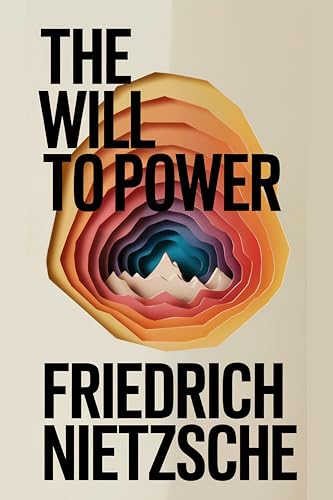
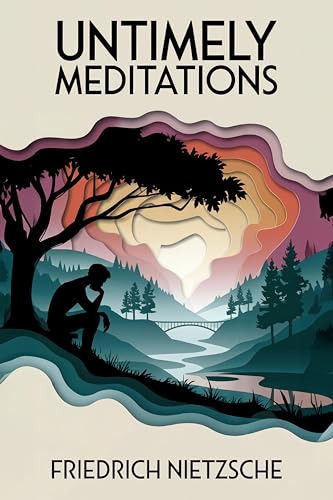
    Thus Spoke Zarathustra: A New Translation in Modern Accessible EnglishThe Gay Science: A New TranslationThe Will to Power: A New TranslationThe Birth of Tragedy: A New TranslationBeyond Good and Evil : A New TranslationUntimely Meditations: A New Translation

    Kafka — The Writer Who Named a Century

    Franz Kafka published almost nothing in his lifetime and instructed his friend Max Brod to burn the manuscripts after his death. Brod did not comply. The three unfinished novels and the complete stories that survived constitute one of the strangest and most influential bodies of work in any language — work so distinctive that it generated its own adjective, a word that now describes experiences Kafka himself would have recognized instantly.

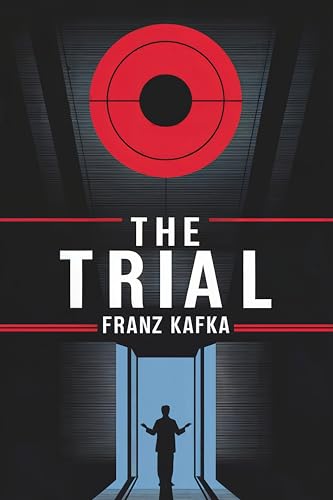
    The Trial is the place to start: Josef K., arrested without charge and prosecuted without ever learning the nature of his crime, navigating a legal system that operates according to its own opaque logic. The novel was written in 1914 and 1915, before the century gave it its full resonance. The opening sentence — “Someone must have made a false accusation against Josef K., for he was arrested one morning without having done anything wrong” — is one of the most precisely engineered first sentences in European literature. The passive construction is not an accident: the accusation arrives from nowhere, made by no one identifiable, and the grammatical structure enacts the very condition it describes. Everything that follows is an attempt to find the subject of that sentence, the someone who accused him. The attempt fails. The system is not corrupt in any simple sense; it simply operates according to logic that the accused cannot access, and the horror is that this is presented as entirely normal.

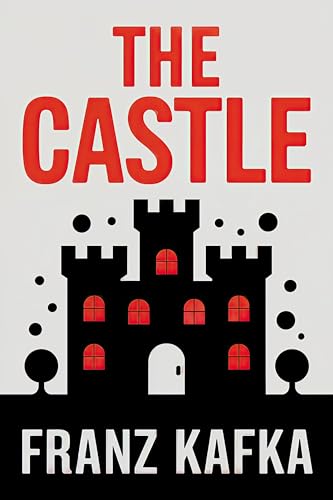
    The Castle is the companion piece — a land surveyor arrives in a village and spends the entire novel attempting, and failing, to make contact with the authorities who summoned him. Both novels end mid-sentence. Both are complete.

    What makes The Castle distinct from The Trial is the texture of the failure. Where Josef K. is prosecuted, K. the land surveyor is simply ignored — worse, perhaps, in its way. He can see the Castle from the village. He can telephone it, and someone always answers. But the answers are evasive, the appointments are canceled, the officials are perpetually unavailable, and the villagers have long since accommodated themselves to a system of endless deferral. There is a scene in which K. speaks at length with a minor official named Bürgel in the middle of the night, and Bürgel explains — exhaustively, almost generously — exactly the circumstances under which a petitioner might successfully bring his case before the authorities. The circumstances are fantastically specific and happen to match K.’s situation precisely. K. falls asleep during the explanation. It is one of the funniest and most devastating scenes in modern literature.

    The translation question matters enormously with Kafka. His German is precise, spare, and almost affectless — a style that has been consistently over-dramatized in older English translations. The Muir translations, which introduced Kafka to English readers in the 1930s, impose a Gothic atmosphere that isn’t there in the original. More recent translations by Breon Mitchell and others correct this. Our guides address the specific translation choices for each book.

    Kafka
    The Trial: A New TranslationThe Castle: A New TranslationThe Carpathian Castle: A New TranslationAmerika (The Man Who Disappeared): A New TranslationA Country Doctor And Other Stories: In the Penal Colony, The Judgment: A New TranslationMetamorphosis: A New Translation in Modern Accessible English

    Stefan Zweig — Europe’s Most Readable Writer

    Stefan Zweig was the most widely read writer in Europe in the 1920s and 1930s — translated into more languages than any contemporary, published in editions that sold in the millions, celebrated from Brazil to Japan. Then came the war, exile, and death by suicide in Petrópolis in 1942. For thirty years after his death, he was largely forgotten in the English-speaking world. The rediscovery, which began in the 1990s and accelerated in the 2010s, has been nearly complete — Zweig is now recognized as one of the essential witnesses to what Europe was before it destroyed itself.

    The World of Yesterday is his memoir, written in exile, covering the Vienna of his youth through the catastrophes of both World Wars. It is one of the great documents of the twentieth century — not as history, exactly, but as testimony: the account of a man who understood, in real time, that he was watching the end of a world. Our essay Zweig Knew the World Was Already Over examines what made his vision so precise. His Jewish Legends represent a different, quieter Zweig — the writer working within a tradition rather than observing one collapse.

    The passage in The World of Yesterday that stops most readers is the description of Vienna before the First World War — a city of coffee houses and concert halls, of intellectual conversation and cosmopolitan ease, where it seemed genuinely possible that European civilization was ascending toward something rather than teetering above an abyss. Zweig describes this world not with naive nostalgia but with the particular anguish of someone who knows what came after. He is writing the memoir in 1941, in exile in Brazil, his Austrian passport cancelled, his books burned. The Vienna he describes is gone so completely that it requires an act of imagination to believe it existed. What makes the book devastating is that Zweig provides that imagination and then takes it away. You understand what was lost because he makes you see it, and then he makes you watch it disappear.

    Stefan Zweig
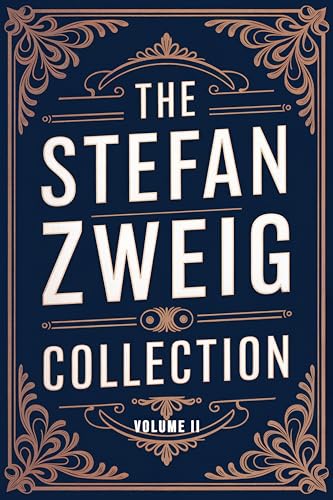
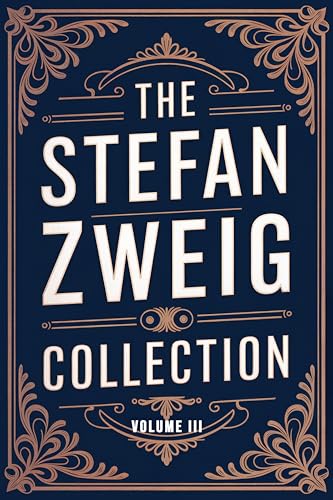
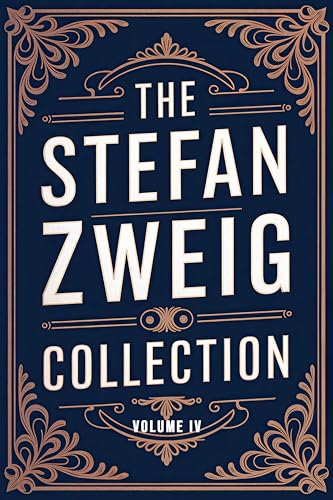
    The Stefan Zweig Collection - Volume 1: A New TranslationThe Stefan Zweig Collection - Volume 2: A New TranslationMarie Antoinette: The Portrait of an Average Woman: A New TranslationThe Stefan Zweig Collection - Volume 3: A New TranslationMagellan: Conqueror of the Seas: A New TranslationThe Stefan Zweig Collection - Volume 4: A New Translation

    The Twentieth Century Beyond Kafka and Zweig

    The German-language tradition did not begin with Kafka and Zweig, and it did not end with them. The twentieth century produced several other writers whose work is essential to any serious engagement with the tradition — and whose absence from English reading lists says more about the accidents of literary fashion than about their quality.

    Thomas Mann is the great German novelist in the way that Tolstoy is the great Russian novelist — a writer of such comprehensive ambition and sustained achievement that the tradition orients itself around him. Buddenbrooks, published in 1901 when Mann was twenty-six, is the great German family novel: four generations of a Lübeck merchant family in decline, the commercial instinct fading as the artistic one strengthens, told with the precision of a surgeon and the sympathy of a son. Mann was drawing on his own family history, and the emotional accuracy is inseparable from the formal control — the novel spans decades and dozens of characters without losing its thread or its feeling. The Magic Mountain, published in 1924, is more demanding and more rewarding in proportion: a young man named Hans Castorp arrives at a Swiss sanatorium to visit a cousin for three weeks and stays seven years. In those seven years, while Castorp debates philosophy with the tuberculosis patients and drifts through an extended holiday from ordinary life, Europe drifts toward war. The sanatorium is a symbol so fully realized that it stops feeling like a symbol and starts feeling like a place.

    Bertolt Brecht approached the literary tradition from the theatre rather than the novel, and what he built there was designed to work against everything theatre had been doing. The Threepenny Opera and Mother Courage and Her Children are the two essential works — the first a savage comic opera set among criminals and beggars, the second a study of a woman who follows armies to profit from war and loses everything she values to the same war she profits from. Brecht invented what he called the epic theatre, a set of techniques designed to prevent empathy — to interrupt the audience’s identification with the characters before it could produce the comfortable catharsis of conventional drama. He wanted audiences to think rather than feel, to remain critical observers rather than become absorbed participants. He was largely right that the theatre had been making audiences feel rather than think, and his corrective, however uncomfortable in the experience, produced plays that remain politically alive in ways that most theatre of the same period does not.

    W.G. Sebald is the great late discovery of German-language literature — a writer who was almost unknown until his sixties and who died in a car accident in 2001, leaving four major prose works and a question about what else he might have written. The Rings of Saturn, The Emigrants, and Austerlitz are prose works that move between memoir, history, and fiction without announcing which mode they are currently inhabiting. Photographs are embedded in the text without captions. Narrators speak in voices that are and are not Sebald’s own. The subject, always, is what time does to memory, what history does to individuals, and what German culture did to European Jewish life and then suppressed. Sebald spent most of his adult life in England, teaching German literature at the University of East Anglia, and his displacement is present in everything he wrote — a German writer who could not write in Germany about Germany, circling the subject from the outside, in English exile.

    How to Read German-Language Literature

    The tradition is large and the entry points matter. A few practical orientations:

    Start with Zweig or Kafka, not Goethe or Nietzsche. This is not because Goethe and Nietzsche are inferior — they are not — but because they require more context to read productively. Zweig is immediately available: his prose translates well, his subjects are human-scale, and his memoir The World of Yesterday provides a historical orientation to the whole period that makes subsequent reading richer. Kafka’s stories are short enough to read in a single sitting and strange enough to reward rereading indefinitely. Both writers give you an experience before they give you a system. Start with the experience.

    With Kafka, the translator matters enormously. This is not a minor scholarly preference — it is a practical reading question. The older Muir translations, which many older paperback editions still use, impose a Gothic drama on Kafka’s prose that is not present in the German original. His style is spare, precise, almost bureaucratic — the horror comes from the flatness of the description, not from elevated diction or atmospheric language. More recent translations correct this and return Kafka’s prose to the affectless register where its real power lives. The edition featured here has been chosen with this in mind.

    With Nietzsche, read the aphoristic books before Zarathustra. The Gay Science and Beyond Good and Evil are the preparation. They establish the vocabulary, the concerns, and the targets of Nietzsche’s critique in a form that is self-contained and immediately graspable — each aphorism is a complete unit of thought. Zarathustra, approached after these, becomes a dramatization of positions already understood. Approached cold, it can seem merely eccentric.

    Do not skip Austria. The Austrian literary tradition — Zweig, Robert Musil, Thomas Bernhard, Ingeborg Bachmann — is as rich as the German, and quite different in tone. Where the German tradition tends toward the systematic and the ambitious, the Austrian tends toward the ironic and the self-aware. Musil’s The Man Without Qualities is the great unfinished novel of the twentieth century, a work of such sustained intelligence and dark comedy that its incompletion feels appropriate — a novel about a civilization that ran out of time, left unfinished by a writer who ran out of time. Bernhard’s novels are tirades, monologues of such sustained venom and precision that they become their own form of music. Bachmann’s prose and poetry are among the most formally exacting works in the tradition. The Austrian tradition is not a footnote to the German. It is a parallel conversation.

    The Larger Context

    German-language literature does not exist in isolation. The tradition was in constant conversation with the French realists — Flaubert’s influence on the German novel was direct and acknowledged, and understanding Madame Bovary illuminates what the German novelists were responding to and reacting against. The philosophical tradition — Kant, Hegel, Schopenhauer, Nietzsche — runs beneath the fiction like a current, surfacing visibly in Kafka and Zweig and in the Austrian writers who came after them.

    Reading German-language literature seriously means reading across these borders — between fiction and philosophy, between Austria and Germany, between the nineteenth century and the catastrophes of the twentieth. The writers in this tradition were not working in separate rooms. They were participants in a single long argument about what European civilization was and what it was becoming. The argument ended badly. The books remain.

    Frequently Asked Questions

    What is the best German novel to start with?

    The two most reliable entry points are Zweig’s The World of Yesterday and Kafka’s The Trial. Zweig is the more immediately accessible of the two — his memoir reads with the momentum of a novel and provides historical orientation that enriches everything else in the tradition. Kafka’s The Trial is slightly more demanding but short enough to read in a weekend, and it remains one of the most viscerally immediate works in any language.

    Is German literature really as difficult as its reputation suggests?

    The reputation is real but applied too broadly. There is genuinely demanding work in the tradition — Musil’s The Man Without Qualities, Hegel’s Phenomenology of Spirit, Goethe’s Faust Part II — that requires sustained attention and some preparation. But Kafka’s stories are not difficult. Zweig’s prose is not difficult. Nietzsche’s aphorisms are designed for immediate impact. The difficulty, where it exists, is the difficulty of seriousness rather than obscurity: these writers expect you to think while you read, which is a different thing from being inaccessible.

    Which German-language authors are most important?

    Any serious list would include: Goethe, the founding figure of the literary tradition; Nietzsche, the philosopher who rewrote the terms of European thought; Kafka, whose three novels and stories generated their own adjective and their own tradition; Thomas Mann, the great German novelist of the twentieth century; Stefan Zweig, the essential witness to prewar European culture; Bertolt Brecht, who reinvented what theatre was for; W.G. Sebald, the great late voice on memory, history, and suppressed guilt; and Robert Musil, whose unfinished The Man Without Qualities is one of the most sustained acts of literary intelligence in the European tradition.

    Does it matter which translation of Kafka I read?

    Yes, significantly. Kafka’s German is spare, precise, and almost affectless — the horror of his fiction comes directly from the flatness of its register, the way catastrophic events are described in the tone of an office memorandum. The older Muir translations, which introduced Kafka to English readers in the 1930s and which many older paperback editions still carry, impose a Gothic atmosphere on this prose that is not present in the original and that fundamentally changes the reading experience. More recent translations restore the affectless precision that makes Kafka’s work distinctive, and the translation we recommend has been selected specifically for this quality.

    This post contains affiliate links. As an Amazon Associate, we earn from qualifying purchases.
    Recommended Edition
    Doctor Faustino’s Illusions — Juan Valera
    Modern English translation

    Kindle →Paperback →

  • Hugo Wrote for the People, Not Scholars

    Hugo Wrote for the People, Not Scholars

    French literature from the eighteenth through the twentieth century is the deepest single tradition in world fiction. Not the oldest, not the most exported, but the deepest — in the sense that its preoccupations compound across generations, each century rewriting the one before. Voltaire dismantles optimism; Hugo restores it through sheer force of feeling; Flaubert arrives to dismantle everything Hugo built; Proust watches the wreckage and decides to memorize it. The tradition is a long argument with itself.

    Most English readers encounter it badly. A Madame Bovary assigned in survey courses. A film adaptation of Les Misérables with the barricade scenes cut short. A translation of Candide that irons out the jokes. These reading guides exist to correct that — to return the books to the specific quality of attention they were written to demand.

    Translation is not a secondary concern when it comes to French literature — it is the primary one. The French sentence is architectural. Its irony is structural, built into the grammar itself; its wit depends on rhythm, on the precise position of a word, on a cadence that arrives half a beat later than you expect. When a translator flattens that rhythm in pursuit of plain English readability, what disappears is not decoration but meaning. Voltaire’s jokes stop being jokes. Flaubert’s sentences, which in French feel like controlled detonations, become merely correct. Proust’s digressions, which in French spiral outward with unmistakable intentionality, begin to seem like failures of discipline. The difference between a good and a bad translation of a French novel is not a matter of nuance. It is the difference between the book and something that shares its plot.

    Classics Retold exists to solve that problem. We do not produce translations — we read them, compare them, and identify the editions that honour the original with enough fidelity and enough courage to make genuine demands on an English reader. For every book in this guide, we have selected the translation we recommend on the basis of close reading: sentence by sentence, scene by scene. Where the translation question is genuinely contested — where two strong editions make different and defensible choices — we say so. The goal is not to tell you what to think about these books. It is to make sure you are reading the right version before you start thinking at all.

    Where to Start

    If you have never read French literature seriously, start with Voltaire. Candide is ninety pages, ruthlessly constructed, and funnier than anything its century produced in English. From there, Hugo’s Les Misérables — not the abridged edition — for the full experience of nineteenth-century romantic amplitude. Then Flaubert, who wrote in direct reaction to Hugo’s sentimentality, and whose prose style remains the most influential in any language. Proust is for later, when you have built up the patience the novel requires and rewards.

    The Enlightenment and Its Discontents

    Voltaire published Candide in 1759 and insisted, despite all evidence, that he had nothing to do with it. The denial was tactical — the book was immediately banned in Geneva, Paris, and Rome — but it also pointed to something real about the text. Candide is not quite a novel. It is a philosophical proposition disguised as an adventure story, and the disguise is so complete that the proposition hits harder than it would have if delivered directly.

    The proposition is this: Leibnizian optimism — the doctrine that we live in the best of all possible worlds — is not merely wrong but obscene. Voltaire had watched the Lisbon earthquake of 1755 kill sixty thousand people and seen theologians argue that the deaths must serve some divine purpose. Candide is his answer. Our reading guide on Candide examines what makes the novel’s comedy so precise — and why it has outlasted every earnest philosophical treatise of its century.

    The scene that crystallises the book’s method comes near the end, when Candide and his battered companions finally acquire a small plot of land outside Constantinople and Pangloss, still incorrigible, still insisting that everything has worked out for the best, prepares to deliver another metaphysical lecture. Candide cuts him off with the novel’s most famous line: il faut cultiver notre jardin — we must cultivate our garden. In context, it is not a counsel of contentment. It is a counsel of exhaustion. Voltaire’s joke is that the only reasonable response to the best of all possible worlds is to stop talking about it and grow vegetables.

    The Romantics — Hugo, Dumas, Stendhal
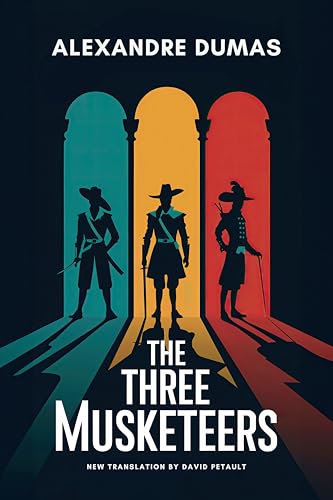
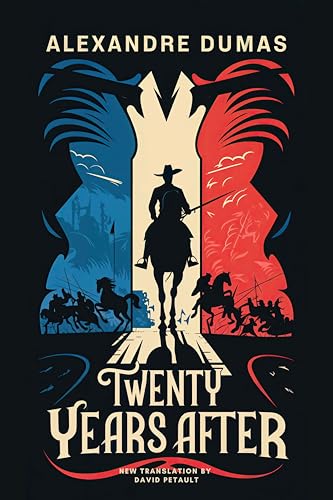
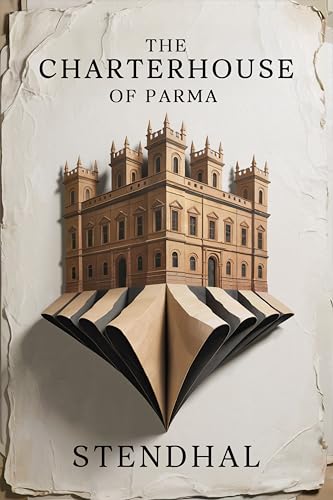
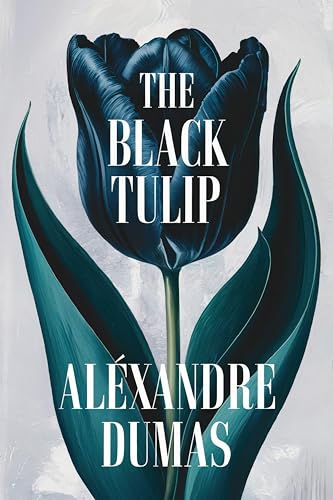
    The Hunchback of Notre-Dame : A New Translation in Modern Accessible EnglishThe Three Musketeers : A New Translation in Modern Accessible EnglishNinety-Three: A New TranslationTwenty Years After (The Three Musketeers Sequel) : A New Translation in Modern Accessible EnglishThe Charterhouse of Parma: New TranslationThe Black Tulip: A New Translation

    The Romantics

    The nineteenth century produced three novelists whose ambitions were essentially architectural. Hugo wanted to build cathedrals out of language. Dumas wanted to construct machines of pure narrative pleasure. Stendhal, the quietest of the three, wanted to dissect the psychology of ambition with the precision of a surgeon who was also, privately, in love with his subject.

    Hugo wrote Les Misérables over the course of twenty years, publishing it in 1862 when he was in political exile. Our guide to Les Misérables addresses the novel as what it actually is: an act of political witness that happens to be a great story. His earlier novel, The Hunchback of Notre-Dame, is formally tighter — a book about the cathedral as much as the people inside it.

    What abridged editions always cut — and what their cuts reveal about a fundamental misreading of Hugo’s intentions — are the digressions: the long chapter on the Paris sewer system, the extended meditation on the Battle of Waterloo, the history of the Petit-Picpus convent. These are not interruptions to the story. They are Hugo’s argument that Jean Valjean’s suffering cannot be understood without understanding the entire structure that produced it. The sewer is where the city’s waste goes, and the sewer is also where Valjean carries a dying man to safety. Hugo’s digressions are always doing two things at once. Abridged editions do neither.

    Dumas operates in a different register entirely. The Three Musketeers has been pedagogized into tedium by school curricula — treated as entertainment for children, which it isn’t. The novel is a study in loyalty, masculine friendship, and the gap between idealism and political reality. It is also, page for page, one of the most propulsive narratives ever written in any language.

    The scene that demonstrates what Dumas is actually doing comes in the early chapters, when d’Artagnan arrives in Paris from Gascony — poor, provincial, riding a horse described as bright yellow and valued at three écus — and proceeds within a single afternoon to schedule duels with all three musketeers by offending each of them in rapid succession. It is comic, but it is also a precise psychological portrait: d’Artagnan is so determined to prove himself that he cannot stop provoking people. The bravado is real, but so is the desperation underneath it. Dumas understood that those two things are usually the same thing.

    Stendhal’s The Red and the Black is perhaps the first genuinely modern novel — the first to concern itself with the inner life of a social climber in a way that produces neither condemnation nor endorsement, only understanding.

    Stendhal based his protagonist Julien Sorel partly on a real case: a young seminarian named Antoine Berthet who shot a former employer in church in 1827 and was guillotined the following year. What interested Stendhal was not the crime but the decades of resentment and thwarted ambition that preceded it — the way a society that claimed to reward merit in fact rewarded birth, and what that contradiction did to the psychology of a brilliant young man who had absorbed the promise and then discovered the reality. Julien Sorel is not sympathetic exactly. But Stendhal makes sure you understand him completely, and understanding is more unsettling than sympathy.

    Realism and Its Aftermath

    Flaubert hated the Romantics. He hated their sentimentality, their grandiosity, their willingness to let feeling substitute for precision. Madame Bovary, published in 1857 and immediately prosecuted for obscenity, is the rebuttal. Emma Bovary has been formed by Romantic fiction — she expects her life to feel the way novels feel — and the book watches her discover that it doesn’t. Our guide to Madame Bovary focuses on the novel’s temporal compression and on what Flaubert’s famous prose style actually does on the sentence level.

    Flaubert spent five years writing Madame Bovary and was known to work for an entire week on a single page, reading each completed sentence aloud to test its rhythm. The result is a prose style in which every word is doing precisely the work assigned to it and nothing else — a style in which the famous authorial impersonality is itself a form of cruelty. The agricultural fair scene, in which Rodolphe seduces Emma while a pompous official delivers a speech about the virtues of manure and livestock management below their window, is the novel’s masterwork: irony operating on three levels simultaneously, without Flaubert once indicating which level you should be attending to.

    Proust arrives fifty years after Flaubert and appears at first to be everything Flaubert opposed — discursive, associative, apparently formless. But the surface is deceptive. In Search of Lost Time is as ruthlessly constructed as Candide, its architecture just harder to see from inside a single volume. Our reading guide to In Search of Lost Time addresses the question English readers always ask first: how to begin, and whether to finish.

    The madeleine passage — in which the narrator dips a small cake into tea and is overwhelmed by a memory he cannot immediately identify — is the most famous moment in the novel, and it is also, for most readers, the first encounter with what Proust is actually doing. The passage is not about nostalgia. It is about the difference between voluntary memory, which is willed and therefore approximate, and involuntary memory, which arrives unbidden and is therefore true. Proust’s entire seven-volume structure rests on that distinction. Every digression, every extended meditation on jealousy or art or the nature of time, is an elaboration of what happened when the madeleine dissolved in the tea. Once you understand that, the length stops feeling like an indulgence.

    The Twentieth Century

    If the nineteenth century in French literature was the century of the social novel — of class, ambition, and the machinery of power — the twentieth century turned inward. Its great subjects were consciousness, absurdity, freedom, and what a human being owes to a world that has given no indication of owing anything in return. The writers who defined this period were not primarily academic philosophers, though several of them wrote philosophy as well as fiction. They were novelists who understood that the felt experience of an idea — the way it lands in the body, in the moment of reading — is not the same as the idea argued in the abstract, and that fiction could do something philosophy could not.

    Albert Camus published The Stranger in 1942 and The Plague in 1947, and the two novels together constitute a sustained examination of what it means to live without guaranteed meaning. The Stranger opens with one of the most destabilising sentences in any language: “Mother died today. Or maybe yesterday, I don’t know.” The flatness is the point. Meursault, the novel’s narrator, is not callous — he is honest in a way that the social world around him cannot accommodate, and the novel is the story of how that world punishes him for it. What makes Camus genuinely difficult — and genuinely irreducible to a philosophical position — is that Meursault is neither a hero nor a warning. He is simply a consciousness, registering experience with more accuracy than comfort allows. The Plague works on a larger scale: an Algerian city quarantined by an epidemic becomes an image of occupied France, and the question of whether to resist — and how, and at what cost — is distributed across a cast of characters who answer it differently and with equal plausibility. Camus did not believe in God and did not believe in despair. The space between those two refusals is where both novels live.

    Antoine de Saint-Exupéry’s The Little Prince, published in 1943, is the best-selling French-language book ever written and almost certainly the most consistently misread. It is shelved in the children’s section because it has illustrations and a child as its central figure. It belongs there about as accurately as Gulliver’s Travels does. Saint-Exupéry was a pioneering aviator who had survived multiple crashes across three continents, had reported on the Spanish Civil War, and had watched France fall to Nazi occupation. When he sat down to write The Little Prince, he was in exile in New York, estranged from his wife, drinking heavily, and struggling with injuries from a crash that had left him in chronic pain. He knew, with some certainty, that he would not survive the war. The little prince who has left his small planet, who carries with him the memory of a single rose he loved and perhaps loved inadequately — this is a book about grief and exile and the things we fail to protect until it is too late. Saint-Exupéry disappeared over the Mediterranean in July 1944, on a reconnaissance mission, and was never found. The novel’s ending is not a fantasy. It is a farewell.

    Simone de Beauvoir published The Second Sex in 1949, and the book changed how the twentieth century thought about women, freedom, and what it means to become a person rather than simply be assigned one. Its opening argument — “One is not born, but rather becomes, a woman” — is the sentence around which the entire analysis pivots. De Beauvoir’s claim is that femininity is not a natural condition but a historical and cultural construction, and that the construction has been so thorough, so embedded in language and law and literature, that most women have participated in their own confinement without being able to name it. The Second Sex is philosophy, but it is also literary criticism, anthropology, and personal testimony, and the combination produces a book that is harder to dismiss than any purely abstract argument could be. It was immediately scandalised in France and immediately translated into English, where it had an equally immediate and lasting effect. Beauvoir belongs in any account of French literature not merely as a feminist thinker but as a writer whose prose, even in translation, carries the peculiar force of someone who has thought something through to its end and is no longer willing to be polite about the conclusions.

    The Novel of Ideas

    Laclos’s Les Liaisons Dangereuses, published in 1782, seven years before the Revolution, is an epistolary novel about aristocrats who weaponize seduction. It caused a scandal on publication and has never stopped causing one. The translation question — which English edition to trust — is one the guide addresses directly, because the wrong translation turns Laclos’s surgical prose into drawing-room gossip.

    What makes the novel genuinely disturbing — more disturbing than its reputation as a tale of aristocratic wickedness would suggest — is that the Marquise de Merteuil and the Vicomte de Valmont are not simply villains. They are the two most intelligent people in the book, and their letters reveal a clarity about power, desire, and social performance that the novel’s more virtuous characters entirely lack. The Marquise in particular is writing, across her letters, a sustained feminist analysis of the society that has made seduction her only available form of power. Laclos, writing seven years before the Revolution, understood that an aristocracy rotten enough to produce Merteuil was an aristocracy that had already lost its justification. The guillotine arrives, historically, a decade after the last letter.

    Jules Verne is almost never read as the political writer he was. 20,000 Leagues Under the Sea is usually packaged as an adventure novel for young readers. But Captain Nemo is a figure of anti-colonial rage, and the Nautilus is a utopian project — a society of one, built in deliberate exile from the world above. Our guide to Jules Verne’s Political Vision recovers what the bowdlerized English translations have long suppressed.

    In later Verne novels — particularly The Mysterious Island, which reveals Nemo’s full history — we learn that he is Prince Dakkar, an Indian nobleman whose family was massacred by British colonial forces during the 1857 rebellion. The Nautilus, read in this light, is not a marvel of technology. It is a weapon of mourning. Every time Nemo sinks a warship, he is answering a specific historical atrocity. The original English translations, produced by publishers nervous about offending British readers, softened or erased this context entirely. They turned a novel about colonial violence into a Victorian adventure story. The difference between those two books is not a matter of translation style. It is a matter of whether the book is allowed to mean what it means.

    The tradition these writers belong to is not merely literary. It is argumentative, adversarial, and deeply concerned with how power organizes itself and how fiction might resist that organization. Reading French literature in good translation is not an act of cultural tourism. It is engagement with a conversation that has been going on for three hundred years and is not finished.

    How to Read French Literature

    French literature rewards method. It is not a tradition you can dip into randomly and expect to get full value from — the books talk to each other too directly, and missing the conversation means missing a significant part of what each individual book is doing. A few practical principles will help.

    On your first pass through the tradition, read chronologically. Start with Voltaire, move through Hugo and Stendhal and Flaubert, arrive at Proust and then Camus. The sequence is not arbitrary — each writer is, consciously or not, arguing with the one before, and reading in order means you arrive at those arguments already equipped to understand them. After your first pass, read thematically: all the novels of ambition together (Stendhal, Balzac, Flaubert), all the novels of political witness together (Hugo, Camus, de Beauvoir). The tradition looks different from each angle, and both angles are useful.

    Never read an abridged Hugo. This is not a suggestion — it is the minimum condition for reading Hugo at all. The digressions in Les Misérables are not interruptions to the story. They are the story’s argument about why the story matters. An abridged Les Misérables is a novel about an escaped convict and an obsessed policeman. The unabridged version is a novel about the entire structure of nineteenth-century French society and why it produces escaped convicts and obsessed policemen in the first place. These are different books. One of them is Hugo.

    For Proust, the only workable approach is full commitment to the first volume. Swann’s Way is long, and it does not apologize for its length, but it is also — once you have adjusted to its rhythms — one of the most pleasurable reading experiences in the tradition. Commit to it entirely before deciding whether to continue. Do not read the first fifty pages and make a judgment. The novel earns its length, but it does not earn it immediately — it earns it retrospectively, in the way that a piece of music earns its opening bars only once you have heard the whole. If you reach the end of Swann’s Way and are not compelled to continue, that is a legitimate response. But make the decision from there, not from the middle.

    Finally: always check who translated the edition you are buying before you buy it. This is not optional. A Madame Bovary translated in 1886 is a different book from one translated in 2010 — not because the French has changed, but because English has, and because translation reflects the assumptions of its moment as much as it reflects the original. Nineteenth-century translators of Flaubert routinely softened his irony and cleaned up his prose because they found his indifference to moral judgment unsettling. Their translations are not wrong exactly, but they are translations of a different Flaubert — a more comfortable one. The translator matters as much as the edition. The reading guides on this site name the translation we recommend for every book covered, and explain the reasoning. Use that information before you start.

    Voltaire & The Enlightenment
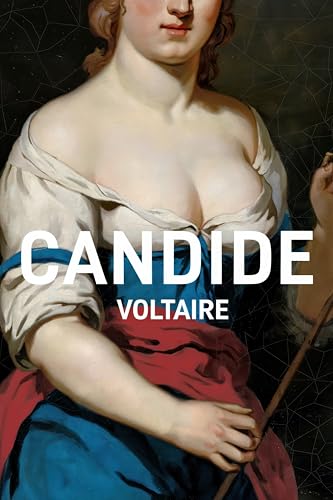
    Candide: A New TranslationThe Voltaire Collection: Vol. 1: New TranslationThe Voltaire Collection: Vol. 2: New TranslationZadig: A New TranslationTreatise on Tolerance: New Translation
    Flaubert & Realism
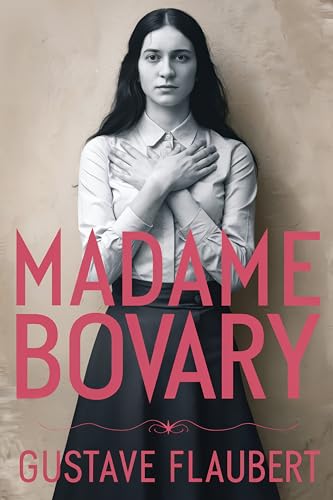
    Madame Bovary: A New Translation
    Proust
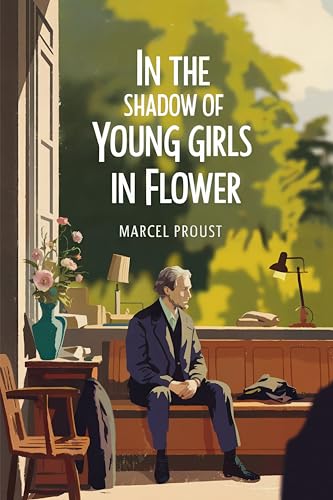
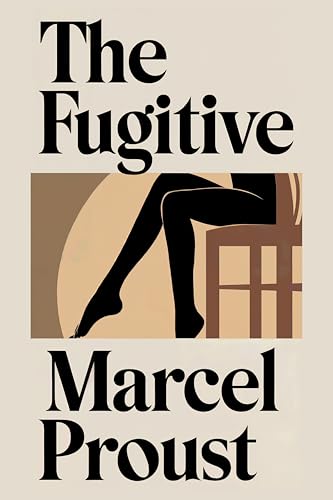
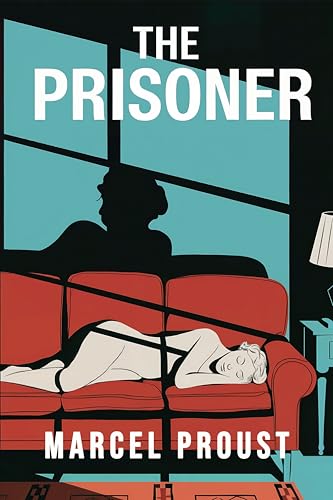
    Swann's Way (In Search of Lost Time Vol. 1): A New TranslationPleasures and Days: A New TranslationIn the Shadow of Young Girls in Flower (In Search of Lost Time Vol. 2): A New TranslationThe Fugitive (In Search of Lost Time Vol. 6): A New TranslationFinding Time Again (In Search of Lost Time Vol. 7): A New TranslationThe Prisoner (In Search of Lost Time Vol. 5): A New Translation
    Laclos & The Novel of Ideas
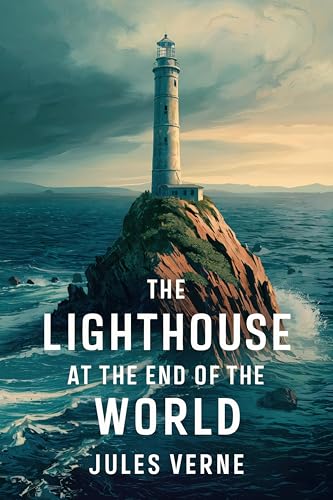
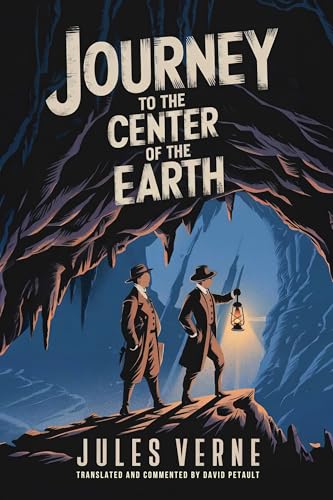
    Twenty Thousand Leagues Under the Sea: A New Translation in Modern Accessible EnglishThe Mysterious Island: A New Translation in Modern Accessible EnglishThe Lighthouse at the End of the World: A New TranslationIn Search of the Castaways (The Children of Captain Grant): A New Translation in Modern Accessible EnglishJourney to the Center of the Earth: A New Translation in Modern Accessible EnglishPropeller Island: A New Translation in Modern Accessible English

    Frequently Asked Questions

    What is the best French novel to read first?

    Candide by Voltaire is the ideal entry point into French literature for almost every reader. At roughly ninety pages, it is short enough to finish in a single sitting, but its comedy, its philosophical precision, and its controlled fury give you an immediate sense of what distinguishes French literary culture from English — the willingness to treat ideas as weapons and to make wickedly good jokes with them at the same time. Every major theme of the tradition — the problem of suffering, the corruption of institutions, the gap between what societies claim and what they do — is present in miniature.

    Which French authors should every reader know?

    Six authors form the spine of the tradition: Voltaire, whose Candide established the French novel as a vehicle for philosophical argument; Victor Hugo, whose ambition and emotional force defined the Romantic century; Gustave Flaubert, whose prose style became the template for literary realism in every language; Marcel Proust, who pushed the novel further into consciousness than anyone before or since; Albert Camus, who made existential philosophy feel like lived experience rather than academic argument; and Simone de Beauvoir, whose The Second Sex changed not just French literature but the intellectual history of the twentieth century. Any serious reader of the tradition will eventually need all six.

    Does translation quality really matter for French literature?

    For French literature specifically, translation quality matters more than for almost any other tradition, because so much of what makes French writing French is carried in its rhythm, its irony, and its wit — all of which are structural, not decorative, and all of which are the first things to collapse in a careless translation. Voltaire’s jokes depend on timing; Flaubert’s moral vision is embedded in sentence cadence; Proust’s digressions mean something different depending on whether they read as deliberate spirals or mere looseness. A poor translation of a Russian novel may blunt its emotional force. A poor translation of a French novel can invert its meaning entirely.

    How is French literature different from English literature?

    French literature is more argumentative, more willing to treat the novel as a vehicle for ideas rather than simply for story, and more interested in the relationship between fiction and political reality. Where English literature has tended — with significant exceptions — toward character, psychology, and social observation conducted at close range, French literature has more consistently asked large questions: about the nature of freedom, the legitimacy of institutions, the relationship between the individual and history. This is not a difference of quality but of orientation. French novels are, on the whole, more interested in being right about something than in being liked, and that adversarial quality is part of what makes the tradition so permanently alive.

    This post contains affiliate links. As an Amazon Associate, we earn from qualifying purchases.
    Recommended Edition
    The Hunchback of Notre-Dame — Victor Hugo
    Modern English translation

    Kindle →Paperback →